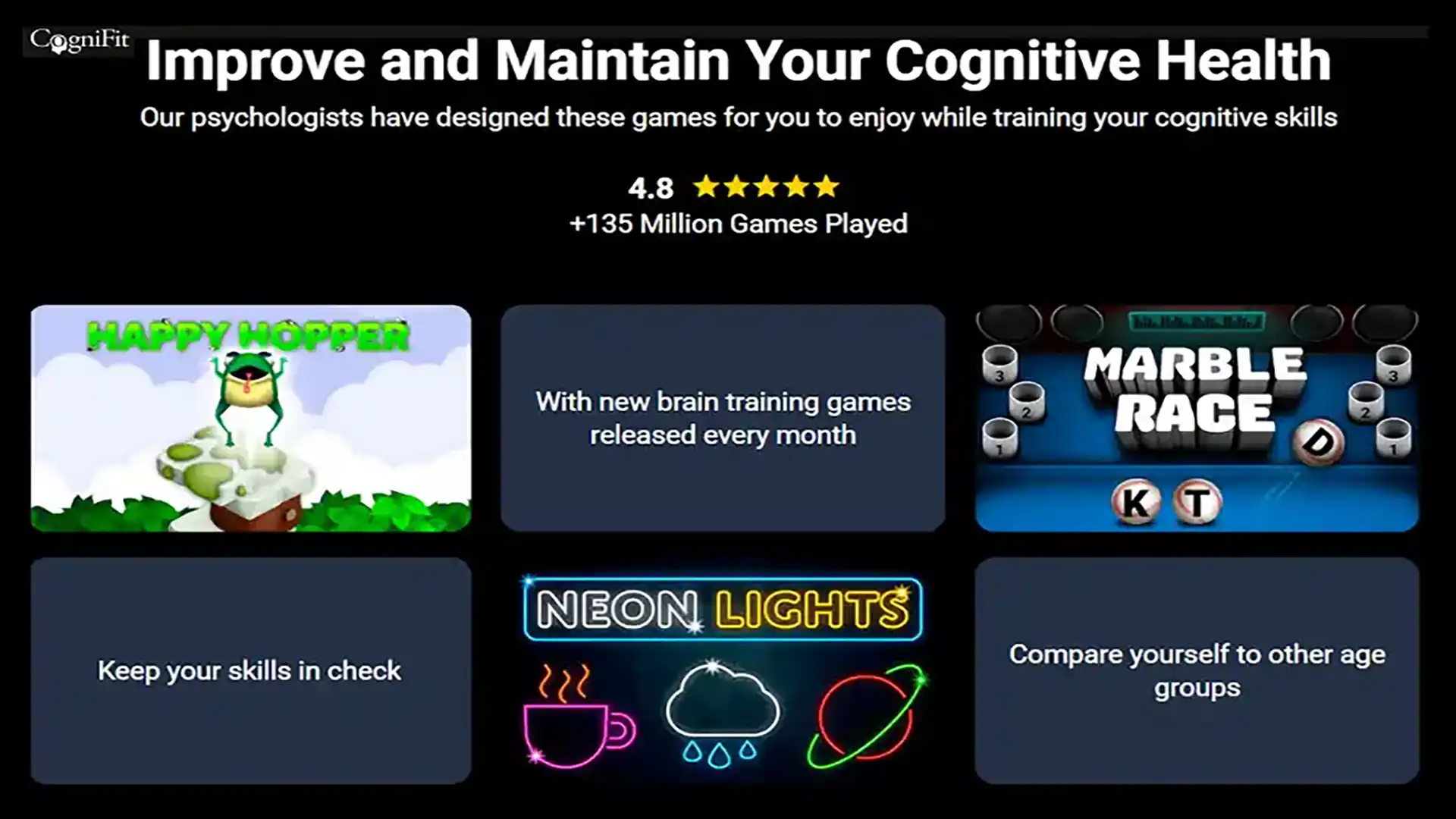
CogniFit Brain Fitness: Easy Brain Boost
In an era where mental clarity is as prized as physical health, have you ever wondered if there’s a scientifically backed way to sharpen your mind? Welcome to CogniFit Brain Fitness, a revolutionary platform that moves beyond simple puzzles. It begins with a sophisticated cognitive assessment to establish your unique mental baseline. This isn’t just a quick cognitive test. It’s a comprehensive cognitive function test that pinpoints your strengths and targets for growth. Based on your results, the CogniFit app delivers a personalized regimen of engaging brain games designed to challenge your brain effectively. This seamless integration of professional cognitive testing and adaptive cognitive training provides a proven path to enhance memory. However, it also boosts focus and improves overall mental agility, making superior cognitive health an achievable goal for everyone.
Table of Contents
ToggleUnlock Your Potential: An Introduction to CogniFit Brain Fitness
Have you ever experienced that frustrating moment when a word is on the “tip of your tongue,” but you just can’t grasp it? Or perhaps you’ve walked into a room only to stand there, completely blanking on why you went in there in the first place? In our demanding, fast-paced world, these lapses in memory and focus are becoming all too common. But what if these aren’t just innocent “senior moments” or signs of being overly busy? What if they are clear indicators that your brain, much like an under-exercised muscle, is craving a proper workout?
This is the core mission of CogniFit Brain Fitness: to provide the essential, scientifically backed training regimen for your most vital organ. It’s not just another app with simple puzzles; it’s a comprehensive platform that merges the engaging nature of brain games with the rigorous science of clinical cognitive testing. Before you can embark on a journey to improve your mind, you must first understand its incredible potential for change.
The Modern Mental Challenge: Beyond Simple Forgetfulness
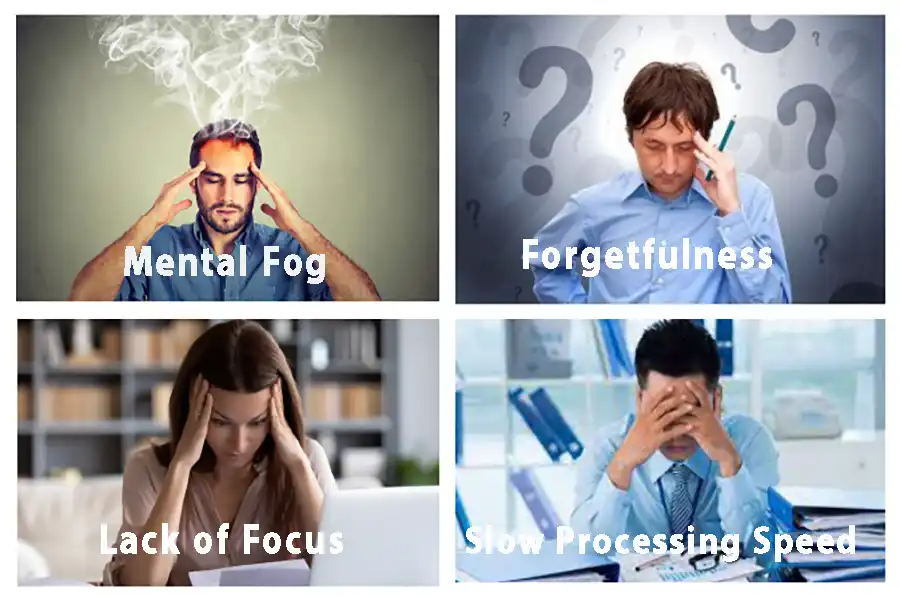
Today’s world places unprecedented demands on our cognitive functions. We are constantly multitasking, switching between tabs, responding to notifications, and processing vast amounts of information. This cognitive overload can lead to:
- Mental Fog: A feeling of cloudiness, making it difficult to think clearly or concentrate.
- Forgetfulness: Struggling to recall names, appointments, or where you left your keys.
- Lack of Focus: Makes one easily distracted and unable to sustain attention on a single task.
- Slow Processing Speed: Taking longer to understand information and react to it.
Many people accept this as an inevitable part of aging or modern life. However, neuroscience tells a different, more hopeful story.
Cognitive Testing and Neuroplasticity: The Science of a Trainable Brain
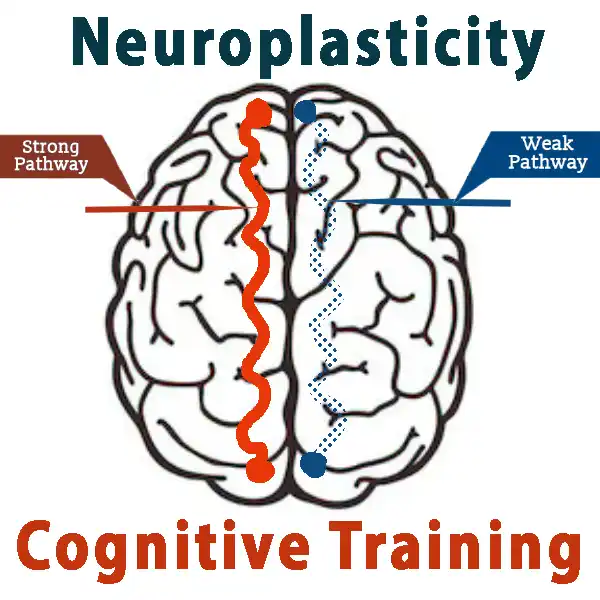
For decades, scientists believed that the brain’s structure became fixed mainly by adulthood. We now know this is entirely false. The brain possesses a remarkable quality known as neuroplasticity—its ability to reorganize itself by forming new neural connections throughout life. This means your brain is not a static, declining organ. The right kind of stimulation can strengthen, refine, and improve this dynamic system.
This is where the power of a cognitive assessment comes into play. Just as a personal trainer first assesses your physical strength and endurance, a cognitive test provides a crucial baseline of your mental capabilities. It measures core skills like memory, attention, and executive functions, pinpointing your unique strengths and weaknesses. Cognitive testing is not about passing or failing; it’s about gathering the data necessary to create a personalized training plan. Without this initial cognitive assessment, any brain training is just a guess, potentially focusing on areas that are already strong while neglecting those that genuinely need help.
Your First Step in Cognitive Training: The CogniFit App
CogniFit Brain Fitness is built upon this foundational principle of “assess and train.” The CogniFit app is your all-in-one gateway to this process. It starts with a sophisticated cognitive assessment that feels like a series of engaging games. This initial cognitive performance test is designed to accurately evaluate a wide array of your mental abilities.
Once your baseline is established, the platform’s adaptive algorithms get to work. The CogniFit app doesn’t offer a one-size-fits-all collection of brain games. Instead, it creates a personalized training regimen specifically tailored to challenge your weaker areas and consolidate your strengths. This ensures that every minute you spend training is efficient and effective, driving real, measurable improvements based on your personal cognitive function test results.
Embarking on this journey with CogniFit Brain Fitness is the first step toward taking control of your cognitive health, reclaiming your mental clarity, and unlocking the full, vibrant potential of your mind.
Measuring Your Mind: The Critical Role of a Cognitive Assessment
Imagine embarking on a fitness journey without knowing your starting weight, strength, or endurance. You might work hard, but without a baseline, you’d have no way to measure progress or know if your exercises were even effective. The same principle applies to your brain. You cannot effectively train your mind without first understanding its current state. This is the indispensable role of a cognitive assessment—it is the objective, scientific starting point that transforms random brain games into a targeted cognitive training program.
A cognitive test within the CogniFit app is not a pass/fail exam. It is a detailed diagnostic tool, a comprehensive check-up for your brain’s health and performance. By establishing a baseline through a cognitive performance test, you move from subjective feelings of “being forgetful” to objective data on your memory capacity, attention span, and processing speed. This data is the foundation of your entire CogniFit Brain Fitness journey.
Why You Need a Baseline Cognitive Test
Why is this baseline so critical? A baseline cognitive test provides three key benefits:
- Objective Measurement: It replaces guesswork with complex data. Instead of wondering if you’re improving, you can track quantifiable progress over time against your initial scores.
- Personalization: It identifies your unique cognitive profile. We all have relative strengths and weaknesses. A cognitive function test reveals precisely which areas—such as working memory, divided attention, or planning—would benefit most from targeted training.
- Motivation: Seeing your initial results provides a powerful motivator. As you continue training, subsequent cognitive assessment tests will show you tangible proof of your improvement, encouraging you to stay consistent with your brain games.
Inside a Comprehensive Cognitive Assessment Test: The CAB Battery
At the heart of CogniFit Brain Fitness is the General Cognitive Assessment Battery (CAB), a sophisticated tool used by researchers and professionals. This isn’t a single puzzle; it’s a comprehensive battery of tasks designed to evaluate a broad spectrum of your cognitive abilities.
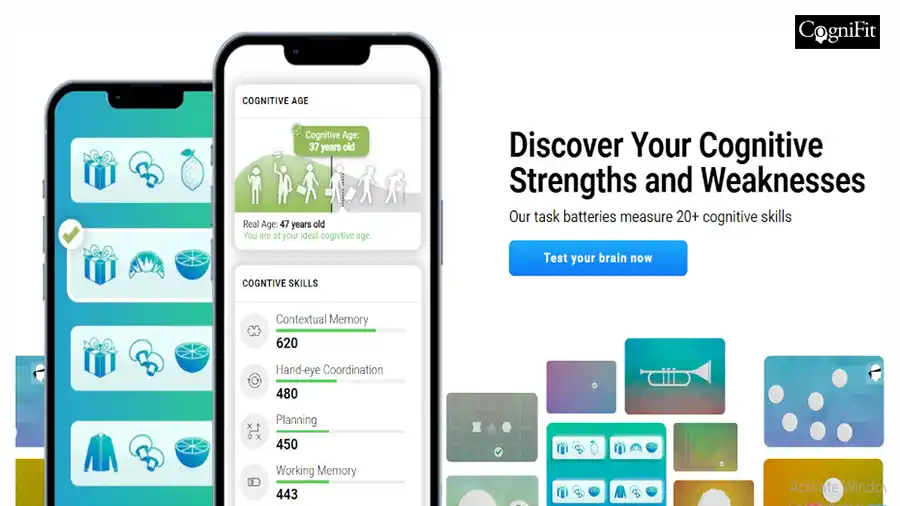
When you take this cognitive assessment test, you are undergoing a digital evaluation that measures up to 22 fundamental cognitive skills, including:
- Working Memory: Holding and manipulating information in your mind.
- Focused and Divided Attention: Concentrating on a single task or splitting attention between multiple tasks.
- Processing Speed: How quickly you can take in and respond to information.
- Visual and Spatial Perception: Interpreting and making sense of visual stimuli.
- Planning and Shifting: Formulating a strategy and flexibly switching between tasks or mental sets.
This multi-faceted approach ensures that the cognitive testing is thorough, providing a holistic picture of your brain’s functioning.
Specialized Cognitive Performance Tests for Driving, Memory, and More
Beyond the general assessment, the CogniFit app offers a suite of specialized cognitive assessment tests designed for specific life domains. These cognitive performance tests provide even more targeted insights:
- Driving Cognitive Assessment (DAB): This test evaluates the 10 key cognitive skills critical for safe driving, such as estimation of distances, response time, and the width of the field of view. It’s a specialized cognitive test for a high-stakes daily activity.
- Concentration Assessment (CAB-AT): Specifically targets and measures your focus, inhibition, and updating abilities.
- Memory Assessment (CAB-ME): Provides a precise evaluation of your short-term memory, working memory, and recognition skills.
CogniFit Brain Fitness offers both broad and targeted cognitive testing, ensuring that whether your goals are general wellness or specific skill improvement, your training is always based on solid, scientific measurement.
Beyond the Score: Understanding Your Cognitive Function Report
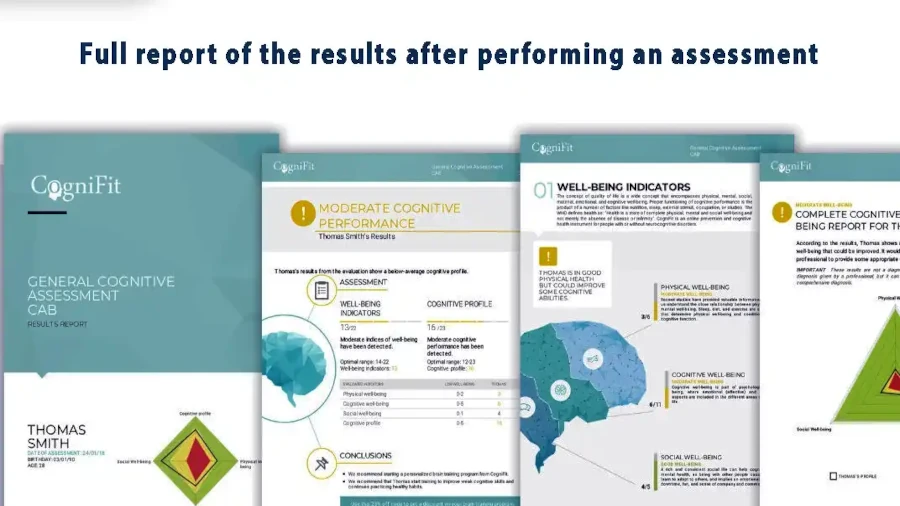
Completing your initial cognitive assessment is a significant achievement, but the real value lies in what comes next: your personalized Cognitive Function Report. This report transforms the raw data from your cognitive test into an actionable, easy-to-understand map of your mind. For many users, this is the “aha!” moment—the point at which abstract concepts of brain health become a clear, personalized picture of their cognitive strengths and weaknesses.
The CogniFit app doesn’t just give you a single score and leave you wondering what it means. It provides a detailed breakdown, turning the results of your cognitive performance test into a practical guide for your CogniFit Brain Fitness journey. Let’s explore how to read this crucial report and what it reveals about your mental well-being.
Decoding Your Cognitive Assessment Results
When you open your report after a cognitive assessment test, you will see a comprehensive analysis designed for clarity. Key elements include:
- Overall Cognitive Index: A composite score that gives you a snapshot of your general cognitive state relative to your age group.
- Cognitive Domain Scores: Your performance is categorized into key areas such as Memory, Attention, Perception, Reasoning, and Coordination. This instantly highlights which broad areas are strong and which require improvement. tailed.
- Skill Metrics: Drilling down further, you see scores for specific skills measured by the cognitive function test, such as Visual Scanning, Inhibition, Updating, and Planning. This granularity is what makes the training truly personalized.
The report presents each score visually, often with graphs and percentile rankings, to help you grasp your cognitive profile at a glance.
The 5 Key Areas Measured by Your Cognitive Function Test
Your report from the CogniFit cognitive assessment primarily focuses on five pillars of mental performance. Understanding these areas helps you connect the dots between your scores and your daily life:
- Memory: This isn’t just one skill. Your report differentiates between Short-Term Memory (holding information for seconds), Working Memory (manipulating that information), and Non-Verbal Memory. A low score here might explain why you frequently misplace items or forget instructions.
- Attention: This section assesses your ability to focus on a task without distraction (Focused Attention), manage multiple streams of information (Divided Attention), and maintain concentration over time (Sustained Attention). Challenges here can lead to procrastination and easy distractibility.
- Reasoning & Executive Functions: This is your brain’s command center. It includes Planning (thinking ahead), Shifting (mental flexibility), and Updating (adjusting to new information). Strengths here correlate with better problem-solving and organization.
- Coordination: This area, measured by specific tasks in the cognitive test, evaluates your Hand-Eye Coordination and Processing Speed. It’s crucial for physical tasks, driving, and overall reaction time.
- Perception: Your Visual and Auditory Perception scores reflect how accurately your brain interprets information from your senses. This foundational skill affects everything from reading to navigating your environment.
From Data to Action: Your Personalized Cognitive Training Plan
This is the most critical function of the report. The CogniFit app uses the detailed results of your cognitive function test to generate a bespoke training regimen automatically. Your assigned brain games are not random. CogniFit selects them intentionally to target the cognitive domains and specific skills where your scores show room for improvement.
If your cognitive assessment revealed a weakness in visual memory, your training will prioritize brain games that challenge that exact skill. If your processing speed is slower than average, the app will introduce exercises designed to gradually increase your mental quickness. This direct link between cognitive test results and the prescribed brain games is what makes CogniFit Brain Fitness a scientifically structured program rather than a simple collection of puzzles. Your report is not an endpoint; it is the personalized blueprint for building a stronger, more resilient mind.
The Engine of Improvement: Brain Games Powered by Science
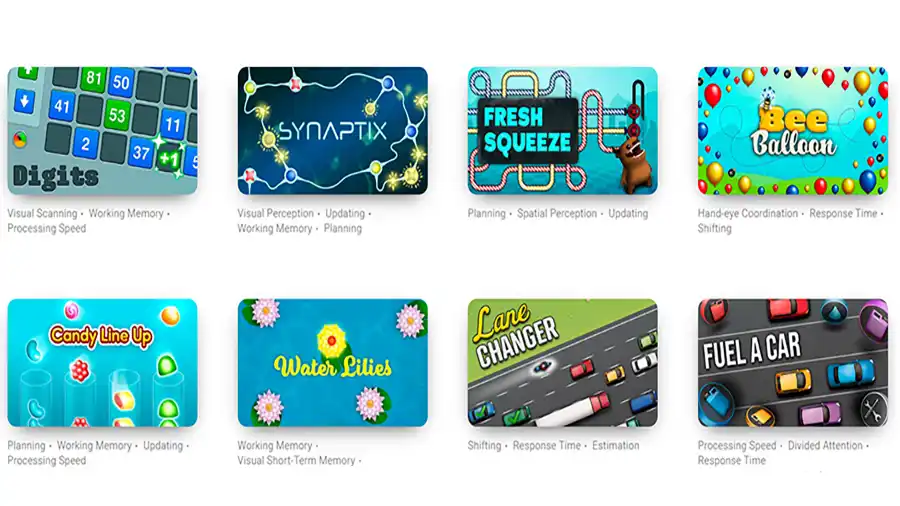
Once your personalized cognitive profile is established through a cognitive assessment, the real transformation begins. This is where CogniFit Brain Fitness shifts from diagnosis to active training, powered by its extensive library of brain games. However, it is crucial to understand that these are not the casual puzzles you might find in a newspaper or a simple mobile game. The brain games in the CogniFit app use sophisticated digital tools. They draw directly from classic neuropsychological tasks. Moreover, CogniFit engineers each game to stimulate specific neural pathways with precision. They are the practical, engaging engine that drives your cognitive improvement forward.
The key differentiator lies in the intent. Entertainment-focused games might be fun. But CogniFit designs its brain games for one purpose: to leverage neuroplasticity through targeted, adaptive, and repeated challenges. This turns your training sessions into a potent regimen for cognitive growth.
How Brain Games Stimulate Cognitive Networks
Each CogniFit game is engineered to target a specific brain network, such as:
- The prefrontal cortex is responsible for planning, decision-making, and impulse control
- Parietal lobe → spatial awareness, attention, coordination
- Temporal lobe → memory, language, auditory processing
- Cerebellum → precision, timing, movement control
- Basal ganglia → habits, learning speed, motor responses
How Brain Games Drive Neuroplasticity
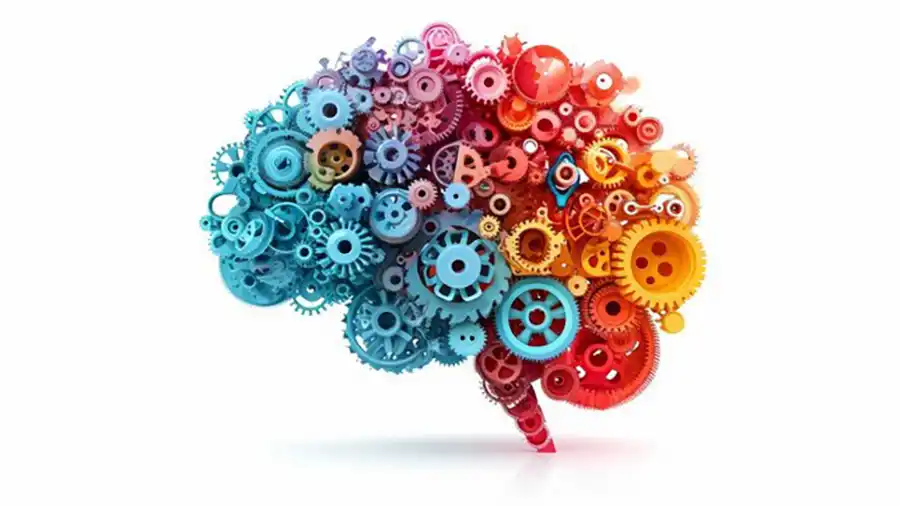
Neuroplasticity responds not to simple repetition but to consistent, targeted challenge. When you play a brain game calibrated to your current ability level, you push your brain to work. The game stays complex enough to challenge you without being so hard as to discourage you. This process:
- Creates New Connections: To solve the novel problems presented in the brain games, your neurons form new synaptic connections.
- Strengthens Neural Pathways: Frequently used pathways become thicker and more efficient, much like a well-trodden path in a forest, leading to faster processing speeds and quicker recall.
- Improves Neural Efficiency: Your brain learns to recruit the most relevant networks for a task, reducing mental effort and improving performance.
Every time you complete a challenging level in a cognitive training game, you are not just earning points; you are physically reshaping and strengthening your brain.
Why Regular Cognitive Training Improves Performance?
The secret is consistency—not intensity.
Short, frequent sessions create the most significant impact because:
- Your brain learns in small repeated steps
- Regular stimulation builds long-term neural pathways
- Adaptation keeps the challenge fresh and effective
CogniFit adjusts difficulty automatically. When you improve, the challenge rises. When you struggle, it eases the level. This keeps your brain in the ideal training zone—never bored, never overwhelmed—making each session more effective than standard games or puzzles.
With continued practice, users often notice:
- Faster thinking
- Sharper focus
- Stronger memory
- Quicker reactions
- Better decision-making
This is the direct result of healthier, more efficient neural connections.
A Tour of the CogniFit App: Your Hub for Effective Brain Games
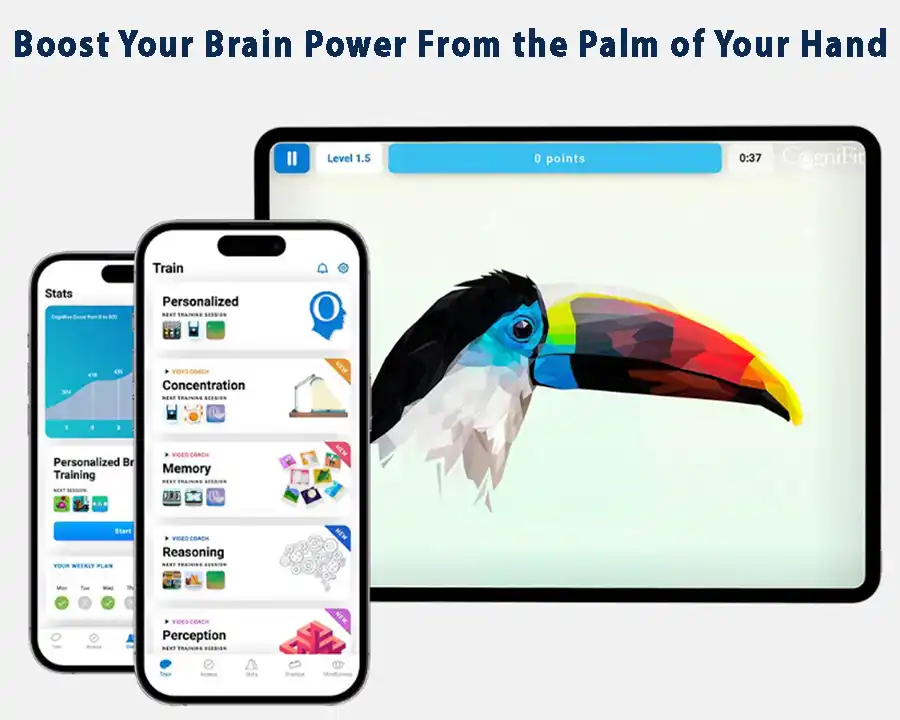
Opening the CogniFit app reveals a clean, intuitive interface designed for seamless cognitive training. The platform is structured to guide you effortlessly through your daily regimen:
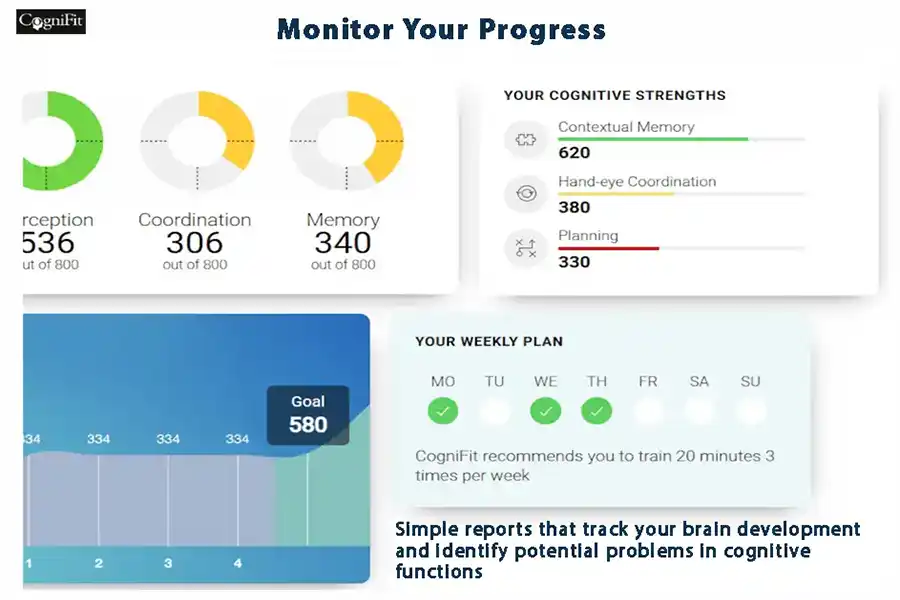
- The Personalized Training Session: Your daily session is front and center. With one tap, you start a series of brain games. The algorithm automatically selects these games based on your latest cognitive assessment results. As a result, each session matches your current needs.
- The Extensive Game Library: Beyond your daily training, you have access to a vast collection of over 60 games. This allows you to explore and practice specific skills, from memory and attention to coordination and reasoning.
- Progress Tracking: The app provides clear, visual feedback on your performance. You can see your scores improving over time in each cognitive domain, offering tangible proof that your cognitive training is working.
This user-friendly design of the CogniFit app removes barriers, making it easy to incorporate effective brain games into your daily routine.
Adaptive Difficulty: Ensuring Your Cognitive Training Never Stops Working
Perhaps the most critical feature of the CogniFit Brain Fitness platform is its adaptive difficulty. In a static game, once you master the mechanics, the cognitive benefit plateaus. CogniFit’s AI-powered system continuously monitors your performance in real-time.
If you are consistently succeeding, the brain games become progressively more difficult, introducing new variables, faster speeds, or greater complexity. This ensures you are continuously operating at the edge of your ability, which is the “sweet spot” for driving neuroplasticity. Conversely, if a game becomes too challenging, the system will gently adjust the difficulty to prevent frustration and keep you in an optimal learning zone. This dynamic adjustment is what makes the CogniFit app a true personal trainer for your brain, ensuring that every session contributes to meaningful cognitive growth.
Why Choose CogniFit: The Advantages of a Scientific Brain Fitness Platform
The digital landscape is flooded with apps promising to sharpen your mind, so what truly sets CogniFit Brain Fitness apart? The distinction lies in its foundation as a scientifically validated platform, not merely an entertainment product. While many apps offer generic brain games, CogniFit provides a comprehensive ecosystem for cognitive testing and cognitive training, built on a bedrock of clinical research and personalized data. Choosing CogniFit is not just choosing a game; it’s choosing a scientifically-grounded methodology for long-term brain health.
The Foundation: A Professional-Grade Cognitive Assessment
The single most significant advantage of the CogniFit app is that it begins with a professional-grade cognitive assessment. Many platforms throw users directly into random brain games without any baseline measurement. In contrast, CogniFit builds its entire system around the data it gathers from your initial cognitive test.
This initial cognitive assessment uses the same type of tool that professionals use in clinical and research settings. It provides a depth of insight that simple puzzles cannot match. By starting here, CogniFit Brain Fitness ensures that your journey is data-driven from day one. You are not guessing which skills to train; you are following a personalized roadmap generated by a sophisticated diagnostic tool. This transforms the experience from a casual pastime into a purposeful cognitive training program.
Personalized Brain Games Based on Your Cognitive Test Results
Following the cognitive assessment, the platform’s AI engine analyzes your results to create a truly personalized training regimen. This is where the magic happens. Your assigned brain games are never random. Instead, CogniFit selects them intentionally to target the cognitive domains where your assessment revealed the greatest need for improvement.
If your cognitive performance test indicated a weakness in processing speed, your training will prioritize brain games designed to accelerate mental quickness. If your working memory score was low, you will encounter exercises that challenge your ability to hold and manipulate information. This direct, algorithmic link between assessment and training is a core differentiator. It ensures that every minute you spend in the CogniFit app is efficient and effective, providing a tailored workout for your unique mind.
The CogniFit App: A Complete System for Cognitive Training
The CogniFit app functions as a seamless, all-in-one system. It integrates the initial cognitive testing, the personalized training with adaptive brain games, and detailed progress tracking into a single, user-friendly interface. This holistic approach offers several key benefits:
- Continuity: Your progress from each training session is recorded and influences future sessions, maintaining a continuous and evolving training curve.
- Motivation through Data: The app provides clear, visual feedback on your improvement across different cognitive domains, directly linking your efforts in the brain games to tangible results from your personal cognitive assessment benchmarks.
- Accessibility: This powerful system is available for both in-clinic use by professionals and at-home use by individuals, making clinical-grade cognitive training accessible to everyone.
In essence, CogniFit Brain Fitness offers a structured, scientific, and personalized path to cognitive improvement that generic brain games and other platforms cannot match. It is a comprehensive system designed for those serious about understanding and improving their mental fitness.
CogniFit vs. The Rest: The Key Differences in Cognitive Training Platforms
In a crowded market of apps promising to make you smarter, it’s vital to understand what you’re really getting. Many platforms offer engaging activities, but CogniFit Brain Fitness stands apart by building its entire methodology on a foundation of clinical science and personalization. These differences are not minor features. Instead, they form the foundation of a platform designed to produce genuine and measurable cognitive improvement.
Clinical Cognitive Assessment vs. Entertainment
The most significant differentiator is the starting point. Many other platforms are primarily designed for entertainment. They offer a collection of brain games that are fun and might make you better at that specific game, but they lack a scientific baseline.
CogniFit Brain Fitness operates differently. Before you play your first training game, you undergo a clinical-grade cognitive assessment. This initial cognitive test is not a simple tutorial; it is a sophisticated cognitive performance test that generates a detailed map of your cognitive strengths and weaknesses. This means your entire training journey is built on objective data from a cognitive function test, not a guess. Other platforms ask, “What game would you like to play?” CogniFit asks, “What does your brain need to train today?” This shift from entertainment to structured, assessment-driven cognitive training is a fundamental divide.
Personalized Cognitive Training vs. One-Size-Fits-All Brain Games
Many apps treat all users the same, offering the same sequence of brain games to everyone. This “one-size-fits-all” approach is inefficient because it fails to address individual cognitive profiles.
The CogniFit app is built around a core principle of personalization. The results from your initial cognitive assessment test directly determine your training regimen. The algorithm identifies your weaker cognitive domains and automatically prioritizes brain games that target those specific skills. Furthermore, the adaptive difficulty ensures the challenge level continuously adjusts to your performance, keeping you in the optimal zone for driving neuroplasticity. This creates a dynamic, personalized cognitive training experience that generic platforms cannot replicate. You are not just playing; you are undergoing a bespoke training program.
The CogniFit Brain Fitness Methodology: A Tool for All Ages and Needs
Many brain training apps have a narrow focus, often targeting only seniors or a general audience. CogniFit Brain Fitness is engineered as a comprehensive tool with validated applications across a wide spectrum of users, from healthy individuals to clinical populations.
This versatility is evidenced by its use in numerous scientific studies. Research has validated its effectiveness for:
- Healthy Adults & Seniors: Improving cognitive control and working memory.
- Children with ADHD: Enhancing executive functions and reading abilities.
- Clinical Settings: Aiding professionals in cognitive rehabilitation.
This broad scientific backing, combined with specialized cognitive assessment tests for areas like driving, demonstrates a level of rigor and application that elevates CogniFit Brain Fitness beyond a casual consumer product. It is a versatile platform trusted by both individuals seeking self-improvement and professionals in cognitive science.
Proven Results: The Evidence Behind CogniFit Cognitive Training
A critical question for anyone considering a brain training program is: “Does it actually work?” With CogniFit Brain Fitness, the answer is supported by a growing body of scientific evidence. This isn’t merely a collection of engaging brain games; it is a cognitive training platform whose methodology and outcomes have been scrutinized and validated in peer-reviewed research. The results demonstrate that consistent use of the CogniFit app can lead to significant, measurable improvements in core cognitive functions.
Validating the Method: Research on Cognitive Assessment and Brain Games
The foundation of CogniFit’s efficacy lies in its scientific approach, which begins with a reliable cognitive assessment. A 2017 systematic review (Shah et al.) highlighted CogniFit as one of the few platforms whose training programs produce significant effect sizes. This means that the improvements observed in studies are not minor or coincidental; they are substantial and directly linked to the training.
The platform’s cognitive testing tools are digitized versions of well-established neuropsychological tasks (like the Stroop Test, Trail Making Test, and others listed in the provided PDFs). This ensures that the initial cognitive function test measures what it claims to measure, and that the brain games target those specific, validated cognitive processes.
Case Studies: Real-World Improvements in Focus, Memory, and Processing Speed
Several key studies illustrate the tangible benefits of the CogniFit method:
- Enhancing Cognitive Control in Older Adults: A landmark study published in Nature (Anguera et al., 2013) showed that after 12 hours of targeted training spread over a month, older adults (60-85 years) improved their cognitive performance on a complex task to a level that surpassed untrained 20-year-olds. This demonstrates the powerful impact of structured cognitive training on neuroplasticity, even later in life.
- Managing Symptoms in Children with ADHD: Research by Horowitz-Kraus (2013) found that CogniFit Brain Fitness training had a significant positive impact on both executive functions and reading literacy in children with ADHD. This shows the transferability of skills learned in brain games to real-world academic challenges. Another study found that improvements in working memory and inhibition persisted weeks after training ended.
- Supporting Healthy Seniors: Studies on healthy older adults have shown that consistent training can help maintain cognitive function and processing speed, contributing to prolonged independence and mental acuity.
User Success Stories with the CogniFit App
Beyond clinical studies, the CogniFit app has been used by millions of individuals who report real-world benefits. User testimonials frequently highlight:
- Improved Focus: Being able to concentrate for more extended periods at work or while studying.
- Sharper Memory: Noticing better recall for names, numbers, and daily tasks.
- Quicker Thinking: Experiencing faster reaction times while driving or playing sports.
- Greater Mental Clarity: Feeling a reduction in mental fog and an increased ability to manage multiple tasks.
These anecdotal reports, combined with the rigorous scientific data, create a compelling case. They show that the improvements measured in the lab—through sophisticated cognitive performance tests—translate into meaningful enhancements in daily life for users of the CogniFit app. This body of evidence positions CogniFit Brain Fitness not as a simple diversion, but as a proven tool for anyone serious about investing in their long-term cognitive health.
Who Stands to Benefit? Tailoring CogniFit to Your Life
A common misconception is that cognitive training is only for older adults or those facing significant neurological challenges. The reality is that CogniFit Brain Fitness is a versatile platform designed to meet the unique needs of a diverse user base. Whether you are a student striving for academic excellence, a professional seeking a mental edge, a senior prioritizing brain health, or someone managing a specific condition, the personalized nature of the CogniFit app ensures your cognitive training is relevant and effective.
For Schoolchildren, Students & Professionals: Enhancing Performance with Cognitive Training
In competitive academic and professional environments, cognitive sharpness is a key asset. The CogniFit app serves as a personal cognitive coach, helping to build the mental muscles required for success.
- Schoolchildren: Schoolchildren need strong cognitive foundations to succeed in reading, writing, math, and daily learning.
CogniFit helps them improve: attention and concentration, working memory, processing speed, problem-solving skills, and learning motivation.
Because the games are fun and colorful, kids stay engaged while strengthening critical cognitive functions. This makes CogniFit a valuable tool for improving classroom performance and supporting healthy brain development. - Students: The platform can strengthen working memory for complex problem-solving, improve focused attention to resist distractions during study sessions, and enhance processing speed for better test-taking performance. The specialized Academic Cognitive Assessment (CAB K-12) provides insights tailored to a student’s learning profile.
- Professionals: CogniFit Brain Fitness targets high-level executive functions crucial in the workplace. This includes planning for project management, cognitive flexibility (shifting) to adapt to changing priorities, and divided attention to manage multiple tasks efficiently. Regular training can help maintain peak mental performance under pressure, reducing mental fatigue and boosting productivity.

For Seniors: Proactive Health Through Regular Cognitive Testing and Brain Games
For older adults, maintaining cognitive health is synonymous with maintaining independence and quality of life. CogniFit Brain Fitness offers a proactive and engaging approach to brain health.
- Early Detection: The comprehensive cognitive assessment serves as a valuable tool for establishing a baseline and monitoring cognitive changes over time, helping to identify potential areas of concern early.
- Targeted Intervention: The personalized brain games are designed to strengthen core cognitive skills that often decline with age, such as short-term memory, processing speed, and visual perception. The 65+ Cognitive Assessment (CAB-AG) is specifically designed for this age group.
- Promoting Neuroplasticity: Consistent training encourages the brain to form new connections, helping to build cognitive reserve and promote mental agility well into later life.
For Clinical Support: Aiding Management with Targeted Cognitive Assessment Tests
CogniFit Brain Fitness is not just for healthy individuals; it is also a valuable tool in clinical and therapeutic settings. The platform’s rigorous cognitive testing and targeted training protocols are used by healthcare professionals to support patients.
- ADHD Management: As cited in research, CogniFit training has been shown to improve working memory, inhibition, and task-switching in children with ADHD. The structured nature of the brain games provides a controlled environment to practice these skills.
- Post-Injury Rehabilitation: For individuals recovering from a stroke or traumatic brain injury, the platform can be used as part of a rehabilitation program to help rebuild damaged cognitive pathways through repetitive, targeted exercises.
- Monitoring Cognitive State: The ability to regularly administer a cognitive assessment test allows clinicians to track a patient’s progress objectively and adjust intervention strategies accordingly.
In summary, the CogniFit app democratizes access to advanced cognitive training. Its adaptability makes it a powerful tool for anyone, regardless of age or goal, who is motivated to understand, maintain, and enhance their cognitive well-being.

Your First Month: A Step-by-Step Guide to the CogniFit App
Embarking on your CogniFit Brain Fitness journey is an exciting step toward taking control of your mental agility. To ensure you get the most out of your experience, this step-by-step guide will walk you through your critical first month with the CogniFit app. From your initial cognitive assessment to building a lasting habit, this roadmap is designed to make your introduction to personalized cognitive training seamless and effective.
Step 1: Your Initial Cognitive Assessment
Your journey begins with the most essential step: establishing your baseline. The CogniFit app will guide you to take your first cognitive assessment. This is not a test you can pass or fail; it is a sophisticated cognitive performance test designed to create a detailed map of your brain’s unique strengths and weaknesses.
- Set Aside Time: Plan for about 30-40 minutes of focused time in a quiet environment.
- Follow the Instructions: The cognitive test consists of a series of engaging tasks that feel like games. They are designed to measure various skills, from memory and attention to coordination and reasoning.
- Trust the Process: The results of this cognitive function test are the foundation for your entire training program. The more accurately you perform, the more personalized and effective your subsequent brain games will be.
Once completed, the app will instantly generate your personalized Cognitive Function Report, giving you a clear picture of your starting point.
Step 2: Your First Session of Personalized Brain Games
With your baseline established, the CogniFit app will automatically generate your first personalized training session. This is where the science comes to life.
- Your Personalized Regimen: The brain games presented to you are specifically selected to target the cognitive areas your cognitive assessment identified as priorities for improvement.
- Embrace the Challenge: The games will feel challenging—this is by design. The adaptive difficulty is already at work, ensuring you are training at the optimal level to stimulate neuroplasticity.
- Focus on Consistency, Not Perfection: Your goal in these first sessions is not to achieve a high score but to familiarize yourself with the process and complete your daily session. Consistency is the key to long-term cognitive training success.
Step 3: Building a Sustainable CogniFit Brain Fitness Habit
The actual benefits of cognitive training are realized through regular practice. Here’s how to make CogniFit Brain Fitness a sustainable part of your life:
- Schedule Your Training: Treat your cognitive training like a necessary appointment. Just 20 minutes, 2-3 times a week, can yield significant benefits. Set a daily reminder in the CogniFit app.
- Track Your Progress: Regularly check your progress dashboard within the app. Seeing your scores improve in your weaker areas provides powerful motivation and tangible proof that your efforts are working.
- Reassess and Refine: After several weeks of consistent training, the app may prompt you to retake a shorter cognitive assessment test. This allows the algorithm to update your cognitive profile and further refine your training program, ensuring it continues to challenge you as you improve.
By following these steps, you will move from a one-time user to an engaged participant in your own cognitive well-being. The CogniFit app is designed to guide you every step of the way, making your first month a rewarding launchpad for a lifetime of better brain health.
FAQ: CogniFit Brain Fitness
CogniFit Brain Fitness is a scientifically validated digital platform that combines professional cognitive assessment tests with personalized brain games. It is designed to help users measure, train, and improve core cognitive functions like memory, attention, and reasoning through the CogniFit app.
Unlike simple quizzes, CogniFit’s cognitive assessment test is a comprehensive battery based on classic neuropsychological tasks. It measures up to 22 cognitive skills, providing a detailed baseline. This professional-grade cognitive function test ensures your subsequent cognitive training is personalized and data-driven.
Yes. The brain games are not just for entertainment; they are adaptive training tools designed to stimulate neuroplasticity. Research shows that consistent use can lead to significant improvements in cognitive performance test scores, with benefits transferring to daily tasks like focus and memory.
For best results, we recommend using the CogniFit app for 20-minute sessions, 2-3 times per week. Consistency is key in cognitive training to ensure continuous challenge and improvement, as tracked by your regular cognitive assessment.
CogniFit Brain Fitness is designed as an aid and training tool. While it can support cognitive rehabilitation and is used by professionals, it is not a substitute for a medical diagnosis or treatment. Always consult a healthcare provider for serious mental or medical concerns.
References
- Anguera, J. A., Boccanfuso, J., Rintoul, J. L., Al-Hashimi, O., Faraji, F., Janowich, J., … & Gazzaley, A. (2013). Video game training enhances cognitive control in older adults. Nature, 501(7465), 97-101. https://doi.org/10.1038/nature12486
- Horowitz-Kraus, T. (2013). Differential Effect of Cognitive Training on Executive Functions and Reading Abilities in Children With ADHD and in Children With ADHD Comorbid With Reading Difficulties. Journal of Attention Disorders, 19(6), 515–526. https://doi.org/10.1177/1087054713502079
- Shah, T. M., Weinborn, M., Verdile, G., Sohrabi, H. R., & Martins, R. N. (2017). Enhancing Cognitive Functioning in Healthy Older Adults: a Systematic Review of the Clinical Significance of Commercially Available Computerized Cognitive Training in Preventing Cognitive Decline. Neuropsychology Review, 27(1), 62–80. https://doi.org/10.1007/s11065-016-9338-9
- Nguyen L, Murphy K, Andrews G. A Game a Day Keeps Cognitive Decline Away? A Systematic Review and Meta-Analysis of Commercially-Available Brain Training Programs in Healthy and Cognitively Impaired Older Adults. Neuropsychol Rev. 2022 Sep;32(3):601-630. doi: 10.1007/s11065-021-09515-2. Epub 2021 Jul 12. PMID: 34251578.
- Jaeggi, S. M., Buschkuehl, M., Jonides, J., & Perrig, W. J. (2008). Improving fluid intelligence with training on working memory. Proceedings of the National Academy of Sciences, 105(19), 6829-6833. https://doi.org/10.1073/pnas.0801268105
Lorem ipsum dolor sit amet, consectetur adipiscing elit. Ut elit tellus, luctus nec ullamcorper mattis, pulvinar dapibus leo.