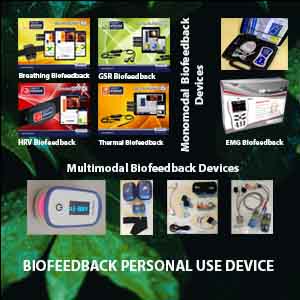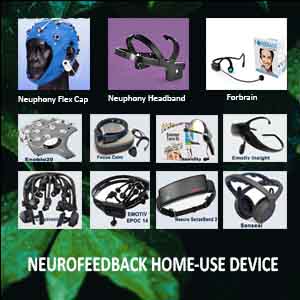
Overwhelmed at Work? Find Balance

Overwhelmed at Work? Find Balance

Feeling overwhelmed at work can leave you drained, anxious, and struggling to keep up with daily demands. When tasks pile up, deadlines loom, or emotional pressure mounts, it’s easy to spiral into overwhelming stress or even overwhelming depression. But there’s a way to break free: learning how to stop getting overwhelmed and how to stop feeling overwhelmed and anxious with effective, science-backed methods. By using biofeedback techniques — including HRV, EMG, and EEG training — you can regain control over your mind and body, reduce stress in real time, and restore focus, energy, and balance at work.

Why Do You Feel Overwhelmed at Work?

When you face ongoing pressure, your brain’s prefrontal cortex—the area responsible for decision-making and focus—starts to fatigue. Meanwhile, your stress centers, including the amygdala, stay highly active. This imbalance triggers that familiar sense of mental chaos, forgetfulness, and irritability.
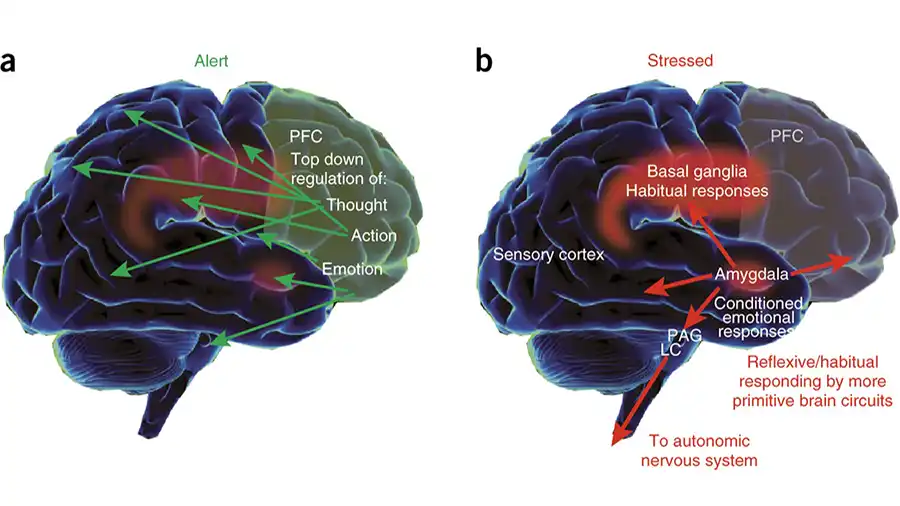
amygdala and the prefrontal cortex under stress

How the Prefrontal Cortex Reacts Under Pressure

The more you try to push through exhaustion, the less efficiently your brain works. Blood flow to the prefrontal cortex decreases, reducing concentration and self-control. You might notice that minor problems feel overwhelming, even if they seemed manageable before.

Understanding the Physiological Roots of Overwhelm

Overwhelm isn’t just “in your head.” It’s a physiological reactiona feedback loop between your mind and body. When your heart rate, muscle tension, and brainwave activity stay elevated for too long, your entire system shifts into a state of stress dominance.

That’s why modern approaches, such as biofeedback training, are so effective. By learning to observe and regulate your body’s stress signals in real time, you can gradually restore calm, focus, and balance at work.

The Difference Between Overwhelmed and Overwhelming

Many people use the words “overwhelmed” and “overwhelming” interchangeably. However, understanding the difference between them can help you recognize your personal stress patterns — and take back control before tension turns into burnout.

Emotional vs. Physiological Overload

When you feel overwhelmed, it’s a personal emotional state — your system is reacting to too much input, too many responsibilities, or too little recovery time.

By contrast, overwhelming describes the external factors, such as demanding projects, constant interruptions, or unrealistic expectations, that push you beyond your comfort zone.

However, these two states are deeply connected. External, overwhelming stressors trigger an internal response of being overwhelmed. Your body mirrors what your mind perceives — heart rate increases, muscles tighten, and your breathing becomes shallow.

External Overwhelm vs Internal Overwhelm

Why “Overwhelming” Stress Feels Different for Everyone

Not everyone reacts to stress in the same way. Some people experience mental overwhelm — racing thoughts, anxiety, or decision paralysis. Others feel it physically — headaches, jaw tension, or fatigue.

Your unique stress pattern depends on how your nervous system processes stimuli and how quickly your body can return to balance after pressure.

That’s where biofeedback modalities can help. They don’t mask symptoms — they help you see how your body reacts to stress and teach you to control those reactions.

Recognizing Your Body’s Early Warning Signals

Learning to detect early signs of overwhelm is crucial. Watch for minor changes such as irregular breathing, increased muscle tension, or difficulty focusing.

Through tools like:

  • HRV biofeedback, you can observe how your heart rhythm changes during stress;
  • EMG biofeedback, you can detect when your muscles remain tensed even when you think you’re relaxed;
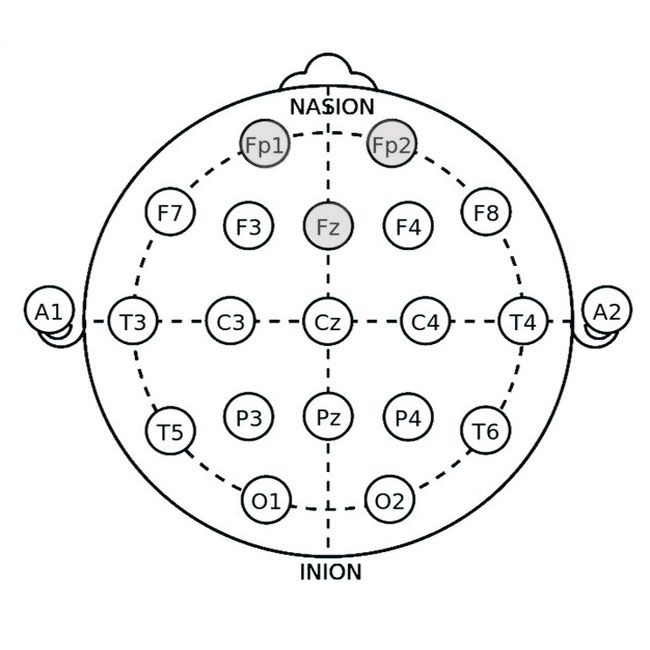
  • EEG neurofeedback, you can monitor when your brain slips into high-stress activity patterns.

Recognizing these signals helps you intervene early — before stress becomes overwhelming.
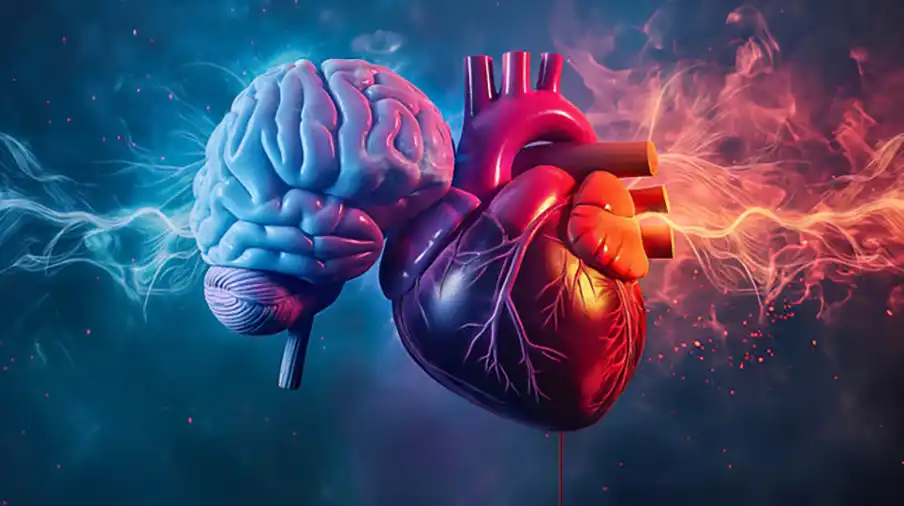
Mind–body connection for overwhelming management

Common Triggers of Overwhelming Work Stress

Feeling overwhelmed at work often starts with minor, unnoticed stressors that gradually accumulate. While each person’s triggers are unique, most workplace overwhelm stems from a mix of cognitive overload, emotional strain, and physical tension. Recognizing these triggers is the first step toward regaining control.
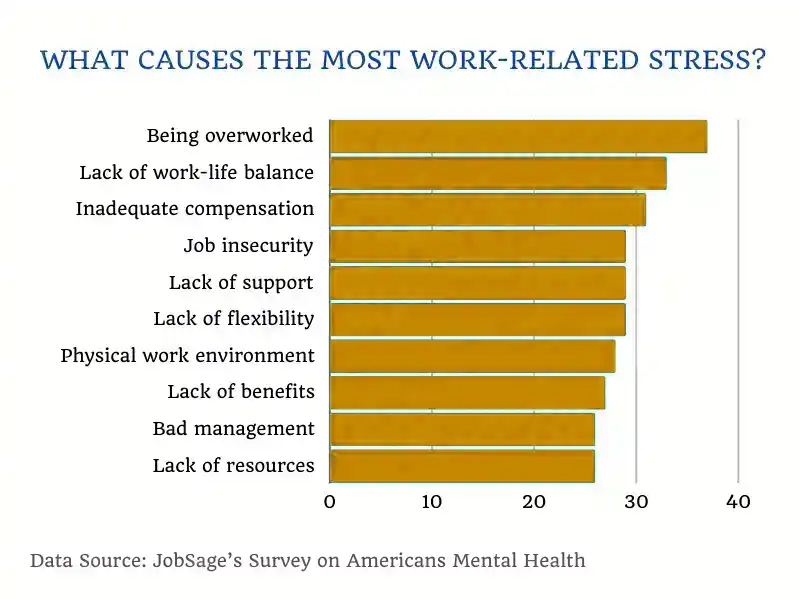
Work-related stress common causes

Digital Overload, Multitasking, and Burnout

The modern work environment rarely allows your brain to rest. Switching between messages, meetings, and deadlines keeps your nervous system in a constant state of alertness. This continuous multitasking can drain your attention, deplete mental energy, and lead to chronic fatigue.

Your brain perceives this ongoing stimulation as overwhelming — similar to facing a real threat. That’s why even minor setbacks can suddenly feel impossible to manage.

Perfectionism and Lack of Recovery Time

High achievers often push themselves too far. The pressure to perform perfectly creates a relentless internal dialogue: “I must do more.” Over time, this mindset prevents recovery and maintains elevated stress responses.
Without moments of relaxation, your autonomic nervous system stays imbalanced — your body doesn’t shift back into calm mode. This imbalance can be tracked through HRV biofeedback, which measures your heart’s adaptability to stress and rest. By observing your HRV patterns, you can see when your system needs recovery time.

How Physical Tension and Poor Breathing Worsen Overwhelm

Chronic stress isn’t just mental — it manifests in your body. Tight shoulders, jaw clenching, or shallow breathing are physical signs that your muscles and diaphragm remain in a state of stress.

Using EMG biofeedback, you can detect hidden muscle tension, even when you’re unaware of it. Pairing EMG with slow breathing or HRV training teaches your body to release stress and restore balance.

Over time, this practice helps break the cycle of overwhelming work stress by teaching your body how to transition from the “fight or flight” response to a state of “rest and recovery.”

How Overwhelming Emotions Impact Mental Health

When work-related pressure persists without relief, emotional and physical stress begin to merge. You might feel not only mentally overwhelmed but also emotionally drained, anxious, or detached. These are early signs that your body’s stress regulation system is overloaded — and that your emotional resilience is weakening.
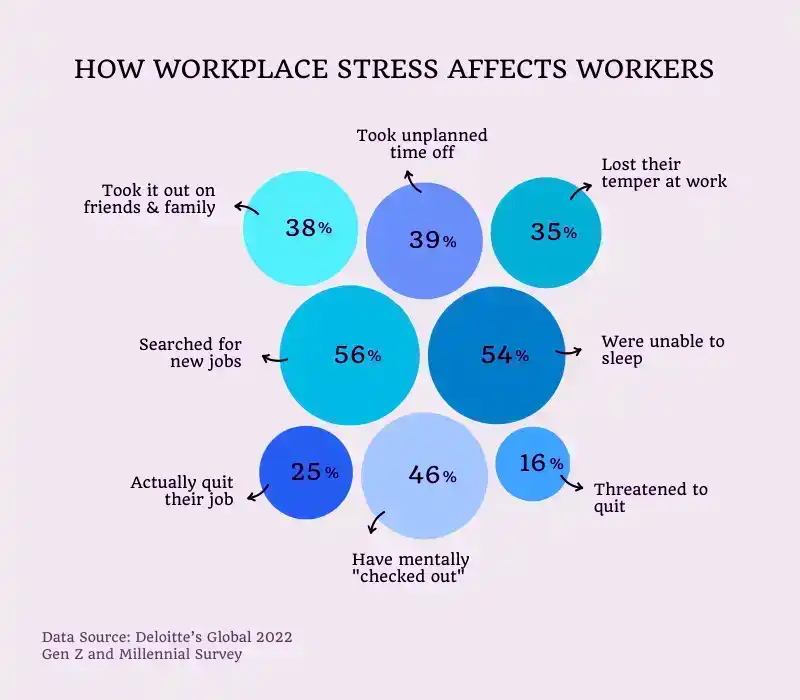
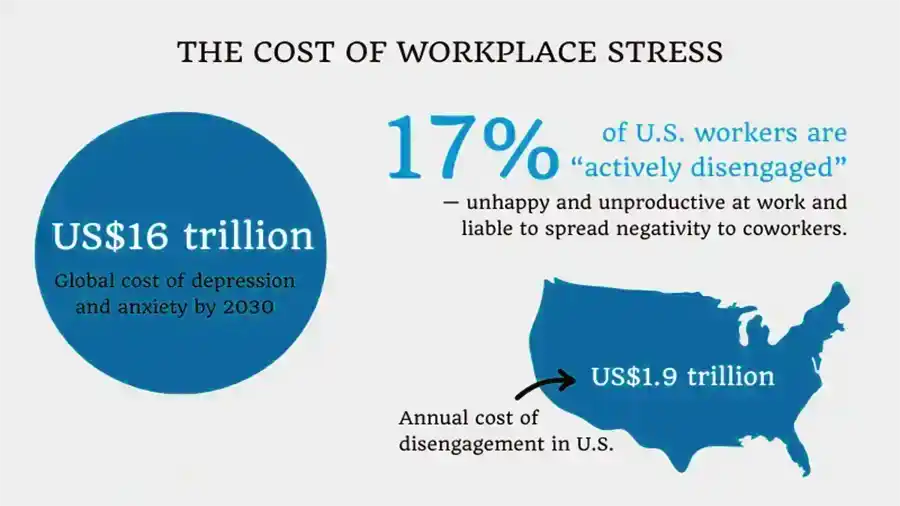
workplace stress overwhelming effects

When Chronic Stress Leads to Overwhelming Depression

Prolonged stress exhausts your brain’s ability to manage emotions. Over time, the same chemical imbalance that helps you stay alert during pressure can begin to suppress your mood.

You may start to experience overwhelming depression — a state where sadness, hopelessness, and mental fatigue take over your thoughts.

During this stage, the stress response becomes self-sustaining. Even small triggers can elicit significant emotional reactions because the nervous system has become accustomed to relying on external stimuli to calm itself.

Here, EEG neurofeedback can play an important role. By showing how your brain waves change during stress, it helps you retrain your mind to return to balanced, calm activity.

The Anxiety–Stress Feedback Loop

Stress and anxiety form a powerful feedback loop. Anxiety makes you more sensitive to stress, and stress amplifies anxiety. When this loop becomes continuous, it can distort perception, making everyday challenges feel overwhelming.

HRV biofeedback helps interrupt this cycle by improving your body’s natural stress resilience. Training your heart to maintain a stable rhythm, even under pressure, enhances your ability to manage emotional reactions. As your HRV improves, your emotional stability increases, too.

How Biofeedback Helps Break Emotional Overwhelm

Unlike temporary relaxation techniques, biofeedback training teaches you self-regulation. It builds awareness of your body’s real-time signals — your breathing, heart rhythm, or brainwave patterns — and guides you to bring them back into balance.

When practiced regularly, these methods help reduce emotional overload, clear mental fog, and restore a sense of inner control. This is the foundation for lasting relief from overwhelming emotions and workplace burnout.

How to Stop Getting Overwhelmed at Work with Biofeedback

When pressure builds and you feel overwhelmed at work, pushing harder rarely helps. The real solution lies in teaching your body and brain how to recover faster from stress. That’s precisely what biofeedback training does — it gives you tools to recognize your stress reactions and retrain them toward calm, balance, and focus.

Through HRV, EMG, and EEG biofeedback, you can learn to manage your physiological responses instead of being ruled by them. Let’s see how each modality helps you regain control and avoid feeling overwhelmed at work.

HRV Biofeedback: Train Your Heart to Stay Calm Under Pressure
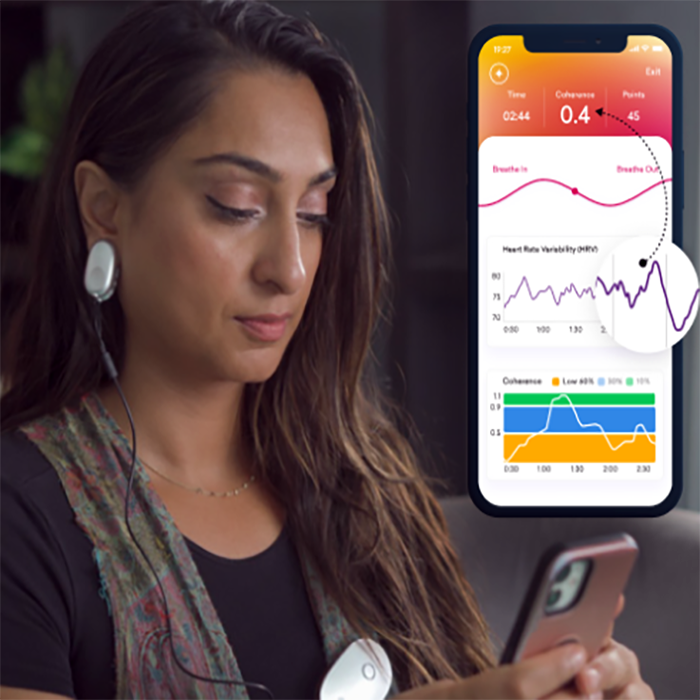
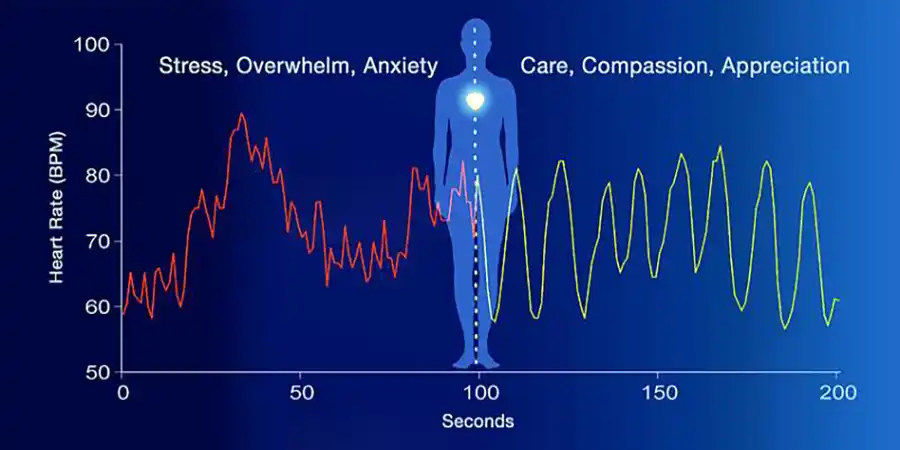
Your heart rhythm reflects your emotional state. When you’re calm, your heart rate variability (HRV) — the subtle changes between each heartbeat — increases, signaling that your nervous system is flexible and adaptive.
However, when stress takes over, HRV drops, indicating that your system is stuck in the “fight-or-flight” mode.

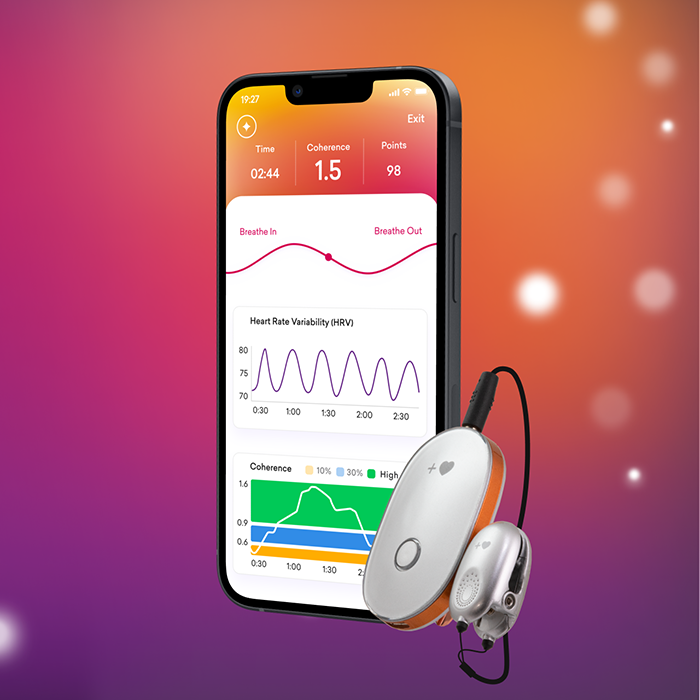
Using HRV biofeedback devices, such as HeartMath Inner Balance, you can visualize these changes in real-time. As you practice slow, rhythmic breathing, your HRV patterns become smoother.

Over time, your heart and mind learn to remain calm even during tense meetings, deadlines, or unexpected challenges.

This is one of the fastest and most evidence-based ways to overcome feelings of overwhelm at work — by teaching your body how to return to coherence on demand.

EMG Biofeedback: Release Hidden Muscle Tension Before Burnout

When stress builds up, your muscles hold onto it. You may not notice tight shoulders, clenched jaws, or tension headaches until they become painful. EMG biofeedback helps you detect this tension before it leads to fatigue or burnout.

With sensors that measure electrical activity in the muscles, EMG training teaches you how to relax specific areas consciously. By pairing this with breathing or stretching exercises, you can reduce muscle strain and restore physical comfort, which in turn reduces feelings of mental overwhelm.

This form of feedback helps translate awareness into control, creating a real sense of balance between body and mind.

EEG Neurofeedback: Restore Mental Clarity and Focus at Work

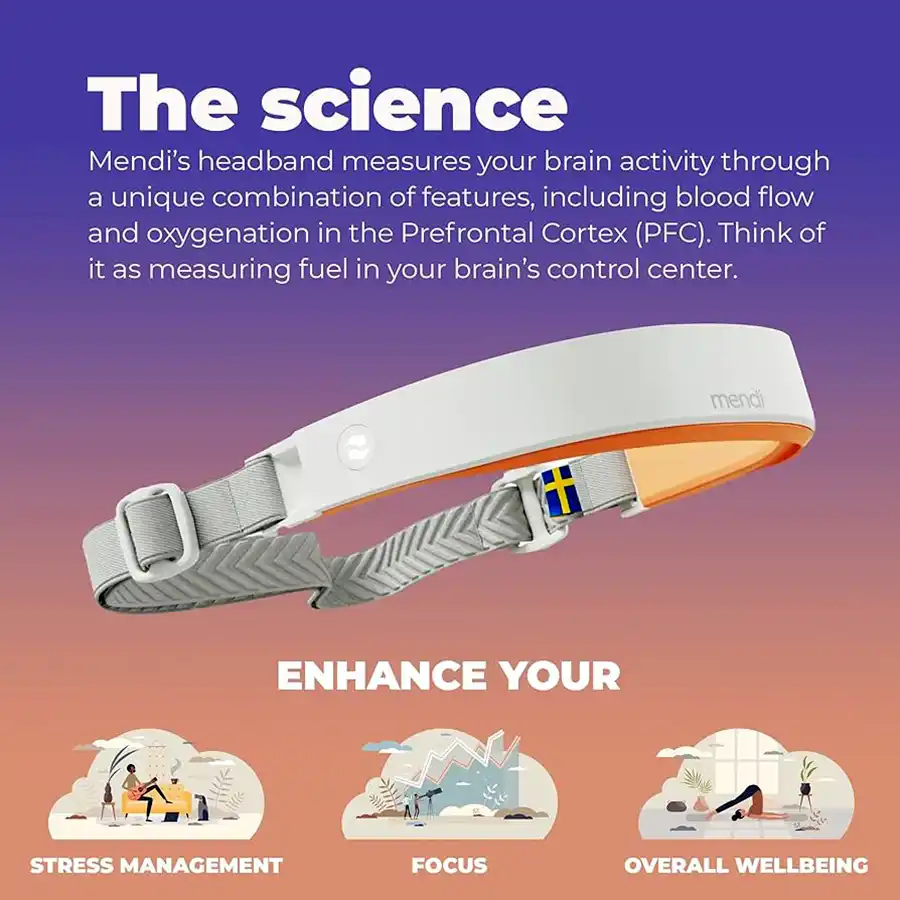
When your mind feels scattered, unfocused, or overstimulated, EEG neurofeedback can help you re-center. It monitors your brainwave activity and provides instant feedback through visual or auditory cues.
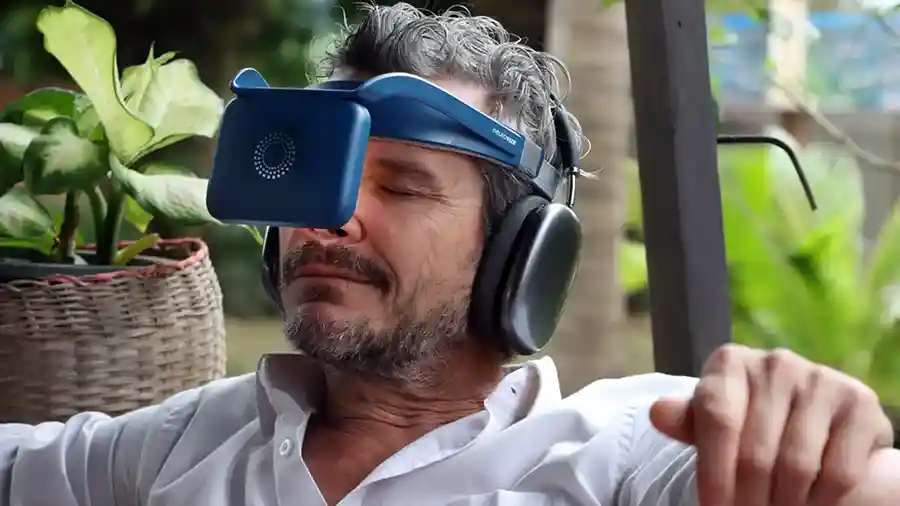
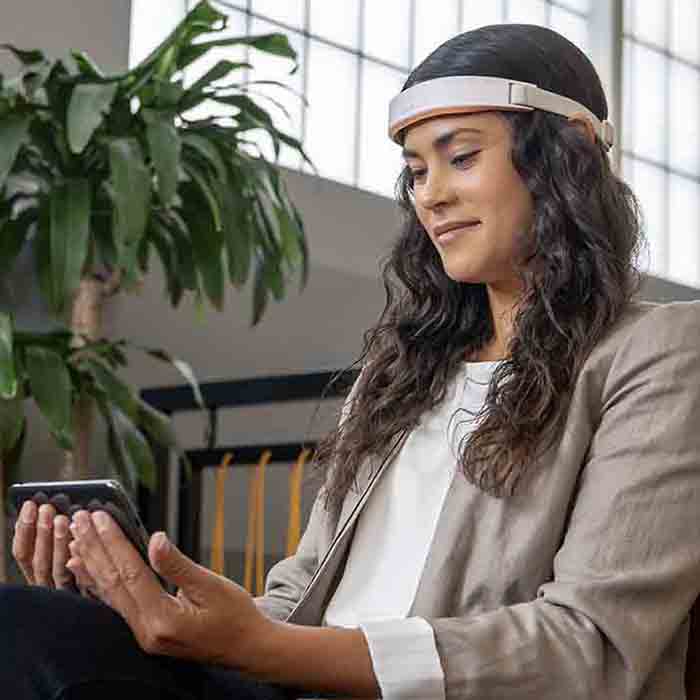
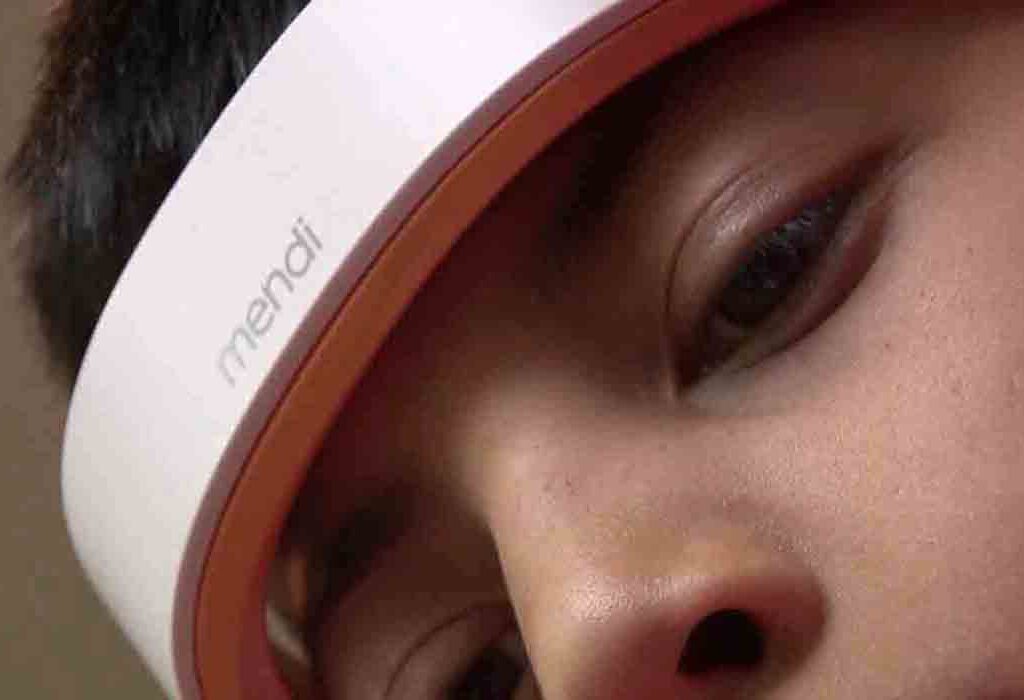
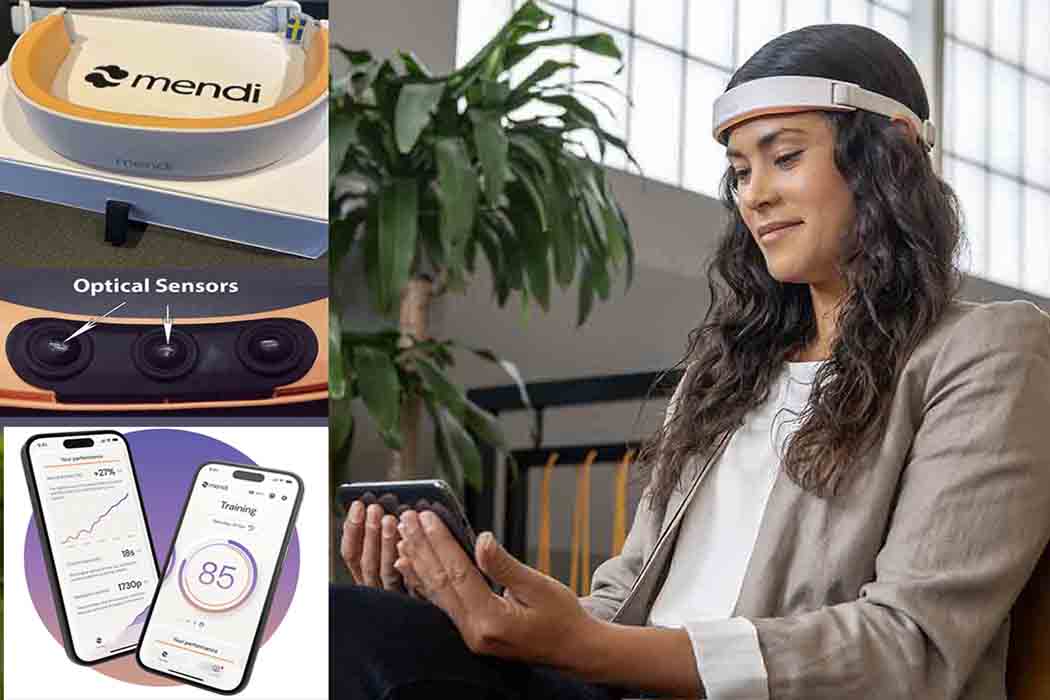
Over time, your brain learns to produce patterns associated with calm focus, reducing mental clutter, impulsivity, and fatigue. Devices like the Mendi Headband make this training accessible even at home or in the office.

By combining EEG neurofeedback with HRV or EMG sessions, you engage your whole mind–body system, creating a resilient response to work stress. The result is a clear, steady focus instead of chronic overwhelm.
How to Stop Feeling Overwhelmed and Anxious Using Biofeedback?

Feeling overwhelmed and anxious is more than just mental strain — it’s a full-body response. Your nervous system reacts automatically, often before you even realize it. Biofeedback teaches you to recognize these signals early and intervene, giving you control over anxiety instead of letting it control you.

By combining HRV, EMG, and EEG biofeedback, you can address both the emotional and physical components of overwhelm.

HRV Coherence Training for Anxiety Reduction

Anxiety triggers irregular heart rhythms, shallow breathing, and heightened alertness. With HRV biofeedback, you can train your heart to stay in a coherent rhythm even under stress.

Practicing HRV exercises for just a few minutes a day helps calm the nervous system, reducing anxious thoughts and creating a sense of inner stability. Over time, your body learns to respond to workplace challenges without triggering full-blown stress reactions.
HRV Biofeedback - How to stop getting overwhelmed

Real-Time Feedback to Calm the Mind and Balance Emotions

Biofeedback provides immediate insight into how your body reacts to stress. Whether it’s a tense muscle spike detected by EMG, a racing heartbeat monitored with HRV, or brainwave activity via EEG, you receive instant cues to adjust your response.

This real-time awareness helps you break the cycle of anxiety before it escalates into overwhelming emotions.

Combining EEG and Breathing Exercises for Faster Recovery

Adding EEG neurofeedback to breathing and HRV training accelerates your recovery from overwhelm. For example, while HRV helps maintain a coherent heart rhythm, EEG feedback teaches the brain to stay focused, calm, and emotionally stable.

Practicing these modalities together strengthens your mind–body connection. You regain mental clarity, reduce anxiety, and develop a resilient response to work stress — turning overwhelm into a manageable challenge rather than a debilitating obstacle.

Effective Daily Habits to Prevent Overwhelm

Preventing overwhelm isn’t just about managing crises — it’s about building daily routines that protect your mental and physical energy. By incorporating biofeedback practices into your daily routine, you can train your body and mind to remain calm and resilient, even during demanding workdays.

How Short HRV Sessions Reset Your Nervous System

Even five minutes of HRV biofeedback in the morning or during breaks can reset your autonomic nervous system. By practicing slow, rhythmic breathing while monitoring your heart rhythm, you signal to your body that it’s safe to relax.

Regular sessions improve your baseline resilience, making it easier to stay focused and composed when new tasks or unexpected pressures arise.

Pairing Mindfulness with Biofeedback Tracking

Mindfulness alone is helpful, but pairing it with biofeedback devices amplifies the results. Monitoring your physiological signals while practicing meditation or mindful breathing gives you immediate feedback, helping you recognize when your mind wanders or tension rises.

Over time, this combination strengthens your ability to maintain calm focus — a critical skill for preventing workplace overwhelm.

Building Long-Term Emotional Resilience at Work

Consistency is key. By creating a daily habit of:

  • HRV sessions in the morning,
  • EMG exercises for muscle relaxation,
  • Short EEG neurofeedback sessions to enhance focus,
    …you cultivate a resilient nervous system. These routines make stress easier to manage and reduce the risk of overwhelming emotions escalating into burnout or depression.

Mindfulness, Breathing, and Biofeedback for Stress Relief

Mindfulness and controlled breathing are powerful tools for managing work-related stress, but their effects are amplified when paired with biofeedback technologies. This combination trains your body and mind to recognize stress signals and respond effectively, rather than reacting automatically.

How Biofeedback Enhances Mindfulness Benefits

Mindfulness teaches awareness of thoughts and sensations, but it can be difficult to measure whether your body is truly relaxing. Biofeedback devices — like HRV sensors or EMG monitors — provide real-time data on your physiological state.

For example, you might notice your heart rate spikes or your muscles tense even while you think you’re calm. By observing these signals, you can adjust your breathing, posture, or focus, making mindfulness practice far more effective.

HRV and Breathing Sensors for Real-Time Calm

HRV biofeedback tools track the subtle variations in your heartbeat, showing exactly how your nervous system responds to stress. Combined with slow, rhythmic breathing, HRV feedback helps you enter a coherent state quickly, reducing anxiety and improving focus.

Even a few minutes of practice at your desk can lower stress hormones, release tension, and restore mental clarity — turning overwhelming tasks into manageable ones.

Why Feedback-Based Relaxation is More Effective than Guesswork

Traditional relaxation often relies on intuition — “I think I’m breathing slowly enough.” Biofeedback replaces guesswork with objective, measurable feedback.

Whether it’s EMG for muscle tension, EEG for brainwave regulation, or HRV for heart coherence, these tools train your body to self-regulate. Over time, your nervous system becomes resilient, and stress becomes something you can manage rather than be controlled by.

When Overwhelming Depression Requires Support

Sometimes, feeling overwhelmed at work or experiencing ongoing stress evolves into something more serious — like overwhelming depression. Recognizing when self-help strategies aren’t enough is crucial for protecting your mental health and ensuring long-term recovery.

How Biofeedback Complements Professional Therapy

Biofeedback is a powerful tool for self-regulation, but it is most effective when used as part of a comprehensive support plan. HRV, EMG, and EEG training can help reduce stress, anxiety, and muscle tension, allowing you to regain control over your emotional responses.

When paired with therapy or counseling, biofeedback enhances awareness, accelerates recovery, and provides measurable progress that reinforces traditional treatments.

Using Neurofeedback for Emotional Regulation

EEG neurofeedback is beneficial for regulating mood and focus. By providing real-time feedback on your brainwave activity, you can strengthen patterns associated with calmness, concentration, and emotional stability.

For individuals struggling with overwhelming depression, this method offers a gentle, non-invasive way to train the brain to respond more adaptively to stress.

Seeking Help When Technology Alone Isn’t Enough

While biofeedback is highly effective for many, severe or persistent depression may require professional intervention. Watch for warning signs such as:

  • Persistent sadness or hopelessness
  • Loss of interest in work or hobbies
  • Difficulty functioning at work or home
    If these symptoms occur, consult a mental health professional. Using biofeedback alongside therapy can accelerate recovery and prevent relapse, helping you regain both emotional balance and workplace productivity.

From Overwhelmed to Empowered: Regain Control at Work

Moving from feeling overwhelmed at work to confident, focused, and calm is possible — especially when you combine daily habits with biofeedback training. This chapter summarizes practical strategies to help you regain control and create lasting balance.

Using Biofeedback to Build Mental Strength and Focus

EEG neurofeedback helps your brain develop patterns associated with calm focus and emotional stability. Paired with HRV and EMG biofeedback, you can train your entire mind–body system to respond effectively to workplace stress.

The key is regular practice. Even brief sessions can yield measurable improvements in concentration, emotional regulation, and stress resilience.

Rewiring Your Stress Response for Long-Term Balance

Biofeedback doesn’t just help in the moment — it reconditions your nervous system. Over time, your body learns to maintain coherence in the face of pressure:

  • Your heart rate remains steady (HRV coherence)
  • Muscle tension reduces automatically (EMG awareness)
  • Your brain stays in calm, focused patterns (EEG stability)
    This rewiring allows you to handle work demands without feeling overwhelmed or anxious.

How Self-Regulation Technology Boosts Performance

By integrating biofeedback into your routine, you transform overwhelm into opportunity. You gain:

  • Clearer thinking under pressure
  • Better emotional control
  • Greater physical comfort and energy
  • Long-term resilience against workplace stress
    Ultimately, combining HRV, EMG, and EEG biofeedback with mindfulness, breathing exercises, and structured daily habits creates a complete system for empowerment. You move from surviving stress to thriving at work, achieving focus, balance, and confidence.

FAQ

Why do I feel so overwhelmed at work?

Feeling overwhelmed at work often happens when job demands exceed your mental or physical capacity. Deadlines, multitasking, and emotional pressure can trigger stress responses in the brain and body. With biofeedback training (HRV, EMG, EEG), you can learn to detect early stress signals and regulate your nervous system before burnout occurs.

How can I stop getting overwhelmed every day?

To avoid feeling overwhelmed, begin by managing your body’s stress signals. HRV biofeedback helps balance your heart rate and breathing, EMG biofeedback teaches muscle relaxation, and EEG neurofeedback enhances focus and calm. Practicing these techniques daily helps your mind and body stay resilient under pressure.

What’s the difference between stress and overwhelming anxiety?

Stress is a natural reaction to challenges, while overwhelming anxiety occurs when your body stays in a prolonged state of tension and alertness. Biofeedback helps you recognize when stress is turning into anxiety — by showing real-time changes in your heart rate, muscle tension, and brainwaves — so you can restore balance quickly.

What is the best way to stop feeling overwhelmed and anxious?

The most effective approach combines slow breathing, mindfulness, and biofeedback. Using HRV and EEG devices, you can track your body’s response to stress in real-time and train yourself to return to a calm, balanced state. Over time, you’ll feel less anxious and more in control at work and in daily life.

How long does it take to see results from biofeedback training?

Most people notice improvements within 2–4 weeks of consistent biofeedback practice. You’ll start feeling less tense, more focused, and better able to handle overwhelming work stress. The longer you practice, the more natural self-regulation becomes.

References

  1. Yu, B. (2018). Biofeedback for Everyday Stress Management. Frontiers in ICT.
  2. Tosti, B., et al. (2024). Integrated use of biofeedback and neurofeedback techniques in treating pathological conditions and improving performance: a narrative review.
  3. Kramar, M., et al. (2025). The Applications of the Mindfulness-Based Cognitive Therapy and HRV Biofeedback in Modern Psychotherapy.
  4. Ratanasiripong, P., et al. (2015). Biofeedback Intervention for Stress, Anxiety, and Depression among Graduate Students in Public Health Nursing.
  5. Schmidt, K., et al. (2025). Biofeedback Training in Inpatient Mental Health Facilities: A Scoping Review.
  6. Gevirtz, R. (2013). The Promise of Heart Rate Variability Biofeedback.
  7. Cleveland Clinic. (2025). Biofeedback: What It Is, Purpose, Procedure, Risks & Benefits.
Stop Overthinking: Retrain Your Brain

Stop Overthinking: Retrain Your Brain

Do you constantly feel trapped in a cycle of racing thoughts and mental fatigue? Understanding what causes overthinking is the first step toward regaining control of your mind. Many people struggle daily without realizing that effective overthinking treatment exists. From stress and decision paralysis to sleepless nights, the consequences are real—but they are not inevitable. With targeted overthinking therapy, including cutting-edge biofeedback methods like HRV and neurofeedback, you can finally stop overthinking, retrain your brain, and regain mental clarity.

Introduction: Tired of Your Racing Mind? Here’s a Science-Backed Solution

Do you find yourself stuck in endless loops of worry, overanalyzing every decision, or replaying conversations in your head? You’re not alone. Millions struggle daily with racing thoughts, and it can leave you feeling exhausted, stressed, and stuck.

The good news? You don’t have to live this way. Science-backed biofeedback techniques—like HRV, neurofeedback, and breathing training—offer a proven path to calm your mind, restore focus, and regain control over your thoughts. Unlike generic advice or quick-fix hacks, biofeedback-based overthinking therapy trains your brain to respond differently to stress, providing you with tools to address overthinking at its root.

In this guide, we’ll explore the causes of overthinking, explain how targeted overthinking treatment works, and demonstrate the most effective biofeedback modalities to retrain your brain and regain mental clarity.

What Causes Overthinking

Overthinking often feels automatic, but understanding what causes overthinking is key to breaking the cycle. Several factors contribute to this mental pattern:

1. Stress and Anxiety
High stress levels trigger your brain’s “fight or flight” response, making it challenging to stop racing thoughts. Even small decisions can feel overwhelming, leading to persistent overthinking.

2. Perfectionism and Fear of Mistakes
People who set extremely high standards often replay scenarios in their minds, worrying about outcomes or potential errors. This pattern fuels overthinking therapy needs.

3. Past Experiences and Trauma
Unresolved experiences, past failures, or emotional trauma can make the brain hyper-focused on potential problems, causing repeated cycles of thought.

4. Lack of Mental Training
Without strategies to regulate attention and stress, the brain can default to repetitive thinking patterns. This is where structured overthinking treatment, such as biofeedback, comes in.

5. Environmental and Lifestyle Factors
Excessive screen time, poor sleep, and constant stimulation can worsen overthinking, creating a feedback loop that keeps the mind active even when rest is needed.

Understanding these causes is the first step toward effective intervention. By identifying triggers and patterns, you can target your overthinking with therapies that are proven to retrain your brain, calm your mind, and restore focus.

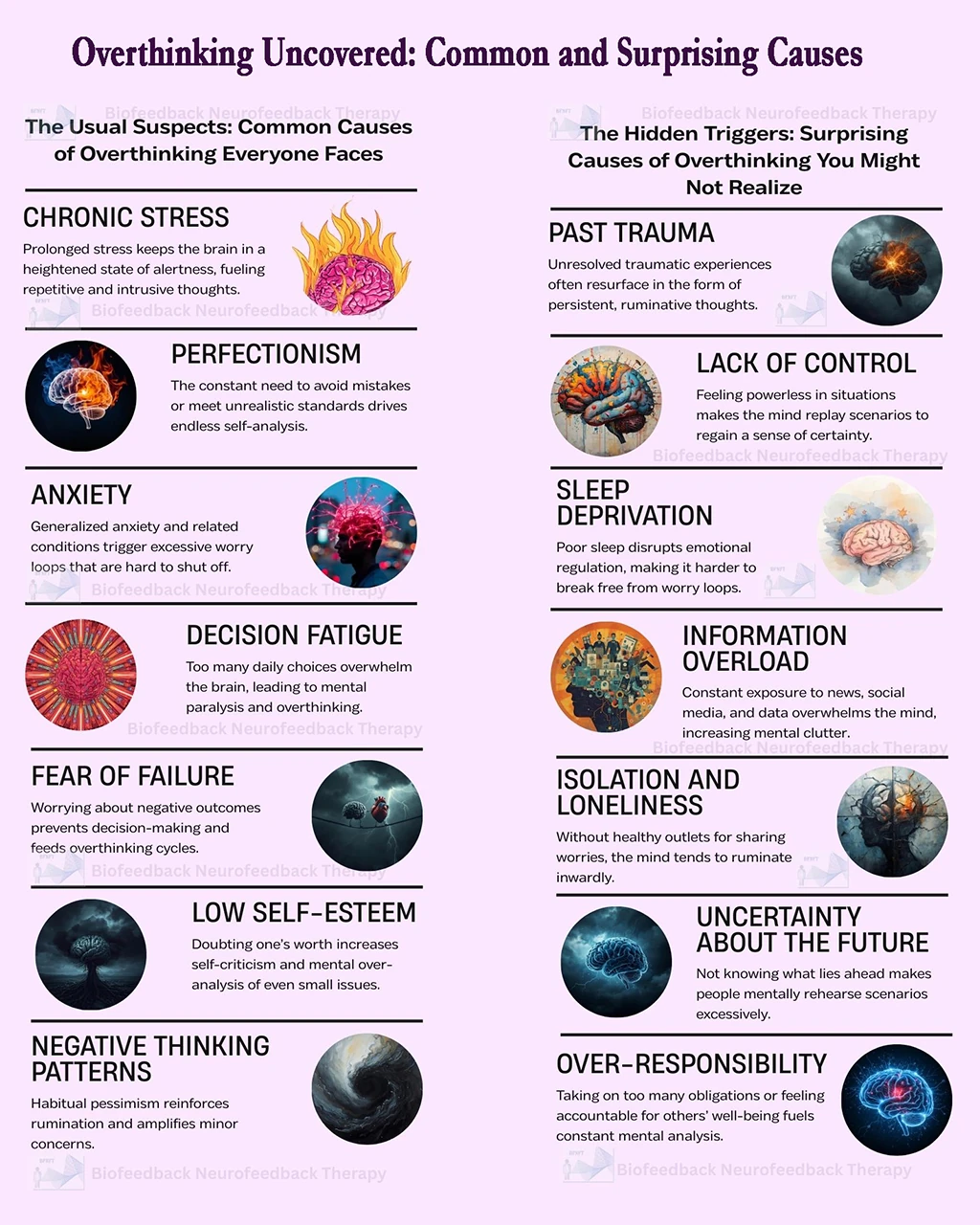
Causes of Overthinking

Signs You Need Overthinking Therapy

Overthinking isn’t just “thinking too much.” It’s a pattern that quietly takes over your mind, leaving you exhausted, stressed, and stuck in mental loops you can’t escape. Recognizing the signs early is the first step toward effective overthinking therapy or overthinking treatment. Here are the key indicators:

Persistent Racing Thoughts

Does your mind feel like it’s constantly spinning, reviewing conversations, decisions, or “what if” scenarios? Persistent racing thoughts can leave you mentally drained, even when nothing significant is happening in your life. Overthinking creates a loop where your brain gets stuck analyzing every detail—sometimes for hours—making it hard to relax or enjoy the present moment.

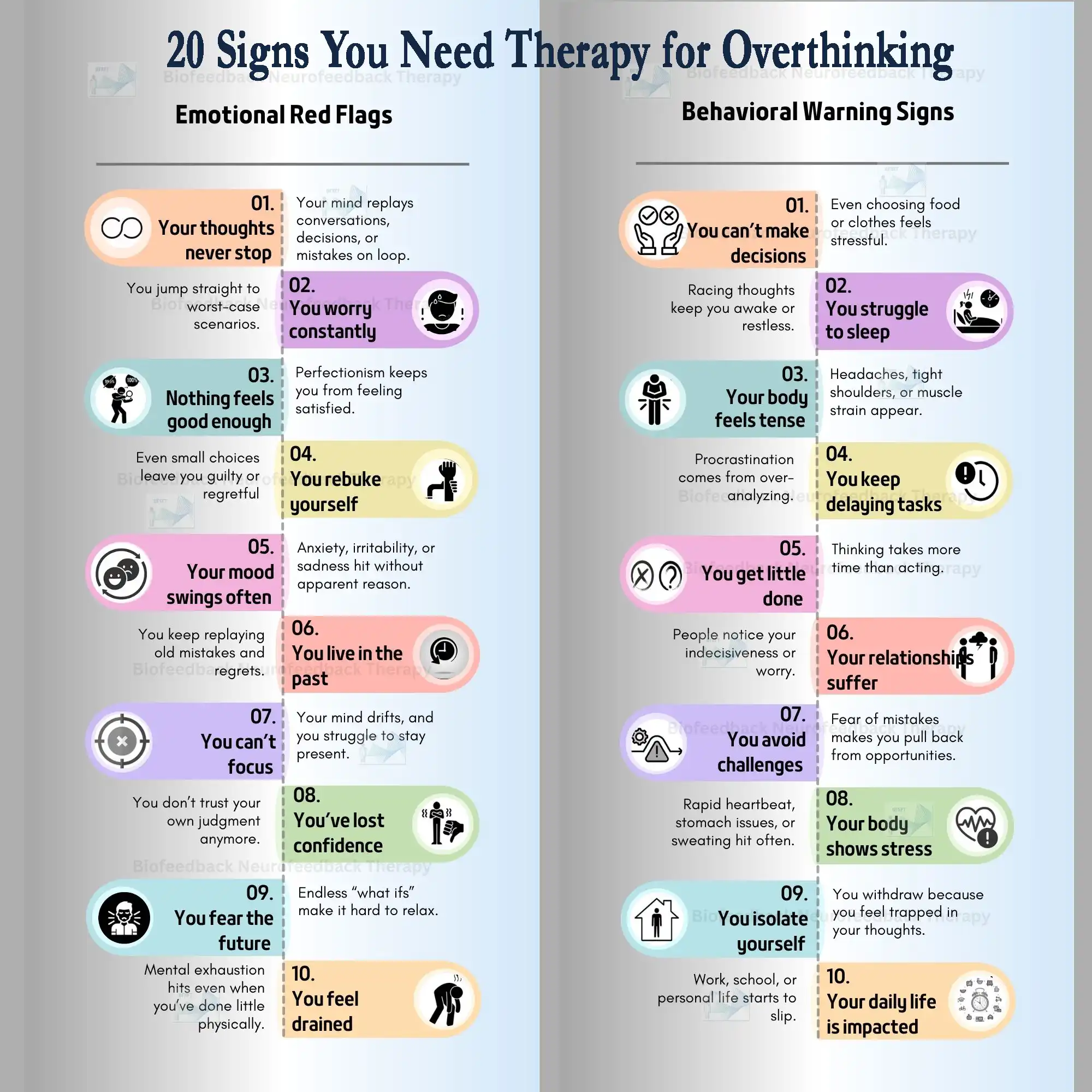
20 Signs of Overthinking Therapy

Difficulty Making Decisions

Even simple choices can feel overwhelming. “Should I respond to that email?”, “What if I make the wrong move?”. This paralysis by analysis is a hallmark of overthinking. When every decision feels monumental, it can stop you from taking action or even enjoying everyday life. Early intervention through biofeedback therapy can help your brain learn to respond calmly, rather than spiraling into a state of uncertainty.

Trouble Sleeping or Resting

Lying in bed, your thoughts race from task to task, memory to memory, worry to worry. Insomnia or restless sleep often accompanies excessive worrying or overthinking. This creates a vicious cycle: the less rested you are, the more your brain struggles to manage thoughts, which in turn exacerbates overthinking. Therapies like HRV and neurofeedback can help regulate the nervous system, allowing your mind and body to rest truly.

Physical Symptoms of Stress

Overthinking doesn’t stay in your head—it shows in your body. Tension headaches, tight shoulders, digestive discomfort, and even increased heart rate are signs that mental stress is translating into physical strain. With biofeedback treatment, you can actually monitor these bodily responses and learn to reduce them, giving you a tangible way to calm both mind and body.

Emotional Overload

Feeling irritable, anxious, or on edge over small things? Overthinking amplifies emotional reactions, making everyday stressors feel unbearable. When your emotions feel out of control, it’s a clear signal that targeted overthinking therapy is needed to retrain how your brain processes stress.

Recognizing these signs is not about labeling yourself—it’s about taking control. With the right biofeedback therapies, including HRV, neurofeedback, and breathing exercises, you can break the cycle of overthinking, reduce stress, and regain focus. The earlier you notice these patterns, the faster you can retrain your brain for clarity, calm, and emotional balance.

Biofeedback as an Overthinking Treatment

Imagine if you could see your stress and overthinking patterns in real-time—and then train your brain to respond differently. That’s precisely what biofeedback offers. Unlike generic advice or temporary coping strategies, biofeedback provides a science-backed, measurable approach to stop overthinking and retrain your brain’s responses to stress.

How Biofeedback Works

Biofeedback uses sensors to monitor your body’s physiological signals—like heart rate, muscle tension, skin conductance, and brainwaves—and gives you instant feedback. This process makes invisible stress and overthinking patterns visible, so you can learn to control them.

For example, when your heart rate spikes during anxious thoughts, HRV (Heart Rate Variability) biofeedback can teach your nervous system to calm down. Over time, your brain learns healthier responses to stress, reducing racing thoughts and mental loops that fuel overthinking.

Why Biofeedback is Effective for Overthinking Therapy

Traditional approaches, such as journaling or meditation, can be helpful, but they rely heavily on self-awareness and discipline. Biofeedback enhances these efforts by providing objective, real-time data. With consistent training, you gain:

  • Greater mental clarity and focus
  • Reduced emotional reactivity
  • Improved decision-making
  • Enhanced sleep quality

Types of Biofeedback Modalities for Overthinking

Not all overthinking is the same, and that’s why different biofeedback modalities target specific patterns in your mind and body. Each method provides unique insights and tools to help you stop overthinking effectively. Here’s a closer look:

HRV (Heart Rate Variability) Biofeedback

Your heart doesn’t just pump blood—it reflects your emotional and mental state. HRV biofeedback trains your heart and nervous system to respond calmly to stress. By practicing controlled breathing and monitoring your heart’s rhythms, you can reduce anxiety, enhance focus, and break cycles of persistent overthinking.

Neurofeedback Therapy

Neurofeedback works directly with your brainwaves, helping your mind learn healthier patterns of thought. For overthinkers, this can mean reducing excessive mental chatter, improving concentration, and fostering a sense of calm. Over time, neurofeedback can retrain the brain to process information more efficiently, making overthinking therapy measurable and effective.

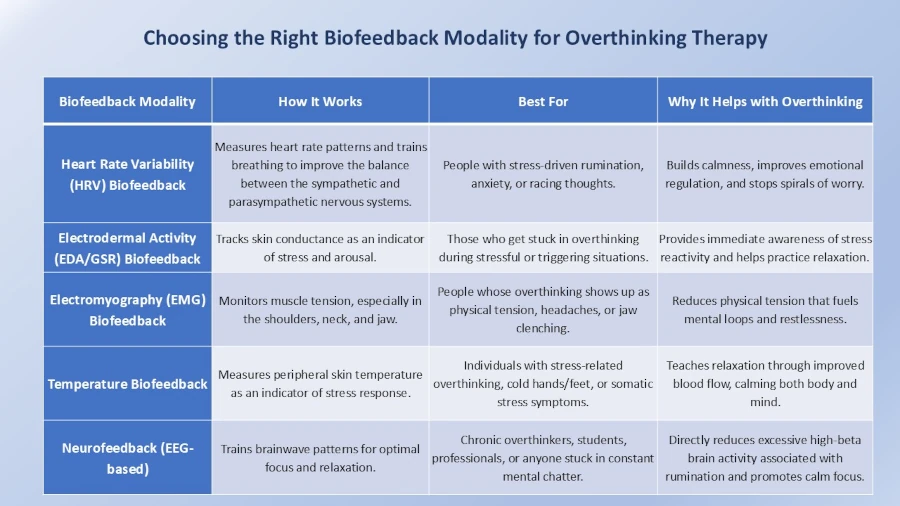
Biofeedback Modalities for Overthinking Therapy

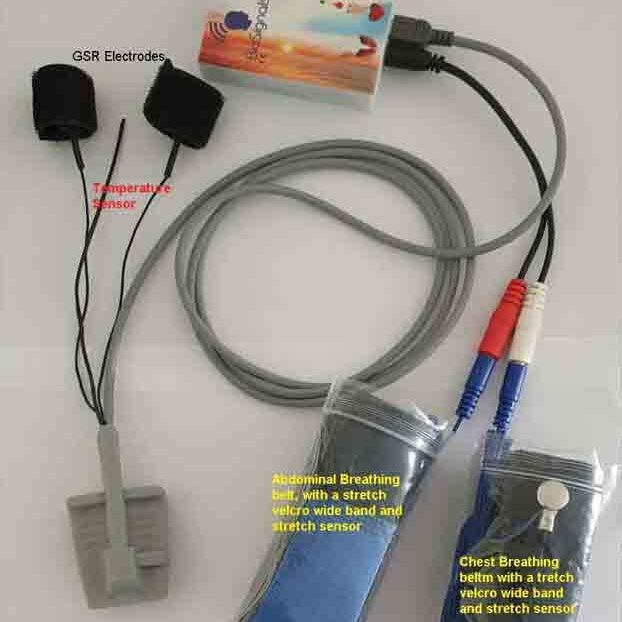
Breathing Biofeedback

Simple but powerful, breathing biofeedback teaches you to control your respiration in response to stress. Monitoring your breath in real-time helps your nervous system relax, lowering tension and slowing racing thoughts. This modality is perfect for moments of acute anxiety or when you notice yourself spiraling into overthinking loops.

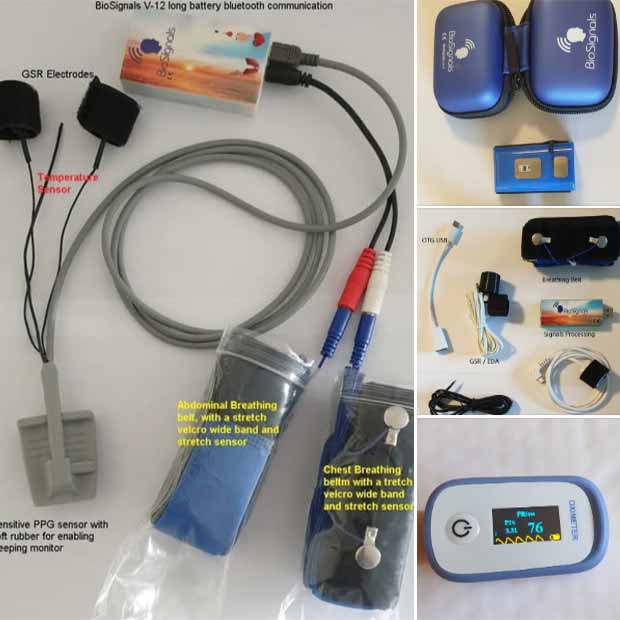
GSR (Galvanic Skin Response) Biofeedback

Your skin reacts to stress through tiny electrical changes triggered by the activity of your sweat glands. GSR biofeedback monitors these changes, providing you with instant insight into how your body responds to stressors. With practice, you can learn to modulate your responses, reducing anxiety-driven overthinking before it escalates.

Temperature Biofeedback

Temperature biofeedback monitors changes in skin temperature, which often drops when the body is stressed. By learning to regulate this response, you can improve relaxation, reduce tension, and regain control over your mind during stressful situations.

EMG (Muscle) Biofeedback

Muscle tension often accompanies overthinking, especially in the shoulders, neck, and jaw. EMG biofeedback helps you recognize and release these physical tensions, which in turn calms the mind. Reducing bodily stress creates a feedback loop that makes it easier to stop overthinking naturally.

How to Start Overthinking Therapy with Biofeedback

Starting overthinking therapy may feel overwhelming at first—after all, your mind has been running nonstop for years. The good news is that biofeedback provides structured, science-backed tools to help you gradually stop overthinking and retrain your brain. Here’s how to get started:

Identify the Right Modality for You

Not every biofeedback tool is effective for everyone. Consider your primary overthinking triggers:

  • Mental stress and racing thoughts: Neurofeedback or HRV biofeedback can help calm your mind.
  • Physical tension and stress responses: EMG, GSR, or temperature biofeedback may be ideal.
  • Acute anxiety or breathing patterns: Breathing biofeedback offers immediate relief.
    Choosing the right modality ensures that your therapy addresses the specific aspects of overthinking affecting your life.

Decide Between At-Home vs. Professional Sessions

Many biofeedback devices are available for home use, allowing you to practice daily at your own pace. Professional sessions, on the other hand, offer guided instruction, personalized adjustments, and detailed progress monitoring. Some people combine both approaches to maximize benefits.

Set a Consistent Practice Routine

Biofeedback works best with regular practice. Even 10–20 minutes a day can create noticeable changes in your nervous system and brain patterns. Think of it like physical exercise: consistency is what retrains your brain and reduces overthinking.

Track Your Progress

One of the most significant advantages of biofeedback is the measurable results it provides. Monitor your heart rate, brainwaves, or muscle tension over time. Seeing tangible improvements reinforces your practice and motivates you to continue.

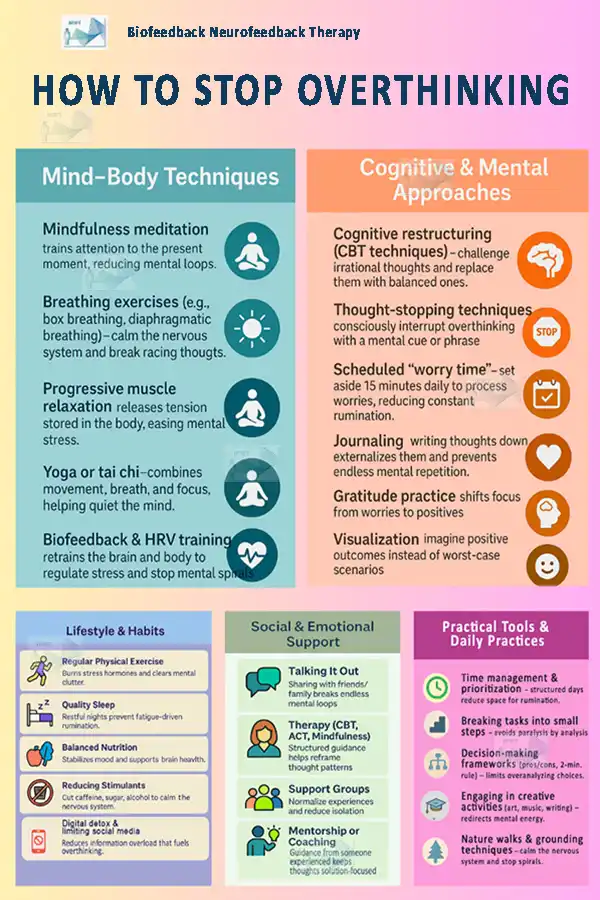
How to stop overthinking infographic

Combine With Lifestyle Adjustments

While biofeedback is powerful, combining it with healthy habits amplifies results. Adequate sleep, regular physical activity, mindfulness, and balanced nutrition all support your brain’s ability to stop overthinking and respond calmly to stress.

Starting overthinking treatment doesn’t have to be complicated. With biofeedback, you have a personalized, measurable, and science-backed pathway to retrain your brain, regain focus, and live a calmer, clearer life.

Benefits of Biofeedback Treatment for Overthinking

If you’ve ever wished for a way to calm your mind and stop spiraling into endless thoughts, biofeedback-based overthinking therapy may be the solution you’ve been searching for. By training your brain and body to respond differently to stress, biofeedback delivers measurable, lasting results. Here’s what you can expect:

Reduce Stress and Anxiety

Overthinking often drives chronic stress, making even small challenges feel overwhelming. Biofeedback helps your nervous system regulate stress responses, lowering heart rate, easing muscle tension, and calming anxious thoughts. With regular practice, your mind learns to respond to situations with calm instead of spiraling worry.

Improve Focus and Mental Clarity

Persistent overthinking can cloud judgment and make decision-making exhausting. By retraining your brain with neurofeedback and HRV biofeedback, you strengthen your attention and clarity. Tasks become easier, productivity improves, and mental fog starts to lift.

Enhance Emotional Regulation

Overthinkers often feel emotionally reactive, frustrated, or drained. Biofeedback trains your brain to recognize stress signals and respond calmly. Over time, this leads to greater emotional balance, better relationships, and improved resilience to daily challenges.

Support Better Sleep

Racing thoughts often interfere with sleep, leaving you tired and irritable. Biofeedback techniques, particularly those focused on HRV and breathing, help calm the nervous system and prepare the body for restful sleep. Improved sleep further reinforces your ability to stop overthinking during the day.

Gain Measurable Results

One of biofeedback’s unique advantages is its objective, measurable approach. You can track improvements in heart rate, brainwaves, muscle tension, and other physiological signals. Seeing tangible progress motivates you to continue your overthinking therapy and validates the effectiveness of your overthinking treatment.

In short, biofeedback doesn’t just reduce symptoms—it reprograms your brain and body, offering long-term relief from overthinking. Whether it’s reducing stress, improving focus, or enhancing emotional stability, the benefits are practical, noticeable, and life-changing.

FAQ - How To Stop Overthinking

How long does overthinking therapy with biofeedback take to show results?

Results vary depending on the individual and the modality used. Some people notice calmer thoughts and reduced stress within a few sessions, while consistent practice over several weeks is often needed for lasting change. Regular use of HRV, neurofeedback, or breathing biofeedback can help strengthen your nervous system, enabling you to stop overthinking more effectively.

Can biofeedback completely stop overthinking?

While no therapy guarantees the instant elimination of overthinking, biofeedback offers a science-backed approach to retrain your brain. Over time, it reduces mental loops, improves emotional regulation, and equips you with tools to manage racing thoughts, making overthinking treatment far more effective than unstructured coping methods.

Are HRV and neurofeedback safe for beginners?

Yes. Biofeedback modalities, such as HRV and neurofeedback, are non-invasive, drug-free, and generally safe for most individuals. They provide measurable feedback that guides you to overthinking therapy techniques at a pace that suits your comfort and ability.

What causes overthinking to worsen despite therapy?

Overthinking can intensify if stress levels are high, sleep is inadequate, or lifestyle factors like nutrition, screen time, and physical activity are neglected. Biofeedback works best when combined with healthy habits, creating a holistic approach to stop overthinking.

Can I combine multiple biofeedback modalities for better results?

Absolutely. Many people benefit from using a combination of HRV, neurofeedback, breathing, GSR, EMG, and temperature biofeedback. Each modality targets a different aspect of overthinking, making the overthinking treatment more comprehensive and effective.

Conclusion

Overthinking can feel overwhelming, draining your energy, focus, and peace of mind. But it doesn’t have to control your life. By understanding what causes overthinking and applying targeted overthinking therapy, you can retrain your brain and calm racing thoughts.

Biofeedback modalities—including HRV, neurofeedback, breathing, GSR, temperature, and EMG—offer a science-backed overthinking treatment that addresses both your mind and body. These techniques provide measurable feedback, teach your brain healthier responses to stress, and help you stop overthinking in a lasting way.

Taking the first step doesn’t require drastic changes. Whether through at-home devices or guided professional sessions, consistent practice can reduce stress, improve mental clarity, enhance emotional regulation, and even support better sleep.

If racing thoughts are interfering with your daily life, exploring biofeedback as a treatment for overthinking can transform the way you think, feel, and live. Start retraining your brain today and reclaim the calm, focus, and balance you deserve.

Biofeedback Device for Overthinking Management

Fix Bruxism and TMJ Without Meds: Biofeedback Works!

Stop Bruxism and TMJ Pain Naturally

Are you struggling with persistent jaw pain, teeth grinding, or jaw tension? You’re not alone. Millions of people silently suffer from bruxism and TMJ disorders—often without even knowing the root cause. Whether you’re clenching your teeth at night or experiencing jaw discomfort during the day, understanding the connection between TMJ and bruxism is crucial for finding lasting relief. In this guide, we’ll explore how innovative solutions, such as bruxism biofeedback and TMJ biofeedback, offer a natural, drug-free approach to reducing clenching, easing muscle tension, and alleviating pain at its source. You’ll also discover how a bruxism biofeedback device can help retrain your jaw muscles and put an end to chronic bruxism and jaw pain—all from the comfort of home.

How to Fix Bruxism and TMJ Naturally Without Medication

Jaw pain, morning headaches, tight facial muscles, and worn-down teeth—these are just a few of the warning signs your body is sending you. If you’ve been waking up with discomfort or feel tension creeping in during the day, you could be caught in the harmful loop of bruxism and TMJ pain.

Let’s break this cycle by uncovering the real cause and the most effective natural solution.

What Are Bruxism and TMJ Disorders—and Why Should You Care?

Bruxism refers to the habitual, often unconscious, grinding of teeth and clenching of the jaw, especially during sleep. Meanwhile, TMJ disorders (short for temporomandibular joint dysfunction) involve pain, inflammation, or misalignment in the joint that connects your jawbone to your skull.

These two conditions are deeply interconnected.

When you grind your teeth:

  • You place intense pressure on your jaw muscles.
  • You overload the TMJ joint.
  • You trigger a cascade of inflammation, tension, and chronic pain.

In short: TMJ and bruxism don’t just coexist—they worsen each other.

Top Warning Signs of TMJ and Bruxism You Shouldn’t Ignore

People often dismiss or misdiagnose these symptoms. But early recognition is the key to relief. Do any of these sound familiar?

  • Morning jaw soreness or tension
  • Headaches that begin at the temples
  • Clicking, popping, or locking of the jaw joint
  • Teeth grinding sounds noticed by a partner
  • Difficulty chewing, yawning, or talking
  • Flattened, cracked, or sensitive teeth
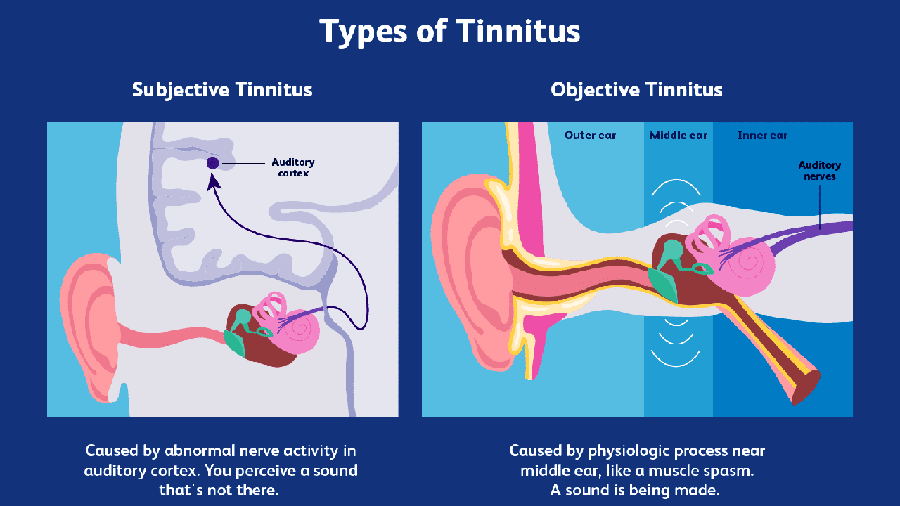
  • Ringing in the ears (tinnitus) without infection

If you check even two of these boxes, you may be dealing with bruxism and jaw pain related to TMJ dysfunction.

Why Do I Clench My Jaw? The Triggers Behind the Pain

Understanding what’s causing your symptoms is the first step to fixing them. Surprisingly, most people don’t realize that stress, poor posture, and sleep disorders are fueling the problem.

1. Stress and Anxiety

  • Emotional stress activates your nervous system and tightens jaw muscles.
  • Cortisol spikes at night can lead to nighttime teeth grinding.
  • Even thinking about stress can cause involuntary clenching.

2. Sleep Disturbances

  • Sleep apnea and insomnia lead to micro-arousals that trigger jaw tightening.
  • The body may grind teeth to reopen airways during sleep.

3. Misaligned Bite or Missing Teeth

  • Uneven pressure forces muscles to overcompensate.
  • This leads to strain on the temporomandibular joint.

4. Excessive Stimulants

  • Caffeine, alcohol, and energy drinks increase grinding episodes, especially during REM sleep.

5. Forward Head Posture

  • “Tech neck” causes your head to lean forward unnaturally.
  • This stretches and tenses the jaw and neck muscles.

The Vicious Cycle of Bruxism and TMJ: Why It Keeps Getting Worse

The relationship between bruxism and TMJ pain creates a self-reinforcing loop:

  1. Teeth grinding puts pressure on the TMJ.
  2. The TMJ becomes inflamed, triggering nerve irritation.
  3. Pain signals increase muscle tension.
  4. You clench more often, unconsciously—especially at night.
  5. Sleep quality deteriorates, and healing becomes more challenging.

It’s a cycle of stress, strain, and pain.

Bruxism and TMJ disorders don’t just coexist—they fuel each other in a self-destructive loop.

Here’s how this cycle works, step by step:

Bruxism Damages the Jaw Joint

When you grind or clench, your jaw muscles generate extreme force—enough to crack a walnut. Over time, this strain can affect the temporomandibular joint (TMJ), the delicate hinge that connects the skull and jaw.

Mechanism:

  • The TMJ’s cartilage disc acts as a shock absorber. Grinding can displace or tear this disc, causing clicking, popping, or locking.
  • Chronic pressure erodes the joint’s bone surfaces, similar to arthritis.

Result:

  • Pain spreads to your jaw, temples, or ears—even when you’re not grinding.

TMJ Pain Triggers More Grinding

Pain doesn’t just hurt—it rewires your nervous system. Inflamed TMJ tissues irritate the trigeminal nerve, the largest nerve in your head. This nerve controls jaw movement and amplifies muscle tension as a misguided protective reflex.

How it backfires:

  • Your brain subconsciously clenches to “stabilize” the joint, worsening the damage.
  • Pain disrupts sleep, increasing nighttime grinding episodes.

Evidence:

  • 70% of TMJ patients report worse symptoms after stressful days.

Stress Traps You in the Cycle

Stress isn’t just emotional—it’s physical. When anxious, your body releases cortisol, a hormone that primes muscles for action. Your jaw muscles (masseters) are especially vulnerable because they’re wired to react instantly to threats.

The domino effect:

  • Stress → jaw clenching → TMJ pain → more stress → repeat.
  • Even thinking about stress can tense your jaw (try it now—did you clench?).

Sleep Disorders Add Fuel to the Fire

Grinding isn’t always about stress. For many, it’s the body’s desperate attempt to keep airways open during sleep apnea or shallow breathing.

The cruel twist:

  • Grinding just the jaw forward to open the airway, but strains the TMJ further.
  • Poor sleep reduces pain tolerance, making TMJ discomfort feel worse.
    In plain terms:

Bruxism and TMJ pain are like two people screaming at each other in a echo chamber. Biofeedback turns down the volume.

Why Traditional Treatments Fail to Fix TMJ and Bruxism

While many common treatments for bruxism and TMJ disorders provide temporary relief, they often fail to address the underlying problem. Here’s why:

1. Mouthguards – A Partial Shield

Mouthguards (or night guards) act like armor for your teeth, preventing damage from grinding. But they don’t stop the clenching itself—they redirect the force.

The problem:

  • Your jaw muscles still contract with full force, straining the TMJ.
  • Some patients even clench harder to compensate for the guard’s bulk.

Result:

  • Teeth stay safe, but jaw pain and headaches often persist.

2. Painkillers – Masking, Not Fixing

Medications like ibuprofen or muscle relaxants numb the pain but don’t correct the cause.

The trap:

  • Pain relief can lead to overuse of the jaw, worsening long-term damage.
  • Dependency risks arise without solving the neuromuscular dysfunction.

Reality check:

  • If pain returns as soon as pills wear off, the root issue remains.

3. Botox – A Temporary Paralysis

Botox injections weaken overactive jaw muscles, reducing clenching force for months.

The catch:

  • It doesn’t retrain muscle behavior—it silences it temporarily.
  • Requires repeat treatments, which can be costly and unnatural.

Side note:

  • Overuse may lead to muscle atrophy (thinning), altering facial structure.

4. The Missing Piece: Retraining the Brain

Most treatments focus on the symptoms (pain, tooth damage) but ignore the source—the brain’s faulty signaling to the jaw muscles.

The Natural Alternative: How a Bruxism Biofeedback Device Breaks the Cycle

Unlike passive treatments, biofeedback therapy targets the root cause: faulty communication between your brain and your jaw muscles.

A bruxism biofeedback device:

  • Detects real-time clenching activity.
  • Sends gentle feedback (a tone or vibration).
  • Helps you learn how to relax your jaw muscles consciously.
  • Promotes long-term relief through neural retraining, not masking pain.

It works without the need for drugs, injections, or side effects.

The Mind-Body Solution for TMJ and Bruxism Pain Relief

Biofeedback therapy taps into your nervous system to:

  • Improve muscle control
  • Reduce jaw tension
  • Break habitual clenching patterns
  • Support TMJ pain relief naturally

When combined with stress-reduction techniques, gentle exercises, and anti-inflammatory habits, biofeedback becomes a complete healing strategy—not just a quick fix.

Take the First Step Toward a Pain-Free Jaw

Living with bruxism and TMJ pain doesn’t have to be your new normal. By understanding the causes and choosing a natural, proven method like biofeedback for jaw tension, you can reclaim comfort, sleep better, and live pain-free—without meds or surgery.

Hidden Symptoms and Root Causes of Bruxism and TMJ

Many people suffer from bruxism and jaw pain without realizing it. They treat headaches, neck tension, or even earaches—without ever addressing the TMJ and bruxism connection. By identifying subtle signs and understanding the real triggers, you can take the first step toward lasting, drug-free relief.

The Silent Symptoms of TMJ and Bruxism Disorders

While most people associate bruxism with teeth grinding, the actual symptoms are often far more subtle. You might not hear yourself clenching or even notice it—until pain sets in.

Watch for These Overlooked Warning Signs:

  • Morning headaches, especially around the temples
  • Jaw stiffness or fatigue when talking, eating, or laughing
  • Ear pain or tinnitus without infection
  • Tooth sensitivity or visible wear (flat, chipped, or cracked teeth)
  • Facial tenderness, especially around the cheeks or jawline
  • Clicking or popping in the jaw joint (a sign of TMJ damage)
  • Interrupted sleep or snoring (linked to sleep bruxism)

Pro tip: If your dentist notices worn enamel or you often wake with a tight jaw, you may have undiagnosed bruxism and TMJ pain.

Beyond Stress: The Real Root Causes of Bruxism and Jaw Pain

While stress is a significant factor, it’s rarely the only cause. In reality, TMJ and bruxism are triggered by a combination of physical, neurological, and behavioral issues. Ignoring these factors leads to chronic pain and frustration.

1. Nervous System Dysregulation

  • The trigeminal nerve (responsible for jaw control) gets overstimulated during stress.
  • This leads to constant muscle tension, even during sleep.
  • People with TMJ pain often also suffer from migraines or tension headaches.

2. Sleep Disruption and Bruxism

  • Poor sleep architecture triggers micro-arousals, leading to teeth grinding.
  • Studies show that sleep apnea triples the risk of sleep bruxism.
  • Even one stormy night of sleep can lower your pain threshold.

3. Structural and Mechanical Triggers

  • Misaligned bite or missing teeth lead to uneven jaw stress.
  • Tech neck (forward head posture from screens) strains the jaw and neck muscles.
  • Bad posture affects the entire musculoskeletal chain, not just your back.

4. Lifestyle and Diet Factors

  • Caffeine, alcohol, and stimulants raise your nervous system’s tension levels.
  • Dehydration and low magnesium levels worsen jaw muscle tightness.
  • Poor chewing habits (e.g., gum chewing, chewing ice) overwork the TMJ.

How These Triggers Create a Pain Loop You Can’t Escape

Once bruxism and TMJ pain begin, they tend to reinforce each other in a damaging cycle:

  1. You clench your jaw (often unconsciously).
  2. This creates muscle fatigue and inflammation in the TMJ.
  3. Your brain senses pain and responds with more clenching.
  4. Poor sleep and stress amplify the problem.
  5. The loop is repeated.

In the result, you have:

  • More pain.
  • Less sleep.
  • More grinding.
  • Long-term damage to your jaw joint.

Why Treating Only the Symptoms Doesn’t Work

Many treatments aim to relieve surface-level discomfort but ignore what’s really happening in your nervous system.

Mouthguards and Splints: Prevent tooth wear, but don’t stop jaw muscle overactivity.

Painkillers and Muscle Relaxers: Numb the discomfort—but don’t solve the dysfunctional jaw-brain feedback loop.

Botox:  Weakens muscles temporarily, but doesn’t retrain the nervous system or improve posture and awareness.

Target the Root Cause with TMJ Biofeedback and Natural Retraining

To achieve lasting relief, you need to break the loop at its source—your brain’s control over the jaw muscles. That’s where bruxism biofeedback makes the difference.
It helps you:

  • Become aware of hidden tension patterns
  • Interrupt clenching before damage occurs
  • Rewire muscle memory to stop the habit
  • Calm the overactive trigeminal nerve

With regular practice, your jaw muscles will naturally stay relaxed, even under stress.

Key Takeaway: Lasting TMJ and Bruxism Relief Starts with Awareness

Don’t wait until jaw pain or tooth damage becomes unbearable. Recognize the signs, understand the real causes, and take control. By using a bruxism biofeedback device and addressing the full-body connection—nervous system, posture, and lifestyle—you set the foundation for healing.

How Biofeedback for Bruxism and TMJ Works

Traditional treatments often treat the surface symptoms of TMJ and bruxism, but not the cause. That’s where biofeedback therapy stands apart. It directly retrains the brain and nervous system, empowering you to stop clenching and grinding at the source.

Let’s explore how this natural, drug-free approach changes everything.

What Is Biofeedback? The Science Behind the Solution

Biofeedback is a form of mind-body therapy that teaches you to consciously control unconscious bodily functions, like muscle tension, breathing rate, heart rate, and even skin temperature.
When applied to bruxism and jaw pain, biofeedback helps you:

  • Detect jaw muscle activity before it causes pain
  • Get real-time feedback through sound, light, or vibration
  • Relax and retrain your jaw muscles through practice
  • Build new, healthier habits that last day and night

Think of it as a mirror for your jaw: it shows you what your body is doing without you realizing it, and helps you correct it.

Why Bruxism Biofeedback Devices Work When Other Treatments Don’t

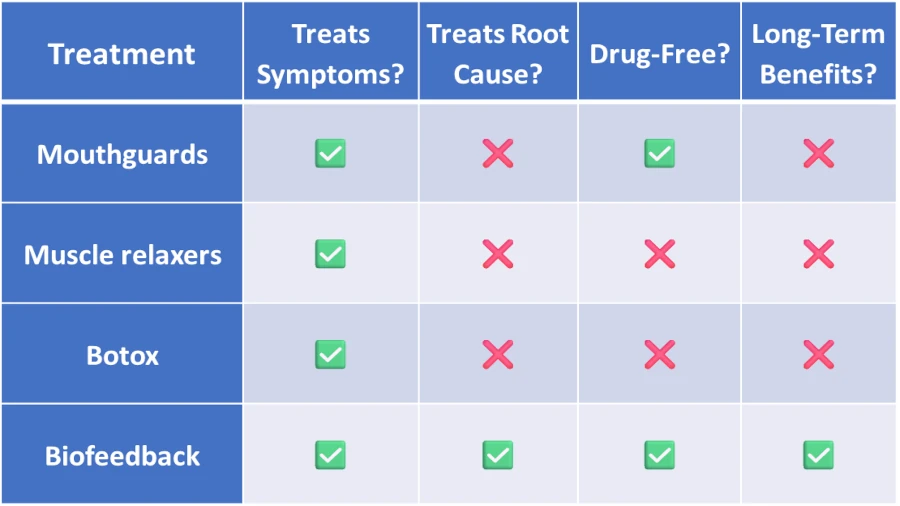
Let’s compare:

Biofeedback stands alone as:

  • Non-invasive
  • Safe and side-effect-free
  • Empowering (you’re in control)
  • Effective for both TMJ pain relief and habit change
Bruxism biofeedback device comparison

How Biofeedback Trains Your Brain to Stop Clenching

Here’s what happens during a biofeedback training session:

  1. Sensors detect tension in your jaw muscles (usually masseter and temporalis).
  2. You receive instant feedback (e.g., a beep, graph, or vibration).
  3. You consciously relax your jaw to stop the signal.
  4. Over time, your brain learns: “relaxed jaw = comfort, no tension = no alarm.”

This process:

  • Interrupts unconscious clenching
  • Reduces overactive nerve signaling
  • Builds muscle memory for relaxation

Eventually, your body learns to stay relaxed—even during sleep.

Who Can Benefit from Biofeedback for Bruxism and Jaw Pain?

Everyone who clenches, grinds, or suffers from jaw tension can benefit, including:

  • Sleep bruxism sufferers
  • Daytime clenchers under stress
  • Adults with chronic TMJ pain
  • Post-surgical recovery patients
  • Individuals with anxiety, ADHD, or sleep disorders
  • Children and teens, with age-appropriate tools

Because biofeedback is gentle, safe, and non-drug-based, it’s suitable for almost every age group and condition severity.

How Fast Does Biofeedback Work for TMJ and Bruxism Relief?

With consistent use, most people report measurable improvements within 4 to 6 weeks:

  • Week 1–2: Greater awareness of clenching triggers
  • Week 3–4: Reduced muscle tightness and fewer episodes
  • Week 5–6: Decreased jaw pain, morning headaches, and tooth sensitivity
  • After 2–3 months: Muscle memory begins to hold, and device use can be reduced

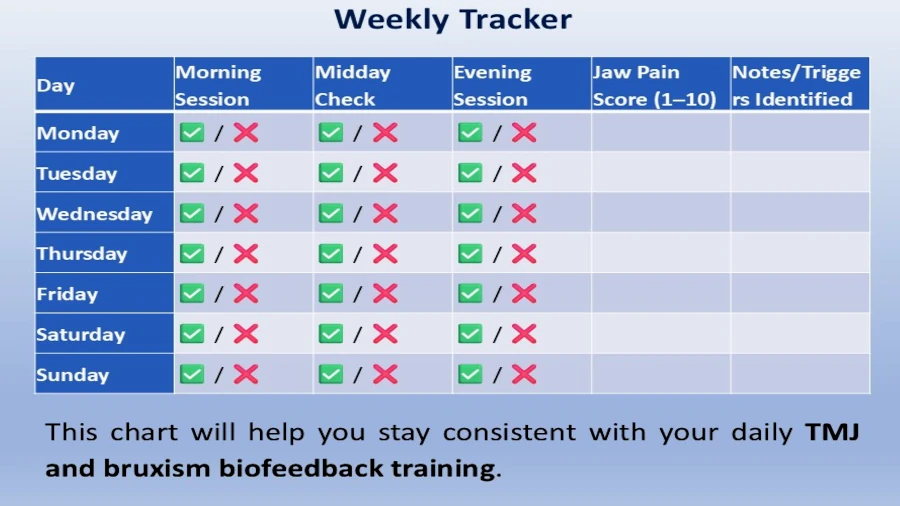
Tip: Keep a journal or use your device’s tracking feature to monitor your progress.

Why Biofeedback Is the Missing Piece in TMJ and Bruxism Treatment

Most therapies (guards, pills, injections) ignore the nervous system’s role in the pain cycle. But biofeedback works by resetting the brain-muscle connection:

  • Reduces activity in the trigeminal nerve (which controls jaw movement)
  • Trains your brain to stay relaxed in high-stress moments
  • Builds resilience through repetition

Bottom line: If your brain is causing the clenching, then retraining your brain will be the solution.

Summary

The Game-Changing Power of TMJ Biofeedback Therapy
A bruxism biofeedback device doesn’t just monitor your symptoms—it helps eliminate them. Unlike temporary fixes, biofeedback builds skills and body awareness that last.

  • Helps you recognize unconscious tension
  • Promotes natural muscle relaxation
  • Treats the root cause—not just the symptoms
  • Offers lasting TMJ and bruxism relief, without medication

You’re not stuck with clenching and jaw pain forever. With biofeedback, you can train your body to heal itself—naturally.

Step-by-Step Guide – How to Use a Bruxism Biofeedback Device for TMJ and Jaw Pain Relief

Now that you understand the power of biofeedback for bruxism and TMJ, it’s time to put it into practice. You don’t need to be tech-savvy or visit a clinic to get started. With the correct device and a simple daily routine, you can start retraining your jaw muscles today, right from the comfort of your own home.

Choose the Right Bruxism Biofeedback Device for Your Needs

Not all devices are created equal. The best option for you depends on the type of bruxism you have, when it occurs, and the severity of your symptoms.

Top Types of Biofeedback Devices for TMJ and Bruxism Relief:

1. EMG Biofeedback Devices (Electromyography)

  • Measure electrical activity in the jaw muscles (masseter and temporalis)
  • Provide real-time feedback through vibration, sound, or visuals
  • Ideal for daytime clenching awareness and habit reversal

2. Nighttime Biofeedback Devices

  • Detect grinding or jaw tension during sleep
  • Use gentle alerts (like vibrations or beeps) to interrupt clenching patterns
  • Best for sleep bruxism and people who wake with jaw pain or headaches

3. App-Based Biofeedback Devices

  • Connect to your smartphone via Bluetooth
  • Offer training programs, charts, and progress tracking
  • Convenient for home use, even during travel

4. Clinical Biofeedback Systems

  • Used under professional supervision
  • Offer more detailed feedback and analysis
  • Recommended for severe TMJ pain or complex neurological cases

Getting Started: Setting Up Your Biofeedback for TMJ Routine

You don’t need more than 10–15 minutes per session to begin seeing results. Here’s your action plan:

Attach the Device – Step 1

Begin with Relaxation – Step 2

  • Sit in a quiet place
  • Keep lips together, teeth apart, and tongue resting lightly on the roof of your mouth
  • Breathe deeply through your nose

Observe the Feedback – Step 3

  • Your device will show or signal muscle tension in real time
  • If clenching begins, the device will vibrate or beep
  • When it does, pause, breathe, and gently release your jaw

Practice Daily – Step 4

  • Start with 5–10 minutes per day, then increase gradually
  • Use twice daily if symptoms are moderate to severe
  • Most users notice a reduction in clenching within the first 2 weeks

What to Expect Over Time – Your TMJ and Bruxism Progress Timeline

Here’s how your jaw retraining typically evolves with consistent practice:

Timeframe Expected Benefits

Week 1: Increased awareness of unconscious clenching
Weeks 2–3: Better control and less daytime tension
Weeks 4–6: Reduced jaw pain, fewer headaches
Week 6+ New relaxation patterns become automatic

Reminder: This is not a quick fix—it’s like physical therapy for your face. Consistency and patience = success.

Combine with Supportive Habits for Maximum Results

For faster and deeper relief, combine your bruxism biofeedback routine with the following:

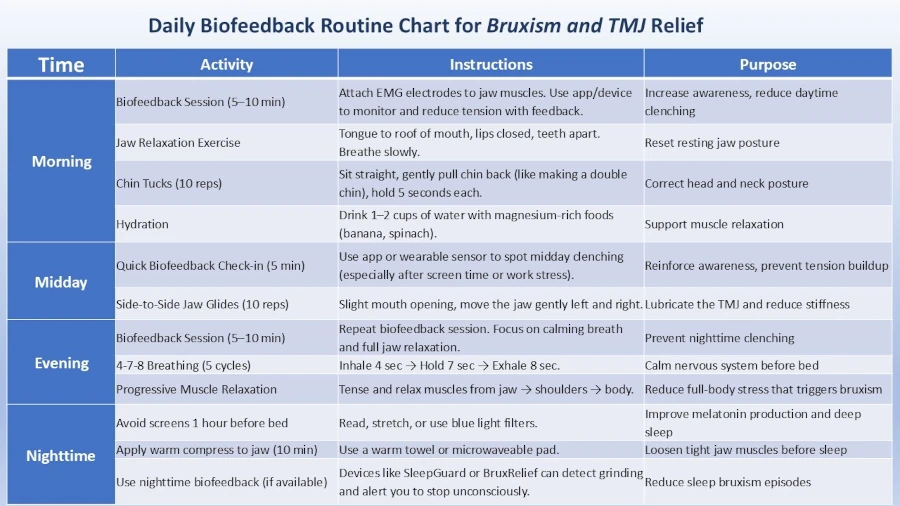
Jaw Relaxation Techniques

  • “Goldfish” exercises (gentle mouth opening and closing)
  • Chin tucks (improve posture and relieve TMJ pressure)
  • Side-to-side jaw movements

Stress Management Tools

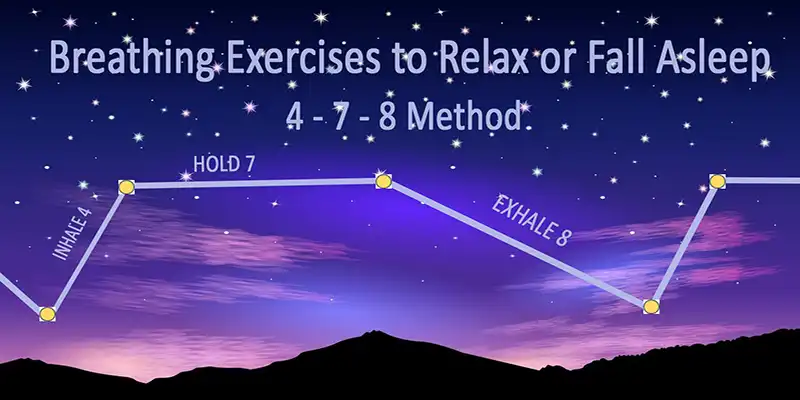
  • Diaphragmatic breathing (4-7-8 method)
  • Progressive muscle relaxation (PMR)
  • Daily mindfulness or meditation (10 mins)

Better Sleep Hygiene

  • Avoid caffeine after 2 PM
  • Use a contoured pillow to prevent jaw misalignment
  • Try mouth taping if you mouth-breathe at night (after checking with a professional)

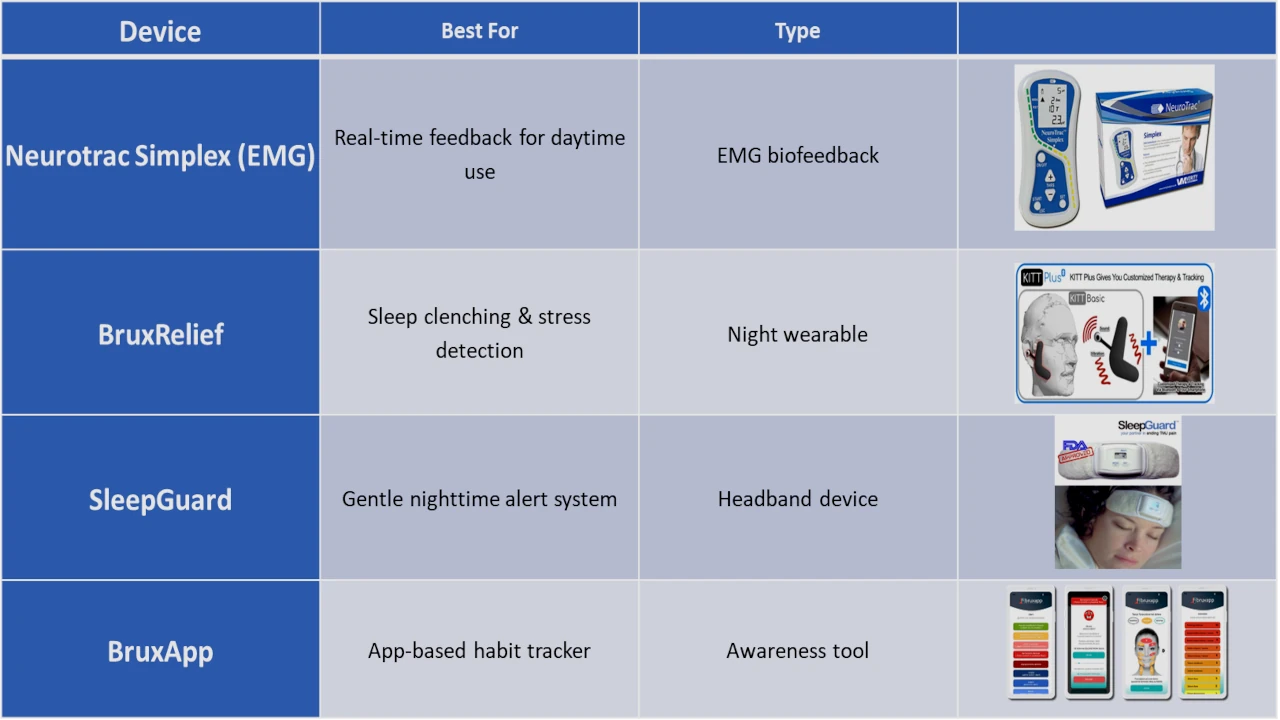
Popular Bruxism Biofeedback Devices to Consider

Here are trusted home-use options:

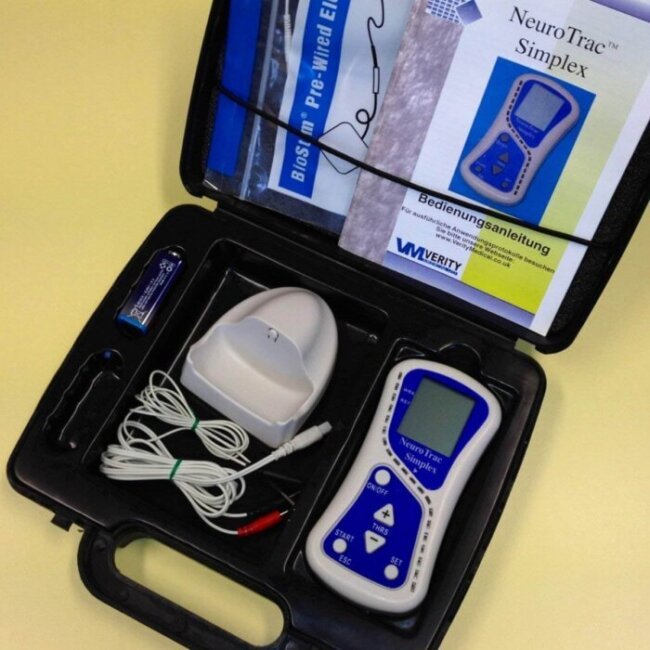
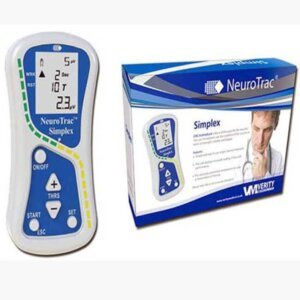
Tip: Start simple. Many users find Neurotrac Simplex (EMG) or BruxRelief to be ideal starting points.

Why This Works: Train Your Brain, Not Just Your Jaw

The goal of bruxism biofeedback isn’t just to “relax.” It’s to rewire your muscle memory, so your jaw stops clenching without conscious effort. Over time, the relaxation response becomes automatic—even during stressful moments or during deep sleep.

This is what makes biofeedback therapy so different—and more effective—than guards, drugs, or injections.

Take Charge of Your Healing with a TMJ Biofeedback Device.

You now have the tools to begin your biofeedback for jaw tension journey at home. With 10 minutes of practice a day, you’ll start reversing years of tension, clenching, and pain—naturally.

The Natural Boost – Exercises, Diet, and Stress Relief to Supercharge Your Bruxism and TMJ Recovery

While biofeedback for bruxism and TMJ works powerfully on its own, you’ll experience faster, longer-lasting relief when you pair it with supportive lifestyle changes. Think of this chapter as your booster plan: everything you can do to optimize your results, heal inflammation, and prevent future pain.

Jaw Exercises That Relieve Bruxism and Jaw Pain

Simple daily exercises help relax overactive jaw muscles, realign posture, and reduce strain on the temporomandibular joint.

Daily Jaw Relaxation Routine (5–7 minutes total) – Perform twice daily, in the morning and evening.

Tongue-to-Roof Hold – Trains neutral jaw posture

  • Keep lips closed, teeth apart
  • Lightly rest your tongue on the roof of your mouth

Chin Tucks – Reduces tech neck, which contributes to TMJ and bruxism

  • Sit upright, tuck your chin inward to form a “double chin”
  • Hold 5 seconds, repeat 10 times

Jaw Slides (Side-to-Side) – Improves TMJ mobility and coordination

  • Open your mouth slightly
  • Slowly slide the jaw left → center → right

Resisted Mouth Opening – Strengthens and stabilizes weak jaw muscles

  • Place your thumb under your chin
  • Try to open your mouth while gently resisting the movement

Pro tip: Always breathe slowly while exercising. Never force movement into pain.

Stress-Reduction Tools That Stop Unconscious Clenching

Stress is the #1 driver of bruxism and TMJ disorders. To stop grinding and clenching, your nervous system must shift from the “fight or flight” response to a state of “rest and relax.”

Diaphragmatic Breathing (The 4-7-8 Method) – Lowers cortisol and relaxes jaw muscles naturally

  • Inhale through your nose for 4 seconds
  • Hold for 7 seconds
  • Exhale slowly for 8 seconds
  • Repeat 4–6 cycles

Progressive Muscle Relaxation (PMR)

  • Start at your toes and move upward
  • Tense and release each muscle group (jaw, neck, and shoulders included)
  • Perfect before bed or after stressful events

Mindfulness Meditation

  • Sit quietly and focus on your breath or bodily sensations
  • If your mind wanders, gently return to the breath
  • Even 10 minutes a day improves stress resilience and jaw tension control.

Eat to Heal: The Anti-Inflammatory Diet for TMJ and Bruxism Relief

What you eat can either soothe your pain or fuel the fire. Chronic jaw inflammation worsens when your body is overloaded with inflammatory foods.

Foods to Include:

  • Wild salmon, flaxseeds, walnuts (omega-3s for joint healing)
  • Leafy greens, bananas, almonds (magnesium-rich for muscle relaxation)
  • Berries, green tea (antioxidants reduce oxidative stress)
  • Ginger, turmeric (natural COX-2 inhibitors for inflammation control)

Foods to Avoid:

  • Crunchy or chewy items (gum, ice, raw carrots, jerky)
  • Refined sugar and white flour (trigger systemic inflammation)
  • Excess caffeine and alcohol (increase nighttime clenching and tension)
  • Carbonated beverages (can worsen acid reflux, aggravating jaw pain).

Hydration Tip:

Drink at least 8–10 glasses of water per day. Dehydration tightens muscles, making your bruxism biofeedback training less effective.

Support Better Sleep to Prevent Nighttime Teeth Grinding

Sleep is the ultimate recovery tool. Poor sleep lowers pain tolerance, heightens anxiety, and leads to more nighttime grinding.

Sleep Hygiene Checklist for Bruxism Relief

  • Turn off screens 1 hour before bed
  • Avoid caffeine after 2 PM
  • Use a supportive pillow to align the jaw and spine
  • Try white noise or guided sleep meditations
  • Consider mouth taping to promote nasal breathing (if safe for you).

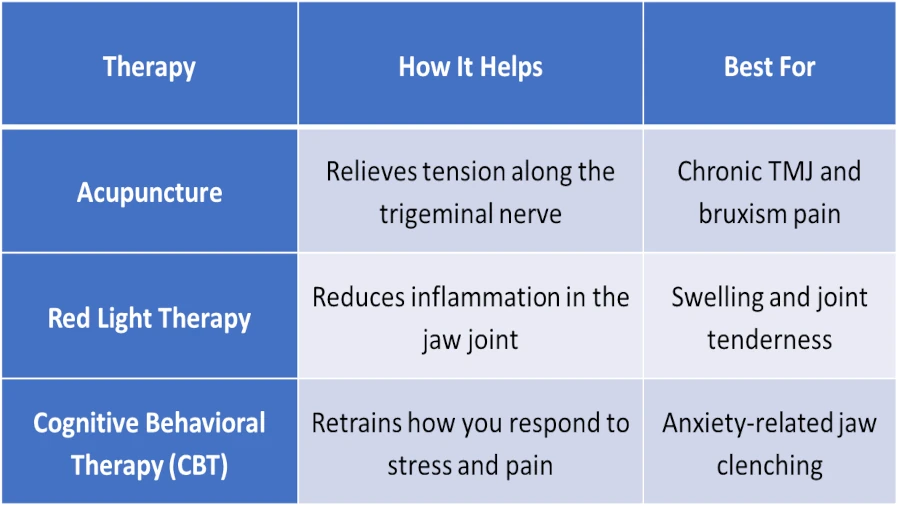
Complementary Therapies to Try with TMJ Biofeedback

If your symptoms are severe or stubborn, combine biofeedback for jaw tension with one or more of these natural treatments:

Complementary Therapies to Try with TMJ Biofeedback

Combining physical, mental, and dietary support leads to faster healing and longer-lasting results.

Key Takeaway

Natural Strategies Multiply Your Bruxism Biofeedback Success.
Don’t treat your biofeedback device as a standalone fix. It’s a core tool, but your daily habits are the engine of healing.

To accelerate your recovery:

  • Stretch your jaw and neck daily
  • Eat to reduce inflammation
  • Calm your nervous system
  • Sleep like your health depends on it (because it does)

Bruxism and TMJ pain relief is absolutely possible—and completely natural.

Bruxism and TMJ FAQs About Biofeedback, Relief, and Recovery

Can a bruxism biofeedback device cure my TMJ disorder?

Biofeedback isn’t a “cure” in the traditional sense—it’s a training method. It helps you recognize and reduce unconscious clenching and retrains the nervous system.

Many users experience:

  • 50–70% reduction in bruxism symptoms,
  • Less pain, better sleep, and improved jaw function,
  • Long-term relief, especially when combined with lifestyle changes.
How long before I feel results with TMJ biofeedback?

It varies by individual, but typical results include:

  • Week 1–2: Better awareness of tension,
  • Week 3–4: Reduced clenching and muscle tightness,
  • Week 5–6: Noticeable relief in jaw pain, stiffness, and sleep quality.

Consistency is key. Think of it as physical therapy for your jaw.

Is biofeedback safe to use daily?

Yes. Biofeedback is a non-invasive, drug-free, and safe treatment option, even for long-term use. It’s suitable for:

  • Children (8+ years with supervision)
  • Adults of all ages
  • People with chronic TMJ and bruxism pain

 Exceptions:

  • Individuals with pacemakers should avoid EMG units with electrical stimulation.
  • People with photosensitive epilepsy should avoid visual feedback with flashing patterns.
Can I use biofeedback while sleeping?

Yes, but not all devices support this. Look for sleep-specific biofeedback devices like:

  • SleepGuard,
  • BruxRelief wearable,
  • Smart headbands with vibration alerts.

These tools gently interrupt clenching episodes during sleep without fully waking you.

Do I still need a night guard with biofeedback?

Not necessarily. A biofeedback device trains you not to clench, while a night guard only protects your teeth. Many people eventually stop using guards altogether after successful training.

That said, some combine both temporarily—using the night guard while retraining the brain with biofeedback.

Conclusion: Take Back Control – End Bruxism and TMJ Naturally and Permanently

You’ve reached the final chapter of your journey to understanding and healing bruxism and TMJ disorders—and that’s a huge step. You’ve learned how:

  • Jaw pain, teeth grinding, and TMJ dysfunction are often driven by unconscious patterns, stress, and lifestyle habits
  • Conventional treatments often offer temporary relief without retraining your body
  • A bruxism biofeedback device empowers you to stop clenching, reduce pain, and prevent damage naturally
  • Supporting changes—exercises, diet, posture, sleep, and relaxation—multiply your success

Here’s What You Can Do Today:

  1. Choose a trusted biofeedback device for jaw pain relief.
  2. Set aside just 10–15 minutes a day for training.
  3. Pair it with simple habits that promote healing and protection of your jaw.
  4. Stay consistent, track progress, and adjust as needed.

References

Bartolucci ML, Incerti Parenti S, Bortolotti F, Della Godenza V, Vandi S, Pizza F, Plazzi G, Alessandri-Bonetti G. Sleep Bruxism and Orofacial Pain in Patients with Sleep Disorders: A Controlled Cohort Study. J Clin Med. 2023 Apr 20;12(8):2997. doi: 10.3390/jcm12082997. PMID: 37109339; PMCID: PMC10142632.

Ilovar S, Zolger D, Castrillon E, Car J, Huckvale K. Biofeedback for treatment of awake and sleep bruxism in adults: systematic review protocol. Syst Rev. 2014 May 2;3:42. doi: 10.1186/2046-4053-3-42. PMID: 24886985; PMCID: PMC4028105.

Bruxism (Teeth Grinding). (https://my.clevelandclinic.org/health/diseases/10955-teeth-grinding-bruxism). 12/18/2023.

National Sleep Foundation (U.S.). The Link Between Sleep Apnea and Teeth Grinding (https://www.sleepfoundation.org/sleep-apnea/link-between-sleep-apnea-and-teeth-grinding).

TMD / TMJ Disorder & Bruxism. Neurology Solutions.  (https://www.neurologysolutions.com/movement-disorders/tmd-tmj-disorder-bruxism/).

Fear Therapy: Cure Phobias Fast

Fear Therapy: Cure Phobias Fast

Do you feel paralyzed by irrational fears or phobias that control your life? Fear therapy offers a revolutionary, science-backed solution that goes beyond temporary fixes—rewiring your brain’s fear response for lasting freedom. Unlike traditional approaches, modern fear therapy combines proven techniques like exposure therapy with cutting-edge biofeedback and neurofeedback, giving you real-time control over anxiety triggers. Whether you dread flying, social situations, or trauma reminders, this article reveals how fear therapy works, its remarkable success rates, and exactly what to expect from treatment. Ready to break free from fear’s grip? Let’s begin.

What is Fear Therapy?

Fear therapy is a structured psychological approach designed to help individuals confront and overcome irrational fears, phobias, and anxiety disorders. Unlike traditional talk therapy, fear therapy often employs active, evidence-based techniques such as exposure therapy, cognitive-behavioral therapy (CBT), and biofeedback/neurofeedback to rewire the brain’s fear response. The goal? To reduce avoidance behaviors and empower individuals to face their fears safely and effectively.

The Role of Biofeedback & Neurofeedback in Fear Therapy

While traditional fear therapy methods focus on gradual exposure and cognitive restructuring, biofeedback and neurofeedback add a scientific, data-driven layer to treatment.

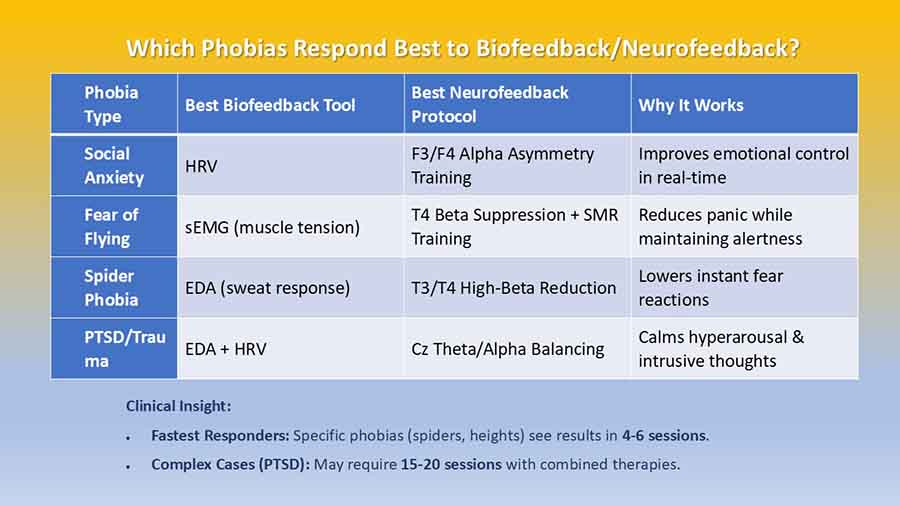
  • Biofeedback tracks real-time physiological signals (heart rate, muscle tension, sweat response) to help patients gain conscious control over their body’s stress reactions.
  • Neurofeedback measures brainwave activity (EEG) and trains individuals to modify maladaptive patterns linked to fear (e.g., calming an overactive amygdala).

When combined with exposure therapy, these tools accelerate progress by providing instant feedback, making fear responses measurable and manageable.

Why Addressing Phobias Matters?

Phobias aren’t just “extreme fears”—they can cripple daily life, leading to:

  • Avoidance of jobs, travel, or social interactions.
  • Physical symptoms (panic attacks, high blood pressure).
  • Long-term mental health risks (depression, chronic anxiety).

Fear therapy—especially when enhanced with biofeedback and neurofeedback—offers more than temporary relief. It rewires neural pathways, providing lasting freedom from fear’s grip.

Does Fear Therapy Really Work?

Fear therapy isn’t just a theoretical concept—it’s a clinically proven method for overcoming phobias and anxiety disorders. But how effective is it? Let’s examine the science and the role of qEEG-based neurofeedback in tracking brain changes, success rates across different phobias, and common misconceptions.

Scientific Evidence Supporting Fear Therapy

Multiple studies confirm that fear therapy, particularly exposure therapy and CBT, can significantly reduce phobia symptoms. Here’s what research shows:

  • Exposure Therapy (the gold standard for phobias) has a 70-90% success rate in treating specific phobias when completed properly (Journal of Anxiety Disorders, 2020).
  • Cognitive Behavioral Therapy (CBT) helps patients reframe irrational fears, with long-term benefits in 60-80% of cases (American Psychological Association, 2021).
  • Biofeedback & Neurofeedback enhance traditional methods by providing real-time physiological data, helping patients gain control over fear responses faster (Applied Psychophysiology and Biofeedback, 2019).

These findings prove that fear therapy isn’t just a placebo—it rewires the brain’s fear circuits for lasting change.

How Neurofeedback Measures Brain Changes in Phobia Patients

Neurofeedback takes fear therapy a step further by measuring and modifying brain activity in real time. Here’s how it works:

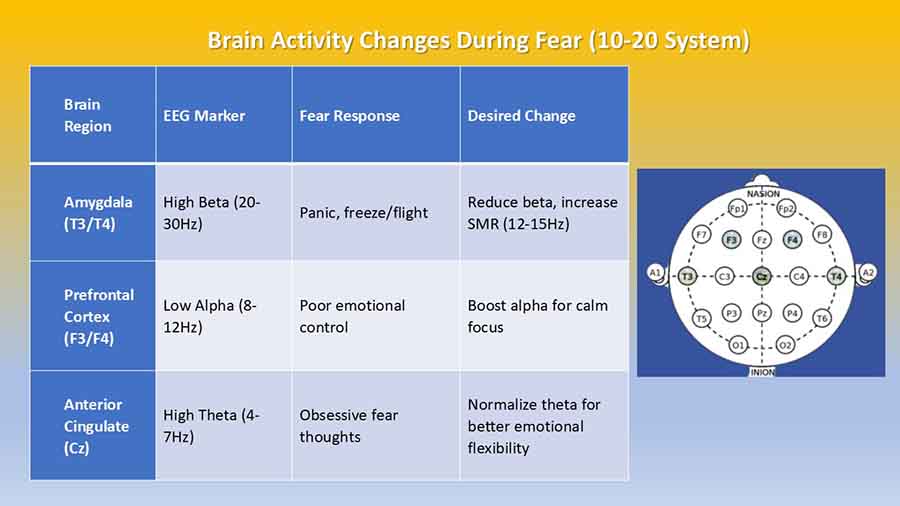
  • The Amygdala & Fear: When a phobia is triggered, the amygdala (the brain’s fear center) overreacts, while the prefrontal cortex (responsible for rational thought) shuts down.
  • Neurofeedback Tracks This Imbalance: Using EEG sensors, therapists monitor brainwave patterns (e.g., high beta waves reflect anxiety, low alpha/theta ratio speaks about poor relaxation).
  • Training the Brain: Patients learn to self-regulate their brain activity, for example, by increasing alpha waves (calm focus) while being exposed to fear triggers.

Research shows neurofeedback can reduce amygdala hyperactivity and improve emotional regulation in phobia patients (Frontiers in Human Neuroscience, 2022).

Success Rates for Different Phobias

Not all phobias respond the same way to fear therapy. Here’s a breakdown:

Fear Therapy Success Rates for Different Phobias

Key Takeaway: Fear therapy works best for specific phobias, while complex cases (like PTSD) may require combined approaches.

Fear Therapy Limitations and Misconceptions

Despite its effectiveness, fear therapy isn’t a magic cure, and some myths persist:

Myth 1: “Fear Therapy Makes Phobias Worse”.
Reality: Properly guided exposure therapy reduces fear over time, but rushing the process can backfire.

That’s why biofeedback/neurofeedback helps by ensuring patients stay within a manageable stress range.

Myth 2: “One Session is Enough”.
Reality: While some brief interventions (like single-session exposure for phobias) exist, most patients need 4-12 sessions for lasting results.

Myth 3: “Medication is Better Than Therapy”.
Reality: Drugs (like SSRIs) may mask symptoms, but fear therapy + neurofeedback addresses the root cause by retraining the brain.

Limitations:

  • Not 100% Effective: Some patients relapse or need maintenance sessions.
  • Requires Active Participation: Unlike pills, therapy demands effort and commitment.

Fear therapy, especially when combined with biofeedback/neurofeedback, is one of the most effective, science-backed treatments for phobias. However, success depends on:

  • The proper technique (exposure, CBT, neurofeedback).
  • Proper pacing (avoiding rushed exposure).
  • Patient consistency (completing sessions & homework).

How Fear Therapy "Cures" Phobias Fast

The Brain's Role in Fear & How Neurofeedback Rewires It

The brain responds to phobic triggers with distinct, measurable electrical patterns that neurofeedback can precisely target. Understanding these signatures is key to effective treatment.

1. Amygdala Hyperactivity & Prefrontal Cortex Suppression

The amygdala (your brain’s threat detector, located near T3/T4 EEG sites) becomes hyperactive, producing excessively high beta waves 20 – 30Hz) that trigger panic responses.

Amygdala Overactivation (T3/T4 sites)

  • High-Beta (20-30Hz): Associated with panic/freeze responses
  • Gamma (>30Hz): Hypervigilance and sensory overload

2. Prefrontal Cortex Dysregulation (F3/F4 sites)

Simultaneously, the prefrontal cortex (F3/F4 regions), which is responsible for rational control, shows suppressed alpha waves (8-12Hz), impairing your ability to calm yourself.

Alpha Asymmetry:

  • Healthy: Balanced alpha (8-12Hz) between hemispheres
  • Phobic: Left prefrontal (F3) alpha deficiency leading to poor emotional regulation
  • Training Goal: Increase F3 alpha to match F4

3. Global Arousal Patterns

  • Excessive Theta (4- 7Hz) at Cz: Obsessive fear thoughts
  • Low SMR (12-15Hz) at C4: Impaired body calmness
Neurofeedback protocols and electrode placement for phobia therapy

Neurofeedback's Role in Normalizing Brain Waves

Neurofeedback targets this imbalance through precise EEG training:

  • Amygdala Calibration: By rewarding suppression of high-beta waves at T3/T4 while maintaining sensorimotor rhythm (SMR, 12-15Hz), patients learn to reduce panic responses.
  • Prefrontal Strengthening: Training increased alpha waves at F3/F4 enhances top-down emotional control.

Studies show just 20 sessions can thicken prefrontal cortex gray matter (NeuroImage, 2022).
This direct neural retraining explains why neurofeedback-enhanced therapy works faster than traditional methods – it addresses fear at its biological source while providing real-time proof of progress.

Neurofeedback's Repair Mechanism

  1. Alpha Asymmetry Correction
    Patients train to increase F3 alpha power while maintaining F4
    Clinical Impact: 60% reduction in avoidance behaviors after 15 sessions (Journal of Affective Disorders, 2023)
  2. Dual-Site Training
    Simultaneously trained:
    – Suppress high-beta on T4 (amygdala),
    – Enhance alpha on F3 (prefrontal control)
    Creates new inhibitory pathways between these regions
  3. Phase-Locking Training
    – Teaches prefrontal cortex (F3/F4) to better synchronize with amygdala (T3/T4)
    – Restores healthy top-down regulation

According to a 2023 meta-analysis, maintained treatment gains 3x longer than medication-only groups.

Key Techniques: Exposure Therapy + Biofeedback/Neurofeedback

Neurofeedback-Driven Exposure: A Brain-Based Approach

How It Works

Patients first undergo baseline EEG mapping in this advanced method to identify fear-related brainwave patterns (e.g., high beta at T3/T4). During exposure (e.g., viewing spider images), they see real-time feedback, like a video game where calm brainwaves (alpha/SMR) control a progress bar. For example, if their amygdala overactivates (high beta), the screen dims; rewards appear as they consciously relax (increasing alpha). This trains the brain to automatically self-regulate fear through operant conditioning.

Studies show this approach doubles retention of therapeutic gains compared to passive exposure (NeuroImage, 2023). By making invisible fear responses visible, patients gain an “off switch” for panic, even outside therapy sessions.

A 2022 meta-analysis (Journal of Clinical Neuroscience) found that neurofeedback + exposure therapy led to 30% faster recovery than exposure alone. Patients who normalized alpha asymmetry (F3/F4) maintained long-term improvements (Frontiers in Psychiatry, 2021).

Neurofeedback session with exposure: Fear Therapy

Why This Combination Works So Well

  1. Real-Time Feedback: Patients see how their brain reacts to fear, making progress tangible.
  2. Faster Rewiring: Traditional exposure can take months, but neurofeedback accelerates the process by training the brain directly.
  3. Personalized Treatment: Protocols adjust based on individual EEG patterns.
Electrode Placement (10-20 System) for Fear Monitoring

Neurofeedback therapists use EEG caps with precise electrode placements to track fear-related brain activity:

  • F3/F4 (Prefrontal Cortex): Measures alpha asymmetry—a key biomarker for emotional regulation.
  • T3/T4 (Temporal Lobes, Near Amygdala): Detects high-beta spikes during fear responses.
  • Pz (Parietal Lobe): Monitors overall arousal levels (alpha/theta balance).
Brain Activity Changes During Fear (10-20 System)
Brain Activity Changes in Fear
Neurofeedback Protocols for Phobias
  • Alpha/Theta Training (Pz/Oz): Helps patients enter a relaxed yet alert state during exposure.
  • SMR-Beta Training (C4/T4): Reduces amygdala overactivation while maintaining awareness.
  • Live fMRI-Neurofeedback (Emerging): Allows direct amygdala regulation (still experimental but promising).

Biofeedback Fear Management: Using Real-Time Body Data (HRV, Muscle Tension)

Biofeedback complements neurofeedback by measuring the body’s fear responses during exposure therapy. Key metrics include:

  • Heart Rate Variability (HRV):
    • Healthy HRV (high variability) = better stress resilience
    • Phobic Response (low HRV) = “freeze” or panic state
    • Training Goal: Patients learn to increase HRV via paced breathing, reducing fight-or-flight activation.
  • Muscle Tension (sEMG):
    • Electrode placement common sites: Forehead (frontalis), jaw, shoulders
    • Phobic Response: Spikes in microvolt readings (e.g., 20+ µV at rest)
    • Training Goal: Achieve <3 µV during exposure = deep relaxation
  • Skin Conductance (EDA/GSR):
    • Measures sweat gland activity (an indicator of nervous system arousal)
    • Use Case: Patients see real-time EDA spikes when fear triggers are shown and practice lowering them.

Example: A patient with a fear of flying (flight phobia) wears an HRV monitor while watching videos of plane takeoffs and landings. The screen turns green when their HRV improves, reinforcing calm under stress.

Biofeedback Tools Comparison
Metrics
HRV (Heart Rate Variability)
sEMG (Muscle Tension)
EDA (Skin Conductance)
Measures
Autonomic nervous system balance
Muscle microvoltage (µV)
Sweat gland activity (arousal)
Fear Response
Low HRV (rigid heart rhythm)
Spikes >10 µV (e.g., clenched jaw)
Rapid spikes (sudden stress)
Training Goal
Increase HRV (coherent breathing)
Reduce to <3 µV (deep relaxation)
Lower baseline conductance
Best For
Generalized anxiety, PTSD
Tension headaches, phobias
Panic attacks, startle responses
Feedback Display
Waveform coherence score
Real-time µV numbers
Graph of conductance peaks

Key Clinical Insight:

  • HRV predicts long-term resilience (study link: Psychophysiology, 2023)
  • sEMG catches unconscious tension (e.g., white-knuckling during exposure)
  • EDA reveals instant stress spikes missed by other tools

How Combined Therapy Accelerates Results

Case 1: Social Anxiety (Neurofeedback + Biofeedback)

Protocol:

  • EEG: Increased F3 alpha (emotional control)
  • HRV: Coherence training during mock conversations

Result: 50% faster improvement than CBT alone (6 vs. 12 weeks)

Case 2: Spider Phobia (Exposure + sEMG + Neurofeedback)

Protocol:

  • Neurofeedback: Reduced T4 beta during spider image exposure
  • sEMG: Kept trapezius muscle tension <5 µV

Result: Touched a tarantula in 4 sessions (usually takes 8+ with exposure alone)

Why It Works:

  • Dual Reinforcement: Brain (EEG) + body (biofeedback) proof of progress
  • Faster Extinction: Combined input disrupts fear memories more effectively
Short-Term vs. Long-Term Fear Therapy Results

Study Spotlight:

A 2024 trial found that patients using both modalities had:

  • 2x lower relapse rates than exposure-only groups
  • 89% reported “I now understand my fear physically and mentally”

Common Phobias Treated with Fear Therapy

Fear therapy—especially when enhanced with biofeedback and neurofeedback—can effectively treat a wide range of phobias and anxiety disorders. Below, we explore the most common conditions and how these advanced techniques optimize treatment.

Social Anxiety & Agoraphobia

  • Key Symptoms: Fear of judgment, avoidance of social situations, panic in crowded/open spaces.
  • How Fear Therapy Helps:
    • Neurofeedback: Trains F3/F4 alpha asymmetry to improve emotional regulation during social interactions.
    • Biofeedback: Uses HRV training to reduce panic responses in triggering environments.
    • Exposure Therapy: Gradual practice in real or virtual social settings (e.g., VR parties).
  • Success Rate: 60-75% significantly improved with combined therapy (Journal of Anxiety Disorders, 2023).

Fear of Flying, Spiders, Heights (Acrophobia)

  • Key Symptoms: Panic attacks, avoidance, physical symptoms (sweating, dizziness).
  • How Fear Therapy Helps:
    • Neurofeedback: Reduces T3/T4 high-beta waves linked to immediate panic.
    • Biofeedback: sEMG monitors muscle tension during exposure (e.g., spider images).
    • VR Exposure: Safe, controlled environments (e.g., virtual flight simulations).
  • Success Rate: 80-90% for specific phobias (Behaviour Research and Therapy, 2022).
VR-Exposure for Fear Therapy

PTSD & Trauma-Related Fears

  • Key Symptoms: Flashbacks, hypervigilance, emotional numbness.
  • How Fear Therapy Helps:
    • Neurofeedback: Targets Cz theta waves to reduce intrusive thoughts.
    • Biofeedback: EDA sensors track stress spikes during trauma recall.
    • EMDR + Neurofeedback: Combines eye movements with brainwave training for deeper processing.
  • Success Rate: 50-70% (higher when combined with other therapies).
Which Phobias Respond Best to the Therapy

Step-by-Step: What a Fear Therapy Session Looks Like

Fear therapy sessions follow a structured, science-backed approach—combining assessment, real-time biofeedback/neurofeedback, exposure, and relapse prevention. Here’s exactly what happens:

Assessment & Goal Setting

Baseline Brain/Body Metrics
Before treatment begins, therapists gather objective data to personalize the approach:

  • Neurofeedback (EEG):
    • Measures amygdala (T3/T4) hyperactivity (high-beta waves)
    • Checks prefrontal (F3/F4) alpha asymmetry (emotional control deficit)
  • Biofeedback:
    • HRV: Baseline stress resilience (e.g., low HRV = poor vagal tone)
    • sEMG: Resting muscle tension (e.g., clenched jaw = 15+ µV)
    • EDA: Skin conductance spikes at rest (indicates chronic hyperarousal)

Goal Setting Example:
“Reduce T4 beta power by 30% during spider exposure while maintaining HRV coherence.”

Exposure Therapy Paired with Biofeedback/Neurofeedback

Example: Live HRV Monitoring During Gradual Exposure

  1. Patient: Views a spider image (low-intensity trigger).
  2. Biofeedback: HRV screen shows real-time drops in variability (stress response).
  3. Intervention: Therapist guides paced breathing to restore HRV coherence.
  4. Progression: Exposure intensity increases only when HRV stabilizes.

Why It Works: Patients learn to self-regulate their physiology before panic escalates.

Neurofeedback Games to Reinforce Calm Under Stress

  • Game 1: “Alpha Garden”
    • Patient grows a virtual garden only when F3/F4 alpha waves increase (prefrontal calm).
  • Game 2: “Amygdala Pacifier”
    • A monster (T4 high-beta) shrinks as the player deepens breathing (SMR waves rise).

Science Behind It: Gamification boosts engagement and accelerates learning (Frontiers in Human Neuroscience, 2023).

Coping Mechanisms & Relapse Prevention

  • Post-Session Tools:
    • HRV Apps: Daily breathing exercises to maintain vagal tone.
    • EEG Wearables: Alerts for rising beta waves (e.g., Muse headband).
  • Relapse Drills:
    • Monthly “booster” sessions with VR exposure + neurofeedback.
    • 3-Step Emergency Protocol:
      1. Spot early physical signs (e.g., clenched fists).
      2. Shift with a neurofeedback-trained technique (e.g., F3 alpha focus).
      3. Stabilize using biofeedback-confirmed calm (HRV >60ms).
  • Long-Term Success Data:
    Patients using these tools show 50% lower relapse rates at 1-year follow-up (Journal of Clinical Psychology, 2024).

Alternative Treatments vs. Fear Therapy

When it comes to treating phobias and anxiety disorders, fear therapy isn’t the only option—but it’s often the most sustainable and brain-changing. Here’s how it compares to other approaches, and why combining it with biofeedback/neurofeedback offers unique advantages.

Fear Medication: Pros and Cons

Hypnosis, Mindfulness, and Other Approaches

Hypnosis

  • Pros: Can bypass conscious resistance; useful for simple phobias.
  • Cons: Limited evidence for complex fears (e.g., PTSD).
  • Data: 40-50% success for dental phobias (International Journal of Clinical and Experimental Hypnosis, 2022).

Mindfulness & Meditation

  • Pros: Improves emotional regulation over time.
  • Cons: It requires months of practice; it is hard for those with acute panic.
  • Biofeedback Boost: Pairing mindfulness with HRV training doubles effectiveness (Mindfulness, 2023).

Other Alternatives

  • Acupuncture: Mixed results; may reduce cortisol short-term.
  • Herbal Remedies (e.g., CBD): Anecdotal relief, but no phobia-specific trials.

Why Biofeedback/Neurofeedback Enhances Traditional Fear Therapy

5 Key Advantages Over Alternatives

  1. Precision: Targets exact brain/body fear signatures (e.g., T4 beta spikes).
  2. Real-Time Proof: Patients see progress (e.g., HRV coherence scores).
  3. No Side Effects: Unlike meds, it’s non-invasive and adaptive.
  4. Longer-Lasting: Rewires neural pathways (studies show 3x durability vs. meds).
  5. Works Alongside Other Therapies: Complements CBT, exposure, or mindfulness.

Case Example:
A PTSD patient failed three medications but succeeded with the following combined therapy:

  • Neurofeedback (Cz theta reduction) +
  •  Biofeedback (EDA-controlled exposure) 
  • Result: 70% symptom reduction in 10 weeks (Journal of Traumatic Stress, 2024).
Lasting Freedom by Fear Therapy

Real-Life Success Stories

Fear therapy isn’t just theory—it’s transforming lives. Below are real cases where biofeedback and neurofeedback turned paralyzing fears into manageable challenges.

Case Study: Overcoming Claustrophobia with Neurofeedback

Patient: Sarah, 34, avoided elevators for 12 years after a childhood trauma.

  • EEG Mapping: Extremely high-beta waves (28Hz) at T4 (right amygdala) in enclosed spaces were found.

Treatment Protocol:

  • Neurofeedback Training: 15 sessions of SMR (12-15Hz) enhancement at C4 + T4 beta suppression.
  • Exposure: Started with open-door elevator viewing, progressed to 30-second rides.

Results:

  • Week 4: Tolerated 2 minutes in elevator with 40% lower beta power.
  • Week 10: Rode 10-floor elevator solo while maintaining alpha/theta dominance (calm focus).
  • Therapist Insight: “Her brain learned to ‘switch off’ panic before it escalated—something meds couldn’t teach.”

Biofeedback in VR Exposure Therapy for Fear of Flying

Patient: Mark, 41, canceled 3 work trips due to panic attacks at airports.

Treatment Protocol:

  • VR Flight Simulator: Paired with live HRV and EDA monitoring.
  • Biofeedback Goals: Keep HRV >60ms and EDA spikes <1.5 µS during turbulence simulation.
  • Neurofeedback: Trained F3 alpha asymmetry to reduce catastrophic thoughts.

Results:

  • Session 6: HRV stabilized during virtual takeoff (no medication).
  • Session 12: Flew cross-country with 80% less anxiety (per self-report and wearable data).
  • Key Tool: “Seeing his HRV stay green during VR crashes rewired his trust in his body.”

Patient Testimonials & Therapist Insights

1. Social Anxiety (Neurofeedback Success)

“After alpha asymmetry training, I gave a wedding toast without vomiting. My brain finally felt like mine.” — Jason, 28

2. Spider Phobia (Biofeedback Breakthrough)

The sEMG showed my shoulders were at 18 µV, just seeing a picture. Now I’m at 3 µV holding a tarantula.” — Priya, 35

Therapist Perspective:

The combo of exposure + real-time biofeedback cuts therapy time in half. Patients get it’ faster when their body proves change is possible.” — Dr. Lee, Clinical Psychologist

Conclusion: Taking the First Step Toward Fear-Free Living

Fear therapy—especially when enhanced with biofeedback and neurofeedback—offers one of the most effective, science-backed solutions for overcoming phobias.

But is it right for you?

Fear therapy may be a great fit if you:

  • Want long-term change (not just temporary symptom relief)
  • Prefer drug-free solutions (or want to reduce medication dependence)
  • Like measurable progress (real-time brain/body feedback)
  • Struggle with specific fears (flying, social anxiety, PTSD, etc.)

Limitations: It requires active participation and may take 8-15 sessions for lasting results.

Where Biofeedback & Neurofeedback Fit In?

These tools enhance traditional therapy by:

  • Making progress visible (e.g., watching your brainwaves calm during exposure)
  • Personalizing treatment (protocols adapt to your unique physiology)
  • Preventing relapse (by teaching self-regulation skills)

Best for:

  • People who’ve “tried everything” (CBT, meds) with limited success
  • Tech-oriented individuals who appreciate data-driven healing

FAQs: Fear Therapy: Cure Phobias Fast

Phobia therapy helps individuals overcome irrational fears through techniques like biofeedback and neurofeedback, retraining the brain's response to triggers.

The fastest way to overcome a phobia often combines neurofeedback, biofeedback, and cognitive-behavioral therapy (CBT). Neurofeedback helps retrain brain activity, while biofeedback promotes relaxation and reduces the physical stress response that fuels the phobia.

A phobia is an intense, irrational fear of a specific object or situation, while normal fear is a natural response to real danger.

Common phobias like arachnophobia (fear of spiders), claustrophobia (fear of enclosed spaces), and social phobia respond well to fear therapy techniques.

Neurofeedback trains the brain to reduce overactive fear responses, helping individuals manage phobias more effectively.

While many experience lasting relief, some may need occasional reinforcement sessions to maintain their progress in overcoming fear.

Biofeedback for Tinnitus

Biofeedback for Tinnitus: Does it work?

Tinnitus is not just an annoying ringing or buzzing in the ears — for many people, it reflects deeper issues involving stress, brain activity, and nervous system imbalances. This is precisely where biofeedback for tinnitus becomes a valuable tool. Unlike conventional therapies, biofeedback for tinnitus focuses on helping individuals regain control over the body’s stress response, muscle tension, and autonomic nervous system. Moreover, neurofeedback tinnitus techniques directly target irregular brainwave patterns often associated with tinnitus perception. Through biofeedback tinnitus training, individuals learn to influence physiological processes, including heart rate variability, breathing, and muscle relaxation. 

Additionally, tinnitus biofeedback training often improves resilience to stress, which is known to worsen tinnitus symptoms. In this article, you will discover how these methods work, what benefits they offer, and how to start your own training. If you would like to know more about what tinnitus is, its causes, and symptoms, please read our previous article, CBT for Tinnitus.

Introduction — How Biofeedback and Neurofeedback Relate to Tinnitus

Understanding Tinnitus as a Stress and Autonomic Nervous System Disorder

If you are struggling with tinnitus, you may have noticed that it feels worse when you are anxious, stressed, or tense. This is not a coincidence. Numerous scientific studies have demonstrated a strong correlation between tinnitus and the body’s response to stress, as well as the functioning of the autonomic nervous system (ANS) — the system responsible for regulating vital functions such as heart rate and breathing. When the ANS is out of balance, tinnitus often becomes louder, more disturbing, and harder to ignore.

This is where biofeedback for tinnitus can offer hope. Biofeedback does not simply try to mask or block the sound. Instead, it helps you recognize and regulate the hidden processes within your body that may be contributing to or exacerbating your tinnitus. People with tinnitus often experience what’s called “autonomic dysregulation,” meaning their stress response is too easily triggered, and their nervous system struggles to return to a calm state.

By learning to rebalance your body’s reactions through biofeedback tinnitus techniques, you may reduce not only the stress associated with tinnitus but also the intensity of the sound itself. Understanding this connection is the first step toward taking back control.

The Role of Brainwaves, Muscle Tension, and Heart Rate in Tinnitus Perception

You may also wonder: Why does tinnitus sometimes get louder when I’m tense, tired, or trying to relax?

The answer lies in how your brain and body work together. Research indicates that irregular brainwave patterns, particularly in areas related to hearing and attention, are frequently associated with tinnitus. This is where neurofeedback tinnitus training can help.

Neurofeedback tinnitus methods aim to guide your brain back into healthier brainwave patterns gently. These techniques don’t just tell your brain what to do. They train it through feedback. This helps the brain learn to reduce the abnormal patterns often associated with tinnitus. This is not about forcing change but about allowing your brain to adjust itself.

Biofeedback for Tinnitus - Before and after

Additionally, many people with tinnitus unknowingly hold chronic muscle tension, especially in the neck, shoulders, or jaw. This tension can make tinnitus worse or even trigger it. Tinnitus biofeedback training helps you become aware of these tensions and teaches you how to release them. Another critical factor is your heart rate variability (HRV), which reflects how well your nervous system adapts to stress. Reduced HRV is a common finding among individuals with tinnitus and stress-related conditions. Luckily, biofeedback for tinnitus can directly improve HRV, helping your body return to a calmer, more balanced state.

What is Biofeedback and Neurofeedback from a Tinnitus Perspective?

The Basics of Biofeedback and Neurofeedback

Tinnitus biofeedback training - HRV Changes Before and After

If you are dealing with tinnitus, you may feel like your body and mind are working against you. The ringing, buzzing, or hissing sound is often constant and uncontrollable. However, methods like biofeedback for tinnitus and the neurofeedback tinnitus technique are designed to help you regain control. They work by targeting the root of the problem — your body’s and brain’s stress response and regulation systems.

In simple terms, biofeedback tinnitus training helps you “see” what your body is doing unconsciously. For example, with biofeedback, you may learn to monitor and regulate:

Muscle tension regions in tinnitus
Tinnitus biofeedback training - Breathing patterns Before and After

When you have tinnitus, these factors often show signs of dysregulation. For example, your HRV may be too low, indicating that your nervous system is constantly in a state of alertness. Alternatively, you may experience chronic muscle tension, which can exacerbate or even trigger tinnitus symptoms. With biofeedback for tinnitus, you are guided through gentle exercises to regulate these body functions. Over time, your nervous system learns to calm down, resulting in reduced tinnitus intensity, improved sleep, and less emotional distress.

Neurofeedback tinnitus takes this concept a step further by focusing directly on your brainwave patterns. Many tinnitus sufferers exhibit irregular activity in brain regions related to hearing, attention, and emotional regulation. Neurofeedback helps you re-train these brainwaves, encouraging healthier and more stable activity. For many, this leads to less intrusive tinnitus sounds, a reduced sense of alarm when tinnitus is present, and greater mental resilience.

Why These Methods Are Used for Tinnitus Management

One of the most challenging parts of living with tinnitus is that it’s rarely just the sound. Tinnitus is often accompanied by:

  • Anxiety
  • Insomnia
  • Difficulty concentrating
  • Irritability
  • Muscle tension
  • Feeling overwhelmed or hopeless
  • Heightened stress response

Each of these symptoms can create a vicious cycle where tinnitus worsens, making you feel even more anxious and distressed. Here is how biofeedback tinnitus and neurofeedback tinnitus can help interrupt this cycle:

Anxiety & Stress Reduction

Anxiety often fuels tinnitus. Through biofeedback for tinnitus, you learn to calm your body’s stress response, lower your heart rate, and activate your parasympathetic nervous system — the system responsible for rest and recovery. When anxiety decreases, tinnitus usually becomes less intrusive and distressing.

Biofeedback Tinnitus Management of Sleep
Tinnitus and TMJ interconnection anatomy

Muscle Tension Release

For many people, chronic muscle tension in the neck, jaw (TMJ), or shoulders is directly linked to tinnitus. Using muscle-based tinnitus biofeedback training, you will be able to spot unconscious muscle tension patterns and learn to release them. This alone often brings noticeable relief.

Improved Sleep

People with tinnitus often suffer from insomnia due to the constant presence of the sound. HRV biofeedback and neurofeedback can help you regulate your body’s relaxation response, making it easier to fall asleep and stay asleep.

Neurofeedback for tinnitus - before and after
Brain mapping before and after neurofeedback for tinnitus

Brainwave Regulation

With neurofeedback tinnitus training, you work directly on normalizing irregular brainwave patterns. Many people with tinnitus show hyperactivity in auditory or attention-related brain areas. Neurofeedback trains the brain to reduce this hyperactivity, helping to lower the perceived loudness and emotional impact of tinnitus.

Cognitive and Emotional Resilience

Tinnitus often creates a feeling of helplessness. Both biofeedback tinnitus and neurofeedback tinnitus training build up your ability to cope emotionally and cognitively with the condition. Many users report that even if the sound is still present, it becomes less bothersome and no longer dominates their lives.

Better Adaptation to Everyday Stress

Stress can worsen tinnitus, but with tinnitus biofeedback training, you can improve your overall ability to adapt to life’s daily challenges. This leads to fewer flare-ups, less emotional reactivity to tinnitus, and greater peace of mind.

In short, biofeedback for tinnitus and neurofeedback tinnitus offers you something that typical treatments often cannot — active participation in your own healing. By learning to directly influence the biological and neurological patterns associated with your tinnitus, you don’t just mask the symptom; you work towards addressing its root causes.

In the following sections of this guide, you will learn about the most effective types of biofeedback tinnitus methods, how to choose the right one for your situation, and how you can start your own home-based training.

Mechanisms of Biofeedback for Tinnitus

How Biofeedback Influences the Body's Response to Tinnitus

If you are reading this, you probably feel that tinnitus is not just about the sound itself — it’s about how your whole body reacts to it. The key idea behind biofeedback for tinnitus is that by regulating your body’s response, you can reduce both the intensity of tinnitus and how much it bothers you.

People with tinnitus often have an overactive stress system. The ringing may feel louder when you’re anxious, tense, or under pressure. Biofeedback tinnitus training works by providing you with real-time information about your body’s stress-related signals, such as heart rate variability, muscle tension, breathing patterns, or skin conductance. These are processes that most people are unaware of, yet they have a direct influence on tinnitus intensity.

By using tinnitus biofeedback training, you learn to adjust these functions consciously:

  • Lower muscle tension in your neck, shoulders, and jaw
  • Slow down and regulate your breathing
  • Increase your heart rate variability (HRV)
  • Calm down your stress-response system

As you practice, your body begins to remember how to maintain a more balanced state, even when tinnitus is present. Over time, this leads to:

  • Reduced tinnitus intensity
  • Fewer spikes triggered by stress
  • Improved sense of control

You will no longer feel like tinnitus is an unstoppable force — you will have tools to influence how your body responds to it.

Stress Regulation, Autonomic Balance, and Tinnitus

Tinnitus is closely linked to dysregulation of the autonomic nervous system (ANS). Your ANS has two main branches:

  • The sympathetic branch (fight-or-flight mode)
  • The parasympathetic branch (rest-and-repair mode)

Tinnitus sufferers often exhibit signs of sympathetic dominance, indicating that their body is constantly in a state of fight-or-flight mode. This is why tinnitus often feels worse when you’re stressed, tired, or overwhelmed. Biofeedback for tinnitus aims to restore balance to your autonomic nervous system (ANS) by strengthening parasympathetic activity and calming sympathetic overactivation.

For example:

  • HRV biofeedback helps you increase your heart rate variability, which is a marker of resilience and relaxation.
  • Respiration biofeedback teaches you to breathe in a way that activates the vagus nerve, calming your nervous system.
  • Muscle biofeedback helps reduce tension that contributes to tinnitus or worsens its perception.

As you train, you will notice that you are less reactive to tinnitus. Even if the sound is still present, it no longer bothers you as much. You may sleep better, concentrate more easily, and enjoy daily activities again.

Neurofeedback for Tinnitus: Modulating Brain Activity Patterns

Understanding Tinnitus and Brain Activity

While biofeedback helps regulate the body, neurofeedback tinnitus training targets the brain directly. Neuroimaging studies have revealed that individuals with tinnitus often exhibit abnormal brain activity, particularly in the auditory cortex and related brain regions.

These abnormalities include:

Brain changes in Tinnitus
  • Excessive high-frequency beta or gamma activity (hyperarousal) in the auditory cortex and other brain areas.
  • Decreased alpha activity (which is associated with relaxation and calmness) in the temporal regions, leading to difficulties in relaxation.
  • Imbalanced connectivity between auditory, limbic (emotional), and attentional brain circuits. These disruptions explain why tinnitus is not only heard as sound but also becomes an emotional and cognitive burden.

How Brainwaves Affect Tinnitus Perception

Moreover, research has shown that individuals with tinnitus display changes in brainwave patterns, including:

  • Enhanced delta wave activity (1–4 Hz), especially in the temporal regions, which is associated with increased sensory processing.
  • Increased gamma frequency coupling (above 30 Hz) between distant brain regions, linking auditory processing with cognitive and emotional control areas.
  • Altered cortical network patterns, indicating the involvement of both the auditory and prefrontal brain regions in tinnitus perception and emotional response.

The Power of Neurofeedback for Tinnitus Relief

With neurofeedback tinnitus training, you can learn to reshape these abnormal brain patterns. Through non-invasive neurofeedback devices, you receive real-time information about your brainwaves. The system rewards healthier brainwave activity, such as increasing alpha waves (promoting relaxation) and reducing overactive beta or gamma waves (which are associated with hyperarousal).

As you train your brain to modulate these patterns, you may experience several benefits, including:

  • Reduced tinnitus loudness perception as the brain learns to filter out the sound.
  • Better emotional detachment from the sound, reducing distress and anxiety associated with tinnitus.
  • Lower reactivity and distress, leading to less emotional burden from the tinnitus.
  • Increased mental calmness, as the brain regains a more balanced state.

Some individuals report that their brain begins to “filter out” the tinnitus sound, making it much less noticeable over time.

By combining biofeedback for tinnitus and neurofeedback tinnitus techniques, you are addressing both the body and brain, providing a holistic approach. While biofeedback helps with regulating bodily responses, neurofeedback works to re-adapt the brain’s activity patterns, offering a powerful, drug-free method for long-term relief.

Tinnitus Biofeedback Training Techniques

Heart Rate Variability (HRV) Biofeedback

Heart Rate Variability (HRV) biofeedback is a highly effective technique for managing the physiological responses linked to tinnitus. HRV measures the variation in time between each heartbeat, reflecting the balance between the sympathetic and parasympathetic nervous systems. A higher HRV indicates a healthier, more flexible autonomic nervous system, which is essential for regulating stress and emotional responses to tinnitus.

HeartMath Inner Balance for Focus & Calm is an excellent tool for those seeking to practice HRV training. By using this device, individuals can monitor their heart rate in real-time and receive feedback on how to adjust their breathing to optimize HRV. This training helps to balance the nervous system, reduce the intensity of tinnitus symptoms, and enhance overall well-being.

Through regular HRV biofeedback tinnitus training, individuals can expect:

  • Reduced stress responses that often worsen tinnitus
  • Better regulation of the autonomic nervous system function
  • A sense of control over tinnitus intensity and related anxiety

To learn more about how to perform HRV training and to get started with your own HeartMath Inner Balance for Focus & Calm HRV Biofeedback Device, visit our HRV biofeedback training page at [insert link here]. This device provides real-time feedback, allowing you to easily monitor and improve your HRV levels from the comfort of your home.

Muscle Tension (EMG) Biofeedback

Muscle tension is a significant factor in the perception and exacerbation of tinnitus. Many individuals with tinnitus unknowingly clench their jaw or tighten the muscles in their neck and shoulders, which can contribute to stress and increase the intensity of their tinnitus. EMG biofeedback for tinnitus helps individuals become more aware of muscle tension and learn how to relax those areas to alleviate discomfort consciously.

NeuroTrac EMG Biofeedback Equipment is an ideal tool for monitoring muscle tension. It provides real-time feedback on muscle activity, guiding you to relax the muscles in the jaw, neck, or scalp areas often associated with tinnitus. By reducing muscle tension, you can decrease the physical stress that triggers or worsens tinnitus symptoms.

Benefits of EMG biofeedback for tinnitus include:

  • Reduced muscle tension in the head, neck, and shoulders
  • Lowered stress responses and reduced tinnitus perception
  • Improved relaxation and mental clarity

To start practicing EMG biofeedback for tinnitus, consider the NeuroTrac EMG Biofeedback Equipment. This device helps you target specific muscle groups, offering immediate feedback to ensure you’re relaxing your muscles correctly. For more information and to get your NeuroTrac EMG Biofeedback Equipment, visit our product page.

Neurofeedback Tinnitus Protocols

Retraining the Brain: Neurofeedback for Tinnitus

Neurofeedback for tinnitus aims to retrain brain activity, particularly in the auditory cortex, to reduce the perception of tinnitus. Research has shown that abnormal brainwave patterns—particularly in the higher frequency ranges (beta, gamma)—are commonly associated with tinnitus. Neurofeedback helps regulate these patterns by providing real-time feedback on brain activity, enabling individuals to learn how to modify their brainwave states.

For neurofeedback tinnitus, a standard protocol typically involves placing electrodes on the scalp to measure brainwave activity. According to the 10-20 electrode placement system, the electrodes are positioned on the following regions:

  • Cz (central area) for general brainwave activity,
  • P3 and P4 (posterior regions) to target areas of the brain associated with auditory processing,
  • F3 and F4 (frontal regions) to promote calmness and reduce anxiety.
Electrode Position for Tinnitus Neurofeedback

Neurofeedback tinnitus training sessions typically target enhancing low-frequency brainwave activity (alpha and theta waves) while reducing high-frequency activity. This helps the brain shift away from the hyperactivity often linked to tinnitus, leading to a reduction in symptom intensity.

Alternative Neurofeedback Solutions: Mendi Headband and NeuroVizr

An alternative to traditional EEG neurofeedback is the use of non-EEG neurofeedback devices, such as the Mendi Headband or the NeuroVizr.

These devices utilize different methods to influence brain activity:

  • Mendi Headband: A non-invasive, user-friendly device that provides real-time feedback on brainwave activity. It utilizes a combination of audio-visual cues to guide the user into a relaxed, focused state, which may help modulate tinnitus perception. The Mendi Headband can be especially useful for those seeking a simple, at-home neurofeedback solution without the need for complex EEG setups.
  • NeuroVizr: This innovative device combines neurofeedback with sensory stimulation to promote relaxation and cognitive enhancement. It uses a combination of light and sound to guide the brain into optimal states, helping reduce tinnitus symptoms and improve overall brain function.

Both devices offer accessible, at-home solutions for those seeking to benefit from neurofeedback without traditional equipment

Relaxation, Breathing, and Mindfulness in Biofeedback Sessions

Incorporating relaxation techniques such as deep breathing, progressive muscle relaxation, and mindfulness into biofeedback sessions for tinnitus can significantly enhance the effectiveness of treatment. Stress is a major contributor to tinnitus, and managing it through relaxation techniques can help reduce the severity of symptoms. These techniques work by calming the nervous system, reducing tension, and promoting a sense of well-being.

The BioSignals 5 Biofeedback Sensors Device is an excellent tool for incorporating breathing exercises into your tinnitus management routine. This device monitors your breathing patterns and provides feedback on how to slow your breath and promote relaxation. Slow, deep breathing activates the parasympathetic nervous system, reducing stress and helping mitigate tinnitus perception.

Benefits of breathing biofeedback tinnitus training include:

  • Reduced anxiety and stress
  • Improved relaxation and emotional regulation
  • Enhanced ability to manage tinnitus-related discomfort

To start using breathing techniques to manage your tinnitus, visit our BioSignals 5 Biofeedback Sensors Device page and learn more about how it can help you manage your symptoms through controlled breathing techniques.

When practiced regularly, these biofeedback techniques can provide individuals with significant relief from tinnitus. If you’re interested in exploring these methods further, be sure to check out the recommended devices, which can be a valuable addition to your tinnitus management plan. For more detailed information on each technique and device, visit our product pages and begin your journey toward tinnitus relief today.

Benefits of Biofeedback for Tinnitus

Tinnitus Loudness and Distress Reduction

One of the most immediate and significant benefits of biofeedback for tinnitus is the reduction in both the loudness and emotional distress caused by the condition. Many individuals with tinnitus experience an amplification of their symptoms when they are stressed, anxious, or fatigued. Biofeedback training helps break this cycle by providing individuals with real-time feedback on their physiological responses, enabling them to gain control over their body’s reactions to tinnitus.

HRV biofeedback, EMG biofeedback, and neurofeedback can significantly impact tinnitus perception. By learning to regulate stress responses and muscle tension, you can lower the intensity of tinnitus sounds. For example:

  • HRV biofeedback can help improve autonomic balance, leading to reduced sensitivity to tinnitus.
  • EMG biofeedback trains you to relax tense muscles that may contribute to a heightened perception of tinnitus.
  • Neurofeedback focuses on modulating brainwave activity, which directly influences auditory processing and emotional regulation related to tinnitus.

By consistently practicing biofeedback techniques, individuals report a noticeable reduction in both the loudness of tinnitus and the distress associated with the condition. Over time, this can help restore a sense of control and reduce the impact that tinnitus has on daily life.

If you’re ready to begin your journey toward reducing tinnitus loudness and distress, the HeartMath Inner Balance for Focus & Calm HRV Biofeedback Device, NeuroTrac EMG Biofeedback Equipment, or Mendi Headband (for neurofeedback) are excellent tools to consider. Visit our product pages to learn more.

Emotional and Physical Stress Management

Stress is a significant trigger and exacerbator of tinnitus symptoms. Whether it’s emotional stress, physical tension, or both, individuals with tinnitus often experience an intensification of their symptoms when under stress. Biofeedback offers an effective, non-invasive approach to managing both the emotional and physical aspects of stress.

Through biofeedback training, individuals can learn to activate their parasympathetic nervous system, promoting relaxation and counteracting the effects of the sympathetic nervous system, which is responsible for the “fight or flight” response. Techniques such as HRV biofeedback and EMG biofeedback focus on:

  • Reducing muscle tension (especially in areas such as the jaw and neck) that may exacerbate tinnitus.
  • Managing stress responses that increase tinnitus intensity.
  • Calming the mind, which reduces the emotional distress and anxiety commonly associated with tinnitus.

By practicing biofeedback techniques regularly, people with tinnitus can significantly reduce the impact of stress on their symptoms, leading to both emotional and physical stress management. This, in turn, helps create a more balanced and peaceful state of being.

To begin managing your stress and tinnitus symptoms, consider using devices such as the HeartMath Inner Balance for Focus & Calm HRV Biofeedback Device, the Neurotrac Simplex EMG biofeedback device, or the NeuroVizr neurofeedback system. These tools will help you gain control over your body’s response to stress and improve your emotional and physical well-being.

Sleep and Cognitive Function Improvements

Biofeedback for Better Sleep: Alleviating Tinnitus Disruptions

Tinnitus can significantly disrupt sleep, with individuals often reporting difficulty falling asleep or staying asleep due to the constant ringing or buzzing in their ears. Additionally, the anxiety, stress, and cognitive overload caused by tinnitus can impair focus and concentration. Fortunately, biofeedback can help alleviate these issues by promoting relaxation, improving sleep quality, and enhancing cognitive function.

  • Improved Sleep Quality: The relaxation achieved through HRV biofeedback, neurofeedback, and muscle relaxation training (EMG biofeedback) can help reduce the physiological arousal that keeps individuals awake at night. By training the body to enter a more relaxed state, biofeedback enables individuals to fall asleep more easily and enjoy deeper, restorative sleep.

Enhancing Cognitive Function and Reducing Stress with Biofeedback

  • Enhanced Cognitive Function: Neurofeedback has been shown to improve attention, memory, and cognitive performance by training the brain to function more efficiently. For tinnitus sufferers, this is particularly helpful in combating cognitive fog or distraction caused by the constant noise. By modulating brain activity, neurofeedback helps restore cognitive clarity, improving concentration and focus.
  • Stress Reduction: The BioSignals 5 Biofeedback Sensors Device helps regulate breathing patterns, which is vital for controlling the body’s stress response and achieving better sleep. Deep breathing exercises reduce cortisol levels and promote a more relaxed state, preparing the body for rest.

With biofeedback tinnitus training, individuals report improved sleep quality, sharper cognitive function, and an overall sense of well-being. These benefits help alleviate the burden that tinnitus places on daily life, enabling better mental and physical health.

If you’re looking to enhance your sleep and cognitive function while managing your tinnitus, consider the HeartMath Inner Balance for Focus & Calm HRV Biofeedback Device, the NeuroTrac EMG Biofeedback Equipment, or the NeuroVizr neurofeedback device. These tools are designed to support your efforts to improve your quality of life and get a better night’s sleep.

Biofeedback offers a comprehensive solution for those struggling with tinnitus. Whether you’re looking to reduce loudness, manage stress, improve sleep, or enhance cognitive function, these techniques can significantly improve your quality of life. To explore the best biofeedback device for your needs, visit our product pages for detailed information on the HeartMath Inner Balance for Focus & Calm HRV Biofeedback Device, the NeuroTrac EMG Biofeedback Equipment, the Mendi Headband, and the NeuroVizr.

Evidence-Based Review

What Research Says About Biofeedback and Neurofeedback for Tinnitus

When it comes to managing tinnitus, many people seek effective, non-invasive treatments that don’t involve medication. Biofeedback and neurofeedback have gained attention as promising options for individuals with tinnitus. Research suggests that these therapies can help reduce the intensity and distress of tinnitus, providing individuals with a better quality of life.

Numerous studies have shown that biofeedback and neurofeedback can lead to improvements in the way the brain processes tinnitus. For example, neurofeedback helps retrain brainwaves and may enhance the brain’s ability to handle tinnitus-related signals. Individuals who have utilized neurofeedback for tinnitus have reported a decrease in the loudness of their tinnitus, as well as a reduction in anxiety and stress associated with the condition.

Additionally, studies involving biofeedback for tinnitus, particularly HRV biofeedback and EMG biofeedback, have demonstrated positive effects in reducing stress and calming the nervous system. Since stress is often a major trigger for tinnitus flare-ups, learning how to manage it can significantly reduce the perception of tinnitus sounds.

Overall, research suggests that both biofeedback and neurofeedback can play a significant role in tinnitus management, providing relief to many individuals by targeting the physiological and psychological factors that exacerbate tinnitus symptoms.

Success Stories and Clinical Case Examples

Numerous success stories and real-life case examples demonstrate the effectiveness of biofeedback and neurofeedback in managing tinnitus. Many people who have struggled with persistent tinnitus have found relief through these treatments, often reporting remarkable improvements in both the loudness and distress caused by the condition.

A typical success story involves individuals who have utilized HRV biofeedback to mitigate the severity of their tinnitus. By practicing breathing exercises and learning how to control their heart rate variability, they’ve been able to manage their body’s stress response and reduce the volume of tinnitus sounds. In some cases, patients have experienced relief after just a few sessions.

For neurofeedback tinnitus protocols, there are reports of individuals who have undergone brainwave training to retrain their brain’s response to tinnitus. These patients report improvements in their ability to tolerate tinnitus and a reduction in the anxiety and distress associated with it. Some have even shared that they no longer experience the constant ringing in their ears or have learned to “ignore” it over time, leading to a more peaceful daily life.

In clinical settings, these therapies have also shown positive outcomes. Doctors and audiologists often recommend biofeedback and neurofeedback to their patients with tinnitus as part of a comprehensive treatment plan. Many individuals have benefited from combining these therapies with other methods, such as counseling and sound therapy.

These success stories highlight the potential of biofeedback and neurofeedback in providing relief for individuals with tinnitus, demonstrating that consistent practice can lead to significant improvements.

Limitations and Ongoing Research

While biofeedback and neurofeedback offer promising results for tinnitus sufferers, it’s essential to acknowledge that they are not a one-size-fits-all solution. Not every individual will experience the same level of improvement, and some may find limited relief or require ongoing treatment. Results can vary depending on the severity of tinnitus, the individual’s overall health, and the commitment to regular training.

Ongoing research continues to investigate how these therapies work and identify which individuals benefit the most. For example, while neurofeedback has been shown to help regulate brainwave activity, further studies are needed to understand its long-term effects and how best to tailor neurofeedback protocols to different types of tinnitus. Similarly, HRV biofeedback and EMG biofeedback have been shown to be helpful in managing stress and muscle tension; however, further research is needed to identify the specific mechanisms that reduce tinnitus symptoms.

Moreover, because biofeedback and neurofeedback are relatively new treatments for tinnitus, they may not yet be universally accepted or understood by all healthcare professionals. However, the growing body of research and positive patient outcomes suggest that these therapies will continue to gain popularity and may become a standard part of tinnitus management in the future.

As research progresses, we can expect to see even more refined and targeted approaches to using biofeedback and neurofeedback for tinnitus. For now, the evidence suggests that these therapies are a valuable tool in managing tinnitus and improving the lives of those affected by it.

How to Start Tinnitus Biofeedback Training

Embarking on tinnitus biofeedback training can seem like a big step, but it’s a valuable approach for managing and reducing the distress caused by tinnitus. Whether you’re considering professional sessions, home-based training, or a combination of both, there are a variety of options available to help you get started.

Options: Professional, Home-Based, or Hybrid Approaches

When it comes to tinnitus biofeedback training, you can choose between professional, home-based, or hybrid approaches. Each option offers different levels of guidance, support, and flexibility.

  • Professional Biofeedback Training: This option involves working with a trained biofeedback therapist in a clinical setting. The therapist will guide you through the training process, adjusting parameters to suit your specific needs. This approach ensures that you receive expert feedback and personalized advice tailored to your tinnitus symptoms. It’s especially beneficial for those who need additional support or have complex tinnitus cases.
  • Home-Based Biofeedback Training: With home-based training, you can practice biofeedback techniques at your convenience, using biofeedback devices specifically designed for at-home use. These devices provide real-time feedback on your body’s responses and allow you to train in a comfortable environment. Many people find this option to be more affordable and flexible, offering the convenience of practicing at their own pace.
  • Hybrid Approach: The hybrid model combines both professional and home-based training. Typically, you’ll start with professional sessions to get guidance and feedback from an expert. Afterward, you can continue practicing at home with biofeedback devices, maintaining progress and receiving ongoing support as needed. This option offers the benefits of both worlds, with the flexibility of home training and the expertise of professional guidance.

Available Devices and Tools

Several biofeedback devices are available for tinnitus management, each targeting different bodily systems or brainwave activity.

  • HeartMath Inner Balance for Focus & Calm: This device focuses on Heart Rate Variability (HRV) biofeedback, helping you regulate your autonomic nervous system and manage stress levels. HRV training is particularly useful for tinnitus sufferers who experience anxiety or stress, as it helps enhance relaxation and emotional regulation. The Heartmath device provides real-time feedback on your heart rate, allowing you to improve your body’s response to tinnitus-related stress.
  • NeuroTrac EMG Biofeedback Equipment Muscle tension (EMG) biofeedback can help reduce the physical tension that often accompanies tinnitus, particularly in the neck, shoulders, and jaw. Using the Neurotrac Simplex Biofeedback Device, you can monitor muscle activity and learn to relax areas where tension may be exacerbating tinnitus symptoms. This device can be especially beneficial for those who experience physical discomfort in addition to the auditory symptoms of tinnitus.
  • BioSignals 5 Biofeedback Sensors Device: Breathing plays a key role in regulating stress and tension. The BioSignals Biofeedback Device helps you monitor and optimize your breathing patterns, teaching you how to breathe slowly and deeply, which can reduce the impact of tinnitus. Proper breathing techniques help calm the body and mind, reducing the physiological reactions to tinnitus and improving overall well-being.
  • Neurofeedback Devices (e.g., Mendi Headband, NeuroVizr): For neurofeedback tinnitus training, devices such as the Mendi Headband and NeuroVizr are designed to modulate brainwave activity. The Mendi Headband uses non-EEG neurofeedback to train your brain’s activity and help with emotional regulation, relaxation, and mental clarity. The NeuroVizr is another neurofeedback device that can track and influence brainwave patterns related to tinnitus perception, offering a comprehensive tool for self-regulation.

Recommendations for Effective Tinnitus Biofeedback Training

To maximize the benefits of tinnitus biofeedback training, it’s essential to follow these key recommendations:

  • Consistency is Key: Just like any skill, biofeedback training requires consistent practice. Set aside time each day to use your biofeedback device, whether you’re using it at home or working with a professional. Over time, you’ll train your body and brain to respond more effectively to tinnitus.
  • Focus on Relaxation: Many people with tinnitus experience increased stress, which can exacerbate the perception of the sound. Make relaxation techniques, such as deep breathing, muscle relaxation, and mindfulness, a core part of your training. This can significantly reduce the emotional burden of tinnitus.
  • Start Slowly and Build Gradually: Begin with short sessions and gradually increase the duration as you become more comfortable. Biofeedback training is about gradual improvement, so it’s essential to listen to your body and give yourself time to learn.
  • Track Your Progress: Keep a journal or log of your tinnitus symptoms and the effects of your training. This will help you track improvements and see patterns in how your biofeedback training is influencing your tinnitus. Additionally, some devices offer built-in progress tracking to help guide your training.
  • Consult a Professional if Needed: While home-based devices are effective for many people, seeking professional guidance can provide additional support if you’re struggling with your training or if you have specific concerns. A trained biofeedback therapist can tailor your training and provide expert advice specifically designed to meet your needs.

By selecting the appropriate approach and device for your needs, you can initiate your tinnitus biofeedback training journey and gain control over your symptoms. Remember that this is a gradual process, and with consistency, you can experience relief and regain a sense of calm in your life.

Who Should Consider Biofeedback for Tinnitus?

Biofeedback for tinnitus can be a highly effective method for managing symptoms, but not everyone may be a suitable candidate. In this chapter, we’ll explore who could benefit most from biofeedback training and discuss the limitations and potential contraindications for its use.

Suitable Candidates

Biofeedback Benefits for Tinnitus-Related Stress and Sleep Issues

Biofeedback can benefit a wide range of individuals, particularly those who experience tinnitus-related distress or struggle with managing the emotional and physical impacts of the condition. The following groups of people may find biofeedback especially helpful:

  • Individuals with Tinnitus-Induced Stress and Anxiety: If tinnitus causes high levels of stress, anxiety, or emotional distress, biofeedback can help regulate the body’s stress responses. By training to control heart rate, muscle tension, and respiration, individuals can reduce their emotional reactions to the sound of tinnitus, which can help decrease its perceived intensity.
  • People with Difficulty Sleeping Due to Tinnitus: Sleep disturbances are common among tinnitus sufferers. Biofeedback techniques, such as HRV and muscle relaxation, can improve sleep by promoting relaxation and reducing the physiological arousal associated with tinnitus. For those who struggle with falling or staying asleep, biofeedback can help restore more peaceful and restorative sleep.

Biofeedback for Musculoskeletal Tension, Long-Term Relief, and Emotional Support

  • Tinnitus Sufferers with Coexisting Musculoskeletal Tension: Tinnitus can often lead to muscle tension in the neck, jaw, and shoulders, which may worsen the perception of tinnitus. Biofeedback techniques targeting muscle relaxation, such as EMG (muscle tension) biofeedback, can help alleviate physical discomfort, making tinnitus less intrusive.
  • Individuals Seeking Non-Invasive, Drug-Free Treatments: Many tinnitus sufferers are looking for natural or drug-free ways to manage their symptoms. Biofeedback offers a non-invasive, drug-free approach that can be done at home or with a professional. For individuals looking to avoid medications or additional therapies, biofeedback provides an alternative that focuses on self-regulation.
  • Those Interested in Long-Term Relief: Biofeedback provides a long-term solution by teaching individuals how to regulate their physiological and mental responses to tinnitus. Unlike temporary relief from medications or sound therapy, biofeedback trains the body and brain to reduce sensitivity to tinnitus over time, promoting lasting changes.
  • Individuals with Coexisting Emotional or Psychological Issues: If tinnitus is accompanied by depression, anxiety, or other emotional disorders, biofeedback can help regulate the body’s response to these issues, potentially providing relief from both emotional and auditory distress. This is particularly helpful for individuals who experience a vicious cycle where anxiety worsens tinnitus, and tinnitus worsens anxiety.

Contraindications and Warnings

Contraindications and Warnings for Biofeedback in Tinnitus Management

While biofeedback is generally safe for most individuals, there are certain conditions where it may not be appropriate or where caution should be exercised. It’s essential to be aware of the following contraindications and warnings before starting biofeedback for tinnitus:

  • Severe Psychological Disorders: While biofeedback can be effective in managing stress and anxiety, individuals with severe psychological disorders, such as schizophrenia or psychosis, should consult a healthcare professional before starting biofeedback. In some cases, professional therapy may be more appropriate to address underlying psychological issues.
  • Pregnancy: Some biofeedback devices, particularly those that use electrical signals (such as muscle biofeedback), may not be suitable for pregnant individuals. It’s essential to consult with a doctor before starting any biofeedback training during pregnancy to ensure the safety of both mother and child.
  • Heart Conditions: Biofeedback devices that monitor heart rate, such as the HRV biofeedback device, should be used with caution in individuals with severe heart conditions. Although HRV training can be beneficial for regulating stress, those with certain heart conditions (e.g., arrhythmias or severe hypertension) should consult their doctor before beginning HRV biofeedback.
  • Epilepsy or Seizure Disorders: Neurofeedback training involves modulating brainwaves, and for individuals with a history of seizures or epilepsy, this may not always be recommended without medical supervision. Neurofeedback training can potentially alter brainwave activity, which could trigger seizures in sensitive individuals. It is essential to consult with a neurologist before considering neurofeedback.

Biofeedback and Tinnitus: Special Considerations for Specific Populations

  • Severe Physical Disabilities: While biofeedback is generally safe, individuals with severe physical disabilities or those with limited mobility may have difficulty using specific biofeedback devices that require manual interaction, such as electromyography (EMG) or heart rate variability (HRV) devices. In such cases, adjustments to the training method or device may be necessary, and consulting a therapist is recommended.
  • Children and Adolescents: While biofeedback can be beneficial for managing tinnitus in children, it may require modifications to make the training appropriate for younger individuals. Children and adolescents should undergo biofeedback training under the guidance of a trained therapist who can ensure the process is engaging and effective. Additionally, some devices may not be suitable for younger users.
  • Severe Hearing Loss: In cases of profound or complete hearing loss, biofeedback for tinnitus may not be as effective, as tinnitus perception may be closely tied to auditory processing. If an individual has severe hearing loss along with tinnitus, they should seek professional advice to determine if biofeedback is the right approach.

Before starting any biofeedback program, it’s essential to consult with a healthcare provider. This is particularly important if you have any underlying health conditions or concerns. A medical professional can help assess whether biofeedback is appropriate for your specific situation. They can also advise you on the best course of action.

FAQ – Biofeedback for Tinnitus

Does biofeedback for tinnitus work?
Yes, many people find biofeedback for tinnitus helpful, particularly in reducing stress and the emotional burden associated with tinnitus. While biofeedback may not eliminate the sound itself, it often reduces its perceived intensity and the adverse reactions to it.

Is biofeedback or neurofeedback better for tinnitus?
Both biofeedback and neurofeedback can be effective for tinnitus, but they target different mechanisms. Biofeedback focuses on stress reduction, heart rate variability, and muscle relaxation, whereas neurofeedback aims to correct abnormal brainwave patterns associated with tinnitus. Combining both may bring the best results.

How long does tinnitus biofeedback training take to show results?
Most people need several weeks to a few months of regular biofeedback or neurofeedback training to notice improvement. However, some report positive changes even after the first few sessions, especially regarding relaxation and reduced distress.

Can I do biofeedback tinnitus training at home?
Yes, home-based biofeedback for tinnitus is possible using specialized devices. However, for neurofeedback tinnitus training, professional guidance is often recommended to ensure proper protocols and safety.

Who benefits most from biofeedback for tinnitus?
People who experience tinnitus worsened by stress, anxiety, or muscle tension often benefit the most. Those looking for a non-invasive, side-effect-free approach may also find biofeedback or neurofeedback helpful.

10. Conclusion: Biofeedback for Tinnitus – A Complementary Solution

Final Thoughts

Tinnitus can be a persistent and often debilitating condition, affecting both physical and emotional well-being. While there is no universal cure, biofeedback offers a promising approach to managing tinnitus symptoms. It provides individuals with tools to regulate their body’s responses to the condition. In many cases, it can even reduce the severity of the tinnitus sound itself. Biofeedback focuses on modulating physiological reactions, including heart rate, muscle tension, and brainwave activity. This approach enables individuals to manage tinnitus naturally and non-invasively.

Through biofeedback and neurofeedback, you can address the auditory perception of tinnitus. You can also address the emotional and psychological components that often accompany it. Reducing stress, improving emotional regulation, and retraining the brain’s response to tinnitus can improve quality of life. Biofeedback can be used alone or with other therapies. It provides a holistic, complementary solution tailored to individual needs.

By taking a proactive approach, you can incorporate biofeedback into your tinnitus management plan. This can help you move toward more significant relief, mental clarity, and emotional balance. It’s essential to note that results may vary. Biofeedback is most effective when combined with other lifestyle adjustments and therapies. These adjustments support your overall well-being. As you embark on this journey, remember that gradual and consistent practice is key. These are essential to achieving long-term success.

Recommendations for Getting Started

Getting Started with Biofeedback for Tinnitus: Key Considerations

  • Consult with a Healthcare Provider: Before starting biofeedback for tinnitus, it’s essential to consult with a healthcare professional to ensure that it’s the right approach for you. They can help assess your specific symptoms. They will guide you on the best modalities for your individual needs. They can also advise you on integrating biofeedback into your overall treatment plan.
  • Choose the Right Biofeedback Device: A variety of biofeedback devices are available, targeting different aspects of tinnitus. If you’re considering home-based training, start with devices that suit your symptoms. For example, if you’re dealing with anxiety or stress from tinnitus, HRV biofeedback may be a great starting point. Devices like the Heartmath HRV Biofeedback Device can help you begin. For those experiencing muscle tension, the Neurotrack Simplex Biofeedback Device can help alleviate physical discomfort. For neurofeedback, Mendi Headband and NeuroVizr offer non-invasive, user-friendly options that modulate brainwave patterns to reduce tinnitus-related distress.
  • Start Slowly and Be Consistent: Biofeedback training is most effective when practiced consistently over time. Begin with shorter sessions and gradually increase the duration as you become more comfortable with the process. Patience and regular practice are essential for achieving significant improvements in your tinnitus symptoms.

Maximizing the Effectiveness of Biofeedback for Tinnitus Relief

  • Track Your Progress: Keeping a journal or using an app to track your symptoms, progress, and any noticeable changes can help you stay motivated and identify patterns. Tracking your emotional and physical responses during and after each session provides valuable insights into your progress. It helps you fine-tune your approach.
  • Combine Biofeedback with Other Therapies: Biofeedback is often most effective when used in combination with other tinnitus management strategies, such as sound therapy, counseling, and relaxation techniques. Consider working with a tinnitus specialist who can help you integrate biofeedback into a comprehensive treatment plan.
  • Stay Patient and Positive: Tinnitus management is a journey, and results may take time. Stay committed to the process, remain open to adjusting your approach, and be patient with yourself. Many individuals experience gradual improvements, with some even reporting a significant reduction in tinnitus severity after consistent biofeedback training.

Biofeedback offers a promising, drug-free option for managing tinnitus. It empowers you to take control of your symptoms and enhance your quality of life. By incorporating biofeedback into your routine and combining it with a comprehensive treatment plan, you can alleviate the burden of tinnitus and work toward achieving lasting relief.

FAQ – Biofeedback for Tinnitus: Does It Work?

Tinnitus often worsens when the body is under stress. Many sufferers experience an overactive sympathetic nervous system. Biofeedback helps restore autonomic balance and activate the parasympathetic “rest and repair” state.

What types of biofeedback are used for tinnitus relief?
  • HRV Biofeedback – Improves heart rate variability and stress resilience
  • EMG Biofeedback – Releases muscle tension in the neck, jaw, and shoulders
  • Respiration Biofeedback – Regulates breathing to calm the nervous system
  • Neurofeedback – Retrains irregular brainwave patterns associated with tinnitus perception
What is neurofeedback for tinnitus, and how does it work?

Neurofeedback measures and trains your brainwaves in real time. It helps reduce overactive beta and gamma activity, while increasing calming alpha waves, making tinnitus less intrusive and emotionally disruptive.

Can biofeedback help with the emotional distress caused by tinnitus?

Yes. It reduces anxiety, improves sleep, and promotes emotional resilience. Users report feeling more in control, less reactive, and less overwhelmed.

How does muscle tension affect tinnitus?

Tension in the jaw, neck, and shoulders can directly trigger or worsen tinnitus. EMG biofeedback teaches you to recognize and relax these muscle groups.

Why do my tinnitus symptoms worsen when I’m stressed or tired?

Stress, muscle tension, and irregular brain activity amplify tinnitus perception. Biofeedback addresses all three by training your body and brain to relax and regulate themselves more effectively.

What results can I expect from regular training?

With consistent biofeedback training, users typically notice:

  • Reduced tinnitus intensity,
  • Less stress and anxiety
  • Better sleep,
  • Improved focus and calm,
  • Greater emotional control over the condition.
How long will it take to see results?

Many users report benefits within a few weeks. However, consistent training over 6–12 weeks yields the most reliable and lasting improvements.

Total Sleep Management and Sleep Therapy

Total Sleep Management for Insomnia

Struggling with restless nights and constant fatigue? You’re not alone. Millions of people face sleep disturbances, but the good news is that total sleep management offers effective solutions. By combining sleep therapy, biofeedback for insomnia, and neurofeedback for sleep, you can regain control over your sleep patterns. Techniques such as breathing exercises for sleeplessness and CBT for sleep help to calm the mind and body, making it easier to fall and stay asleep. Whether you’re managing sleep difficulties or looking for natural ways to improve sleep quality, this guide will explore proven methods to say goodbye to insomnia for good.

Introduction: How Total Sleep Management Can End Sleepless Nights

Sleep is essential for physical health, mental clarity, and emotional balance. Yet, millions struggle with insomnia (as many as 35% of adults) —a condition that disrupts both the quantity and quality of rest. Insomnia can stem from stress, anxiety, or poor sleep habits, leaving individuals exhausted and frustrated. Fortunately, Total Sleep Management provides a holistic approach to overcoming these challenges.

By integrating Sleep Therapy methods like biofeedback and neurofeedback, you can train your body and mind to achieve more profound, restorative sleep. Whether you’re new to Biofeedback for Insomnia or looking for advanced techniques, this article will explore how these innovative tools can help you sleep better and wake up refreshed.

By understanding the root causes of sleep disturbances and implementing a structured sleep management plan, you can regain control over your nights and wake up energized. Let’s begin by exploring the role of sleep therapy in overcoming insomnia.

What is Total Sleep Management?

What is Sleep Therapy? A Key to Better Sleep Management

Sleep therapy is a structured approach to help individuals overcome sleep disturbances and develop healthier sleep patterns. It includes techniques such as cognitive behavioral therapy, relaxation exercises, biofeedback, and lifestyle adjustments to improve overall sleep management. Unlike sleep medications that provide temporary relief, sleep therapy addresses the root causes of insomnia and promotes long-term solutions.

Types of Sleep Therapy

  1. Cognitive Behavioral Therapy for Insomnia (CBT-I) – A scientifically proven method that helps individuals identify and change negative thoughts and behaviors that contribute to sleeplessness.
  2. Biofeedback for Sleep – A technique that uses real-time monitoring of physiological functions, like heart rate and muscle tension, to train the body for more profound relaxation and better sleep.
  3. Neurofeedback for Insomnia – A brainwave-based therapy that helps regulate sleep patterns by improving the brain’s ability to transition into a restful state.
  4. Breathing Exercises for Sleeplessness – Controlled breathing techniques activate the body’s relaxation response, reducing stress and making it easier to fall asleep.
  5. Sleep Hygiene and Lifestyle Changes: Adjusting screen time, diet, and bedtime routines to create an optimal sleep environment.

Total Sleep Management

Total Sleep Management is a comprehensive approach designed to improve sleep quality by addressing the physical, mental, and environmental factors contributing to insomnia and other sleep disorders. Unlike traditional methods, which focus on a single aspect of sleep, Total Sleep Management combines evidence-based techniques such as biofeedback, neurofeedback, and sleep hygiene to create a personalized plan for better rest.

By using biofeedback, individuals can learn to regulate physiological functions like heart rate and breathing, which are often disrupted by stress or anxiety. Neurofeedback takes this further by training the brain to produce optimal brainwave patterns for relaxation and deep sleep. Additionally, incorporating sleep hygiene practices—such as maintaining a consistent sleep schedule and creating a calming bedtime routine—ensures the body is primed for restful sleep.

These methods collectively establish the foundation of Total Sleep Management, providing a comprehensive approach to sleep optimization and enhancement solutions. Whether you’re struggling with occasional sleeplessness or chronic insomnia, this approach empowers you to take control of your sleep and wake up refreshed.

The Science of Sleep Management: Why Managing Sleep Matters

Sleep is not just about rest—it’s a complex biological process essential for physical and mental well-being. Managing sleep effectively ensures proper cognitive function, emotional balance, immune system support, and overall health. Poor sleep, on the other hand, can lead to a weakened immune system, reduced focus, mood disorders, and an increased risk of chronic diseases like heart disease and diabetes.

How Sleep Works: The Sleep Cycle Explained

Sleep consists of several stages that repeat in cycles throughout the night:

  1. Stage 1 (Light Sleep): The transition between wakefulness and sleep.
  2. Stage 2 (Light Sleep): The heart rate slows, body temperature drops, and brain activity decreases.
  3. Stage 3 (Deep Sleep): The most restorative stage, where the body repairs tissues, builds bone and muscle, and strengthens the immune system.
  4. REM Sleep (Rapid Eye Movement): Essential for cognitive function, memory consolidation, and emotional regulation.
Sleep cycle explained

Managing sleep becomes crucial when sleep cycles are disrupted—whether due to stress, poor habits, or underlying conditions. Implementing structured sleep management techniques can help restore these cycles and improve overall sleep quality.

Key Factors Affecting Sleep Management

Insomnia is more than just difficulty falling asleep—it’s a complex condition that can disrupt every aspect of your life. Characterized by trouble falling asleep, staying asleep, or waking up too early, insomnia often stems from a combination of physical, psychological, and environmental factors. Common causes include stress, anxiety, poor sleep habits, irregular sleep schedules, and even underlying health conditions like sleep apnea or chronic pain.

  • Circadian Rhythm Disruptions: Irregular sleep schedules, exposure to blue light at night, and shift work can throw off your body’s internal clock.
  • Stress and Anxiety: Mental tension prevents the body from transitioning smoothly into deep sleep stages.
  • Poor Sleep Hygiene: Inconsistent bedtimes, excessive caffeine intake, and an uncomfortable sleep environment can negatively impact sleep quality.
  • Neurological Imbalances: Conditions such as insomnia can be linked to irregular brainwave activity, which therapies like biofeedback for insomnia and neurofeedback for insomnia can help regulate.
  • Mental Health disorders: depression, schizophrenia, PTSD, bipolar disorder, Alzheimer’s disease. There is a close link between insomnia and many mental health conditions. Many people with a mental health condition also experience insomnia. Insomnia may also increase the risk for mental health conditions.
  • Health conditions: sleep apnea, gastrointestinal reflux disease (GERD), chronic obstructive pulmonary disease (COPD), chronic pain, restless legs syndrome.

By understanding the science behind sleep and applying total sleep management strategies, you can optimize your rest and wake up feeling truly refreshed. In the next section, we will explore how biofeedback for insomnia can help naturally improve sleep quality.

What are the effects of insomnia?

The effects of insomnia extend far beyond feeling tired during the day. Chronic sleep deprivation can lead to impaired cognitive function, mood disorders like depression, and a weakened immune system. Over time, it can also increase the risk of serious health issues such as heart disease, diabetes, and obesity. For many, the search for The Cure for Insomnia becomes a top priority, as the condition can significantly impact the quality of life.

The Wide-Ranging Impact of Insomnia

Insomnia may play a role in the development of:

  • Cognitive Impairment – Memory problems, difficulty concentrating
  • Weakened Immune System – Higher susceptibility to infections
  • Mood Disorders – Increased risk of anxiety, depression, and irritability
  • Heart Disease – Higher blood pressure and increased risk of heart attack
  • Weight Gain – Hormonal imbalances leading to overeating
  • Diabetes Risk – Increased insulin resistance and blood sugar imbalance
  • Digestive Issues – Stomach pain, bloating, acid reflux
  • Reduced Performance – Low energy, poor productivity, slow reaction time
  • Increased Risk of Accidents – Higher likelihood of car and workplace accidents
  • Premature Aging – Faster skin aging, dark circles, and fine lines

It can also undermine school and work performance and limit a person’s ability to do daily activities.

Cognitive and Neurological Effects of Insomnia

People with insomnia have changes in cognitive performance and brain structure, especially in the white matter and some regions that are affected in the early stages of Alzheimer’s disease.

On the one hand, researchers analyzed the cognitive performance of people with insomnia and compared it with those with normal sleep. The results show that insomnia is associated with worse cognitive test results. In particular, they have described a reduction in some executive functions, such as working memory.

On the other hand, the study shows that participants with insomnia have a lower volume in some brain regions. Among them are the precuneus or the posterior cingulate cortex, which are affected in the early stages of the disease. The results suggest that people with insomnia are more vulnerable to Alzheimer’s disease.

Insomnia Brain vs Normal Brain

Understanding the root causes of insomnia is the first step toward effective treatment. By addressing these factors through Total Sleep Management and techniques like biofeedback and neurofeedback, individuals can break the cycle of sleeplessness and achieve lasting relief. In the following sections, we’ll explore how these innovative approaches can help you regain sleep control and improve your overall well-being.

Biofeedback for Insomnia: A Natural Way to Improve Sleep

Biofeedback for insomnia is a science-backed technique that helps individuals gain control over physiological processes that affect sleep. Using sensors to monitor bodily functions like muscle tension, heart rate, and skin temperature, biofeedback trains the body to enter a relaxed state conducive to sleep. Unlike medications, which only mask sleep problems, biofeedback addresses the underlying causes of sleeplessness and promotes long-term improvements.

How Biofeedback Works for Sleep Management

Biofeedback devices provide real-time data on your body’s responses, allowing you to learn how stress, anxiety, and tension impact your sleep. With guided practice, you can consciously regulate these responses to promote relaxation and deeper sleep.

Key biofeedback techniques for managing insomnia include:

By incorporating biofeedback into a Total Sleep Management plan, individuals can address the underlying causes of insomnia and achieve long-term relief.

Benefits of Biofeedback for Insomnia

  • Reduces stress and anxiety, leading to faster sleep onset
  • Helps regulate the body’s relaxation response naturally
  • Improves sleep duration and quality without medication
  • Provides long-term sleep improvements through self-regulation

Many people struggling with sleep management have found relief through biofeedback, as it empowers them with the skills to naturally enhance their sleep patterns. In the next section, we will explore how neurofeedback for insomnia can further optimize brain activity for better sleep.

Neurofeedback for Insomnia: Rewiring the Brain for Restful Sleep

While biofeedback focuses on regulating physiological functions, neurofeedback takes sleep improvement a step further by targeting brain activity. By providing real-time feedback on brain function, neurofeedback trains the brain to transition smoothly between wakefulness and deep sleep. This method is particularly beneficial for individuals who struggle with managing sleep due to chronic insomnia, stress, or anxiety-related sleep disturbances.

How Neurofeedback Works for Sleep Management

Neurofeedback uses EEG (electroencephalogram) sensors to monitor brainwave activity while the individual engages in a neurofeedback training session. When the brain produces the desired sleep-promoting patterns, the system provides positive reinforcement, gradually teaching the brain to maintain these patterns naturally.

The key brainwave types involved in sleep therapy include:

  • Delta Waves (Deep Sleep): Essential for deep, restorative sleep.
  • Theta Waves (Light Sleep & Relaxation): Helps transition into sleep and maintain REM cycles.
  • Beta Waves (Alertness): Often too high in people with insomnia, making it difficult to relax.
  • Alpha Waves (Calm Wakefulness): Helps quiet an overactive mind before sleep.

By using neurofeedback for sleep, individuals can train their brains to produce more delta and theta waves, while reducing excessive beta activity that contributes to overthinking and sleep disruptions.

Neurofeedback Protocol for Sleep Management

EEG Biofeedback can help individuals regulate their sleep-wake cycles by targeting specific brainwave activity and reinforcing desirable neural states. 

Neurofeedback training for sleep management can be performed using both simple wearable devices and professional neurofeedback systems.

Wearable headbands and headsets with frontal (FP1, FP2, Fz) or occipital (O1, O2) electrodes provide a convenient, user-friendly way to train brainwave activity at home. These devices use dry electrodes and built-in software to monitor and modulate brain activity in real-time, making neurofeedback accessible for daily use.

Professional neurofeedback systems utilize 10-20 system electrode caps with multiple channels and specialized software for a more advanced and customized approach. These systems allow for precise training at key locations such as C3, C4, Cz, Pz, and O1/O2, enabling tailored protocols for optimizing sleep architecture. Whether using a wearable headset for self-guided training or a clinical-grade system for professional supervision, neurofeedback provides an effective method to retrain brainwave patterns and improve sleep quality.

Below are the key neurofeedback protocols used for sleep management and their corresponding application sites based on the 10-20 system.

Neurofeedback protocols and application sites

SMR (Sensorimotor Rhythm) Training

Application Site: C4 (right central region) or C3 (left central region)
Mechanism: SMR (12-15 Hz) is associated with calm, wakeful states and physical relaxation. Training SMR at C4 helps improve sleep onset and continuity by reducing nighttime arousal.


Neurofeedback for sleep - SMR Training
Neurofeedback for sleep - Theta-Beta Ratio Training

Theta-Beta Ratio Training

Application Site: Cz (central midline) or Fz (frontal midline)
Mechanism: A high theta (4-7 Hz) to beta (15-20 Hz) ratio is linked to difficulty maintaining sleep. Training involves reducing excessive theta and increasing beta to promote cognitive stability and improve sleep efficiency.

Delta Enhancement

Application Site: Pz (parietal midline) or O1/O2 (occipital regions)
Mechanism: Delta waves (0.5-4 Hz) dominate deep sleep. Enhancing delta activity improves slow-wave sleep, which is essential for physical and cognitive restoration.


EEG electrode placement sites for Delta training
Alpha-theta training: EEG electrode location sites

Alpha-Theta Training

Application Site: Pz (parietal midline) or Cz (central midline)
Mechanism: Alpha-theta training involves increasing theta (4-7 Hz) while maintaining stable alpha (8-12 Hz). This induces a hypnagogic state, easing sleep onset and reducing hyperarousal.


Frontal Inhibitory Training

Application Site: Fz (frontal midline) or FP1/FP2 (prefrontal cortex)
Mechanism: Excessive high beta (20-30 Hz) in the frontal cortex is linked to racing thoughts and anxiety, which interfere with sleep. Training reduces high beta and increases low-frequency activity, promoting relaxation.

Frontal inhibitory: EEG electrode placement sites

Neurofeedback provides

  1. Brainwave Monitoring:
    Sensors placed on the scalp measure electrical activity in the brain, displaying it on a screen in real time. This allows individuals to see how their brainwaves change in response to different states, such as stress, focus, or relaxation.
  2. Training for Relaxation:
    Neurofeedback helps individuals learn to produce brainwave patterns linked to calmness and sleep, such as alpha and theta waves. By practicing techniques to increase these waves, you can train your brain to enter a relaxed state more easily, both at bedtime and during the night.
  3. Addressing Hyperarousal: Many people with insomnia experience hyperarousal, where the brain remains overly active even at rest. Neurofeedback helps reduce this overactivity, allowing the brain to transition smoothly into sleep.

Benefits of Neurofeedback for Insomnia

  • Improves sleep onset and reduces nighttime awakenings: by training the brain to relax, neurofeedback makes it easier to fall asleep.
  • Helps individuals fall asleep naturally without medication: increased alpha and theta waves promote deeper sleep stages, enhancing overall sleep quality.
  • Trains the brain to develop long-term healthy sleep patterns: unlike medications, neurofeedback offers lasting benefits by teaching the brain to self-regulate.
  • Reduces overactive mental activity that causes sleep disturbances.

When combined with biofeedback, neurofeedback creates a powerful synergy for Total Sleep Management. Together, these techniques address both the physical and mental barriers to sleep, offering a comprehensive solution for insomnia relief.

In the next section, we will explore how CBT for sleep can further enhance sleep quality by addressing negative thought patterns and behaviors.

Using Binaural Beats for Brainwave Entrainment in Insomnia

Using binaural beats is a non-invasive and effective method to help regulate brainwave activity and improve sleep quality for individuals with insomnia. Binaural beats work by playing two slightly different frequencies in each ear, which the brain perceives as a third frequency corresponding to the difference between them. This process, known as brainwave entrainment, encourages the brain to synchronize with the target frequency, promoting relaxation and better sleep. For sleep induction, delta (0.5-4 Hz) and theta (4-7 Hz) binaural beats are commonly used, as they mimic the brain’s natural sleep rhythms, helping to facilitate deep, restorative rest.

Additionally, alpha (8-12 Hz) binaural beats can help calm an overactive mind before bedtime, reducing stress and anxiety that often contribute to insomnia. Listening to binaural beats through headphones for 15-30 minutes before sleep can help ease the transition into sleep and improve overall sleep quality.

CBT for Sleep: How Cognitive Behavioral Therapy Improves Sleep

Cognitive Behavioral Therapy for Insomnia (CBT for sleep) is a highly effective, evidence-based approach that helps individuals change negative thoughts and behaviors that contribute to managing insomnia. Unlike sleep medications, which offer only temporary relief, CBT for sleep provides long-term solutions by addressing the root causes of sleep disturbances.

How CBT for Sleep Works

CBT for sleep focuses on identifying and replacing unhelpful sleep-related thoughts and habits with healthier alternatives. The therapy consists of several key components:

  • Cognitive Restructuring: This technique identifies negative thoughts about sleep (e.g., “I’ll never fall asleep”) and replaces them with positive, realistic beliefs.
  • Sleep Restriction Therapy: Limits the time spent in bed to strengthen the brain’s association between the bed and sleep.
  • Stimulus Control Therapy: Encourages habits like using the bed only for sleep and going to bed only when sleepy.
  • Relaxation Training: Includes techniques like breathing exercises for sleeplessness, progressive muscle relaxation, and guided meditation.
  • Sleep Hygiene Optimization: This approach focuses on improving bedtime routines, reducing blue light exposure, and maintaining a consistent sleep schedule.

Benefits of CBT for Sleep Management

  • Helps retrain the brain for healthy sleep habits
  • Reduces anxiety and stress linked to sleep difficulties
  • Provides long-term relief from insomnia without medication
  • Improves overall sleep management and daily energy levels

Incorporating CBT for sleep into your total sleep management plan allows you to develop sustainable habits for restful and refreshing sleep. In the next section, we will explore breathing exercises for sleeplessness, an easy yet powerful way to naturally promote relaxation before bedtime.

Breathing Exercises for Sleeplessness: A Simple Yet Effective Solution

Breathing exercises are a powerful, natural way to calm the mind and body, making falling and staying asleep easier. Many people struggling with managing sleep experience stress, anxiety, or an overactive mind at night. By practicing controlled breathing, you can activate the parasympathetic nervous system, which promotes relaxation and prepares the body for rest.sum dolor sit amet, consectetur adipiscing elit. Ut elit tellus, luctus nec ullamcorper mattis, pulvinar dapibus leo.

How Breathing Affects Sleep Management

When we are stressed or anxious, our breathing tends to become shallow and rapid, signaling to the body that we are in a heightened state of alertness. Breathing exercises for sleeplessness help slow the heart rate, reduce muscle tension, and encourage the body to shift into a sleep-ready state.

Best Breathing Techniques for Sleep

  • 4-7-8 Breathing Method
    • Inhale deeply through your nose for 4 seconds.
    • Hold your breath for 7 seconds.
    • Exhale slowly through your mouth for 8 seconds.
    • Repeat this cycle 4-6 times.
    • Benefit: Slows the heart rate and induces a deep relaxation response.
Breathing Exercises for Sleep
  •  Diaphragmatic (Belly) Breathing
    • Place one hand on your chest and the other on your belly.
    • Inhale deeply through your nose, allowing your belly to expand.
    • Exhale slowly through your mouth, feeling your belly deflate.
    • Repeat for several minutes.
    • Benefit: Reduces stress and promotes deep, restful breathing.
  • Box Breathing (4-4-4-4 Method)
    • Inhale for 4 seconds.
    • Hold your breath for 4 seconds.
    • Exhale for 4 seconds.
    • Hold again for 4 seconds.
    • Repeat for several cycles.
    • Benefit: Balances oxygen levels and reduces anxiety before sleep.
  • Alternate Nostril Breathing (Nadi Shodhana)
    • Close your right nostril with your thumb and inhale through the left nostril.
    • Close your left nostril with your finger and exhale through the right nostril.
    • Inhale through the right nostril, then switch and exhale through the left.
    • Repeat for several cycles.
    • Benefit: Clears the mind, balances energy, and promotes relaxation.

Benefits of Breathing Exercises for Sleep Management

  • Reduces stress, anxiety, and overactive thinking at bedtime
  • Lowers heart rate and blood pressure, preparing the body for sleep
  • Enhances oxygen flow, promoting more profound, more restful sleep
  • Complements other total sleep management techniques like biofeedback for sleep.

Incorporating these breathing exercises for sleeplessness into your bedtime routine can naturally improve your sleep quality.

The following section will explore some of the Best Biofeedback Devices for Sleep to help you start your journey to better rest.

Best Biofeedback Devices for Sleep

If you’re ready to take control of your sleep using biofeedback and neurofeedback, choosing the right device is a crucial first step. Here are some of the best biofeedback devices for sleep that can help you achieve Total Sleep Management and improve your sleep quality:

1. Heart Rate Variability (HRV) Biofeedback Device

  • Example Devices: HeartMath HRV Biofeedback Device for use at home
  • How It Helps: The HRV biofeedback device tracks your heart rate variability, a key indicator of stress and relaxation. By practicing breathing exercises with real-time feedback, you can activate your body’s relaxation response and prepare for sleep.

2. EEG Neurofeedback Headsets

  • Example Devices: Mendy Headband
  • How It Helps: The Mendi Headband is an easy-to-use neurofeedback device, making it ideal for individuals unfamiliar with brainwave training. Unlike traditional EEG-based systems, Mendi uses functional near-infrared spectroscopy (fNIRS) to measure blood flow and oxygenation in the prefrontal cortex (PFC), which plays a key role in stress regulation and cognitive control. By engaging in regular Mendi training, users can enhance self-regulation of brain activity, reduce stress, and improve relaxation—factors crucial for better sleep. Over time, this training helps balance brainwave activity, promoting a shift from high beta waves (linked to stress and overthinking) to more alpha and theta waves associated with calmness and sleep readiness.

3. Respiration Biofeedback Devices

  • Example Devices: BioSignals 5 sensor, Respiration Biofeedback Device for use at home.
  • How It Helps: These devices focus on breathing patterns, guiding you to slow and deepen your breath. This can reduce stress and improve sleep onset.

4. Comprehensive Biofeedback Systems

  • Example Devices: BioSignals Biofeedback 5 sensors Device
  • How It Helps: These advanced systems combine multiple biofeedback modalities (e.g., HRV, breathing, muscle tension) to provide a holistic approach to sleep improvement.

Choosing the Right Device

When selecting a biofeedback device, consider the following:

  • Ease of Use: Look for user-friendly devices with clear instructions.
  • Features: Choose a device that targets your specific sleep issues (e.g., stress, brainwave regulation).
  • Budget: Prices vary widely, so find a device that fits your budget while meeting your needs.

By incorporating one of these best biofeedback devices for sleep into your routine, you can take a proactive step toward Total Sleep Management and enjoy the benefits of improved sleep quality. In the next section, we’ll explore how to combine biofeedback with other Sleep Therapy techniques for even greater results.

Integrating Sleep Therapy: A Comprehensive Approach to Total Sleep Management

Now that we’ve explored breathing exercises for sleeplessness, it’s time to look at how various techniques, including biofeedback for sleep, neurofeedback for insomnia, and CBT for sleep, can be combined into a structured sleep therapy plan. By integrating multiple approaches, you can create a highly effective total sleep management strategy tailored to your specific sleep challenges.

The Key Components of an Effective Sleep Therapy Plan

A well-rounded approach to sleep management should focus on four key areas:

  • Mind-Body Relaxation Techniques
    • Breathing exercises for sleeplessness to calm the nervous system before bed.
    • Progressive muscle relaxation (PMR) to release physical tension.
    • Guided meditation or mindfulness to quiet an overactive mind.
  • Behavioral Sleep Training
    • CBT for sleep to address negative thought patterns related to insomnia.
    • Stimulus control techniques (e.g., using the bed only for sleep, maintaining a consistent bedtime routine).
    • Sleep restriction therapy to increase sleep efficiency.
  • Technology-Assisted Sleep Optimization
    • Biofeedback for insomnia to improve self-regulation of stress and muscle tension.
    • Neurofeedback for sleep to train the brain to enter restful sleep states more easily.
    • Wearable sleep trackers to monitor and optimize sleep cycles.
  • Lifestyle Adjustments for Long-Term Sleep Health
    • Optimizing your sleep environment (dark, cool, and quiet room).
    • Maintaining a consistent sleep schedule.
    • Avoid caffeine and screens before bedtime.
    • Engaging in regular physical activity to promote deeper sleep.

How to Personalize Your Sleep Therapy Plan

Everyone’s sleep struggles are different, so a personalized sleep therapy approach is key to success. Here’s how you can tailor your total sleep management strategy:

  • For chronic insomnia: Focus on CBT for sleep, neurofeedback for insomnia, and structured relaxation techniques.
  • For stress-related sleep issues: Prioritize breathing exercises for sleeplessness and biofeedback for insomnia to calm the nervous system.
  • For difficulty falling asleep: Implement stimulus control therapy and breathing exercises to ease into sleep naturally.
  • For frequent night awakenings: Use neurofeedback for sleep and optimize your sleep environment.

Combining these elements allows you to develop a total sleep management routine that promotes deep, restorative sleep every night.

Tips for Better Sleep: Beyond Biofeedback

While biofeedback and neurofeedback are powerful tools for improving sleep, incorporating simple yet effective habits into your daily routine can further enhance your Total Sleep Management plan. Here are some practical tips for better sleep that complement biofeedback techniques:

Establishing Healthy Sleep Habits

  • Stick to a Consistent Sleep Schedule
    • Go to bed and wake up simultaneously every day, even on weekends.
    • This helps regulate your body’s internal clock, making it easier to fall asleep and wake up naturally.
  • Create a Relaxing Bedtime Routine
    • Wind down with calming activities like reading, taking a warm bath, or practicing mindfulness meditation.
    • Avoid stimulating activities before bed, such as working or watching intense TV shows.
  • Optimize Your Sleep Environment
    • Keep your bedroom cool, dark, and quiet.
    • Invest in a comfortable mattress and pillows to support restful sleep.
    • Consider using blackout curtains, white noise machines, or earplugs if needed.
  • Limit Screen Time Before Bed
    • The blue light emitted by phones, tablets, and computers can interfere with melatonin production, making it harder to fall asleep.
    • Try to avoid screens at least an hour before bedtime, or use blue light filters if necessary.

Supporting Sleep Through Lifestyle Choices

  • Watch Your Diet and Hydration
    • Avoid heavy meals, caffeine, and alcohol close to bedtime, as they can disrupt sleep.
    • If you’re hungry, choose a light snack, such as a banana or a small handful of nuts.
  • Stay Active During the Day
    • Regular physical activity can improve sleep quality, but avoid vigorous exercise close to bedtime.
    • Activities like yoga or gentle stretching in the evening can help relax your body and mind.
  • Manage Stress and Anxiety
    • Practice relaxation techniques like deep breathing, progressive muscle relaxation, or guided imagery.
    • Use biofeedback tools to monitor and reduce stress levels throughout the day.
  • Limit Naps
    • If you need to nap, keep it short (20–30 minutes) and avoid napping late in the afternoon.
    • Long or late naps can interfere with your ability to fall asleep at night.
  • Seek Professional Help if Needed
    • If insomnia persists despite your efforts, consider consulting a sleep specialist or therapist.
    • They can help you explore additional treatments, such as CBT-I or advanced neurofeedback protocols.

By incorporating these tips for better sleep into your routine, you can amplify the benefits of biofeedback and neurofeedback, creating a well-rounded approach to Total Sleep Management. In the final section, we’ll summarize the key takeaways and encourage you to take the next step toward better sleep.

FAQ -Total Sleep Management & Sleep Therapy for Insomnia

What is Total Sleep Management?

Total Sleep Management is a comprehensive, holistic approach to overcoming insomnia by addressing the physical, mental, and environmental factors that disrupt sleep. It combines evidence-based techniques, such as sleep therapy, biofeedback, neurofeedback, and lifestyle changes, to create a personalized plan for achieving deep, restorative sleep.

How can biofeedback help with insomnia?

Biofeedback for insomnia is a technique that utilizes sensors to provide real-time data on physiological functions, such as heart rate, muscle tension, and skin temperature. By learning to control these bodily responses, individuals can reduce stress and anxiety, activate the body’s relaxation response, and improve their ability to fall and stay asleep naturally, without the need for medication.

What are the long-term health risks of chronic insomnia?

Chronic insomnia extends beyond fatigue and can lead to serious health issues, including impaired cognitive function (memory and concentration problems), an increased risk of heart disease, weight gain, diabetes, a weakened immune system, and even structural changes in the brain linked to conditions like Alzheimer’s disease.

How does neurofeedback training work to improve sleep?

Neurofeedback works by monitoring brainwave activity in real-time with EEG sensors. When the brain produces desirable sleep-promoting patterns (like alpha or SMR waves), the system provides positive feedback. Over time, this trains the brain to self-regulate and maintain these calm states, making it easier to fall asleep and reducing nighttime awakenings.

What are binaural beats, and how do they help with sleep?

Binaural beats are an auditory illusion created when two slightly different frequencies are played in each ear. The brain perceives a third tone equal to the difference between them. This process, known as brainwave entrainment, can guide the brain into sleep-promoting states, such as theta and delta waves, thereby helping to calm an overactive mind and facilitate deeper sleep.

Conclusion: Achieve Deep, Restorative Sleep with Total Sleep Management

With the right tools and strategies, achieving restful, restorative sleep is within your reach. Total Sleep Management offers a comprehensive approach to overcoming insomnia by combining biofeedback, neurofeedback, and proven Sleep Therapy techniques. From learning to regulate your physiological responses with biofeedback to training your brain for relaxation through neurofeedback, these methods address both the physical and mental barriers to sleep.

By incorporating practical tips for better sleep, such as maintaining a consistent sleep schedule, optimizing your sleep environment, and managing stress, you can create a holistic plan that works for you. Whether you’re exploring Biofeedback for Insomnia, seeking The Cure for Insomnia, or curious about the Best Biofeedback Devices for Sleep, the journey to better sleep starts with taking the first step.

Take control of your sleep today by integrating these strategies into your routine. Explore the best biofeedback devices for sleep, experiment with relaxation techniques, and commit to a Total Sleep Management plan that prioritizes your well-being. Remember, better sleep isn’t just a dream—it’s a skill you can learn and master.

Emotional Balance vs Imbalance

Emotional Balance vs Emotional Imbalance

Achieving emotional balance is essential for overall well-being, yet many people struggle with emotional imbalance due to stress, lifestyle, and daily challenges. When emotions spiral out of control, they can negatively impact decision-making, relationships, and mental health. However, mastering self-management emotional intelligence allows individuals to regulate their emotional responses, build resilience, and maintain inner stability. Anyone can regain control and enhance their quality of life through emotional self-management techniques—including mindfulness, cognitive strategies, and biofeedback. In this article, we’ll explore the causes of emotional imbalance, its consequences, and effective methods to achieve lasting emotional stability.

What Is Emotional Balance and Why Does It Matter?

Emotions influence every aspect of our lives, from our thoughts and decisions to our relationships and overall well-being. Achieving emotional balance means maintaining a healthy relationship with our emotions—neither suppressing nor being overwhelmed by them. But why is this balance so important, and how does it shape our daily experiences?

Understanding Emotional Balance and Its Role in Well-Being

Emotional balance is the ability to experience emotions fully while controlling how they affect thoughts and behaviors. It doesn’t mean eliminating negative emotions but rather managing them in a way that supports mental and physical health.

When emotions are balanced, we can:

Increasing Emotional Intelligence: Effect
  • Handle stress effectively without feeling overwhelmed
  • Make rational decisions instead of acting impulsively
  • Maintain healthy relationships by responding calmly to challenges
  • Improve focus and productivity by reducing emotional distractions

On the other hand, emotional imbalance—whether it’s excessive anxiety, irritability, or emotional numbness—can lead to burnout, poor decision-making, and even physical health issues like high blood pressure or weakened immunity.

How Emotions Shape Your Life and Decision-Making

Emotional Self Management

Our emotions influence how we perceive the world and react to situations. Whether we feel joy, anger, fear, or sadness, these emotions guide our thoughts and behaviors. Studies show that emotional responses can impact decision-making more than logic alone.

For example:

  • Stress and frustration can lead to impulsive choices, often driven by short-term relief rather than long-term benefits.
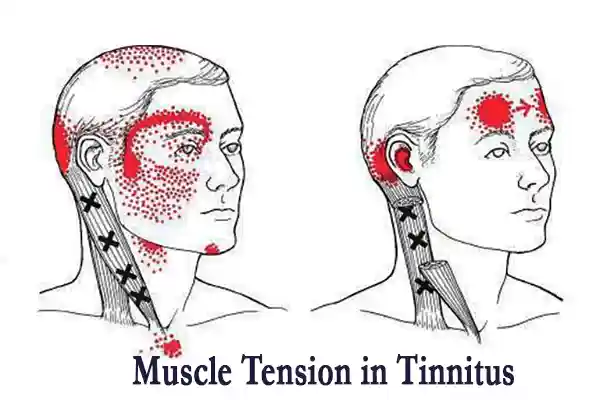
  • Fear and anxiety may cause avoidance behaviors, preventing us from taking necessary risks for growth.
  • Positive emotions like gratitude and excitement encourage motivation, creativity, and stronger social connections.

Developing self-management emotional intelligence allows individuals to regulate emotions and make thoughtful decisions rather than being controlled by momentary feelings. This skill is essential for success in both personal and professional life.

The Next Step: Learning to Master Emotional Self-Management

Now that we understand why emotional balance matters, we will explore how to self-manage emotions effectively. The following chapter will explore emotional imbalance, its causes, and the consequences of unmanaged emotions.

Emotional Imbalance: Causes, Signs, and Consequences

While emotional ups and downs are a natural part of life, emotional imbalance occurs when negative emotions become overwhelming, persistent, or difficult to manage. It can manifest as mood swings, chronic stress, or emotional numbness, affecting both mental and physical well-being. But what causes emotional imbalance, and what are the long-term consequences?

What Leads to Emotional Imbalance?

Several factors can disrupt emotional stability, making it harder to regulate emotional responses and maintain emotional balance. The most common causes include:

Chronic Stress and Burnout

High-pressure jobs, financial struggles, and personal conflicts can trigger prolonged stress. When stress becomes chronic, it disrupts the brain’s ability to regulate emotions, leading to heightened anxiety, irritability, and exhaustion.

Unresolved Trauma and Emotional Suppression

Past traumatic experiences, whether from childhood, relationships, or major life events, can leave lasting emotional wounds. Suppressing emotions instead of addressing them can cause emotional detachment, outbursts, or unpredictable mood shifts.

Unhealthy Lifestyle Choices

    • Poor sleep affects mood regulation and cognitive function, increasing emotional reactivity.
    • An unbalanced diet (high sugar, caffeine, processed foods) contributes to mood swings and irritability.
    • Lack of physical activity reduces endorphins and serotonin levels, increasing stress and emotional instability.

Hormonal and Neurological Imbalances

Fluctuations in hormones (such as cortisol, serotonin, or dopamine) significantly affect emotional regulation. Conditions like anxiety, depression, and even hormonal imbalances due to thyroid dysfunction or menopause can lead to emotional imbalance.

The Hidden Costs: Health, Relationships, and Performance

Ignoring emotional imbalance can have widespread consequences, affecting every aspect of life.

! Health Consequences

  • Increased risk of anxiety, depression, and panic attacks
  • Weakened immune system and frequent illnesses
  • Sleep disturbances, chronic fatigue, and headaches
  • Elevated blood pressure and heart disease risk

! Relationship Struggles

  • Difficulty in expressing emotions leads to misunderstandings
  • Increased conflicts due to mood swings and emotional outbursts
  • Emotional withdrawal or detachment from loved ones
  • Loss of social connections due to irritability or lack of engagement

! Impact on Performance and Decision-Making

  • Reduced concentration, productivity, and problem-solving abilities
  • Poor decision-making due to heightened emotional reactions
  • Increased procrastination and lack of motivation
  • Higher risk of burnout and job dissatisfaction

Breaking the Cycle: Moving Toward Emotional Self-Management

Now that we understand the dangers of emotional imbalance, the next step is learning how to self-manage emotions effectively. In the next chapter, we’ll explore emotional self-management, why it’s crucial, and how it enhances resilience and mental clarity.

The Power of Emotional Self-Management

In a world full of challenges, setbacks, and uncertainties, mastering emotional self-management is essential for maintaining inner stability and achieving personal and professional success. When emotions are left unchecked, they can dictate decisions, strain relationships, and even harm physical health. But with the right strategies, it’s possible to develop greater control over emotional responses and build resilience in the face of adversity.

What Is Emotional Self-Management and Why Is It Essential?

Emotional self-management is the ability to regulate emotions in a way that supports well-being, decision-making, and interpersonal relationships. It’s a key component of self-management emotional intelligence, enabling individuals to:

  • Stay calm under pressure and respond thoughtfully instead of reacting impulsively
  • Reduce stress and anxiety by managing emotional triggers effectively
  • Improve focus and productivity by minimizing emotional distractions
  • Strengthen relationships through better communication and emotional control

People who lack emotional self-management may experience frequent mood swings, struggle with emotional outbursts, or suppress emotions until they build up and cause breakdowns. Over time, poor emotional regulation can lead to chronic stress, burnout, and difficulty adapting to life’s inevitable changes.

How the Self-Management Emotional Intelligence Builds Resilience

Resilience is the ability to bounce back from setbacks, adapt to change, and keep moving forward despite challenges. Developing self-management emotional intelligence is key to building resilience, as it allows individuals to process emotions effectively rather than being controlled by them.

Recognizing and Understanding Emotional Triggers

By identifying emotional triggers—whether it’s criticism, failure, or stress—people can take proactive steps to regulate their emotional responses before they escalate.

Shifting from Reaction to Response

Instead of reacting impulsively, emotionally intelligent individuals pause, assess their feelings, and choose a response that aligns with their long-term goals and values. This skill is particularly valuable in high-stress situations requiring a level-headed approach.

Practicing Mindfulness and Self-Awareness

Mindfulness techniques, such as deep breathing, meditation, or body scanning, help individuals stay present and prevent emotions from spiraling out of control. Increased self-awareness also allows for greater emotional insight and regulation.

Using Biofeedback for Emotional Regulation

Cutting-edge biofeedback technologies provide real-time data on physiological responses, helping users develop better emotional control. Devices like:

From Emotional Control to Mastery: What’s Next?

Emotional self-management is the foundation for emotional balance, resilience, and success. As we move forward, we will delve deeper into emotional responses, examine how they shape our interactions, and explore practical strategies to master them effectively.

Mastering Emotional Responses: The Key to Inner Stability

Emotions influence every aspect of life—from decision-making and relationships to performance and well-being. While emotions themselves are neither good nor bad, how we respond to them can make all the difference. Mastering emotional responses allows for greater control, clarity, and resilience, preventing emotional upheavals from taking over.

How to Recognize and Control Your Emotional Responses

Before emotions can be managed, they must first be understood. Emotional responses are automatic reactions triggered by internal or external events. Recognizing them early is the first step toward developing emotional stability.

Identify Emotional Triggers

Understanding what sparks strong emotional reactions—such as criticism, failure, or stress—helps prevent impulsive responses. Keeping an emotional journal or practicing mindfulness can enhance self-awareness.

Understand the Role of the Nervous System

When faced with emotional challenges, the brain activates the fight-or-flight response, releasing stress hormones. Learning to regulate this reaction helps prevent emotional overwhelm and promotes clear thinking.

Pause Before Reacting

When emotions rise, take a deep breath, count to five, and assess the situation. This small pause can create space for a thoughtful response instead of an automatic reaction.

Use Biofeedback to Monitor Emotional Responses

Biofeedback tools provide real-time data on physiological reactions, helping individuals gain better control over their emotions:

Strategies to Shift from Reactivity to Emotional Control

Developing emotional control requires practice and the right techniques. The following strategies help shift from reactive patterns to intentional responses.

Cognitive Reframing: Change the Narrative

Instead of reacting emotionally to setbacks, shift perspective. Ask: Is there another way to interpret this situation? Reframing negative experiences helps reduce emotional distress.

 Breathing Techniques for Instant Calm

Slow, deep breathing activates the parasympathetic nervous system, signaling relaxation. Try 4-3-8 breathing: inhale for 4 seconds, hold for 3, exhale for 8.

Progressive Muscle Relaxation (PMR)

Tensing and relaxing different muscle groups releases stored emotional tension, bringing immediate calm. The best biofeedback device for muscle relaxation is Neurotrac Simplex.

Mindfulness and Meditation

Regular meditation strengthens self-management and emotional intelligence, improving emotional resilience over time.

Achieving Emotional Balance: What’s Next?

By mastering emotional responses, individuals regain control over their inner world, leading to emotional balance and improved decision-making. In the next chapter, we’ll explore advanced emotional self-management techniques, including biofeedback, for long-term emotional stability.

Biofeedback: A Science-Backed Approach to Emotional Balance

Achieving emotional balance requires more than just willpower; instead, it involves training both the mind and body to handle stress in a healthier way. Fortunately, biofeedback offers a cutting-edge, science-backed solution that empowers individuals to regulate their emotional responses. By providing real-time feedback on physiological states, this method not only enhances emotional self-management but also fosters long-term resilience.

Brain changes - emotional balance vs emotional imbalance

How Biofeedback Trains the Brain for Emotional Self-Management

Biofeedback monitors physiological signals—such as heart rate, brain activity, skin conductivity, and breathing patterns—and displays the data in real-time. Observing these responses allows individuals to control their emotional states and reduce stress more effectively.

Key Benefits of Biofeedback for Emotional Self-Management

  • Enhances awareness of emotional triggers
  • Helps shift from emotional imbalance to emotional stability
  • Trains the brain for better self-management emotional intelligence
  • Reduces stress-related symptoms like anxiety, irritability, and mood swings

The process involves using biofeedback devices that measure biological responses and provide instant feedback. This enables individuals to adjust their breathing, thoughts, or focus to create a state of calm and control.

The Role of Neurofeedback and Physiological Biofeedback

There are two primary types of biofeedback used for emotional regulation:

1. Neurofeedback: Training the Brain for Emotional Control

Neurofeedback is a form of biofeedback that focuses on brain activity. It helps individuals regulate emotional responses by training specific brain regions.

Mendi Headband: Uses blood flow measurement in the prefrontal cortex to enhance focus, emotional stability, and stress resilience.
NeuroVizr: Light stimulation influences brainwave activity, promoting relaxation and emotional well-being.

2. Physiological Biofeedback: Regulating the Body’s Emotional Signals

Emotions are deeply connected to physiological responses. Biofeedback devices help regulate these signals for better emotional control.

  • Heart Rate Variability (HRV) Biofeedback (BioSignals 5 sensor device): Trains the autonomic nervous system to manage stress and anxiety more effectively.
  • Breathing Biofeedback (BioSignals 5 sensor device): Improves breathing patterns for emotional regulation.
  • Galvanic Skin Response (GSR) Biofeedback (BioSignals 5 sensor device): Detects emotional arousal and helps individuals learn to calm their reactions.
  • Thermal Biofeedback (BioSignals 5 sensor device): Tracks stress-related temperature changes and teaches relaxation techniques.

From Biofeedback to Lasting Emotional Mastery

Biofeedback is a powerful tool for achieving emotional balance. It provides insights into emotional and physiological patterns. By integrating these techniques, individuals can develop long-term emotional resilience and self-regulation skills.
In the next chapter, we’ll explore how to integrate biofeedback techniques into daily life for sustainable emotional well-being.

Top Biofeedback Devices for Emotional Self-Management

Technology has made emotional self-management more accessible than ever. With advanced biofeedback devices, individuals can monitor and regulate their emotional responses, achieving greater emotional balance and resilience. These tools provide real-time feedback, helping users train their nervous system for stress reduction, focus, and overall well-being.
Let’s explore some of the most effective biofeedback and neurofeedback devices for emotional regulation.

Mendi Headband: Training Blood Flow for a Calmer Mind

The Mendi Headband is a groundbreaking neurofeedback device that enhances emotional regulation by training prefrontal cortex activity. This brain region is responsible for decision-making, impulse control, and emotional balance.

How It Works:

  • Uses functional near-infrared spectroscopy (fNIRS) to measure blood flow in the prefrontal cortex.
  • Encourages the brain to optimize its function through interactive mental exercises.
  • Trains users to stay calm, focused, and emotionally resilient.

Benefits for Emotional Self-Management:

✅ Strengthens self-management emotional intelligence
✅ Reduces stress and anxiety levels
✅ Improves focus and impulse control

NeuroVizr: Light and Sound for Emotional Regulation

The NeuroVizr is a brainwave entrainment device that uses pulsing light and sound stimulation to influence brain activity and promote emotional stability.

How It Works:

  • Uses flashing light frequencies and audio stimulation to guide the brain into desired states (relaxation, focus, or energy).
  • Helps regulate emotional responses by influencing neural activity.
  • Supports mental clarity and reduces emotional imbalance.

Benefits for Emotional Regulation:

✅ Induces relaxation and emotional stability
✅ Enhances cognitive function and mental clarity
✅ Reduces stress and improves sleep quality

BioSignals HRV, GSR, Thermal, and Breathing: A Holistic Biofeedback Toolkit

While understanding the theory of emotional self-regulation is crucial, the fundamental transformation begins with practice. This is where biofeedback becomes an invaluable tool, acting as a mirror to our internal state. Among the advanced devices available, the Biosignal 5 sensor biofeedback system stands out as a comprehensive toolkit for anyone seeking to achieve deeper emotional balance. It translates the subtle language of the autonomic nervous system (ANS) into precise, real-time data, empowering users to move from feeling overwhelmed by their physiology to actively guiding it.

From Abstract to Tangible: The Principles of Biofeedback

Biofeedback is founded on a simple yet powerful principle: if you can measure a physiological function, you can learn to control it. By receiving immediate feedback about processes typically outside conscious awareness—like heart rate, sweat gland activity, or skin temperature—we can develop strategies to influence them. The Biosignal 5 makes this principle accessible, providing a direct window into the balance between the sympathetic (SNS – “fight-or-flight”) and parasympathetic (PNS – “rest-and-digest”) branches of the ANS.

The Biosignal 5: A Multi-Dimensional Approach to Self-Awareness

What sets the Biosignal 5 apart is its integrated multi-sensor design. Instead of focusing on a single metric, it provides a holistic picture of your autonomic state by simultaneously monitoring four key biosignals:

Heart Rate Variability (HRV): The Rhythm of Resilience

HRV is the subtle variation in time between each heartbeat. It is a primary indicator of ANS flexibility and emotional regulation capacity. A high, complex HRV signifies a healthy balance where the body can efficiently adapt to stress and recover quickly. The Biosignal 5 uses a precise pulse plethysmograph (PPG) sensor to measure HRV. Through guided breathing exercises, users can see in real-time how slow, diaphragmatic breathing increases their HRV, directly strengthening the calming influence of the parasympathetic nervous system.

Galvanic Skin Response (GSR): The Gauge of Arousal

Also known as Electrodermal Activity (EDA), GSR measures the electrical conductivity of your skin, which increases slightly as you sweat. This is one of the most sensitive indicators of emotional arousal and SNS activation. The Biosignal 5’s GSR sensors provide an immediate feedback loop for stress or anxiety. By observing the GSR signal rise during a stressful thought and then fall as you practice a calming technique, you gain concrete evidence of your ability to self-soothe.

Thermal Feedback: The Flow of Relaxation

Peripheral skin temperature is a direct reflection of blood flow. During stress (SNS dominance), blood vessels constrict, moving blood away from the extremities and causing hands and feet to feel cold. As you relax (PNS dominance), these vessels dilate, warming the hands. The Biosignal 5’s temperature sensor allows users to practice “warming their hands” through visualization and relaxation, a classic biofeedback technique that directly trains the body to shift out of a stress state.

BioSignals Combined Multimodal Biofeedback Home-Use Device to manage anxiety
Breathing (Respiration): The Lever of Control

Breathing is unique—it is both an automatic and a voluntarily controlled function. The Biosignal 5 includes a respiration belt that tracks breathing rate and depth. Erratic, shallow chest breathing is linked to anxiety, while slow, deep diaphragmatic breathing promotes calm. The device provides real-time feedback on breathing patterns, guiding users to pace their breath in a way that optimally stimulates the vagus nerve and enhances HRV, creating a powerful positive feedback loop for relaxation.

Integrating the Signals for Powerful Insights

The true power of the Biosignal 5 lies in the correlation of these signals. For instance, you might observe a scenario where:

  • A stressful thought arises.
  • Your GSR spike provides the first clue of arousal.
  • Your breathing becomes shallow and rapid.
  • Your HRV pattern becomes more rigid.
  • Your finger temperature begins to drop.

Witnessing this cascade in real-time makes the mind-body connection undeniable. More importantly, you can then intervene using a breathing or mindfulness technique and watch the entire system return to balance: GSR settles, HRV becomes complex, and temperature rises. This integrated feedback transforms abstract concepts like “calm down” into a tangible, learnable skill.

Conclusion: Empowering Your Self-Management Journey

The Biosignal 5 is more than a device; it is a personal biofeedback laboratory. By making the invisible visible, it demystifies the body’s response to emotion and provides a practical pathway to mastery. In the context of emotional balance and self-management, it serves as a dedicated trainer, helping individuals move from reactive patterns to proactive, conscious control. By regularly engaging with this holistic toolkit, users can rewire their nervous system’s habitual responses, building the resilience and emotional flexibility that are the hallmarks of true well-being.

HeartMath in Regulating Emotional Balance

While many biofeedback methods target the brain or specific stress responses, the HeartMath Institute has pioneered a unique approach focused on the heart. HeartMath techniques are designed to create heart coherence, a state where the heart, brain, and nervous system are in harmonious synchronization. This state is fundamental to achieving deep emotional balance and resilience.

HeartMath operates on the principle that the heart has its own complex nervous system (“the heart-brain”) that communicates with the brain. During stress or emotional imbalance, heart rhythms become erratic and disordered—a pattern known as incoherence. This incoherence signals the brain to activate the stress response, impairing clear thinking and emotional control.

The core of the HeartMath method involves using a biofeedback device, often paired with a sensor on the earlobe or finger, to display your heart rate variability (HRV) in real-time. Through simple exercises like Focused Heart Breathing—where you consciously breathe slowly and evenly while focusing on cultivating a positive emotion, such as appreciation or care—you learn to shift your heart rhythm into a smooth, wave-like pattern of coherence.

The benefits are profound. Achieving heart coherence quickly reduces cortisol levels, calms the nervous system, and enhances cognitive function. By practicing these techniques regularly, individuals can self-generate a state of calm on demand, leading to improved emotional regulation, better decision-making, and a greater capacity to navigate daily challenges with stability and clarity. It effectively trains the body’s intrinsic regulatory systems to support, rather than undermine, emotional well-being.

Choosing the Right Biofeedback Device for Your Needs

Each biofeedback device offers unique benefits, but the best choice depends on individual goals:

  • For cognitive and emotional control → Mendi Headband
  • For brainwave and sensory regulation → NeuroVizr
  • For heart rate-based emotional self-management → BioSignals 5 sensor device or HeartMath
  • For stress detection and control → BioSignals 5 sensor device
  • For relaxation and thermal biofeedback → BioSignals 5 sensor device
  • For breath-based emotional regulation → BioSignals 5 sensor device

Harnessing Biofeedback for Lasting Emotional Balance

By integrating biofeedback technology, individuals can train their minds and bodies for long-term emotional stability. In the next chapter, we’ll explore practical strategies for incorporating biofeedback into daily life for sustainable emotional well-being.

How to Build Lasting Emotional Balance in Daily Life

Achieving emotional balance is not a one-time effort—it’s a lifelong practice that requires self-awareness, consistency, and the right tools. By integrating biofeedback, mindfulness, and self-reflection into daily life, you can build emotional resilience and enhance your overall well-being.

In this chapter, we’ll explore practical strategies for mastering your emotional responses, reducing stress, and cultivating long-term emotional self-management.

Practical Techniques for Everyday Emotional Mastery

Maintaining emotional balance involves recognizing emotional triggers, regulating stress, and making intentional lifestyle choices. Here are key techniques to develop emotional stability:

Monitor and Regulate Your Stress Levels with Biofeedback

📌 Why It Works: Stress disrupts emotional balance. Biofeedback helps you track and regulate physiological responses linked to stress and emotional arousal.

✅ Use HeartMath or BioSignals 5 sensor device to monitor and improve heart rate variability for emotional resilience.
✅ Practice GSR biofeedback to track emotional arousal and develop better stress control.
✅ Train your brain with the Mendi Headband to strengthen cognitive and emotional regulation.

Practice Deep Breathing for Instant Emotional Control

📌 Why It Works: Conscious breathing slows the heart rate, reduces cortisol (stress hormone), and activates the parasympathetic nervous system, promoting calmness.

✅ Use BioSignals 5 sensor device to track and improve your breathing patterns.
✅ Try box breathing (inhale for 4 seconds, hold for 4 seconds, exhale for 4 seconds, hold for 4 seconds).
✅ Engage in diaphragmatic breathing to shift from reactive to controlled responses.

Strengthen Self-Awareness with Emotional Journaling

📌 Why It Works: Writing down your thoughts and emotions helps identify patterns, triggers, and areas for growth.

✅ Reflect on emotional triggers and note how you respond to stressful situations.
✅ Keep a mood journal to track daily emotional shifts.
✅ Pair journaling with biofeedback to monitor progress in emotional regulation.

Use Mindfulness to Stay Present and Reduce Overwhelm

📌 Why It Works: Mindfulness helps break the cycle of emotional reactivity by bringing attention to the present moment.

✅ Practice mindfulness meditation for 5–10 minutes daily.
✅ Use NeuroVizr’s light and sound technology to enhance meditation and mental clarity.
✅ Engage in mindful walking or mindful eating to stay grounded.

Develop Healthy Sleep and Lifestyle Habits

📌 Why It Works: Poor sleep and unhealthy habits contribute to emotional imbalance and increased stress. Optimizing your routine supports emotional stability.

✅ Maintain consistent sleep schedules for better mood regulation.
✅ Engage in regular physical activity to balance stress hormones.
✅ Reduce caffeine, sugar, and processed foods, which can impact emotional health.

Cognitive Behavioral Therapy (CBT) for Emotional Balance

Cognitive Behavioral Therapy (CBT) is one of the most effective psychological approaches to managing emotions. It focuses on changing negative thought patterns and behaviors contributing to emotional imbalance.

How CBT Helps with Emotional Self-Management

📌 Why It Works: Your thoughts directly influence your emotions and reactions. By reshaping your thinking patterns, you can improve emotional resilience and avoid unnecessary distress.

✅ Identify Cognitive Distortions: Learn to recognize exaggerated negative thoughts (e.g., “I always fail,” “No one likes me”) and replace them with more balanced, realistic perspectives.
✅ Challenge Negative Thoughts: Ask yourself, Is this thought based on facts or assumptions? Reframing irrational thoughts reduces emotional distress.
✅ Practice Thought Replacement: Replace automatic negative thoughts with constructive affirmations (e.g., “I can handle this,” “I am capable of learning and adapting”).

Integrating CBT with Biofeedback and Mindfulness

📌 Why It Works: Combining CBT with biofeedback and mindfulness creates a powerful, science-backed approach to emotional self-management.

✅ Use biofeedback tools (HRV, GSR, Mendi Headband) to track physiological responses while practicing CBT techniques.
✅ Apply CBT strategies during mindfulness sessions to reinforce new thinking habits.
✅ Journaling CBT exercises alongside biofeedback data helps visualize progress and reinforce positive change.

Combining Biofeedback, Mindfulness, and CBT for Long-Term Emotional Balance

For lasting emotional self-management, it’s essential to combine multiple techniques that reinforce each other. Here’s how:

✔ Start your day with mindfulness practice and a quick HRV biofeedback session.
✔ Use biofeedback tools throughout the day to monitor emotional responses.
✔ Apply CBT techniques when negative thoughts arise to shift toward a balanced perspective.
✔ Journal in the evening to reflect on emotional patterns and progress.
✔ Incorporate breathwork whenever you feel stress building up.

Final Thoughts: Mastering Emotional Balance for Life

Developing emotional balance is a continuous process, but with biofeedback, mindfulness, and CBT, you can create a solid foundation for long-term emotional intelligence and resilience.
By implementing these strategies into daily life, you’ll enhance your ability to stay calm, focused, and in control—no matter what challenges come your way.

Conclusion: Take Control of Your Emotional Well-Being

Emotional well-being is not just about managing stress—it’s about thriving in all aspects of life. By prioritizing self-management emotional intelligence, you can cultivate resilience, enhance decision-making, and improve your overall quality of life. Throughout this article, we’ve explored the causes of emotional imbalance, the power of emotional self-management, and the science-backed tools like biofeedback and neurofeedback that can help you take control of your emotions.

Now, let’s wrap up with key insights and actionable next steps.

Why Prioritizing Self-Management Emotional Intelligence Transforms Lives

Developing self-management emotional intelligence isn’t just a personal goal—it’s a transformational skill that affects every area of your life:

Better Decision-Making – Emotional clarity leads to smarter choices in personal and professional life.
Stronger Relationships – Managing your emotional responses fosters healthier communication and deeper connections.
Improved Mental and Physical Health – Reducing emotional imbalance lowers stress, improves sleep, and enhances overall well-being.
Higher Performance and Productivity – Emotional regulation boosts focus, motivation, and resilience, whether in academics, sports, or the workplace.

When you take charge of your emotions, you don’t just react to life—you actively shape it to align with your goals and values.

FAQ - Emotional Balance vs Emotional Imbalance

What is emotional balance, and why is it important?

Emotional balance is the ability to experience a full range of emotions without being overwhelmed by them. It enables you to handle stress effectively, make rational decisions, maintain healthy relationships, and enhance your focus. According to the article, emotional imbalance can lead to burnout, poor decision-making, and physical health issues, making emotional balance crucial for overall well-being.

What is self-management emotional intelligence?

Self-management emotional intelligence is a key component of emotional intelligence (EQ) that involves the ability to regulate your emotions in a way that supports well-being and decision-making. It enables you to stay calm under pressure, reduce stress, improve focus, and strengthen relationships by responding thoughtfully instead of reacting impulsively.

How can biofeedback help with emotional self-management?

Biofeedback is a science-backed approach that utilizes devices to provide real-time data on physiological signals, such as heart rate, brain activity, and skin conductivity. This feedback helps individuals consciously regulate these responses, thereby enhancing emotional control, reducing stress-related symptoms such as anxiety, and fostering long-term emotional resilience.

What are the best biofeedback devices for emotional regulation?
  • For cognitive and emotional control: Mendi Headband (Neurofeedback)
  • For brainwave entrainment: NeuroVizr (Light and Sound)
  • For heart rate-based training: HeartMath (HRV Biofeedback)
  • For stress detection: BioSignals 5 sensor device (HRV, Temperature, GSR, and Breathing Biofeedback)
What are some immediate techniques to control an emotional response?
  • Pause and Breathe: Take a deep breath and count to five before reacting.
  • 4-7-8 Breathing: Inhale for 4 seconds, hold for 7, exhale for 8 to activate calm.
  • Cognitive Reframing: Ask yourself if there’s another way to interpret the situation to reduce distress.

Your Next Steps to Achieve Lasting Emotional Balance

Ready to take control of your emotional well-being? Here’s a roadmap to get started:

Step 1: Start Tracking Your Emotional Patterns

📌 Why? Awareness is the first step to change.

✅ Keep an emotional journal to track your triggers and responses.
✅ Use biofeedback devices (HRV, GSR, Mendi Headband) to monitor stress and emotional fluctuations.

Step 2: Implement Daily Emotional Self-Management Techniques

📌 Why? Small habits lead to long-term transformation.

✅ Practice breathwork and relaxation techniques (BioSignals 5 sensor device, HeartMath HRV training).
✅ Incorporate mindfulness and meditation (with NeuroVizr for enhanced focus).
✅ Apply CBT strategies to shift negative thinking patterns and reframe stressors.

Step 3: Train Your Brain with Biofeedback

📌 Why? Biofeedback strengthens emotional resilience by optimizing brain function.

✅ Use the Mendi Headband to improve emotional regulation and mental clarity.
✅ Practice GSR and thermal biofeedback to train your stress response.
✅ Experiment with light and sound neurofeedback (NeuroVizr) for deeper relaxation.

Step 4: Stay Consistent and Measure Progress

📌 Why? Long-term success requires consistency.

✅ Set reminders to practice biofeedback, mindfulness, and emotional reflection daily.
✅ Regularly assess your emotional resilience and progress through self-check-ins.
✅ Join communities or programs focused on emotional well-being for support and motivation.

Final Thought: Take the First Step Today!

Emotional mastery doesn’t happen overnight, but each small step brings you closer to lasting balance and control. Whether you start by practicing mindfulness, using biofeedback, or applying CBT techniques, the key is to take action.

Your emotional well-being is in your hands—embrace the journey and start building the balanced, resilient life you deserve!

Advanced Pain Management Techniques: Behind the Science

Advanced Pain Management Techniques

Pain is a complex and universal experience that affects individuals in different ways. Understanding what is pain, its causes, and how it can be managed is essential for improving quality of life. While traditional treatments often focus on short-term solutions, advanced pain management offers innovative methods to address the underlying causes of discomfort. By exploring modern techniques of pain management, individuals can achieve effective and sustainable relief, even from chronic conditions. Integrating science and technology has led to the development of pain management techniques that target specific pain mechanisms and address the pathology of pain. Moreover, these advancements have made pain management at home a reality, empowering individuals to take control of their health with cutting-edge pain management devices.

What is Pain?

Pain is the body’s natural alarm system, alerting us to potential harm or injury. But what is pain exactly? It is a complex sensory and emotional experience caused by the activation of specific nerve pathways. These pathways send signals from the site of injury or inflammation to the brain, where the pain sensation is processed and interpreted.

Pain can be classified into two primary types:

1. Acute Pain: This is short-term pain that arises from an injury, surgery, or temporary condition. It typically subsides once the underlying cause is treated.
2. Chronic Pain: This is persistent or recurring pain that lasts for months or even years. Chronic pain is often associated with deeper issues related to the pathology of pain, such as nerve damage or long-term conditions like arthritis.

The complexity of pain lies in its pain mechanisms, which include both physical and psychological factors. These mechanisms involve the activation of nociceptors (pain receptors), which detect harmful stimuli like heat, pressure, or inflammation. Once activated, these receptors send signals through the spinal cord to the brain.

Understanding pain mechanisms is crucial for effective treatment. For example, chronic pain may involve overactive nerve pathways, making the body more sensitive to pain even without injury. This knowledge forms the foundation for developing advanced pain management strategies.

With advancements in science and technology, modern pain management techniques focus on addressing both the sensory and emotional aspects of pain. These include targeting the pathology of pain at its source and offering natural solutions that reduce reliance on medication. Whether acute or chronic, understanding what is pain is the first step toward finding effective relief.

Pain Mechanisms: Understanding the Pathology of Pain

To effectively treat pain, it is crucial to understand the pain mechanisms that underlie this complex experience. Pain arises from the interaction of sensory signals and the nervous system, which processes and interprets these signals in the brain. At the core of this process lies the pathology of pain, which explains how pain develops and why it persists in certain conditions.

Pain begins when nociceptors, the body’s specialized pain receptors, detect harmful stimuli such as injury, inflammation, or intense pressure. These nociceptors generate electrical signals that travel through the peripheral nerves to the spinal cord and, ultimately, the brain. The brain then processes these signals, leading to the perception of pain.

There are two primary categories of pain mechanisms:

  1. Nociceptive Pain: This occurs when physical injuries, burns, or inflammation activate nociceptors. It is typically acute and resolves once the injury heals.
  2. Neuropathic Pain: This type of pain results from damage or dysfunction in the nervous system. It is often chronic and can arise from conditions like diabetes, multiple sclerosis, or spinal cord injuries.

The pathology of pain also includes changes in the nervous system over time. For example, chronic pain can cause the nervous system to become hypersensitive, amplifying pain signals even in the absence of an injury. This phenomenon, known as central sensitization, highlights the need for advanced pain management solutions.

Modern pain management techniques aim to address these underlying mechanisms, focusing on reducing inflammation, calming overactive nerves, and interrupting chronic pain cycles. By understanding the pathology of pain, healthcare providers can develop personalized strategies for effective pain management at home or in clinical settings, offering hope to those living with persistent discomfort.

Why Do We Need Advanced Pain Management?

Pain, especially when it becomes chronic, can severely impact a person’s physical, emotional, and social well-being. Traditional approaches often rely on medications, which may provide temporary relief but rarely address the root cause of discomfort. This is where advanced pain management plays a critical role.

Modern pain management techniques go beyond masking symptoms; they target the underlying pathology of pain and the intricate pain mechanisms that contribute to chronic conditions. These innovative methods integrate technology, science, and holistic care, offering sustainable solutions that reduce pharmaceutical dependency.

One of the main reasons we need advanced pain management is the prevalence of chronic pain conditions such as arthritis, fibromyalgia, and nerve-related pain. Traditional treatments are often insufficient for these complex conditions. Advanced methods, such as biofeedback and neurofeedback, address the deeper pain mechanisms, helping patients regain control over their bodies.

Additionally, the need for non-invasive and natural pain relief has grown significantly. Many individuals seek pain management techniques that are safe, drug-free, and effective in the long term. These include biofeedback devices, mindfulness-based therapies, and wearable technologies that allow for pain management at home.

Another compelling reason is the impact of pain on mental health. Chronic pain often leads to stress, anxiety, and depression, creating a vicious cycle that exacerbates discomfort. Advanced pain management techniques focus on breaking this cycle by addressing both physical and emotional pain.

In summary, the need for advanced pain management stems from the limitations of traditional approaches and the growing demand for personalized, effective, and sustainable solutions. With advancements in science and technology, individuals can now access innovative tools and therapies that empower them to manage pain more effectively.

Key Techniques of Pain Management

Managing pain effectively requires a combination of approaches tailored to an individual’s specific needs. Modern techniques of pain management incorporate both traditional and advanced strategies to address the underlying pain mechanisms and provide long-lasting relief. Below are some of the most effective methods:

Non-Invasive Techniques

Non-invasive methods focus on reducing pain without surgical interventions. These include physical therapies such as

  • heat and cold application,
  • transcutaneous electrical nerve stimulation (TENS),
  • and massage therapy.

These pain management techniques are ideal for individuals seeking natural pain relief and avoiding medication dependency.

Hot and Cold Pain Management Technique

Biofeedback Therapy

Biofeedback therapy is a cornerstone of advanced pain management. This innovative technique uses sensors to monitor physiological responses, such as muscle tension, heart rate, and skin temperature. By learning to control these responses consciously, patients can manage the pathology of pain more effectively. Biofeedback is particularly beneficial for conditions like migraines, muscle pain, and stress-related disorders, making it an invaluable tool for pain management at home. In our upcoming articles, we will explore each biofeedback modality in greater detail, including their specific indications, techniques, and how they can be used to manage pain in various conditions.

Medication-Based Pain Relief

Medication-Based Pain Relief

Medication remains a widely used method for addressing acute and chronic pain. Pain-relief medications, such as nonsteroidal anti-inflammatory drugs (NSAIDs), opioids, and antidepressants, target specific pain mechanisms. However, reliance on medication often comes with side effects, which is why it is usually combined with other techniques of pain management.

Physical and Psychological Therapies

Physical therapies, such as physiotherapy and exercise, help to strengthen muscles, improve mobility, and alleviate pain. Psychological therapies, including cognitive behavioral therapy (CBT) and mindfulness, address the emotional and mental components of pain. These therapies help patients break the cycle of chronic pain by reducing stress and improving coping mechanisms.

By combining these pain management techniques, individuals can achieve comprehensive and effective relief tailored to their unique needs.

Pain Management Pysical Therapy

The Future of Advanced Pain Management

The future of advanced pain management is promising, driven by rapid advancements in technology, neuroscience, and personalized medicine. Emerging innovations are revolutionizing pain management techniques, offering more effective and targeted solutions to address the underlying pain mechanisms and the pathology of pain.

One of the most exciting developments is the integration of artificial intelligence (AI) into pain management devices. AI-powered tools can analyze real-time data to predict pain patterns, allowing for highly personalized treatment plans. This ensures that individuals receive interventions tailored to their specific needs, improving outcomes significantly.

Another promising trend is the rise of wearable and portable technologies, enabling pain management at home. Devices such as biofeedback and neurofeedback systems are becoming more accessible, allowing users to monitor and manage pain in real-time. These tools empower patients to take control of their health while reducing reliance on medications.

Non-invasive approaches are also evolving, with advancements in therapies such as transcranial magnetic stimulation (TMS) and low-level laser therapy. These natural pain relief methods target specific pain mechanisms, such as nerve hyperactivity, without the need for surgery or drugs.

Regenerative medicine, including stem cell therapy and gene editing, offers hope for addressing the root causes of chronic pain. These therapies aim to repair damaged tissues and nerves, addressing the pathology of pain at its core.

Lastly, there is growing recognition of the importance of holistic care. Future techniques of pain management will likely incorporate physical, psychological, and emotional therapies in a more integrated manner. This comprehensive approach will further enhance the effectiveness of advanced pain management strategies.

As research continues to uncover new insights, the future holds immense potential for transforming how pain is understood and treated, improving the lives of millions worldwide.

FAQ - Advanced Pain Management Techniques

How does biofeedback help with pain management?

Biofeedback therapy is a cornerstone of advanced pain management. It utilizes sensors to monitor physiological responses, such as muscle tension and heart rate. By learning to control these functions consciously, patients can directly influence their pain pathology. It is particularly effective for migraines, muscle pain, and stress-related disorders, and can be facilitated through pain management devices for home use.

What are some non-invasive pain management techniques?

The article highlights several non-invasive techniques of pain management that provide natural pain relief. These include:

  • Physical therapies (heat/cold application, massage)
  • Transcutaneous Electrical Nerve Stimulation (TENS)
  • Biofeedback devices
  • Psychological therapies like mindfulness and cognitive-behavioral therapy (CBT).
Why is advanced pain management better than just taking medication?

While medication can help, it often offers temporary relief and may have side effects. Advanced pain management is more effective because it aims to address the root cause of discomfort by targeting specific pain mechanisms. It offers a more holistic, personalized, and sustainable approach, reducing long-term reliance on drugs and empowering individuals to manage their pain at home.
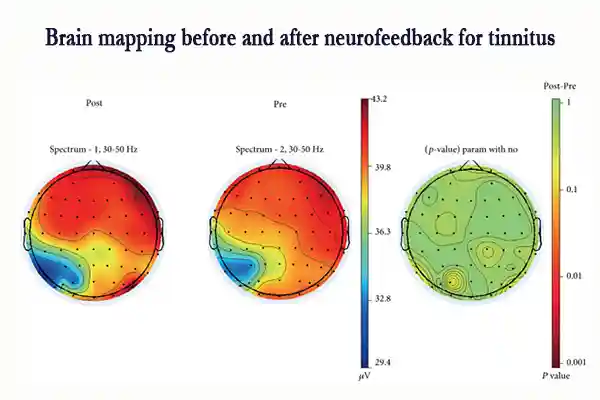
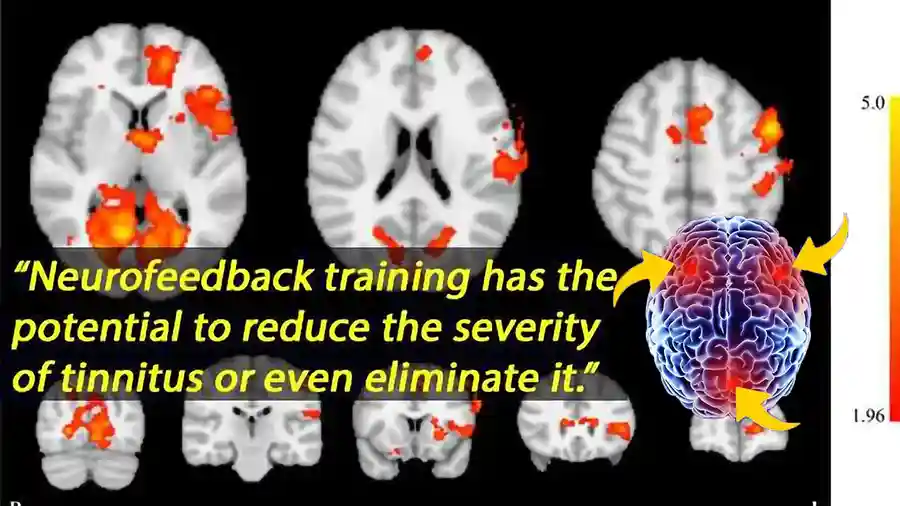
How does chronic pain affect mental health?

The article explains that chronic pain often leads to stress, anxiety, and depression, creating a vicious cycle that worsens the perception of pain. Advanced pain management recognizes this link and incorporates psychological therapies to break the cycle by addressing both the physical sensations and the emotional toll of pain.

What is the difference between acute pain and chronic pain?

According to the article, acute pain is short-term pain resulting from an injury, surgery, or temporary condition that subsides as the cause heals. Chronic pain, however, is persistent, lasting for months or years, and is often linked to deeper issues like nerve damage or conditions such as arthritis. Understanding this distinction is crucial for selecting the proper pain management techniques.

Conclusion

Pain is a complex experience, deeply rooted in the intricate pain mechanisms of the body and the pathology of pain. Understanding what is pain and how it manifests is the first step toward effective relief. Modern advancements have redefined the field of advanced pain management, offering innovative tools and therapies that go beyond traditional methods to address pain at its source.

Through a combination of non-invasive approaches, pain management techniques, and therapies such as biofeedback, individuals now have access to more personalized and effective care. These innovations empower patients to manage discomfort proactively, whether through natural pain relief strategies or advanced pain management devices designed for home use.

The integration of technology with holistic practices has revolutionized the way we approach pain. From wearable devices to regenerative medicine, modern solutions target the underlying pathology of pain with precision. At the same time, physical and psychological therapies help address the emotional toll of chronic pain, creating a well-rounded approach to recovery.

As science continues to evolve, the future of pain management at home looks brighter than ever. The combination of accessible tools and cutting-edge therapies ensures that pain can be managed effectively without heavy reliance on medications.

In conclusion, understanding what is pain and utilizing advanced techniques of pain management paves the way for sustainable relief. By addressing the root causes and empowering individuals with knowledge and tools, modern pain management offers hope and improved quality of life for those struggling with both acute and chronic conditions. Whether through biofeedback therapy, innovative technologies, or holistic practices, the path to effective pain control has never been more achievable

HRV Training

HRV Training. How to improve performance

In recent years, integrating HRV training (Heart Rate Variability) with biofeedback guidance has emerged as a promising avenue for enhancing performance across various domains. This approach offers individuals real-time insights and cues to optimize their HRV metrics and overall performance outcomes.

HRV, the variation in the time interval between heartbeats, is a window into the autonomic nervous system’s activity, reflecting the balance between sympathetic and parasympathetic influences. Individuals can use targeted interventions, such as controlled breathing exercises and mindfulness techniques, to modulate their HRV. This modulation can then influence their physiological and psychological states.

Introduction to HRV Training

Heart Rate Variability (HRV) training aims to improve the function of the autonomic nervous system. It works by modulating the variation in the time intervals between heartbeats. This variability indicates the balance between sympathetic (fight-or-flight) and parasympathetic (rest-and-digest) nervous system activity. HRV training typically involves controlled breathing exercises, meditation, and relaxation techniques influencing HRV patterns. By enhancing HRV, individuals can potentially improve their resilience to stress. They may also experience better recovery and optimize performance in various aspects of life.

HRV Indexes

A high HRV index indicates more significant variability between heartbeats. This suggests a well-regulated and flexible autonomic nervous system. Such regulation is associated with better health outcomes and greater resilience to stress. A high HRV index typically falls within the 50-100 milliseconds range. However, specific values can vary based on age and overall health status.

A low HRV index reflects reduced variability between heartbeats, indicating a more rigid and less adaptable autonomic nervous system. Lower HRV often correlates with an increased risk of health issues, including cardiovascular disease, anxiety disorders, and poor emotional regulation. Typically, a low HRV index is below 50 milliseconds. Monitoring HRV indices offers valuable insights into an individual’s physiological and psychological well-being. Understanding these indices can guide interventions aimed at improving overall health and performance.

HRV training leverages the body’s ability to adapt and respond to stressors. Consistent practice allows individuals to train their autonomic nervous system to achieve better balance and coherence. This results in increased variability in heart rate patterns. Consistent practice can improve cardiovascular health, emotional regulation, cognitive function, and well-being.

Indications for using HRV training

Experts may recommend HRV training as a complementary therapy for conditions such as hypertension, anxiety disorders, depression, and chronic pain. These conditions often involve dysregulation of the autonomic nervous system.

Stress Management:

HRV training helps individuals cope with stress by promoting relaxation and reducing its physiological effects on the body. Improved HRV links to greater resilience to stressors and better emotional regulation.

Athletic Performance Enhancement:

HRV training can benefit athletes by optimizing performance and enhancing recovery. It also helps manage the demands of training and competition more effectively. Enhanced HRV is linked to better endurance, faster recovery, and overall athletic performance.

Anxiety Reduction: 

Experts may recommend HRV training as a complementary therapy for individuals experiencing anxiety disorders. Increasing HRV is associated with reduced anxiety symptoms, improved mood, and greater overall well-being.

Cardiovascular Health:

HRV training can benefit individuals with cardiovascular conditions like hypertension and heart disease. Improving HRV is linked to better cardiovascular function, lower blood pressure, and reduced risk of adverse cardiac events.

Chronic Pain Management:

Individuals suffering from chronic pain conditions may benefit from HRV training as part of a comprehensive pain management strategy. Increasing HRV is associated with reduced pain perception, improved pain tolerance, and enhanced quality of life.

Sleep Quality Improvement: 

HRV training has positively impacted sleep quality and duration. Improving HRV can lead to better sleep patterns, fewer disturbances, and enhanced sleep quality.

Emotional Regulation:

HRV training can help individuals better regulate their emotions and respond more effectively to stressful situations. Increasing HRV is associated with improved emotional resilience, excellent emotional stability, and enhanced coping abilities.

Cognitive Function Enhancement: 

HRV training improves cognitive function, including enhanced focus, attention, and memory. Increasing HRV may support better cognitive performance and overall mental acuity.

Resilience Building:

HRV training can help build resilience to physical and psychological stressors. Improving HRV promotes greater adaptability, increased resilience, and an enhanced ability to bounce back from challenges.

General Well-being Promotion:

HRV training can promote overall well-being and foster a sense of balance and harmony between mind and body. Increasing HRV is associated with excellent overall health, vitality, and quality of life.

These indications highlight the wide range of benefits HRV training offers. It can improve physical, emotional, and cognitive aspects of health and performance.

The Importance of Biofeedback Guidance for HRV Training

The main distinction between traditional HRV training and HRV training with biofeedback guidance is providing real-time feedback. Both approaches aim to modulate HRV to enhance performance and well-being. However, biofeedback-guided training provides immediate insights into physiological responses, enabling more precise and personalized interventions. The real-time feedback loop enhances the efficacy and efficiency of HRV training. This leads to better outcomes compared to traditional methods alone.

The HRV training biofeedback loop continuously monitors HRV parameters. It interprets physiological responses and adjusts training techniques based on real-time feedback. Sensors detect changes in HRV patterns and present them to the individual through visual or auditory cues. This feedback enables individuals to modulate their HRV responses, improving performance, stress management, and overall well-being.

In summary, while HRV training offers significant potential benefits, incorporating biofeedback guidance can enhance its effectiveness and efficiency. Biofeedback gives individuals real-time information about their physiological responses. This information allows them to adjust their techniques and practices for optimal results. The immediate feedback loop enhances awareness and control over HRV patterns, leading to more targeted and personalized interventions. This approach improves outcomes in stress management, athletic performance, and emotional regulation.

Moreover, biofeedback guidance ensures that individuals adhere to proper techniques and protocols, maximizing the therapeutic benefits of HRV training. Integrating biofeedback into HRV training enhances performance outcomes and deepens the understanding of the mind-body connection. It also enables individuals to modulate HRV patterns more effectively, improving health and performance.

Parameters of HRV Training with Biofeedback Guidance

Heart Rate Variability (HRV) training with biofeedback guidance monitors various parameters and indexes. This approach helps optimize training outcomes and health management. Understanding these parameters is crucial for assessing autonomic nervous system function and guiding interventions to improve HRV patterns.

The interval between successive normal heartbeats (between consecutive R waves on an electrocardiogram) tracing is called the NN interval. This interval is also referred to as the normal-to-normal interval. In other words, it measures the time elapsed from one heartbeat to the next normal heartbeat. The NN interval is the basic unit for calculating heart rate variability (HRV). It represents the heart’s rhythm in a stable state.

NN intervals are crucial for analyzing HRV because they reveal variations in the timing between heartbeats. This variation reflects the dynamic interplay of the autonomic nervous system. HRV analysis assesses the balance between sympathetic (fight-or-flight) and parasympathetic (rest-and-digest) nervous system activity. This measurement is based on evaluating differences between successive NN intervals. The balance between sympathetic and parasympathetic systems is vital for regulating various physiological functions and maintaining overall health.

Here are the key parameters and indexes of HRV training with biofeedback guidance.

1. Time Domain Parameters:

SDNN (Standard Deviation of NN intervals): SDNN measures the overall variability of NN intervals, reflecting both sympathetic and parasympathetic influences. A higher SDNN indicates greater HRV and better autonomic function. Typical range: 50-100 ms.

RMSSD (Root Mean Square of Successive Differences): RMSSD reflects parasympathetic activity and short-term HRV. Higher RMSSD values suggest better vagal tone and enhanced relaxation response. The normal range is 20-50 ms.

2. Frequency Domain Parameters:

LF (Low Frequency): LF power represents a mixture of sympathetic and parasympathetic influences, reflecting baroreceptor activity and sympathetic modulation. Increased LF may indicate heightened sympathetic activity or reduced parasympathetic activity. This change could suggest a state of heightened arousal, stress, or a diminished relaxation response. Typical range: 20-40% of total power.

HF (High Frequency): HF power primarily reflects parasympathetic activity and respiratory sinus arrhythmia. Higher HF indicates the prevalence of vagal tone and relaxation response. Elevated HF values suggest a dominance of parasympathetic nervous system activity, particularly the vagus nerve’s influence on the heart. A higher HF indicates a more robust relaxation response and better regulation of physiological functions associated with rest and digestion. Typical range: 40-60% of total power.

3. Nonlinear Parameters:

SD1 (Standard Deviation 1): SD1 represents short-term HRV and reflects beat-to-beat variability influenced by respiratory sinus arrhythmia. Higher SD1 values indicate better parasympathetic modulation, reflecting increased variability in heart rate patterns associated with the respiratory cycle. This mechanism suggests a more decisive influence of the parasympathetic nervous system on heart rate regulation. It promotes relaxation and adaptability to changing physiological demands. The typical range is 5-15 milliseconds.

SD2 (Standard Deviation 2): SD2 reflects long-term HRV and overall variability influenced by sympathetic and parasympathetic activity. Higher SD2 values suggest greater overall HRV, indicating increased variability in heart rate patterns over more extended periods. This broader variability is linked to better adaptability to stressors. It also shows improved cardiovascular health and enhanced overall well-being. The typical range for this variability is 20-50 milliseconds.

4. Others:

Coherence: Coherence measures the degree of synchronization between respiration and heart rate oscillations. Higher coherence values indicate better cardiovascular and respiratory coupling, reflecting more efficient autonomic function.

Unlike other HRV parameters, coherence measures 0 to 1 on a scale. Higher values indicate more robust synchronization between respiratory and heart rate rhythms.

A coherence value closer to 1 indicates high synchronization, reflecting efficient cardiovascular and respiratory coupling. This synchronization is associated with optimal autonomic nervous system function and cardiovascular health. On the other hand, a coherence value closer to 0 suggests weaker synchronization between respiratory and heart rate rhythms. This may indicate autonomic dysfunction or other health issues.

Coherence doesn’t have a specific range like other HRV parameters. Interpreting coherence values involves assessing the synchronization strength between respiratory and heart rate oscillations. This helps understand autonomic nervous system function and cardiovascular health.

Importance of HRV Training with Biofeedback Guidance Parameters in Performance and Health Management

Heart Rate Variability (HRV) training with biofeedback guidance is valuable for optimizing performance and health outcomes. By monitoring and modulating HRV parameters with real-time feedback, individuals can enhance their physiological resilience, emotional regulation, and overall well-being. 

Performance Optimization:

HRV training with biofeedback guidance provides athletes, performers, and professionals with a strategic approach to optimizing performance outcomes. Individuals can optimally balance sympathetic and parasympathetic nervous system activity by fine-tuning HRV parameters such as SDNN, RMSSD, LF, HF, SD1, SD2, and coherence. This balance fosters a state of physiological coherence, promoting peak performance, endurance, and recovery. By leveraging biofeedback to adjust real-time training protocols, individuals can adapt to changing demands, manage fatigue, and maximize their competitive edge.

Stress Resilience and Emotional Regulation:

Biofeedback-guided HRV training empowers individuals to manage stress better and regulate their emotions in high-pressure situations. Monitoring HRV parameters, such as LF, HF, SD1, and coherence, helps individuals understand their autonomic nervous system activity and stress response. Targeted interventions, like controlled breathing exercises and mindfulness techniques, allow individuals to modulate HRV patterns. These techniques induce relaxation, reduce anxiety, and enhance emotional resilience. Integrating biofeedback into HRV training boosts self-awareness and control over physiological and psychological responses. This integration fosters a more adaptive stress-coping mechanism.

Cardiovascular Health and Disease Prevention:

HRV training with biofeedback guidance holds promise for promoting cardiovascular health and mitigating the risk of heart disease. Individuals can enhance autonomic nervous system function and cardiovascular regulation by improving HRV parameters such as SDNN, RMSSD, LF, HF, SD1, SD2, and coherence. This optimization reduces the burden on the heart, lowers blood pressure, and improves vascular function. Incorporating biofeedback into HRV training provides personalized feedback on cardiovascular responses. This feedback allows individuals to tailor interventions to meet their specific needs. Over time, this proactive approach to cardiovascular health management may help prevent the onset of heart disease and related complications.

Sleep Quality Enhancement:

HRV training with biofeedback guidance can also improve sleep quality and health. Monitoring HRV parameters like RMSSD, HF, and coherence helps individuals assess autonomic nervous system activity and its effect on sleep patterns. Biofeedback-guided interventions, including relaxation techniques and breathing exercises, help individuals regulate their HRV patterns. These interventions promote relaxation and improve sleep onset and maintenance. Integrating HRV training with biofeedback into a bedtime routine can enhance sleep quality, reduce sleep disturbances, and improve overall sleep health.

Chronic Pain Management:

For individuals dealing with chronic pain conditions, HRV training with biofeedback guidance offers a complementary approach to pain management. Monitoring HRV parameters such as SDNN, LF, and coherence provides valuable insights into autonomic nervous system function. Furthermore, it clarifies the connection between this function and pain perception. Biofeedback-guided interventions, such as deep breathing exercises and mindfulness practices, help modulate HRV patterns. This modulation can reduce pain intensity and improve pain tolerance. Regular HRV training sessions with biofeedback guidance can potentially lead to a decreased reliance on pain medications. Additionally, these sessions may enhance functional abilities and improve overall quality of life.

Cognitive Function Enhancement:

In addition to physical health benefits, HRV training with biofeedback guidance can also support cognitive function and mental well-being. By monitoring HRV parameters such as SDNN, RMSSD, and coherence, individuals can assess their autonomic nervous system activity and its impact on cognitive performance.

Biofeedback-guided HRV training influences cognitive function through several physiological and psychological mechanisms. By providing real-time feedback on HRV parameters, individuals can effectively modulate autonomic nervous system activity. Consequently, this promotes a balanced response characterized by increased parasympathetic activity and decreased sympathetic activity. This physiological balance reduces stress levels and enhances cardiorespiratory efficiency, facilitating optimal oxygenation and blood flow to the brain. Biofeedback-guided HRV training may also synchronize brainwave patterns with HRV parameters, fostering coherence between brain and heart activity. 

Combined with consistent modulation of HRV patterns, this coherence promotes neuroplasticity and strengthens neural connections associated with cognitive function. Biofeedback-guided HRV training creates an optimal physiological state for cognitive functioning, improving attention, memory, decision-making, and overall mental well-being.

Biofeedback-guided interventions, such as cognitive-behavioral techniques and attentional focus exercises, can help modulate HRV patterns to enhance cognitive function, including attention, memory, and decision-making. By integrating HRV training with biofeedback guidance into a cognitive training regimen, individuals may experience improved cognitive resilience, enhanced mental clarity, and greater overall cognitive well-being.

Personalized Health Management:

HRV training with biofeedback guidance provides a personalized health management approach. It allows individuals to monitor and optimize physiological responses in real time. Tracking HRV parameters and adjusting training protocols help address specific health concerns like chronic pain, sleep disturbances, and mood disorders. This approach empowers individuals to engage actively in their health and well-being, improving adherence to therapeutic interventions and fostering long-term behavior change. Integrating HRV training with biofeedback into routine health practices can cultivate resilience, enhance performance, and optimize quality of life.

Overall Well-being Promotion:

Ultimately, HRV training with biofeedback guidance promotes overall well-being by empowering individuals to participate actively in their health and performance optimization. Monitoring HRV parameters and adjusting real-time training protocols help individuals cultivate resilience. Additionally, these adjustments reduce stress and enhance physical, emotional, and cognitive well-being. Biofeedback-guided HRV training supports a holistic approach to health management. It addresses the interconnectedness of mind and body and promotes sustainable behavior change. Incorporating HRV training with biofeedback guidance into daily routines enables individuals to unlock their full potential. Consequently, they can thrive in all aspects of life.

In conclusion, HRV training with biofeedback guidance parameters offers a comprehensive approach to performance enhancement and health management. Leveraging real-time feedback to modulate HRV patterns allows individuals to optimize their physiological responses. In addition, this modulation promotes resilience and supports overall health and well-being. As a result, individuals can achieve peak performance while maintaining their overall health. Through personalized interventions and targeted training protocols, HRV training with biofeedback guidance empowers individuals to lead healthier, more fulfilling lives.

How to Regulate and Optimize HRV Parameters and Patterns

Regulating and optimizing HRV parameters and patterns is crucial for enhancing overall health and well-being. By understanding how to modulate these parameters in both high and low cases, individuals can achieve a balanced autonomic nervous system response and promote optimal physiological function. Here are explored strategies for regulating and optimizing HRV parameters, including SDNN, RMSSD, LF, HF, SD1, SD2, and coherence, in various scenarios.

SDNN (Standard Deviation of NN Intervals):

  • High SDNN: To regulate high SDNN, individuals can engage in relaxation techniques such as deep breathing exercises, meditation, or progressive muscle relaxation. These practices promote parasympathetic activation, reducing sympathetic dominance and decreasing SDNN.
  • Low SDNN: Conversely, to increase low SDNN, individuals can incorporate aerobic exercise into their routine, engage in stress-reducing activities such as yoga or tai chi, or ensure adequate sleep and hydration. These interventions enhance overall HRV and increase SDNN.

RMSSD (Root Mean Square of Successive Differences):

  • High RMSSD: Techniques such as paced breathing, mindfulness meditation, or biofeedback-assisted relaxation can help increase RMSSD by enhancing parasympathetic activity and promoting vagal tone.
  • Low RMSSD: To address low RMSSD, individuals can focus on stress management strategies, ensure sufficient sleep quality and duration, and adopt a healthy lifestyle that includes regular physical activity and balanced nutrition.

LF (Low Frequency) and HF (High Frequency):

  • High LF: To regulate high LF, individuals can engage in relaxation techniques such as diaphragmatic breathing, progressive muscle relaxation, or guided imagery. These practices help reduce sympathetic activity and rebalance the autonomic nervous system.
  • Low LF: Conversely, to increase low LF, individuals can engage in moderate-intensity aerobic exercise, practice stress-inducing activities such as cold exposure or intermittent hypoxic training, or consume caffeine in moderation.
  • High HF: Techniques such as paced breathing, mindfulness meditation, or biofeedback-assisted relaxation can help increase HF by enhancing parasympathetic activity and promoting vagal tone.
  • Low HF: To address low HF, individuals can focus on stress management strategies, ensure sufficient sleep quality and duration, and adopt a healthy lifestyle that includes regular physical activity and balanced nutrition.

SD1 (Standard Deviation 1) and SD2 (Standard Deviation 2):

  • High SD1 and SD2: Techniques such as paced breathing, coherence training, or mindfulness meditation can help increase both SD1 and SD2 by promoting parasympathetic activation and enhancing heart rate variability.
  • Low SD1 and SD2: To address low SD1 and SD2, individuals can use relaxation techniques, stress management strategies, and regular physical activity to enhance overall HRV and improve autonomic function.

Coherence:

  • High Coherence: Techniques such as coherent breathing, HRV biofeedback training, or mindfulness-based practices can help increase coherence by promoting synchronization between respiratory and heart rate oscillations.
  • Low Coherence: To address low coherence, individuals can focus on improving relaxation skills, practicing slow, deep breathing exercises, and incorporating coherence training into their daily routines.

Implementing strategies tailored to specific HRV parameters and patterns helps individuals regulate their autonomic nervous system function. This regulation effectively optimizes their overall health, well-being, and performance. As a result, people see enhancements in all these areas.

Techniques for Managing HRV Parameters with Biofeedback-Guided Training

Breathing Techniques

Diaphragmatic Breathing:

Diaphragmatic breathing (see video explanation), also known as abdominal or deep breathing, involves engaging the diaphragm to take slow, deep breaths.

To practice diaphragmatic breathing, individuals should first sit or lie comfortably. Next, they should place one hand on their abdomen and inhale deeply through their nose, allowing their belly to rise. Afterward, they should exhale slowly through their mouth while contracting their abdominal muscles.

Diaphragmatic breathing involves slow, deep inhalations and exhalations that engage the diaphragm. This practice enhances HRV by promoting relaxation and activating the parasympathetic nervous system. As individuals continue diaphragmatic breathing, they stimulate the vagus nerve. This stimulation leads to increased vagal tone and more significant variability in heart rate. Consequently, individuals experience higher HRV, which indicates a more adaptive autonomic response and improved cardiovascular health.

Paced Breathing:

 Another effective technique is paced breathing (see video explanation), which entrains respiratory and heart rate rhythms to a specific frequency or pattern. Paced breathing involves synchronizing the breathing patterns with a particular rhythm or pace, typically guided by visual or auditory cues. Common-paced breathing techniques include coherent breathing (breathing at a rate of 6 breaths per minute) and resonance frequency breathing (see video explanation) (aligning breathing with individual resonance frequency). Paced breathing enhances HRV by promoting rhythmic heart rate patterns and coherence between respiratory and heart rate oscillations. These breathing techniques foster relaxation and stress reduction and optimize autonomic balance, ultimately improving HRV parameters and overall well-being.

Changes in HRV parameters during breathing techniques reflect the modulation of autonomic nervous system activity. Specifically, these changes include an increase in parasympathetic activity and a decrease in sympathetic activity. Additionally, breathing techniques enhance respiratory sinus arrhythmia and promote physiological coherence. As a result, parameters such as SDNN, RMSSD, HF, SD1, SD2, and Coherence increase. In contrast, LF decreases.

By practicing breathing techniques regularly, individuals can optimize HRV parameters, promote relaxation, and support overall health and well-being.

Exercise:

  • Aerobic Exercise: Aerobic exercise, such as walking, running, cycling, swimming, or dancing, involves continuous, rhythmic movements that increase heart rate and oxygen consumption. Regular aerobic exercise improves cardiovascular fitness, enhances respiratory efficiency, and increases HRV. To optimize HRV benefits, individuals should engage in moderate-intensity aerobic exercise for at least 30 minutes most days a week.
  • Strength Training: Strength training exercises, such as weightlifting, resistance band workouts, or bodyweight exercises, involve repetitive muscle contractions against resistance. While strength training primarily targets muscular strength and endurance, it can also indirectly improve HRV by promoting cardiovascular health and metabolic efficiency.

Moderate-intensity aerobic exercise increases HRV, particularly HF power. Regular physical activity can help rebalance autonomic nervous system activity by enhancing parasympathetic tone and reducing sympathetic dominance.

Mindfulness Practices:

  • Meditation: Meditation involves focusing on a specific object, thought, or sensation to cultivate present-moment awareness and mental clarity. Mindfulness meditation practices, including focused attention meditation, loving-kindness meditation, and body scan meditation, promote relaxation, reduce stress, and increase HRV by enhancing parasympathetic activation and emotional regulation.
  • Mindful Breathing: Mindful breathing, or breath awareness, involves paying attention to the sensations of breathing without judgment. By consciously observing each inhalation and exhalation, individuals can anchor their awareness in the present moment, reduce rumination, and enhance HRV by promoting relaxation and stress reduction.

Diet:

  • Balanced Nutrition: A balanced diet rich in fruits, vegetables, whole grains, lean proteins, and healthy fats supports overall health and can positively influence HRV. Certain nutrients, such as omega-3 fatty acids, magnesium, and antioxidants, have been associated with improved cardiovascular function and increased HRV. Conversely, excessive processed foods, sugary beverages, and high-fat meals may negatively impact HRV.

Sleep Hygiene:

  • Consistent Sleep Schedule: Maintaining a consistent sleep schedule by going to bed and waking up at the same time daily helps regulate circadian rhythms and supports healthy sleep patterns. Adults should aim for 7-9 hours of sleep daily to optimize HRV and overall well-being.
  • Sleep Environment: Creating a comfortable, relaxed, dark, and quiet environment promotes restful sleep and enhances HRV. To improve sleep quality, individuals should minimize exposure to electronic devices before bedtime, avoid caffeine and alcohol close to bedtime, and establish relaxing bedtime rituals.

Stress and Anxiety Management:

  • Stress Reduction Techniques: Stress reduction techniques, such as progressive muscle relaxation, guided imagery, or journaling, help alleviate tension and promote relaxation. By practicing stress management strategies regularly, individuals can reduce chronic stress levels, improve emotional resilience, and enhance HRV.
  • Anxiety Management Strategies: Anxiety management techniques, such as cognitive-behavioral therapy (CBT), deep breathing exercises, or mindfulness-based stress reduction (MBSR), empower individuals to cope effectively with anxious thoughts and emotions. These strategies promote emotional regulation, reduce physiological arousal, and increase HRV.

Implementing these techniques into biofeedback-guided HRV training can help individuals optimize HRV parameters, enhance autonomic nervous system function, and promote overall health and well-being.

Understanding the Difference Between HRV Training Devices and Biofeedback-Guided HRV Training Devices

Heart Rate Variability (HRV) training has gained popularity as a method for improving physiological resilience and overall well-being. While both HRV training devices and biofeedback-guided HRV training devices aim to enhance HRV patterns, there are fundamental differences between the two approaches.

HRV Training Devices:

HRV training devices typically measure and analyze HRV patterns without real-time feedback or intervention. These devices collect heart rate data over time and provide metrics such as SDNN, RMSSD, LF, HF, SD1, SD2, and coherence, which reflect autonomic nervous system activity and cardiovascular function. HRV training devices may include wearable heart rate monitors, smartphone apps, or standalone HRV measurement tools. 

Users of HRV training devices often review their HRV data retrospectively and adjust lifestyle factors, such as exercise, sleep, stress management, and nutrition, to optimize HRV patterns. While HRV training devices offer valuable insights into autonomic function, they lack real-time feedback mechanisms for guiding interventions and behavior modifications.

Biofeedback-Guided HRV Training Devices:

In contrast, biofeedback-guided HRV training devices combine HRV measurement with real-time feedback and intervention capabilities. These devices monitor HRV parameters and provide immediate feedback to users, allowing them to modulate their physiological responses in real-time. Biofeedback-guided HRV training devices typically employ visual, auditory, or tactile cues to indicate changes in HRV patterns and guide users in achieving desired physiological states. Users can actively influence their HRV patterns and promote physiological coherence by engaging in paced breathing, relaxation exercises, or mindfulness practices. 

Biofeedback-guided HRV training devices may include wearable sensors, smartphone apps, or standalone biofeedback devices equipped with HRV monitoring capabilities. Integrating real-time feedback into HRV training facilitates personalized interventions, enhances self-regulation skills, and promotes efficient physiological adaptation.

Key Differences:

The primary difference between HRV training devices and biofeedback-guided HRV training devices lies in providing real-time feedback and intervention capabilities. While HRV training devices focus on data collection and retrospective analysis, biofeedback-guided HRV training devices enable users to engage in HRV modulation through immediate feedback and intervention actively. Biofeedback-guided HRV training devices offer a dynamic and interactive approach to HRV training, empowering users to optimize autonomic function and enhance overall well-being in real time.

In summary, while HRV training devices and biofeedback-guided HRV training devices aim to improve HRV patterns, the latter approach distinguishes itself by incorporating real-time feedback. By providing immediate feedback and intervention capabilities, biofeedback-guided HRV training devices offer a more interactive and personalized approach to HRV modulation, facilitating efficient self-regulation and physiological adaptation.

Selecting the Right Biofeedback-Guided HRV Training Device

Choosing the appropriate biofeedback-guided HRV training device is essential for optimizing your HRV training experience and achieving your health and wellness goals. With various available options, consider several factors to ensure you select the device that best suits your needs and preferences.

Define Your Goals:

Before selecting a biofeedback-guided HRV training device, you must clarify your specific goals and objectives. Determine whether you aim to reduce stress, improve resilience, enhance athletic performance, manage chronic health conditions, or optimize overall well-being. Understanding your goals will help you narrow down the features and functionalities required in a training device.

Consider Device Features:

Please evaluate the features and capabilities of each biofeedback-guided HRV training device to ensure they align with your needs. Key features to consider include:
Real-time Feedback: Look for devices that offer immediate feedback on HRV parameters and guide you through real-time interventions.
User Interface: Assess the usability and intuitiveness of the device’s interface, including the display, controls, and navigation.
Customization Options: Choose a device for personalized settings and training programs tailored to your preferences and goals.
Compatibility: Ensure compatibility with your existing devices and platforms, such as smartphones, tablets, or computers, for seamless integration and data sharing.
Portability: Consider the device’s portability and convenience in various settings, including home, office, or travel.

Review Training Programs:

Explore the training programs and protocols each biofeedback-guided HRV training device offers to determine their suitability for your goals and preferences. Look for devices that provide a variety of guided interventions, such as paced breathing exercises, relaxation techniques, mindfulness practices, or coherence training. Consider whether the device offers customizable training programs to accommodate your needs and progression.

Assess Data Insights:

Examine the data insights and analytics each biofeedback-guided HRV training device provides to ensure they offer valuable information for monitoring progress and optimizing training outcomes. Look for devices that provide comprehensive metrics on HRV parameters, trends, patterns, and actionable recommendations for adjustments and improvements. Consider whether the device offers data visualization tools, reporting capabilities, or integration with third-party platforms for enhanced data analysis and interpretation.

Read Reviews and Recommendations:

Before making a purchase decision, research and read reviews from other users, healthcare professionals, or experts in the field. Pay attention to feedback regarding device reliability, accuracy, effectiveness, ease of use, and customer support. Seek recommendations from trusted sources or online communities to gain insights into the real-world experiences of users using the device for HRV training.

Budget Considerations:

Finally, consider your budget constraints and investment preferences when selecting a biofeedback-guided HRV training device. Compare the cost of each device relative to its features, capabilities, and long-term value for achieving your goals. Remember that while some devices may have a higher upfront cost, they may offer greater functionality, durability, and support for long-term use.

Enhancing Effectiveness with Combined Biofeedback Modalities:

Combining biofeedback-guided HRV training with other biofeedback modalities, such as breathing biofeedback and galvanic skin response (GSR) biofeedback, can enhance the effectiveness of HRV training and optimize physiological regulation. Breathing biofeedback focuses on improving respiratory patterns and promoting relaxation through paced and diaphragmatic breathing techniques.

By incorporating breathing biofeedback into HRV training, individuals can enhance respiratory sinus arrhythmia, synchronize respiratory and heart rate rhythms, and achieve greater coherence between autonomic functions.

Similarly, GSR biofeedback measures changes in skin conductance, reflecting sympathetic nervous system arousal and emotional regulation. Integrating GSR biofeedback with HRV training allows individuals to monitor stress levels, enhance emotional awareness, and develop strategies for stress management. Combining multiple biofeedback modalities, individuals can access a comprehensive toolkit for self-regulation, optimizing HRV patterns, and promoting holistic well-being. This synergistic approach leverages the complementary benefits of different biofeedback modalities, resulting in more profound physiological and psychological effects.

Performing Biofeedback-Guided HRV Training Correctly

Performing biofeedback-guided HRV training according to recommendations is essential for maximizing its benefits and avoiding potential adverse or side effects. Here are guidelines and recommendations for conducting it effectively, including considerations for monitoring HRV parameters, scheduling training sessions, setting intensity levels, and implementing other best practices.

Attend to Proper Technique:

Ensure you use proper technique during biofeedback-guided HRV training sessions, especially when performing breathing exercises or relaxation techniques. Follow the instructions the device or app provides accurately and maintain a relaxed, comfortable posture throughout the session. Pay attention to your breathing pattern, heart rate variability, and any visual or auditory cues the device provides to guide your interventions.

Monitor HRV Parameters:

Monitor HRV parameters during training sessions regularly to track your progress and ensure you achieve the desired physiological responses. Focus on metrics such as SDNN, RMSSD, LF, HF, SD1, SD2, and coherence to assess changes in autonomic nervous system activity and cardiovascular function. Aim to maintain or increase HRV parameters within optimal ranges while avoiding excessive fluctuations that may indicate overexertion or stress.

Set Realistic Goals:

Establish realistic goals for your biofeedback-guided HRV training based on your needs, preferences, and health status. Start with achievable objectives, such as reducing stress levels, improving relaxation skills, or enhancing overall well-being, and gradually progress as you build proficiency and confidence in your training. Avoid setting overly ambitious goals that may lead to frustration or burnout.

Schedule Training Sessions:

Consistently schedule biofeedback-guided HRV training sessions into your daily or weekly routine to ensure regular practice and sustained progress. Allocate dedicated time for training sessions, ideally at the same time each day or week, to establish a consistent habit. Choose a quiet, comfortable environment free from distractions to optimize your focus and relaxation during training.

Adjust Intensity Levels:

Pay attention to your body’s responses and adjust the intensity levels of your training sessions accordingly. Start with gentle interventions and gradually increase the intensity as you become more comfortable and proficient. Monitor HRV parameters throughout the session and establish stop lines or thresholds to prevent overexertion or adverse reactions. Aim to balance challenging yourself and staying within your physiological limits.

Listen to Your Body:

Listen to your body’s signals and respect its limitations during biofeedback-guided HRV training. If you experience discomfort, fatigue, or negative symptoms such as dizziness or shortness of breath, pause the training session and take a break. Pay attention to any warning signs of overtraining or excessive stress and adjust your training intensity or duration accordingly.

Seek Professional Guidance:

Consider seeking guidance from a qualified healthcare professional or certified biofeedback therapist to ensure safe and effective implementation of biofeedback-guided HRV training. Consult with experts who can provide personalized recommendations, monitor your progress, and address any concerns or challenges you encounter during training. Professional guidance can enhance the effectiveness of your training and help you achieve optimal results while minimizing risks.

Maintain Balance and Consistency:

Maintain a balance between biofeedback-guided HRV training and other aspects of your lifestyle, including exercise, nutrition, sleep, and stress management. Avoid overemphasizing HRV training at the expense of other important health behaviors. Strive for consistency in your training regimen, but also allow for flexibility and adaptability to accommodate changes in your schedule or individual needs.

Following these guidelines and recommendations, you can perform biofeedback-guided HRV training correctly, maximize its benefits, and minimize potential adverse or side effects. Stay attentive to proper technique, monitor HRV parameters, set realistic goals, schedule training sessions consistently, adjust intensity levels appropriately, listen to your body, seek professional guidance, and maintain balance and consistency in your training approach. With diligent practice and mindful attention, biofeedback-guided HRV training can be a powerful tool for enhancing health, resilience, and well-being.

FAQ - HRV Training with Biofeedback Guidance

What is HRV training, and how can it improve my performance?

Heart Rate Variability (HRV) training is a method to improve the function of your autonomic nervous system by modulating the variation in time intervals between heartbeats. By employing techniques such as controlled breathing and mindfulness, you can enhance your physiological resilience, resulting in improved stress management, faster recovery, and optimized performance in sports, at work, and in daily life. A higher HRV indicates a more flexible and healthy nervous system.

What is the difference between a standard HRV tracker and a biofeedback-guided HRV device?

Standard HRV training devices measure and analyze your HRV data, which you can review later. In contrast, biofeedback-guided HRV training devices provide real-time feedback using visual, auditory, or tactile cues. This immediate feedback enables you to actively modulate your physiological responses during training, resulting in more precise and personalized interventions that lead to faster results in stress reduction and performance enhancement.

What do the key HRV parameters like SDNN, RMSSD, and HF mean?
  • SDNN (Standard Deviation of NN Intervals): Reflects overall autonomic nervous system variability. A higher SDNN (typically 50-100 ms) indicates better autonomic function.
  • RMSSD (Root Mean Square of Successive Differences): Primarily reflects parasympathetic (rest-and-digest) activity. A higher RMSSD suggests better vagal tone and relaxation.
  • HF (High Frequency Power): Also indicates parasympathetic activity and respiratory sinus arrhythmia. Higher HF (40-60% of total power) is associated with a strong relaxation response.

Conclusion

In conclusion, biofeedback-guided HRV training enhances physiological resilience, promotes stress management, and optimizes overall well-being. By leveraging real-time feedback mechanisms and interventions, individuals can actively modulate their autonomic nervous system activity, improve HRV patterns, and achieve greater physiological coherence.

Biofeedback-guided HRV training offers a dynamic and interactive method for self-regulation. It empowers individuals to cultivate skills for managing stress, enhancing relaxation, and promoting adaptive responses to environmental challenges. By incorporating techniques such as paced breathing, relaxation exercises, mindfulness practices, and coherence training, individuals can optimize HRV parameters, support cardiovascular health, and foster emotional well-being.

When performing biofeedback-guided HRV training, it is crucial to focus on proper technique. Additionally, individuals should monitor HRV parameters closely. Setting realistic goals is also essential. Consistently scheduling training sessions helps maintain progress. Adjusting intensity levels appropriately is necessary to match individual needs.

Furthermore, listening to the body’s signals ensures that the training remains effective. Seeking professional guidance as needed can provide additional support. Lastly, maintaining balance and consistency in the training approach is essential.

By following these guidelines and recommendations, individuals can fully harness the benefits of biofeedback-guided HRV training. As a result, they will be better equipped to achieve their health and wellness goals.

HRV Training Biofeedback Device

List of References

  1. Lehrer, P. M., & Gevirtz, R. (2014). Heart rate variability biofeedback: How and why does it work? Frontiers in Psychology, 5, 756.
  2. McCraty, R., Atkinson, M., et al. (2009). The coherent heart: Heart–brain interactions, psychophysiological coherence, and the emergence of system-wide order. Integral Review, 5(2), 10-115.
  3. Shaffer, F., & Ginsberg, J. P. (2017). An overview of heart rate variability metrics and norms. Frontiers in public health, 5, 258.
  4. Laborde, S., Mosley, E., et al. (2017). Heart rate variability and cardiac vagal tone in psychophysiological research–recommendations for experiment planning, data analysis, and data reporting. Frontiers in Psychology, 8, 213.
  5. McCraty, R., & Shaffer, F. (2015). Heart rate variability: new perspectives on physiological mechanisms, assessment of self-regulatory capacity, and health risk. Global advances in health and medicine, 4(1), 46-61.
  6. Laborde, S., & Allen, M. S. (2016). The role of cardiac vagal activity in the relationship between exercise and executive functioning. Brain and Cognition, 110, 102-106.
  7. Gevirtz, R. (2013). The promise of heart rate variability biofeedback: evidence-based applications. Biofeedback, 41(3), 110-120.
  8. Zaccaro, A., Piarulli, A., et al. (2018). How breath-control can change your life: A systematic review on psycho-physiological correlates of slow breathing. Frontiers in human neuroscience, 12, 353.
  9. van der Zwan, J. E., de Vente, W., et al. (2015). Physical activity, mindfulness meditation, or heart rate variability biofeedback for stress reduction: A randomized controlled trial. Applied Psychophysiology and Biofeedback, 40(4), 257-268.
  10. Grossman, P., & Taylor, E. W. (2007). Toward understanding respiratory sinus arrhythmia: Relations to cardiac vagal tone, evolution, and biobehavioral functions. Biological Psychology, 74(2), 263-285.
Secret of Success & Role of Biofeedback

Secret of Success & Role of Biofeedback

Unlocking the secret of success is a pursuit that captivates individuals across all walks of life. In this quest for excellence, biofeedback modalities serve as powerful tools. They offer valuable insights into the intricate interplay between mind and body. By harnessing the principles of biofeedback, individuals gain the ability to understand their physiological responses. Furthermore, they can regulate these responses effectively. This process helps them cultivate resilience and optimize performance in various domains.

Understanding Success. What is it? What psychophysiological parameters will contribute to being successful?

Success is a multifaceted concept that transcends mere accomplishment; it embodies realizing one’s goals and aspirations and fulfilling personal potential. Success is the attainment and satisfaction of an individual’s physical, mental, emotional, social, occupational, or personal goal or desire. In this context, we will delve into the essence of success, exploring what it truly means and identifying psychophysiological parameters that contribute to achieving it.

Defining Success

Success, in its truest sense, goes beyond material achievements and societal recognition. It encompasses a holistic and individualized perspective, acknowledging that the definition of success varies from person to person. Some may involve professional accomplishments, while others revolve around personal growth, relationships, or societal contributions. Understanding success requires a nuanced appreciation of individual values and passions and aligning one’s actions with one’s authentic self.

What Psychophysiological Parameters Contribute to Success?

Success is not solely a mental or physical endeavor but a dynamic interplay between the mind and body. Psychophysiological parameters are crucial in shaping an individual’s journey toward success. These parameters encompass a range of factors, including cognitive functions, emotional intelligence, and physiological responses. Exploring the connection between success’s psychological and physiological aspects unveils a deeper understanding of how our minds and bodies influence our ability to achieve our goals.

Cognitive Functions

The cognitive aspects of success involve mental processes such as perception, attention, memory, and problem-solving. A sharp, focused mind is better equipped to navigate challenges, make informed decisions, and persist in adversity. We will explore how cognitive functions contribute to success and how biofeedback modalities can enhance cognitive abilities.

Emotional Intelligence

Success often hinges on the ability to navigate complex social and emotional landscapes. Emotional intelligence, self-awareness, empathy, and effective interpersonal communication influence personal and professional success. Individuals with high emotional intelligence are better equipped to manage stress. Additionally, they build meaningful relationships and inspire others, which are vital to success. In this section, we will explore the role of emotional intelligence in achieving success. 

Physiological Responses

The body’s physiological responses, such as heart rate variability (HRV), electroencephalography (EEG) patterns, and galvanic skin response (GSR), offer valuable insights into our inner workings. These physiological indicators reflect our current state of arousal and stress and influence our cognitive and emotional functioning. Understanding and regulating these physiological responses can profoundly impact our ability to perform optimally and achieve success in various domains of life.

How Biofeedback Modalities Unveil the Secret of Success

Biofeedback modalities serve as powerful tools for uncovering the secrets of success by directly influencing and optimizing psychophysiological parameters. Through real-time feedback on various physiological processes, these innovative technologies enable individuals to gain both awareness and control over their mind-body interactions. Consequently, by harnessing biofeedback modalities, individuals can enhance cognitive functions, cultivate emotional intelligence, and regulate physiological responses. Ultimately, this integrated approach paves the way to unlocking the key to success.

Enhancing Cognitive Functions

Biofeedback modalities, such as neurofeedback, offer a unique opportunity to optimize cognitive functions by directly targeting brain activity. Through real-time monitoring of EEG patterns, individuals can learn to modulate their brainwaves to achieve heightened focus, creativity, and cognitive flexibility. By training the brain to operate more efficiently, biofeedback facilitates sharper mental understanding and enhanced problem-solving abilities, which are essential for success in various endeavors.

Cultivating Emotional Intelligence

Emotional intelligence, a cornerstone of success, can be cultivated and strengthened through biofeedback training. Techniques such as heart rate variability (HRV) biofeedback enable individuals to regulate their physiological responses to stress and emotions, fostering greater emotional resilience and self-awareness. By learning to maintain a balanced autonomic nervous system response, individuals can navigate challenging situations with composure, empathy, and clarity, fostering deeper connections and success in interpersonal relationships and leadership roles.

Regulating Physiological Responses

Biofeedback modalities regulate physiological responses like heart rate, respiration, and skin conductance. Through respiratory and GSR biofeedback, individuals can learn to induce relaxation, reduce stress, and enhance overall well-being. By achieving physiological coherence and balance, individuals can optimize their physical and mental functioning, paving the way for success in both personal and professional spheres.

By enhancing cognitive functions, cultivating emotional intelligence, and regulating physiological responses, biofeedback empowers individuals to unlock their full potential and achieve their goals with greater efficacy and fulfillment.

Illuminating Success with Electroencephalography (EEG) Biofeedback

Electroencephalography (EEG) biofeedback, also known as neurofeedback, unlocks the secret of success by harnessing the power of brainwave modulation. EEG biofeedback enables individuals to cultivate focused attention, creativity, and emotional balance by providing real-time feedback on brainwave activity. In academia, creative expression, and professional development, EEG biofeedback empowers individuals to optimize their cognitive functioning, unleash their creative potential, and achieve breakthrough success.

Enhancing Cognitive Functions

EEG biofeedback targets specific brainwave frequencies associated with cognitive functions such as attention, memory, and problem-solving. It trains individuals to increase or decrease activity in specific frequency bands, facilitating improved cognitive performance and mental acuity. In academic settings, it helps students strive for academic excellence. Meanwhile, it enables professionals to enhance productivity and innovation in corporate environments. Ultimately, EEG biofeedback offers a pathway to sharpened cognitive abilities and sustained success.

Cultivating Emotional Intelligence

Emotional intelligence, a critical component of success, is intricately linked to patterns of brainwave activity. EEG biofeedback enables individuals to modulate brainwave patterns linked to emotional processing. This modulation fosters greater emotional resilience and self-regulation. By cultivating a balanced emotional state, individuals enhance their empathic understanding. As a result, they can navigate interpersonal relationships with grace and authenticity. This ability ultimately unlocks the secret to success in leadership, teamwork, and personal fulfillment.

Facilitating Peak Performance

Peak performance is paramount in high-pressure environments such as competitive sports, performing arts, and executive leadership. EEG biofeedback offers athletes, artists, and professionals a means to enter flow states characterized by effortless focus, creativity, and peak performance. By training individuals to regulate their brainwave patterns associated with flow states, EEG biofeedback facilitates optimal performance. It unlocks the full potential of individuals striving for success in their fields.

Promoting Neuroplasticity and Personal Growth

One of the most remarkable aspects of EEG biofeedback is its ability to promote neuroplasticity, which refers to the brain’s capacity to reorganize and adapt in response to experience. By using targeted neurofeedback protocols, individuals can strengthen neural connections associated with desired cognitive and emotional states. As a result, they facilitate personal growth and self-actualization. Whether overcoming limiting beliefs, cultivating resilience in adversity, or fostering a growth mindset, EEG biofeedback empowers individuals. It helps them transcend barriers and unlock new levels of success in their lives.

Unlocking Success: Brainwave Optimization Strategies

Neurofeedback protocols can vary depending on individual goals and areas of focus related to success. However, some commonly used neurofeedback protocols that may contribute to success include:

SMR (Sensorimotor Rhythm) Training: 

SMR training focuses on enhancing sensorimotor rhythm activity in the brain, typically within the 12-15 Hz frequency range. By doing so, this protocol not only improves focus and attention but also boosts cognitive functioning. Consequently, these improvements are crucial in achieving success across academic, professional, and personal domains.

Alpha-Theta Training:

Alpha-theta training enhances alpha (8-12 Hz) and theta (4-8 Hz) brainwave activity, promoting deep relaxation and creativity. This protocol can reduce stress, increase emotional resilience, and facilitate insight and problem-solving abilities, all of which are conducive to success in various domains.

Beta Training:

Beta training specifically targets beta brainwave activity (15-30 Hz), which, in turn, is linked with alertness, concentration, and cognitive performance. As a result, by increasing beta activity, individuals may subsequently experience heightened mental acuity. Moreover, this enhancement often leads to improved focus and, consequently, enhanced productivity. Ultimately, these benefits can contribute significantly to academic, professional, and creative success.

4. Peak Alpha Frequency (PAF) Training:

PAF training focuses on increasing the individual’s peak alpha frequency, which is unique to each person, and correlates with cognitive functioning and overall brain health. By optimizing PAF, individuals may experience improved memory, attention, and mental flexibility, supporting success in cognitive tasks and problem-solving.

Connectivity Training:

Connectivity training aims to improve functional connectivity between different brain regions, enhancing communication and coordination within the brain’s neural networks. This protocol can help optimize information processing and promote efficient brain functioning. Additionally, it facilitates the integration of cognitive, emotional, and physiological processes. These elements are essential for success in various domains.

Selecting neurofeedback protocols should rely on individual assessment, goals, and preferences. Ideally, this process occurs under the guidance of a qualified neurofeedback practitioner to ensure effective and personalized treatment. Additionally, success in neurofeedback training often requires consistency, patience, and commitment to the process over time.

By enhancing cognitive functions, cultivating emotional intelligence, facilitating peak performance, and promoting neuroplasticity, EEG biofeedback empowers individuals to achieve their goals with greater efficacy and fulfillment. Whether striving for academic excellence, professional success, or personal growth, EEG biofeedback offers a pathway to unlock the full potential of the human mind and unleash success in every aspect of life.

Mendi Neurofeedback Headband for Health

Neuro VIZR for Mental Clarity and Focus

Unlocking the Secret of Success with Heart Rate Variability (HRV) Training

Heart Rate Variability (HRV) training is a beacon of hope in biofeedback modalities. It offers a profound understanding of the body’s autonomic nervous system and its crucial role in pursuing success. At its core, HRV reflects subtle variations in the time intervals between successive heartbeats. This variation serves as an invaluable indicator of physiological resilience and adaptability. Through HRV training, individuals embark on a transformative journey. They delve deep into the nuances of their physiology. As a result, they unlock untapped potential and achieve unparalleled success.

In the bustling arenas of athletics, where victory often hinges on split-second decisions and unwavering determination, HRV training emerges as a game-changer. By honing their HRV, athletes cultivate the resilience needed to push past physical limitations, maintain optimal performance under duress, and emerge victorious on the field of play. 

In the fast-paced world of corporate leadership, where success hinges on strategic insight, resilience in adversity, and the ability to inspire and motivate teams, HRV training offers a beacon of hope.

By optimizing their HRV, leaders cultivate emotional intelligence, enhance stress management skills, and foster a calm and composed demeanor amidst chaos. With insights from HRV training, leaders navigate turbulent waters with grace and poise, steering their organizations toward unprecedented success and growth.

Moreover, HRV training transcends the boundaries of specific domains, offering universal benefits that extend to all facets of life. Whether pursuing academic excellence, striving for personal fulfillment, or embarking on a journey of self-discovery, individuals find solace and empowerment in HRV training. 

HRV training represents a beacon of hope in pursuing success, offering individuals the keys to unlock their full potential and achieve greatness in every aspect of their lives.

Breathing Success: Respiratory Biofeedback Techniques

Respiratory biofeedback techniques offer a pathway to success through breathing patterns and autonomic nervous system balance regulation. By guiding individuals to achieve coherent breathing patterns, respiratory biofeedback facilitates relaxation, stress reduction, and enhanced mental clarity (video). In domains such as sports performance, mindfulness practice, and stress management, respiratory biofeedback empowers individuals to harness the power of breath to optimize performance, foster resilience, and achieve peak success.

Harnessing Success with Galvanic Skin Response (GSR) Biofeedback

Galvanic Skin Response (GSR) biofeedback offers unique insights into the body’s sympathetic nervous system activity and its influence on emotional arousal and stress. By monitoring changes in skin conductance, GSR biofeedback provides individuals with valuable feedback on their stress levels and emotional reactivity. In public speaking, interpersonal communication, and performance arts fields, GSR biofeedback equips individuals with the tools to manage stage fright, enhance charisma, and convey confidence, unlocking the secret of success in high-pressure situations.

Empowering Success with Muscle Biofeedback

Muscle (EMG) biofeedback provides individuals with insights into muscular tension and relaxation, offering a gateway to success in various domains. By monitoring electromyographic (EMG) signals, muscle biofeedback enables individuals to develop awareness of muscular tension patterns and learn to release tension effectively. Muscle biofeedback empowers individuals to optimize movement efficiency. It also helps prevent injuries and achieve peak performance. Muscle biofeedback unlocks the secret to success in various fields by enhancing bodily awareness and control. These include physical rehabilitation, sports training, and stress management.

From HRV training to EEG biofeedback, GSR biofeedback, respiratory biofeedback, and muscle biofeedback, each modality offers unique insights and techniques for optimizing performance, fostering resilience, and achieving peak success. By harnessing the power of biofeedback, individuals can unlock their full potential and embark on a journey toward greater fulfillment and achievement in every aspect of their lives.

Biofeedback Modalities Applications in Various Domains

Whether in sports performance enhancement, stress reduction and mental health, academic and professional success, or creative and artistic expression, biofeedback empowers individuals to unlock their full potential and achieve their goals with precision and excellence. By harnessing the power of biofeedback, individuals can transcend limitations, cultivate resilience, and embark on a journey toward greater fulfillment and success in every aspect of their lives.

Unveiling the Secret of Success in Sports Performance Enhancement

Sports performance enhancement represents a domain where the pursuit of success is paramount. Biofeedback modalities offer athletes unique opportunities to unlock their full potential and achieve peak performance. By harnessing techniques such as HRV training, EEG biofeedback, and muscle biofeedback, athletes can optimize their physical and mental abilities, cultivate resilience, and elevate their performance to new heights. Whether striving for victory on the field, track, or court, biofeedback empowers athletes to unlock the secret of success and achieve their athletic goals with precision and excellence.

Unlocking Success Through Stress Reduction and Mental Health

Managing stress and maintaining mental well-being are essential to success in today’s fast-paced world. Biofeedback modalities provide individuals with practical tools for stress reduction and mental health enhancement. Through techniques such as respiratory biofeedback and GSR biofeedback, individuals can learn to regulate their physiological responses to stress, cultivate emotional resilience, and achieve greater clarity of mind. By prioritizing mental health and well-being, individuals can unlock the secret of success in their personal and professional lives, fostering greater fulfillment and productivity.

Revealing the Secret of Academic and Professional Success

Academic and professional success hinge upon cognitive abilities, emotional intelligence, and effective stress management. Biofeedback modalities offer students and professionals valuable tools for optimizing performance and achieving goals. Through EEG biofeedback and HRV training, individuals can enhance focus, memory retention, and cognitive flexibility, improving academic and professional outcomes. Individuals can confidently navigate challenges and succeed in their chosen fields by cultivating emotional and stress resilience.

Unleashing Creativity and Artistic Expression

Creative and artistic expression represent domains where unlocking the secret of success is synonymous with tapping into one’s inner creativity and authenticity. Biofeedback modalities provide artists, musicians, and performers with tools to enhance creativity, overcome performance anxiety, and achieve flow states. Through techniques such as EEG and respiratory biofeedback, individuals can enter states of heightened creativity, presence, and inspiration, unleashing their artistic potential and achieving success in their creative endeavors.

From Conflict to Connection: Biofeedback’s Impact on Family Dynamics

Each biofeedback modality offers unique benefits for promoting successful family relationships, from enhancing emotional regulation and stress management to improving communication and fostering a sense of unity and understanding.

Heart Rate Variability Training

HRV training promotes family harmony and resilience by equipping individuals with enhanced emotional regulation and stress management skills through the optimization of their HRV. Therefore, when facing conflicts, they can respond with greater composure and empathy. These improved interactions subsequently lead to measurable benefits, including improved communication, deeper connections, and a more unified family understanding.

Electroencephalography (EEG) Biofeedback:

EEG biofeedback can enhance cognitive functioning and emotional intelligence within the family. By training individuals to regulate their brainwave activity, EEG biofeedback can improve focus, attention, and decision-making abilities, fostering more meaningful interactions and mutual support among family members. Additionally, EEG biofeedback may help family members manage symptoms of anxiety, depression, or ADHD, contributing to a healthier and more harmonious family dynamic.

GSR biofeedback

Firstly, GSR biofeedback helps families promote emotional awareness and empathy by teaching them to recognize and regulate their physiological responses to stressors. Through this shared practice, family members can communicate more effectively, manage conflicts constructively, and consequently build a more supportive and nurturing home environment.

Respiratory biofeedback

Breathing biofeedback focuses on optimizing breathing patterns, which can profoundly impact emotional regulation and stress reduction within the family. Respiratory biofeedback teaches individuals to control their breathing and activate the body’s relaxation response. As a result, it promotes calmness, reduces tension, and fosters a sense of peace and tranquility in the family environment. When family members practice respiratory biofeedback, they often experience improved communication and enhanced intimacy. Consequently, this practice can lead to a greater sense of connection and harmony within the family.

Electromyographic Biofeedback

Muscle (EMG) biofeedback can be beneficial for managing physical and emotional stress within the family. By learning to relax tense muscles and release bodily tension, family members can alleviate anxiety symptoms, promote physical comfort, and enhance overall well-being. Muscle biofeedback techniques may also address chronic pain or tension headaches, allowing family members to support each other in managing health challenges and improving quality of life.

By incorporating biofeedback practices into family life, individuals can cultivate resilience, deepen connections, and create a supportive and nurturing environment where each member can thrive.

Biofeedback modalities offer a powerful pathway to unlocking the secret of success by empowering individuals to harness the innate potential of their minds and bodies. Integrating biofeedback into personal and professional development practices helps individuals cultivate self-awareness, resilience, and optimal performance. As a result, this approach leads to greater fulfillment and achievement in all aspects of life.

Navigating the Path to Success: A Guide to Choosing the Right Biofeedback Modality

When choosing the most appropriate biofeedback modality, consider individual goals, preferences, and focus areas. This approach ensures better success and alignment with personal needs.

Here are some recommendations to guide your selection process:

  1. Identify Your Goals: Begin by clarifying your specific objectives for using biofeedback. For instance, are you aiming to improve cognitive performance, manage stress, enhance athletic performance, or cultivate emotional intelligence? Ultimately, understanding your goals will help you choose the most relevant biofeedback modality.
  2. Assess Your Needs: Next, evaluate your current strengths and areas for improvement. Key aspects to consider include cognitive functioning, emotional resilience, physiological stress responses, and physical performance. 
  3. Consider Modalities’ Suitability: Assess the suitability of different biofeedback modalities based on your preferences, lifestyle, and comfort level with technology. For example, wearable biofeedback devices or smartphone applications may be suitable if you prefer non-invasive techniques and real-time feedback.
  4. Evaluate Effectiveness: Before committing, thoroughly research the effectiveness and evidence base of various biofeedback modalities. For example, seek out independent studies, meta-analyses, and verified testimonials that validate the efficacy of each modality for your specific goals, ensuring it is a proven path to success in your desired domains.
  5. Try Multiple Modalities:  Experiment with different biofeedback modalities to find the ones that resonate with you and deliver the desired results. Stay open-minded and explore various techniques to discover what works best for your unique needs and preferences.
  6. Integrate Complementary Approaches: Consider integrating multiple biofeedback modalities or combining biofeedback with other complementary approaches, such as mindfulness meditation, cognitive-behavioral therapy, or physical exercise. 
  7. Monitor Progress and Adjust Accordingly: Regularly monitor your progress and adjust your biofeedback training regimen as needed. Pay attention to changes in cognitive functioning, emotional well-being, stress levels, and performance outcomes. 

Conclusion

By following these recommendations and carefully considering your goals, needs, preferences, and the evidence base, you can choose the most appropriate biofeedback modality to support your journey toward success. Remember that success is a multifaceted endeavor, and biofeedback modalities can serve as valuable tools to unlock your full potential and achieve your goals in various domains of life.

In conclusion, unlocking the journey of the secret of success with biofeedback modalities illuminates a path of profound self-discovery and personal growth. Through practices such as heart rate variability (HRV) training, EEG biofeedback, and others, individuals gain insights into their physiology, empowering them to cultivate resilience, manage stress, and optimize cognitive performance. As we embrace the transformative power of biofeedback, let us embark on a collective journey of empowerment and self-realization, guided by the belief that success is not merely an endpoint but a continual process of growth and fulfillment.

FAQ - Unlocking Success with Biofeedback

What is biofeedback, and how can it help me achieve success?

Biofeedback is a technique that uses electronic sensors to monitor physiological processes like heart rate, brainwaves, and muscle tension. It helps you achieve success by providing real-time data, allowing you to gain conscious control over these involuntary functions. By enhancing cognitive performance, cultivating emotional intelligence, and regulating stress responses, biofeedback empowers you to optimize your performance in academic, professional, athletic, and personal domains.

Which biofeedback modality is best for improving focus and cognitive performance?

EEG (Electroencephalography) Biofeedback, also known as Neurofeedback, is widely considered the best modality for improving focus and cognitive performance. It trains the brain by providing real-time feedback on brainwave activity. Protocols like SMR (Sensorimotor Rhythm) Training and Beta Training are specifically designed to enhance attention, memory, and problem-solving abilities, which are crucial for success.

Can Heart Rate Variability (HRV) training reduce stress and improve leadership skills?

Yes, HRV training is highly effective for reducing stress and enhancing leadership skills. By teaching you to regulate your autonomic nervous system, HRV biofeedback increases physiological resilience. This leads to better emotional regulation, improved stress management, and a calmer, more composed demeanor—key traits for effective leadership and decision-making under pressure.

How does biofeedback unlock the secret to peak performance in sports?

Biofeedback unlocks peak athletic performance by optimizing the mind-body connection. Modalities like HRV training enhance resilience and recovery, EEG biofeedback promotes focused “flow states,” and EMG (muscle) biofeedback improves movement efficiency and prevents injury. Together, they help athletes maintain optimal performance under high-pressure conditions.

Discover Your Path to Success with Our Curated Selection

Embark on an enriching journey towards success with our handpicked selection of biofeedback devices available on our Shop page. Delve into diverse cutting-edge products carefully curated to cater to your unique needs and aspirations. As a result, you can find a range of innovative solutions through our affiliate offerings, whether you’re striving to boost cognitive abilities, master stress management, or elevate athletic performance. Explore our Shop page today and discover the perfect biofeedback device to accompany you on your personal and professional growth path.

List of References

  1. Lehrer, P. M., & Gevirtz, R. (2014). Heart rate variability biofeedback: how and why does it work? Frontiers in Psychology, 5, 756.
  2. McCraty, R., & Shaffer, F. (2015). Heart Rate Variability: New Perspectives on Physiological Mechanisms, Assessment of Self-regulatory Capacity, and Health Risk. Global Advances in Health and Medicine, 4(1), 46–61.
  3. Khazan, I. (2013). Biofeedback and the Modification of Performance Anxiety: A Review of the Literature. Journal of Cognitive Psychotherapy, 27(3), 231–246.
  4. Hammond, D. C. (2006). What is Neurofeedback: An Update. Journal of Neurotherapy, 10(4), 25–36.
  5. Tan, G., Shaffer, F., Lyle, R., et al. (2016). Evidence-Based Heart Rate Variability (HRV) Biofeedback: A Technique to Reduce Symptoms of Autonomic Dysfunction and Stimulate Self-Regulation. Applied Psychophysiology and Biofeedback, 41(2), 139–140.
  6. Landers, D. M., & Petruzzello, S. J. (1994). The Influence of Electroencephalographic Biofeedback on Performance in Pre-elite Archers. Medicine & Science in Sports & Exercise, 26(4), 505–512.
  7. Gruzelier, J. H. (2014). EEG-neurofeedback for optimizing performance. I: A review of cognitive and affective outcomes in healthy participants. Neuroscience & Biobehavioral Reviews, 44, 124–141.
  8. Penzlien, L., Kersten, J.,et al. (2020). Neurofeedback as a Tool for Enhancing Performance in Surgery – A Systematic Review. Frontiers in Human Neuroscience, 14, 588447.
  9. Prinsloo, G. E., Rauch, H. G. L., et al. (2011). Noakes, T. D., & Derman, W. E. (2011). The effect of short-duration heart rate variability (HRV) biofeedback on cognitive performance during laboratory-induced cognitive stress. Applied Cognitive Psychology, 25(5), 792–801.