Description
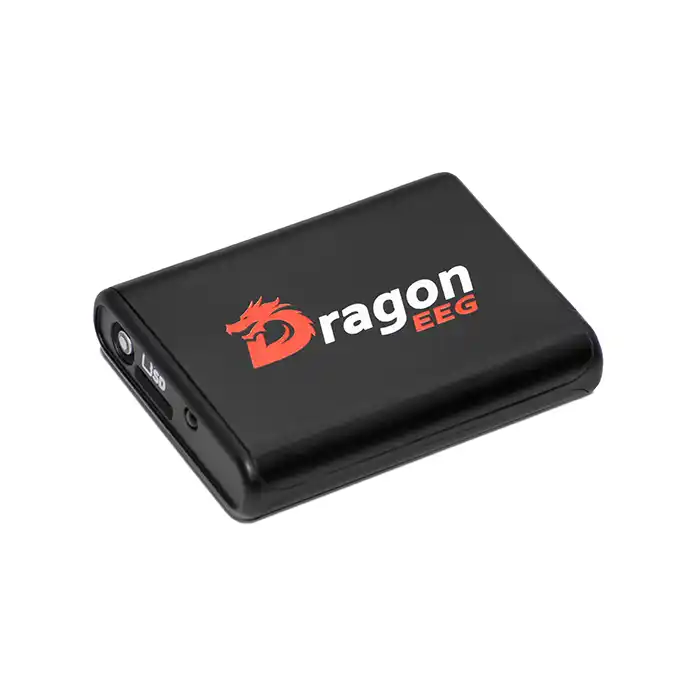
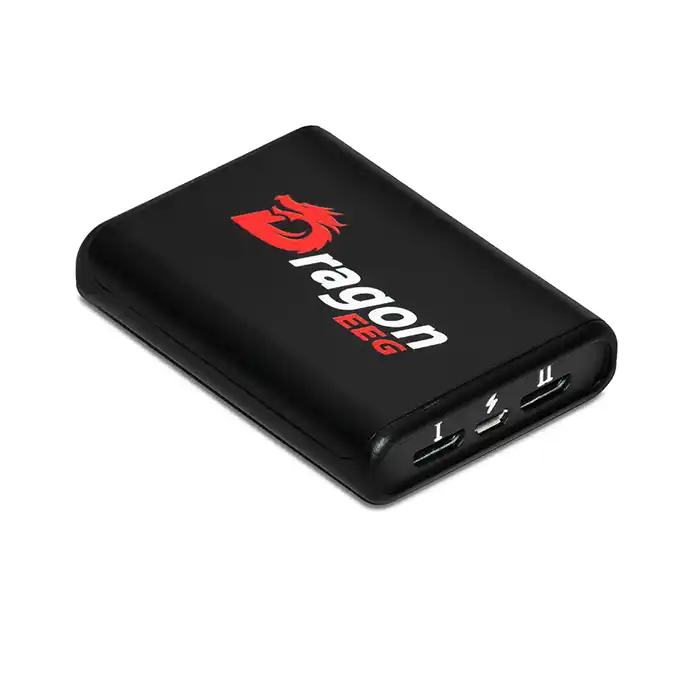
What if you could see how your brain is functioning before deciding how to train it? The Dragon EEG is a professional EEG cap designed to transform brain activity into meaningful insights through advanced quantitative EEG brain mapping and data-driven QEEG neurofeedback. Instead of relying on guesswork, DragonEEG helps practitioners, researchers, peak performers, and advanced home users identify brainwave patterns, uncover hidden strengths and inefficiencies, and create personalized training strategies based on objective data. Whether you want to enhance brain function, support cognitive performance, conduct neuroscience research, or work with a remote neurofeedback specialist, DragonEEG provides comprehensive full-head EEG recording, powerful analysis capabilities, and a pathway to smarter, more targeted brain training.
What Is the Dragon EEG Cap?
Professional EEG Technology for Quantitative EEG Brain Mapping
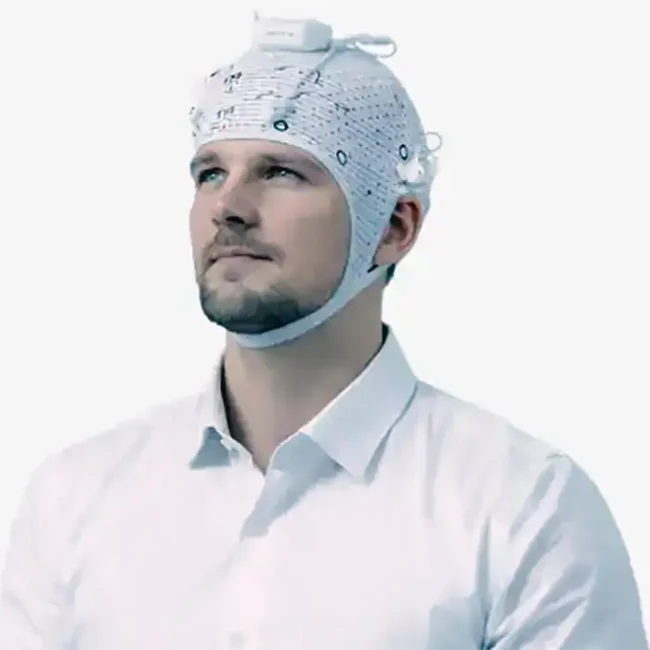
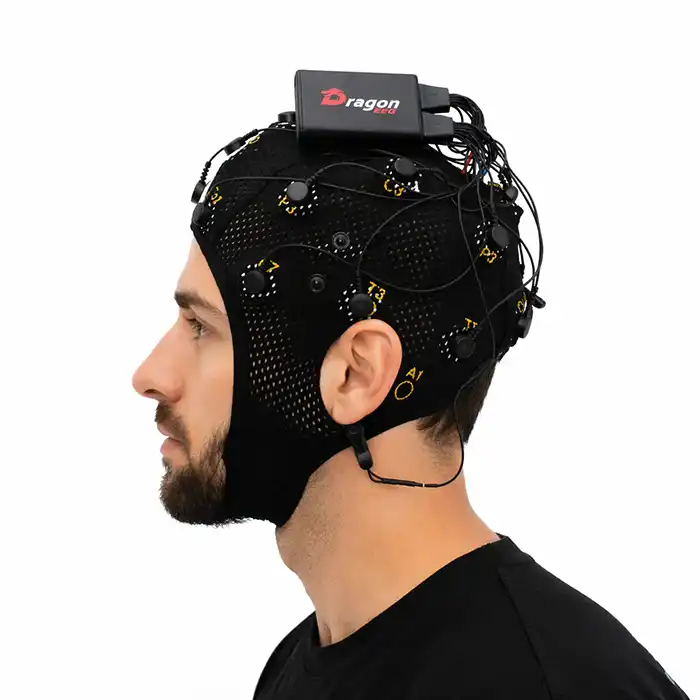
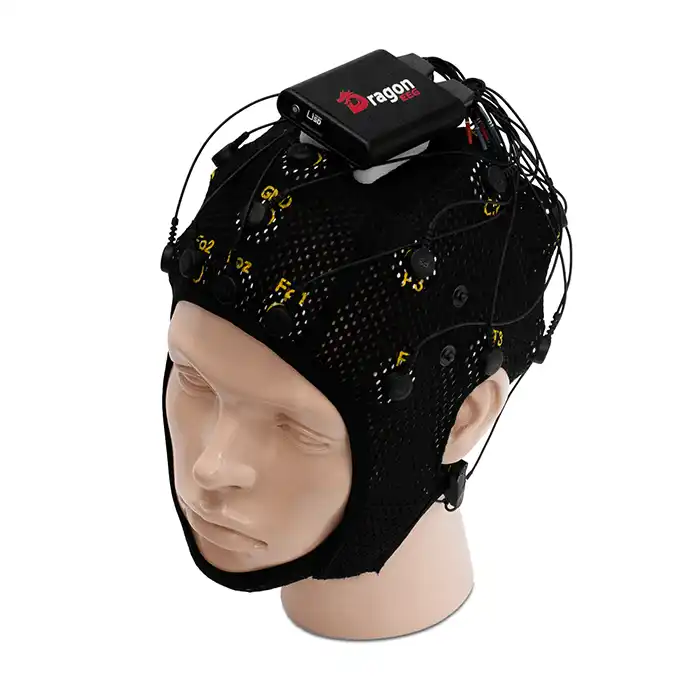
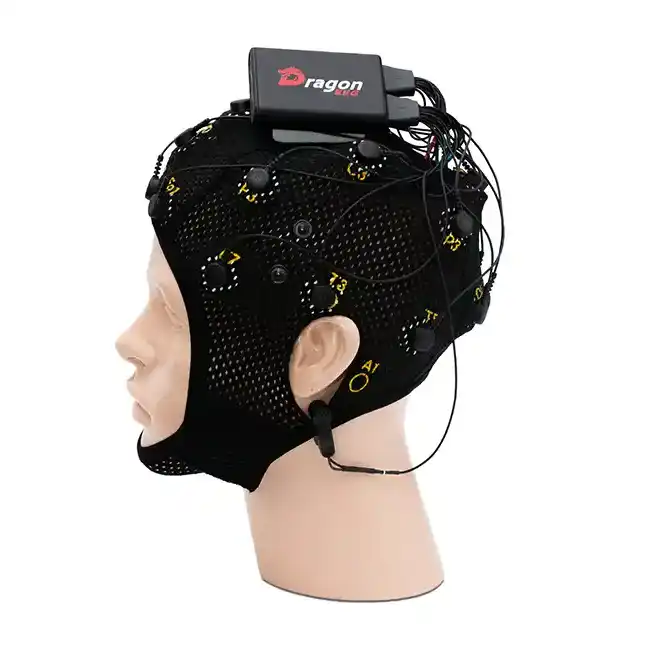
The Dragon EEG is a professional wireless EEG cap that delivers comprehensive brain activity assessment, quantitative EEG brain mapping, and advanced QEEG neurofeedback applications. Unlike simplified EEG devices that focus on a limited number of recording sites, DragonEEG uses 21 EEG channels positioned across the entire scalp according to the internationally recognized 10-20 system. As a result, it can capture a more complete picture of how different brain regions function and interact.
For many people, the most difficult part of brain training is not deciding what to improve—it is understanding where to begin. Difficulties with focus, mental performance, stress management, learning efficiency, or cognitive endurance can have many different underlying patterns. Consequently, assessment often provides valuable insights before developing a training program.
By collecting high-resolution EEG data across the whole brain, DragonEEG creates the foundation for objective analysis rather than assumptions. This data supports a wide range of applications. For example, clinicians can use it for brain mapping and performance assessment, while researchers can apply it to scientific studies and protocol development.
Designed for Advanced QEEG Neurofeedback Applications
Effective QEEG neurofeedback starts with understanding the unique activity patterns of an individual brain. While many neurofeedback systems focus primarily on training, DragonEEG emphasizes assessment first. This approach allows practitioners, researchers, and advanced users to identify brainwave characteristics before selecting training targets.
The system supports full-head EEG acquisition, EDF data export, compatibility with professional analysis platforms, and integration into both in-person and remote workflows. Therefore, Dragon EEG supports use in clinics and research laboratories and enables guided home-based neurofeedback programs. Experienced professionals then review and interpret the collected data.
Rather than applying generic protocols, users can develop training strategies based on measurable patterns of brain activity. This data-driven approach often provides a more structured path toward cognitive optimization and performance enhancement.
Why Accurate EEG Data Matters
The quality of any brain assessment depends on the quality of the data collected. Inaccurate or incomplete recordings can make it difficult to identify meaningful patterns, compare results over time, or create individualized training plans.
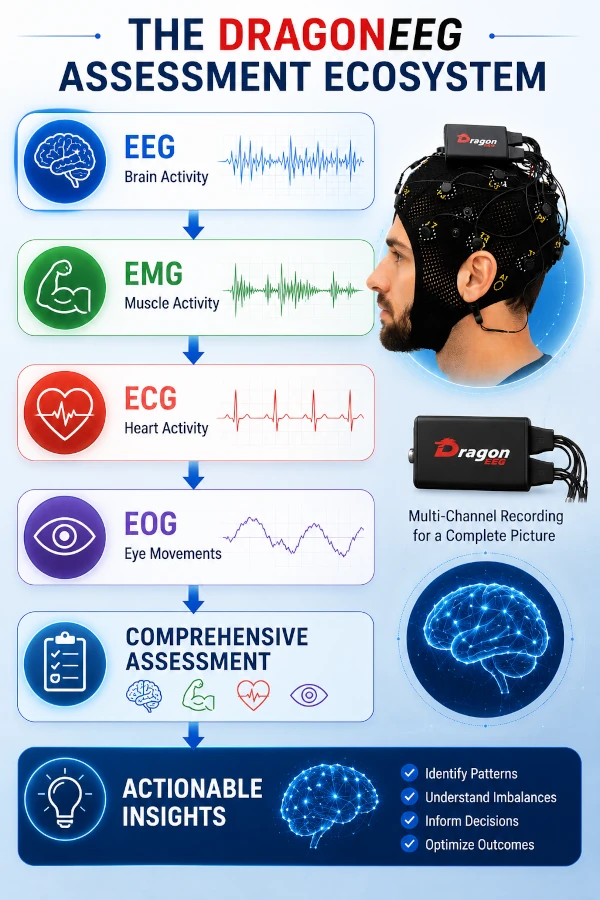
DragonEEG addresses this challenge through full-head 21-channel EEG recording, optional wet or dry electrode configurations, and additional physiological channels for EMG, ECG, and EOG measurements. Together, these capabilities provide a richer understanding of the factors that may influence performance, attention, emotional regulation, learning, recovery, and overall brain function.
Whether your goal is to enhance brain function, conduct neuroscience research, optimize performance, or establish a baseline before beginning neurofeedback training, accurate assessment is often the first step toward making informed decisions.
Why Choose Dragon EEG Cap for Brain Mapping and Neurofeedback?
The Advantages of a Multi-Electrode EEG Cap
When it comes to understanding brain function, detail matters. A professional EEG cap like DragonEEG provides 21-channel full-head coverage, allowing for a significantly more complete view of brain activity than simplified electrode systems. This matters because brain function does not occur in one isolated area. Rather, it emerges from distributed networks that constantly communicate with each other.
With a multi-electrode system, it becomes possible to observe how different regions communicate in real time. As a result, quantitative EEG brain mapping becomes more precise, revealing patterns that would otherwise remain hidden in limited-channel recordings. This level of detail is especially important when designing QEEG neurofeedback protocols, where accuracy in identifying brainwave imbalances directly influences training outcomes.
From Brain Activity Monitoring to QEEG Neurofeedback
Basic EEG devices often focus on general monitoring of brainwaves. However, monitoring alone is not enough for meaningful cognitive change. The transition from raw EEG signals to actionable neurofeedback requires structured analysis and interpretation.
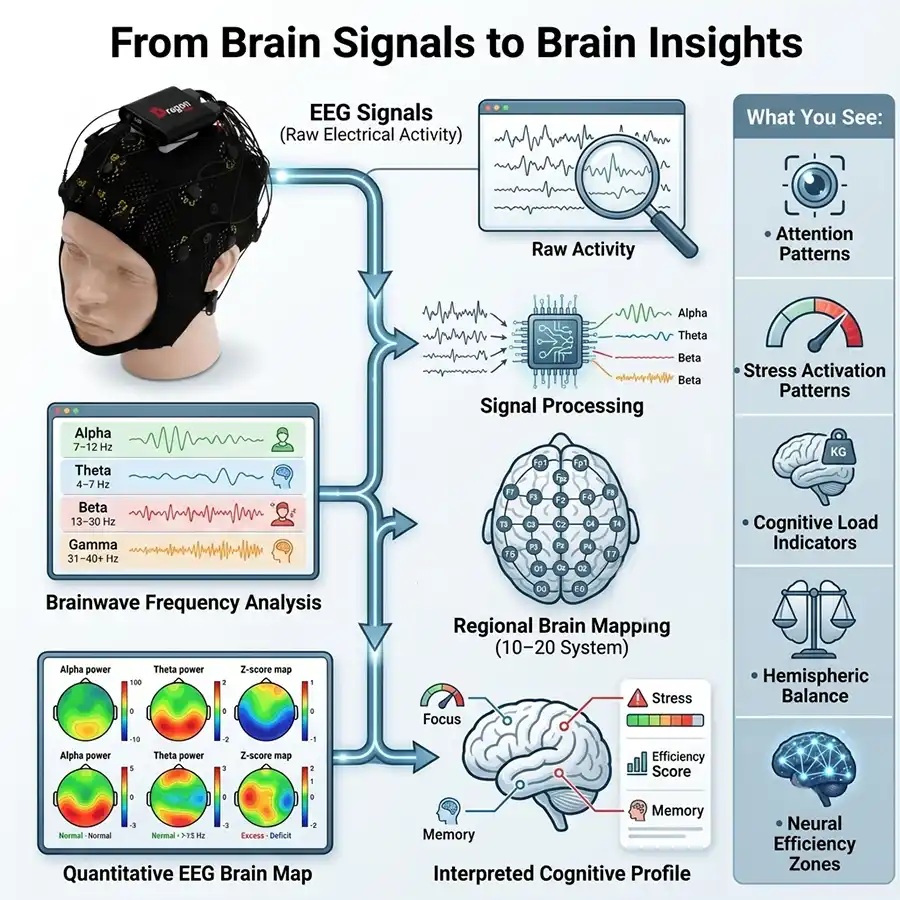
Dragon EEG bridges this gap. It captures high-resolution EEG data and converts it into quantitative brain maps that clinicians use to guide individualized neurofeedback strategies. This allows users and practitioners to move beyond simple observation and toward structured brain optimization based on measurable data.
How Quantitative EEG Brain Mapping Reveals Hidden Brain Patterns
One of the most important advantages of full-head EEG recording is the ability to detect asymmetries and functional imbalances between brain regions. These patterns are often not visible in simplified EEG setups.
Through quantitative EEG brain mapping, it becomes possible to analyze frequency distributions, connectivity patterns, and regional activity differences. This helps identify potential areas of overactivation, underactivation, or inefficient communication between brain networks.
For many users, this is the stage where awareness begins to shift. Instead of guessing why focus, performance, sleep quality, or emotional regulation feels inconsistent, they can begin to see objective patterns in their brain activity data. This creates a strong foundation for more targeted and effective neurofeedback training strategies.
Enhance Brain Function Through Data-Driven Neurofeedback
The Link Between Brain Activity and Cognitive Performance
Everyday cognitive performance—such as focus, memory, emotional regulation, stress tolerance, and mental clarity—closely depends on patterns of brain activity. However, these patterns are not always consciously noticeable. Many people experience symptoms like mental fatigue, distraction, or inconsistent performance without understanding their neurological origin.
This is where quantitative EEG brain mapping becomes valuable. By measuring and analyzing electrical activity across the brain, it becomes possible to identify functional patterns that influence how efficiently the brain operates. Instead of relying on subjective impressions, decisions can be based on measurable neurophysiological data.
Using QEEG Neurofeedback to Support Brain Training
After identifying brain activity patterns, users/practitioners can use them to guide QEEG neurofeedback training. This approach focuses on reinforcing more optimal brainwave states while reducing inefficient patterns.
Unlike general cognitive exercises, neurofeedback directly connects to real-time brain activity. This means training is not generic—it is based on the actual functioning of the individual brain.
DragonEEG provides the high-resolution data needed for this process. Full-head EEG recording enables practitioners or advanced users to develop targeted neurofeedback protocols that reflect the unique characteristics of each brain, rather than applying standardized programs.
Why Assessment Should Come Before Training
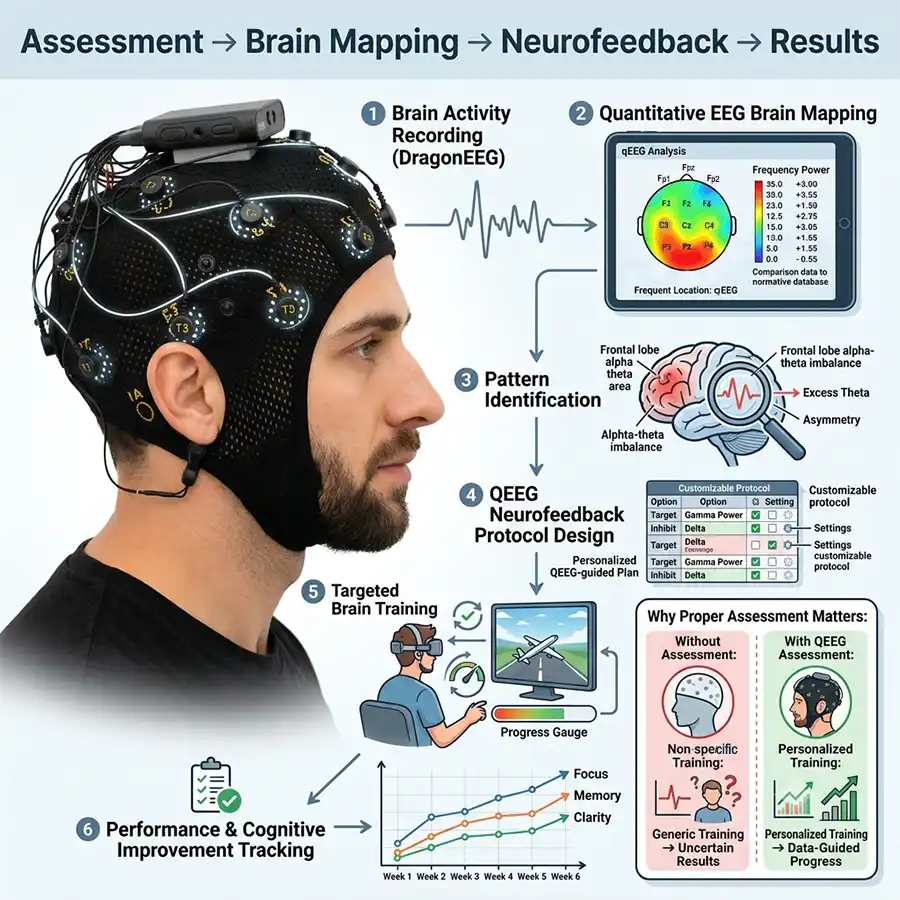
One of the most important principles in modern neurofeedback is that effective training begins with accurate assessment. Without a detailed understanding of baseline brain activity, it becomes difficult to determine which training protocols are most appropriate.
A proper EEG assessment helps clarify:
- Which brain regions may be overactive or underactive
- How different brain networks interact
- Whether certain cognitive challenges may be linked to specific activity patterns
This is why quantitative EEG brain mapping is often the first step before any structured neurofeedback program begins. It provides the foundation for informed decision-making and more personalized training strategies.
For many users, this stage marks an important shift—from general self-improvement attempts to a more structured, data-driven approach to improving brain function.
See Your Brain in Action: What Quantitative EEG Brain Mapping Reveals
Measuring Brain Activity Across Multiple Brain Regions
One of the most powerful advantages of quantitative EEG brain mapping is that it transforms invisible brain activity into structured, visual information. Instead of abstract signals, you can observe how different regions of the brain behave in real time and across different states of activity.
A 21-channel EEG cap, like the Dragon EEG, records brain activity across the frontal, central, temporal, parietal, and occipital regions. This allows for a multi-layered understanding of how the brain processes attention, emotion, sensory input, and executive functions simultaneously.
As a result, brain function becomes something measurable, comparable, and trackable over time rather than something subjective or uncertain.
Understanding Brainwave Patterns
The brain operates through different frequency ranges, often referred to as brainwaves. These patterns are continuously changing depending on mental state, environment, and cognitive demands.
Through quantitative EEG brain mapping, it becomes possible to analyze:
- Distribution of fast and slow brainwave activity
- Balance between hemispheres
- Regional synchronization or imbalance
- Shifts between different cognitive states
This level of insight provides a deeper understanding of why certain mental states occur, such as difficulty focusing, mental fatigue, overthinking, or reduced cognitive efficiency.
Identifying Strengths and Areas for Improvement
Every brain has unique strengths and areas that may function less efficiently under certain conditions. Full-head EEG recording makes these patterns visible through objective data analysis.
Instead of guessing what might improve performance, users can begin to see:
- Which brain regions show higher or lower activation
- Where regulation or balance may be needed
- How brain activity changes during rest, focus, or cognitive effort
This is where quantitative EEG brain mapping becomes especially valuable. It provides a structured foundation that helps identify not only challenges but also natural strengths, which targeted training approaches can further optimize.
For many users, this stage creates a strong realization:
“My brain does not operate randomly. Instead, it follows identifiable patterns that I can understand, strengthen, and improve.”
This shift in perspective is often the point where interest turns into a desire to explore deeper analysis and structured neurofeedback guidance.
Dragon EEG vs Standard EEG Cap Systems
What Makes DragonEEG Different?
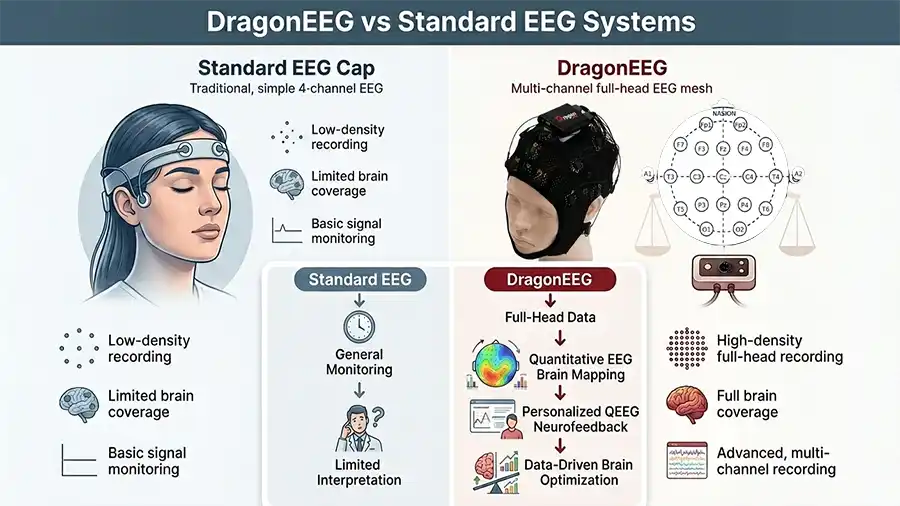
Not all EEG systems serve the same purpose. Some devices focus on basic signal recording, while others support advanced quantitative EEG brain mapping and research-level analysis. DragonEEG belongs to the second category.
With 21 EEG channels and full 10–20 system coverage, DragonEEG provides a significantly more complete representation of brain activity compared to simplified EEG cap systems. This level of coverage allows for more accurate detection of regional brain dynamics, connectivity patterns, and functional imbalances.
In contrast, standard EEG caps with fewer channels often provide a limited view of brain activity, which can restrict the depth of analysis and reduce the precision of QEEG neurofeedback protocol development.
High-Density Electrode Coverage for More Detailed Brain Mapping
The value of EEG data depends heavily on spatial resolution—the number and distribution of recording points across the scalp. High-density electrode coverage enables more detailed observation of how different brain regions interact.
Dragon EEG uses a full-head 10–20 montage and ensures proper representation of key functional brain areas. This allows for:
- More precise quantitative EEG brain mapping
- Better detection of inter-hemispheric asymmetries
- More accurate localization of functional patterns
- Improved foundation for individualized neurofeedback protocols
As a result, brain data becomes not only more detailed but also more actionable.
Designed for Professional QEEG Neurofeedback Workflows
Dragon EEG supports structured neurofeedback and brain mapping workflows used in clinical, research, and advanced performance environments. It integrates into professional analysis pipelines through EDF export and compatibility with established EEG analysis tools.
This makes it suitable for users who require more than basic monitoring—they need reliable data for interpretation, reporting, and long-term tracking.
Whether used in research settings, professional neurofeedback practice, or guided brain optimization programs, DragonEEG provides the data quality required for rigorous QEEG neurofeedback applications and evidence-based brain assessment.
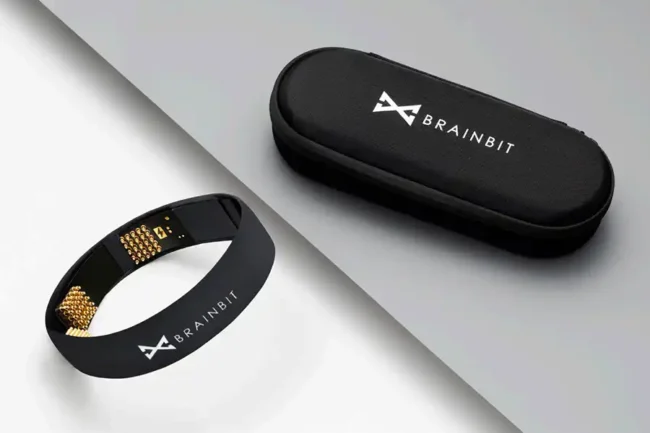
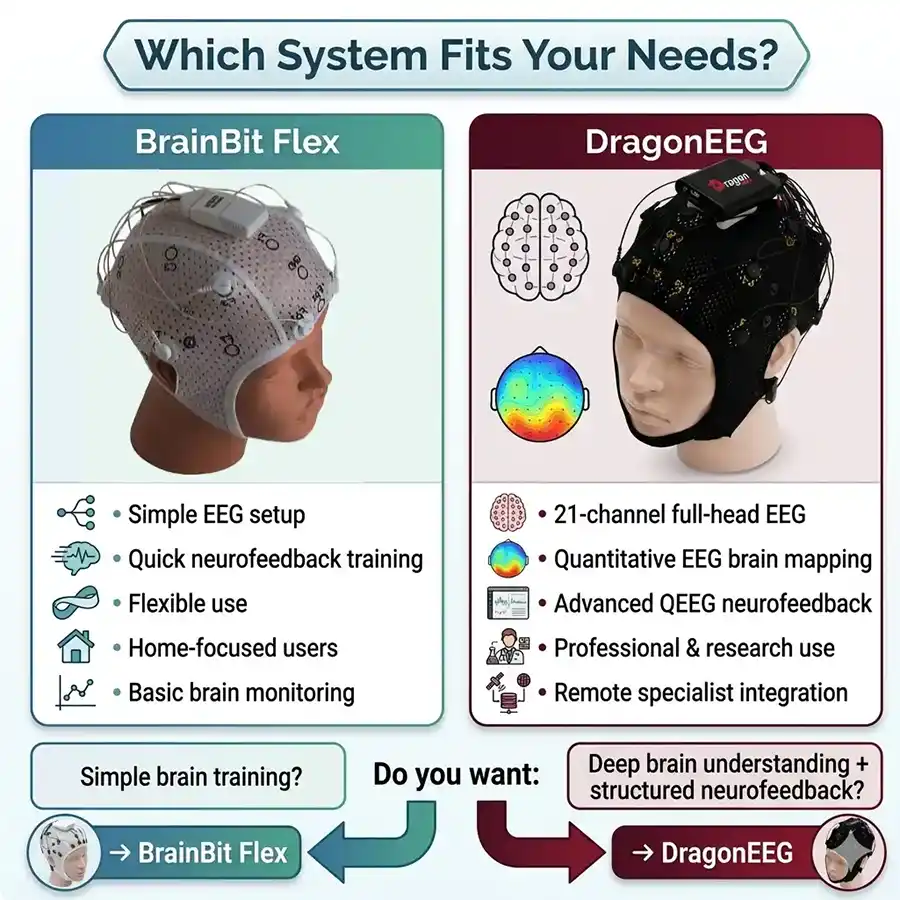
Dragon EEG vs BrainBit Flex: Which Is Right for You?
When BrainBit Flex Is the Better Choice
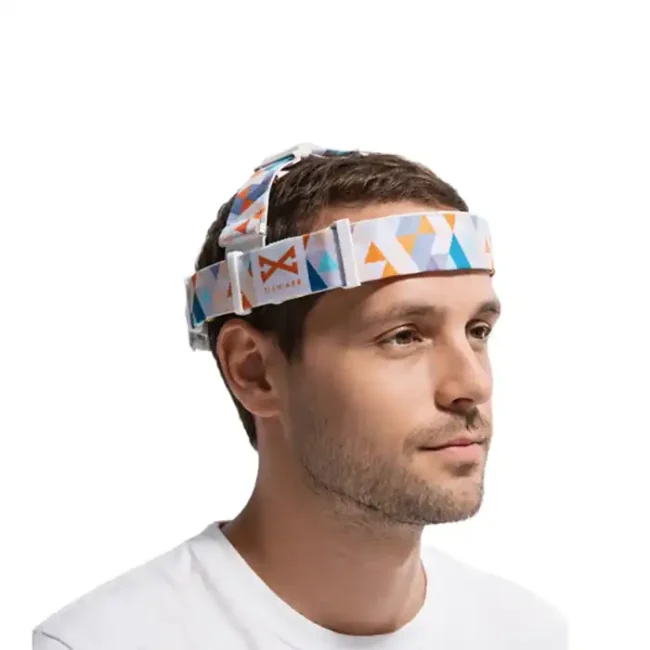
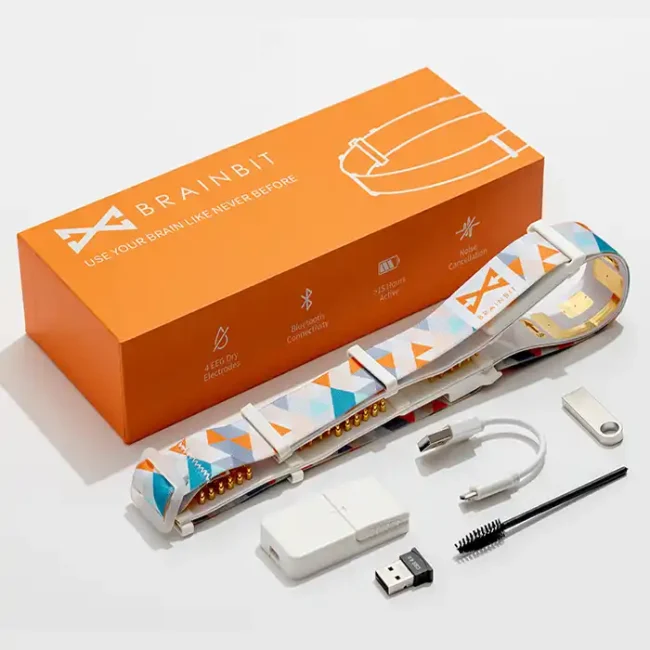
BrainBit Flex offers a flexible, accessible entry point to EEG-based brain training and neurofeedback. It suits individuals who focus on personal brain training, everyday cognitive support, and simple setup without advanced analysis workflows.
For users whose primary goal is to train attention, improve relaxation, or support general cognitive performance, BrainBit Flex provides a practical and efficient solution. It emphasizes usability, comfort, and straightforward neurofeedback applications.
When DragonEEG Provides Greater Insight
Dragon EEG provides a deeper and more comprehensive understanding of brain function for users who need advanced insights. With full-head 21-channel coverage and support for quantitative EEG brain mapping, it provides a significantly more detailed view of brain activity across multiple regions.
This makes DragonEEG especially suitable for situations where:
- A detailed baseline brain assessment is required
- QEEG neurofeedback protocols need to be precisely tailored
- Brain activity patterns must be analyzed at a network level
- Data needs to be shared with specialists or used in research workflows
Instead of focusing only on training, DragonEEG emphasizes understanding first, which often leads to more structured and informed neurofeedback strategies.
Convenience vs Comprehensive Brain Mapping
The key difference between the two systems is not about quality, but about depth and purpose.
BrainBit Flex prioritizes simplicity, ease of use, and direct neurofeedback training.
DragonEEG prioritizes comprehensive quantitative EEG brain mapping, full-head data acquisition, and advanced analysis capabilities that can support both independent exploration and specialist-guided interpretation.
In other words, one system helps you start training quickly, while the other helps you fully understand the brain before designing a training approach.
Choosing the Right System for Your Goals
The right choice depends on what stage you are at in your brain optimization journey.
If you are primarily looking for accessible neurofeedback training, BrainBit Flex may be sufficient.
However, if your goal is to build a detailed understanding of brain function, develop personalized neurofeedback protocols, or work with structured EEG data at a professional level, DragonEEG provides the insight required to achieve those outcomes.
For many users, the decision naturally becomes clear once they recognize the difference between basic training and full-scale brain mapping.
Electrode Placement and the International 10–20 System
Understanding EEG Electrode Locations
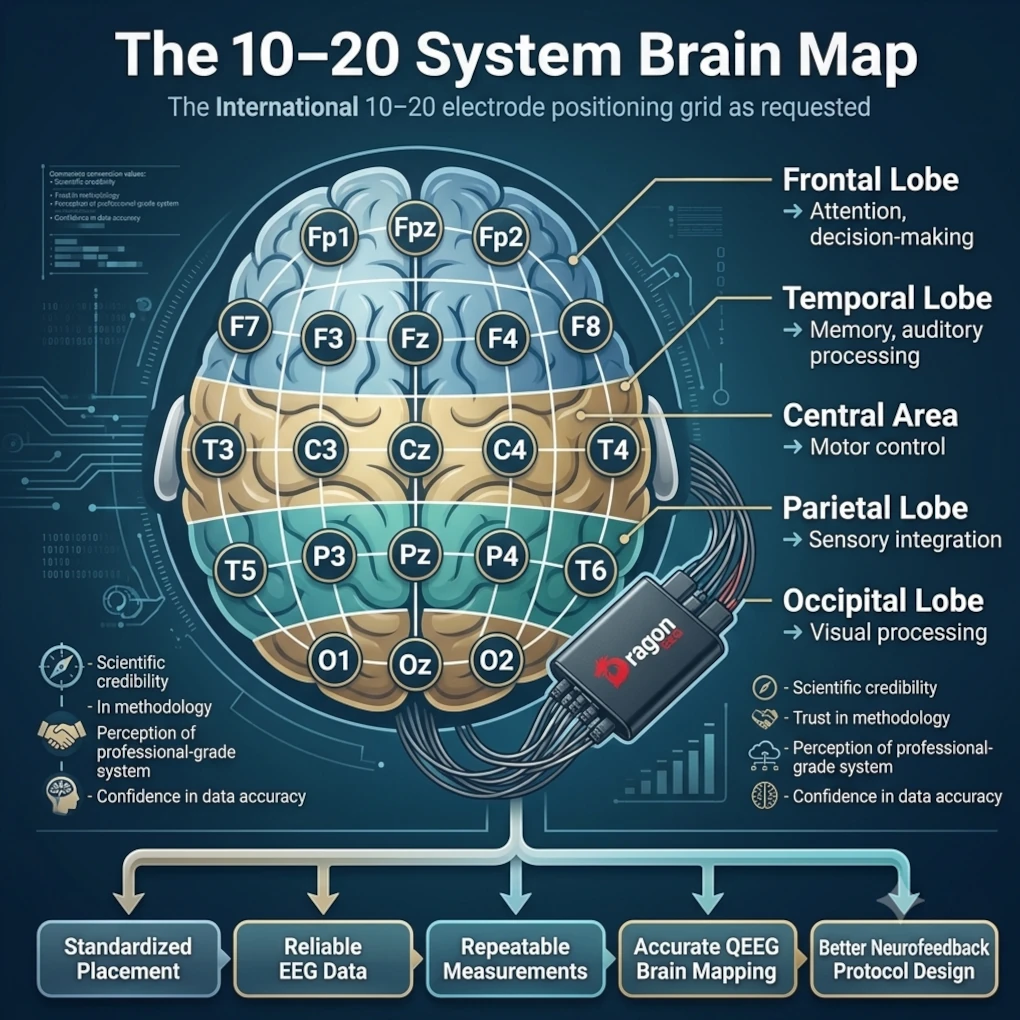
The Dragon EEG system uses the internationally recognized 10–20 EEG electrode placement system, the standard framework used worldwide in clinical, research, and advanced neurotechnology applications. This system records brain activity from consistent, scientifically validated scalp locations.
Each electrode position corresponds to a specific brain region, allowing for structured observation of electrical activity across the frontal, temporal, central, parietal, and occipital areas. As a result, quantitative EEG brain mapping becomes more reliable, comparable, and interpretable across sessions and users.
The 21 EEG Channels of DragonEEG
DragonEEG uses 21 strategically placed EEG channels to capture full-head brain activity:
Fp1, Fpz, Fp2, F7, F3, Fz, F4, F8, T3, C3, Cz, C4, T4, T5, P3, Pz, P4, T6, O1, Oz, O2
This configuration provides high-density coverage of key functional brain regions involved in attention, sensory processing, emotional regulation, motor control, and executive function.
This full coverage allows practitioners to design QEEG neurofeedback protocols with greater precision. They can target specific regions or networks based on measured brain activity rather than assumptions.
Flexible Electrode Placement for Quantitative EEG Brain Mapping
Accurate brain mapping depends not only on the number of channels but also on their correct anatomical placement. The 10–20 system positions each electrode consistently, which enables repeatable measurements over time.
This consistency is essential for quantitative EEG brain mapping, especially when tracking changes in brain activity across multiple sessions or comparing baseline assessments with follow-up recordings.
By maintaining standardized placement, DragonEEG supports reliable data collection for longitudinal monitoring, neurofeedback planning, and advanced brain analysis workflows.
Why Full-Head Coverage Matters
Full-head EEG coverage provides a more complete representation of brain function because cognitive processes operate across multiple interconnected networks.
Instead of focusing on isolated regions, DragonEEG enables observation of how different brain areas interact dynamically. This is particularly important for identifying patterns related to focus, cognitive efficiency, stress regulation, and mental performance.
For many users, this structured view of brain activity marks a turning point in understanding their own cognitive patterns.
Brain function is not random. Instead, it follows measurable patterns that can be trained when properly mapped.
Scientific Protocols and QEEG Neurofeedback Applications
Why QEEG Assessment Should Always Come First
Effective neurofeedback is not based on generic exercises or one-size-fits-all protocols. It begins with quantitative EEG brain mapping, which provides a detailed view of how the brain is functioning across different regions and frequency bands.
Without this assessment, neurofeedback training becomes generalized rather than personalized. With it, practitioners can structure training, target specific needs, and align it with the individual’s neurological profile.
For this reason, the Dragon EEG system primarily serves as an assessment and brain-mapping tool that supports advanced QEEG neurofeedback applications.
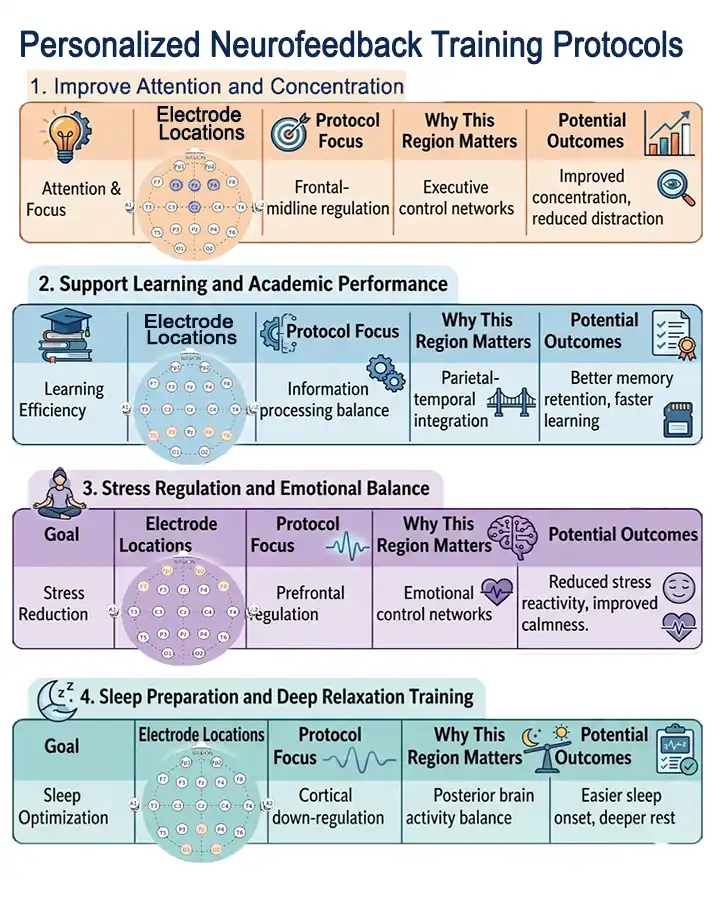
Individualized Neurofeedback Based on Brain Mapping Results
Once users/practitioners record and analyze brain activity, they can design specific neurofeedback protocols based on the observed patterns. These protocols are not random; instead, they come directly from measurable EEG data.
DragonEEG supports this process by providing high-resolution, full-head recordings that allow for:
- Identification of underactive or overactive brain regions
- Detection of connectivity imbalances between hemispheres
- Analysis of frequency-specific activity patterns
- Mapping of cognitive and emotional regulation systems
This structured approach ensures that practitioners tailor QEEG neurofeedback interventions to the unique characteristics of each brain rather than applying them uniformly.
Enhancing Brain Function Through Targeted Protocol Design
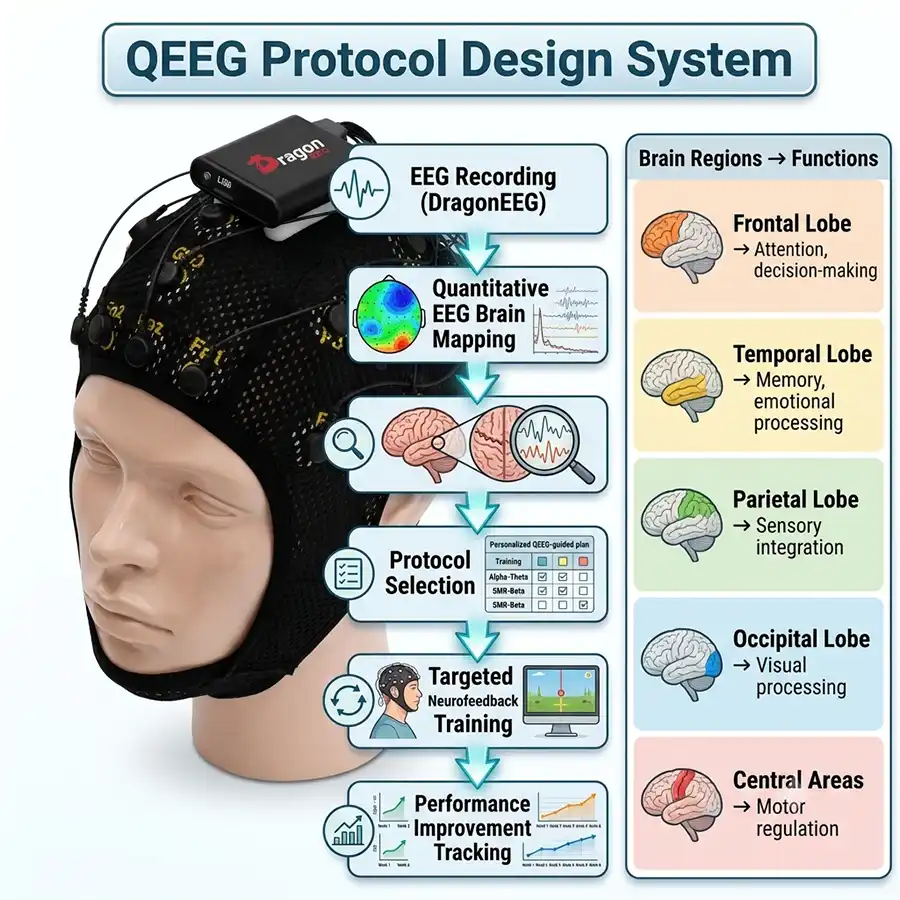
The strength of quantitative EEG brain mapping lies in its ability to transform raw brain activity into structured, actionable information. Instead of guessing which brain regions require training, practitioners design protocols based on observed patterns in the data.
This creates a direct pathway:
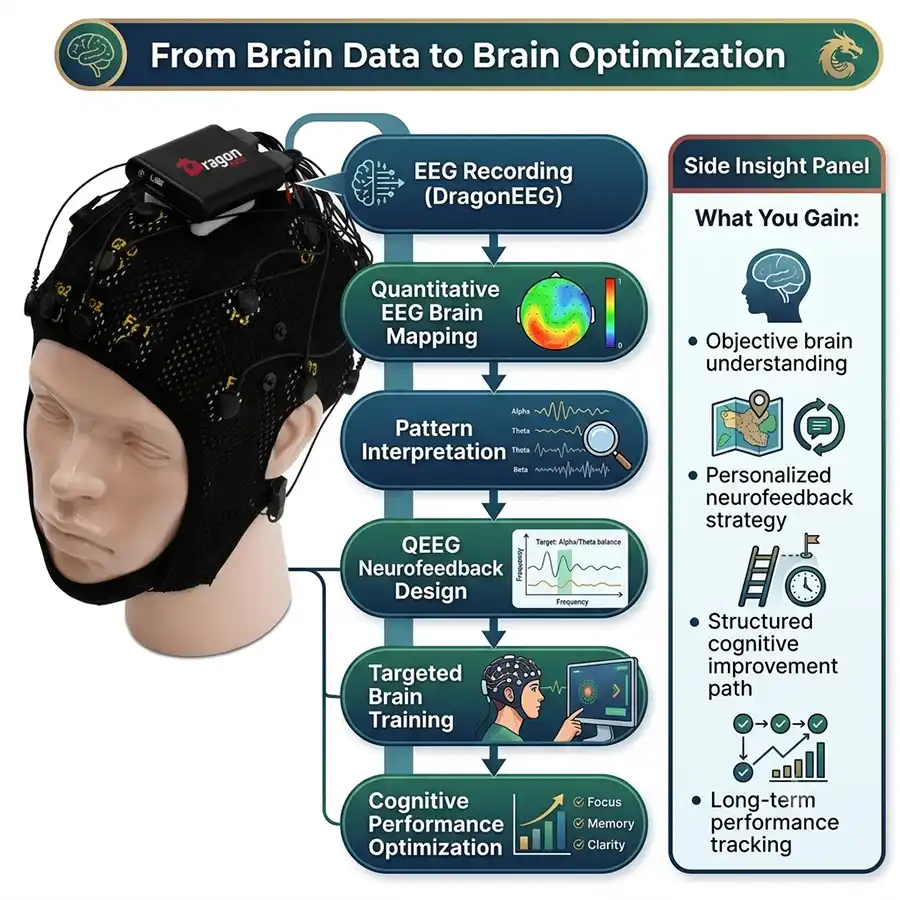
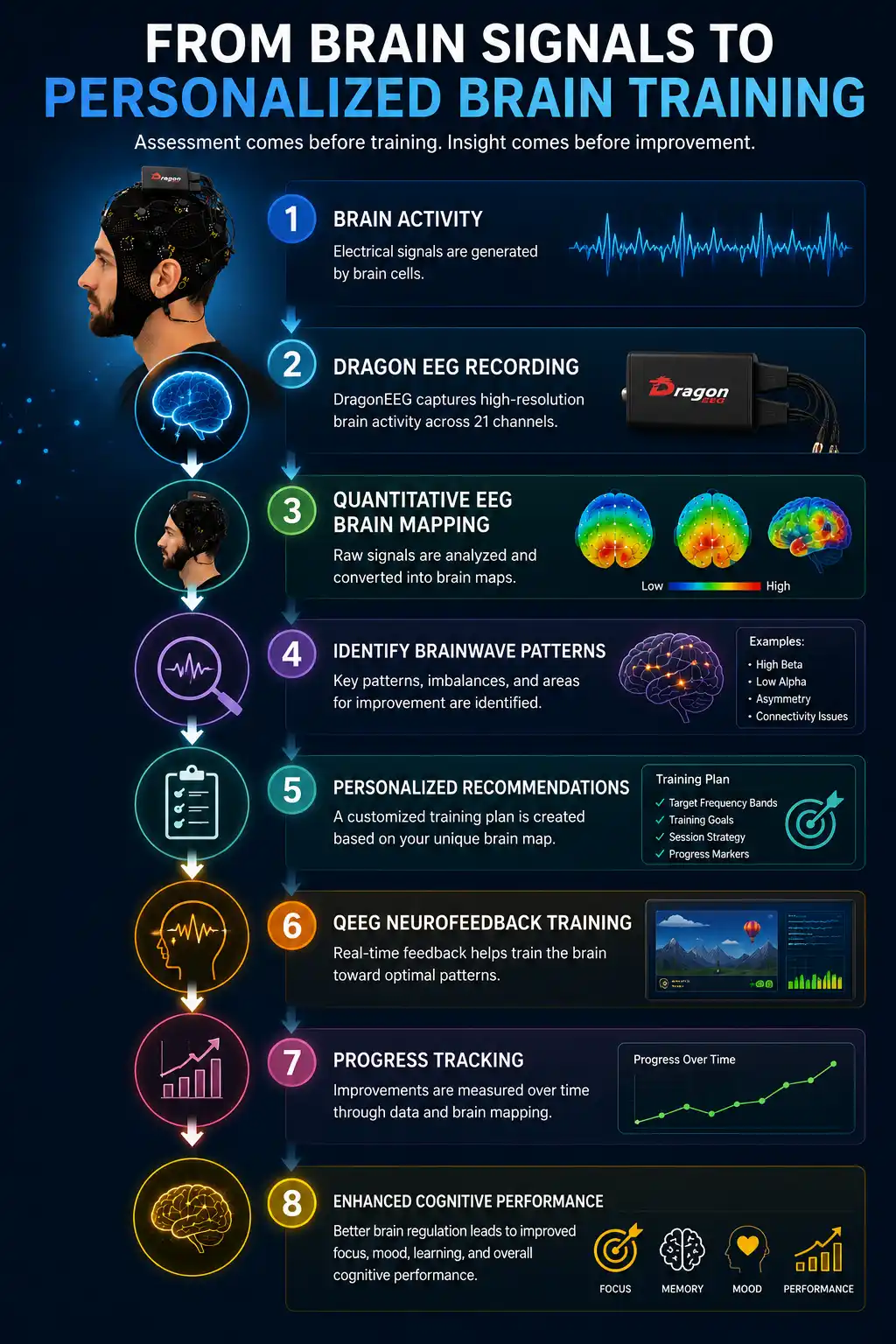
Brain Recording → Brain Mapping → Protocol Design → Neurofeedback Training → Measurable Change
For many users, this is the point where brain training becomes more precise and structured than traditional self-guided cognitive exercises. It also opens the possibility of working with data-driven systems or specialist-guided programs that interpret EEG results and translate them into actionable neurofeedback strategies.
QEEG Neurofeedback Applications
Cognitive Health and Brain Optimization
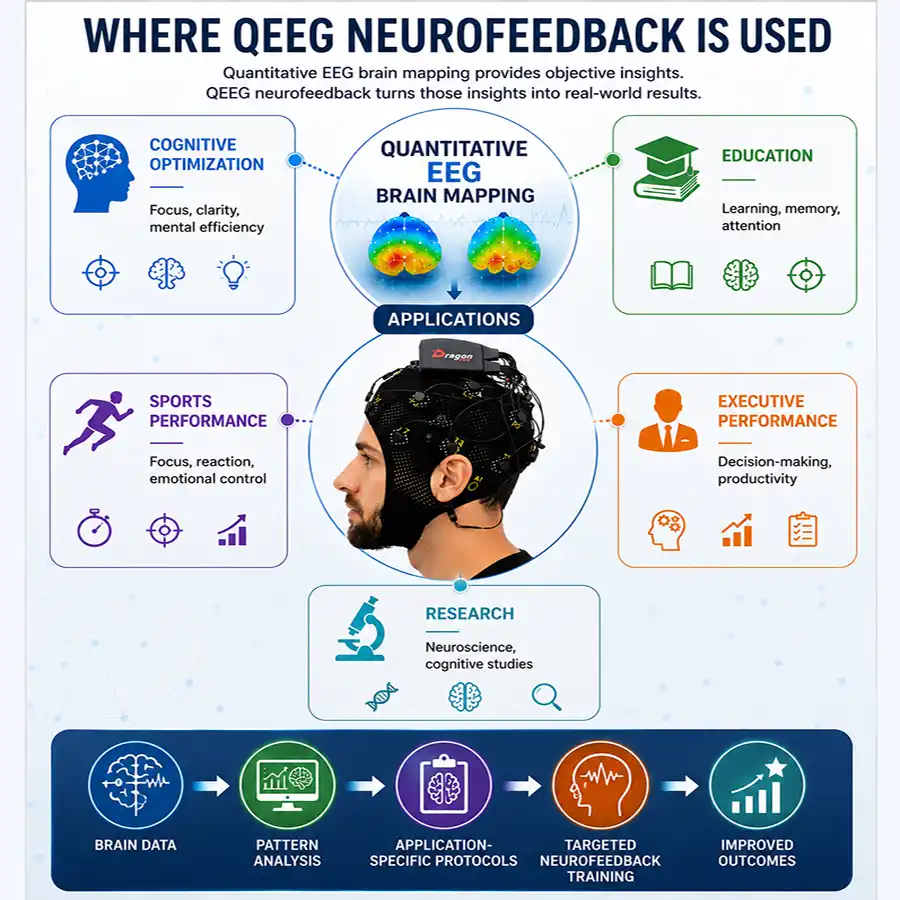
QEEG brain mapping helps identify how different brain regions function during rest, focus, and task performance. Once practitioners understand these patterns, they design QEEG neurofeedback protocols that reinforce more efficient brain states and reduce patterns associated with mental fatigue or reduced clarity.
People often use this approach to improve cognitive efficiency, mental resilience, and consistency in daily performance.
Education and Learning Enhancement
Learning efficiency depends on attention regulation, memory processing, and how the brain integrates information across regions. Through EEG-based assessment, it becomes possible to identify patterns that may affect concentration, information retention, and cognitive load management.
Quantitative EEG brain mapping helps practitioners develop training strategies that support more stable focus and improved learning performance. This is particularly relevant for students, educators, and lifelong learners who want to optimize cognitive performance.
Sports Performance and Mental Training
In sports and high-performance environments, mental state regulation plays a key role in consistency and execution. Athletes use QEEG neurofeedback to understand and train brain states linked to focus, reaction speed, emotional control, and performance under pressure.
By analyzing brain activity patterns, it becomes possible to support mental training strategies that complement physical training programs.
Executive Performance and Productivity
High-level cognitive demands in business and leadership require sustained attention, decision-making clarity, and stress regulation. Quantitative EEG brain mapping can help identify neurological patterns that influence productivity, cognitive overload, and mental endurance.
Practitioners use this information to support structured neurofeedback approaches that improve performance consistency and cognitive efficiency in demanding professional environments.
Research and Neuroscience Applications
DragonEEG is also suitable for research environments that require high-resolution EEG data to study brain function, cognition, and human performance. With 21-channel full-head coverage and data export support, it provides a flexible platform for neuroscience studies, experimental protocols, and cognitive research projects.
Its compatibility with advanced analysis tools makes it suitable for academic institutions, research labs, and innovation-focused teams working in neurotechnology.
From Applications to Personalized Insight
Across all these areas, quantitative EEG brain mapping consistently transforms brain activity into structured information that practitioners can analyze, compare, and use to guide QEEG neurofeedback strategies.
Whether the goal is performance, learning, research, or cognitive optimization, the foundation is always the same—accurate understanding of brain function before training begins.
Who Can Benefit from DragonEEG?
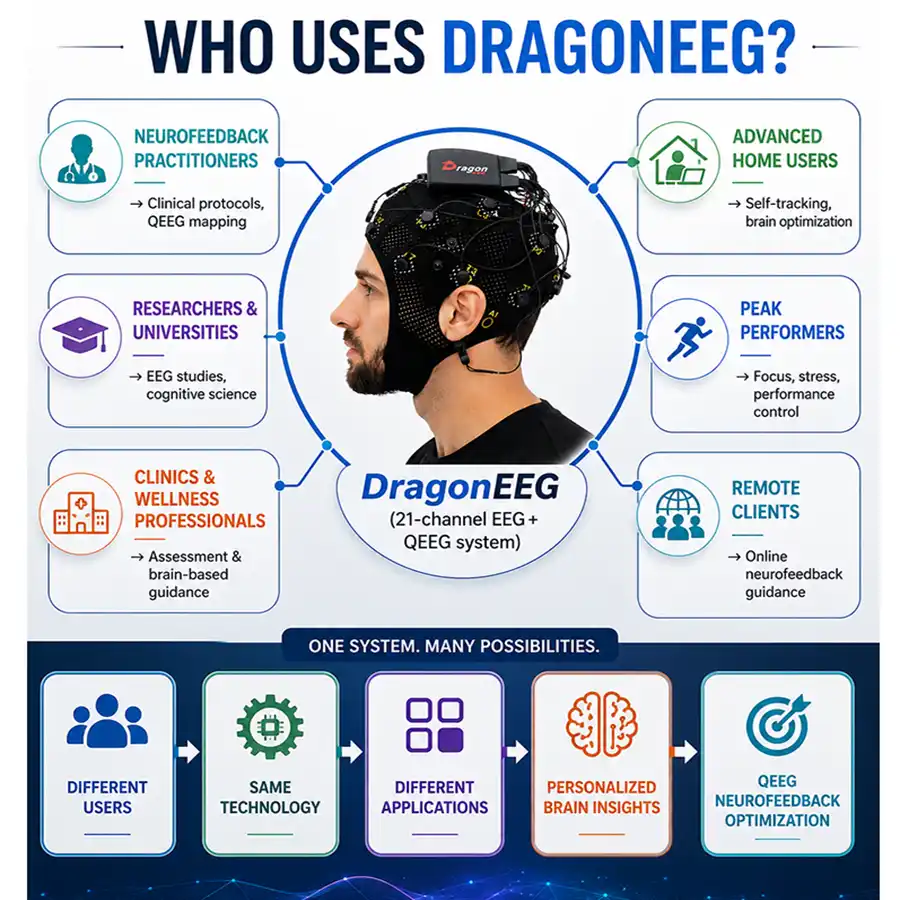
Neurofeedback Practitioners
Neurofeedback professionals can use DragonEEG as a high-resolution EEG cap for advanced client assessment and quantitative EEG brain mapping. The 21-channel full-head configuration enables detailed evaluation of brain activity patterns, supporting the development of more precise and individualized QEEG neurofeedback protocols.
For practitioners, this means moving beyond basic training protocols and working with objective brain data that can guide more effective intervention strategies.
Clinical and Wellness Professionals
Professionals in clinical, coaching, or wellness environments often require reliable tools to assess brain function in a structured way. DragonEEG provides high-quality EEG data that can support cognitive assessment workflows and brain-based performance analysis.
By using quantitative EEG brain mapping, professionals can better understand how cognitive, emotional, and physiological systems interact, thereby improving the quality of recommendations and support strategies offered to clients.
Researchers and Universities
For research environments, DragonEEG offers a flexible and data-rich platform for studying brain function, cognition, and human performance. Its 21-channel system, along with EMG, ECG, and EOG channels, enables multi-dimensional data collection suitable for neuroscience, psychology, and human performance studies.
The ability to export data and integrate with analysis tools makes it suitable for experimental protocols and academic research involving quantitative EEG brain mapping.
Advanced Home Users
Some users are not professionals but still want a deeper understanding of their brain function. For these individuals, Dragon EEG provides access to structured EEG recording and QEEG neurofeedback workflows that they can combine with software tools and guided interpretation.
This group often seeks more than general brain training—they want insight, structure, and the ability to track cognitive changes over time using real EEG data.
Peak Performers Seeking Cognitive Optimization
Executives, athletes, and high-performance individuals often look for ways to optimize focus, stress regulation, and mental endurance. DragonEEG enables the measurement of brain activity patterns that influence performance under pressure.
Through quantitative EEG brain mapping, it becomes possible to identify cognitive states associated with peak performance and develop strategies to reinforce them through structured neurofeedback approaches.
Individuals Working with Remote Neurofeedback Specialists
Not all users interpret EEG data themselves. Many choose to work with specialists who analyze recordings and design personalized neurofeedback protocols.
Dragon EEG supports this workflow by enabling high-quality EEG data collection that professionals can share remotely for interpretation. This creates a flexible model in which users can combine self-recording with expert-guided QEEG neurofeedback planning as needed.
From Identification to Implementation
Across all user groups, the key value remains consistent: DragonEEG transforms brain activity into structured data through quantitative EEG brain mapping, enabling more informed decisions about brain training and cognitive optimization strategies.
For many users, this is where the concept becomes personal:
“This is not just for experts — this could actually apply to me.”
Advanced Features of the Dragon EEG Cap
Multi-Channel EEG Recording
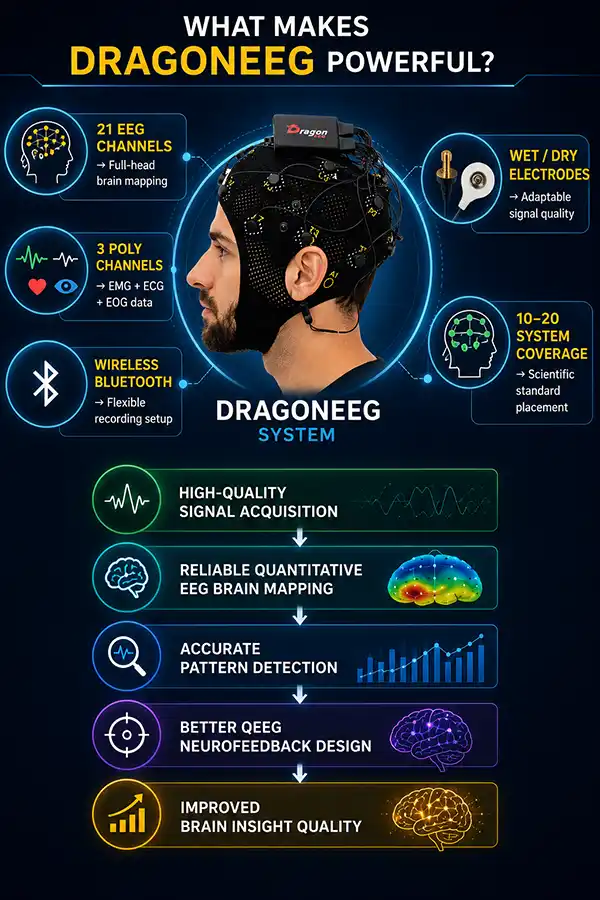
Dragon EEG is a 21-channel EEG cap that captures full-head brain activity with high spatial resolution. This multi-channel configuration enables detailed quantitative EEG brain mapping, providing a more complete understanding of how different brain regions function and interact.
Unlike simplified EEG systems, multi-channel recording provides richer data for advanced analysis, research applications, and the development of structured QEEG neurofeedback protocols.
Comprehensive Brain Activity Monitoring
In addition to EEG channels, DragonEEG includes three poly channels for EMG, ECG, and EOG measurements. This expands the system beyond brain activity alone, allowing for a more holistic view of physiological processes that may influence cognitive performance, emotional regulation, and attention states.
By combining multiple data streams, users gain a more integrated perspective on how the brain and body function together in real time.
Support for Quantitative EEG Brain Mapping
Dragon EEG is specifically designed for quantitative EEG (QEEG) brain mapping. As a result, it captures high-quality EEG recordings that enable detailed analysis of brainwave patterns, functional connectivity, and regional differences in brain activity.
This level of precision supports more accurate interpretation of brain function and enables the development of individualized neurofeedback strategies based on objective EEG data rather than assumptions.
Wireless EEG Recording for Mobility and Flexibility
The system uses wireless Bluetooth connectivity, allowing users to record brain activity with greater freedom of movement. This makes DragonEEG suitable for both controlled environments and more flexible setups, depending on research or training requirements.
Wireless operation also simplifies workflow, making it easier to integrate into both clinical and remote neurofeedback environments.
Wet and Dry Electrode Options
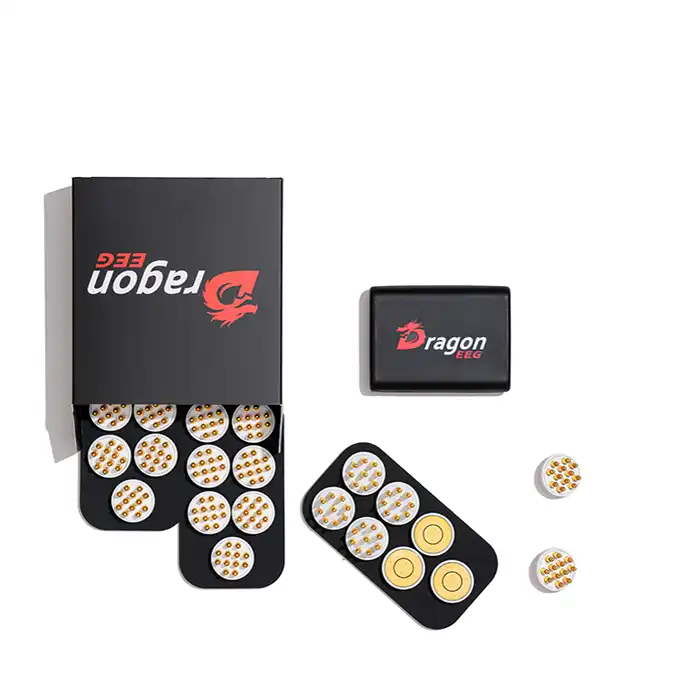
DragonEEG offers two electrode configurations: dry, gold-plated, spring-loaded electrodes and classical wet Ag/AgCl electrodes. This flexibility allows users to choose between convenience and maximum signal stability depending on their specific application.
Both options maintain high-quality signal acquisition for quantitative EEG brain mapping and QEEG neurofeedback applications.
Designed for Professional Neurofeedback and Research Use
DragonEEG is built for professional environments where reliable EEG data is essential. It supports research, clinical assessment, and advanced neurotechnology applications that require structured brain mapping and accurate signal acquisition.
Its design makes it suitable for users who need more than basic monitoring—they require consistent, high-resolution data for interpretation, reporting, and long-term tracking of brain function.
Dragon EEG Software and QEEG Ecosystem
BrainAssistant: Your Gateway to Brain Optimization
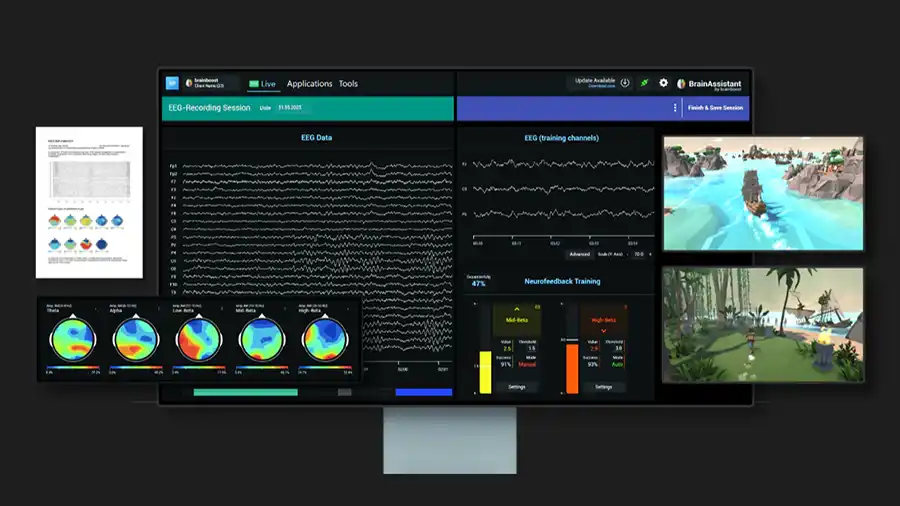
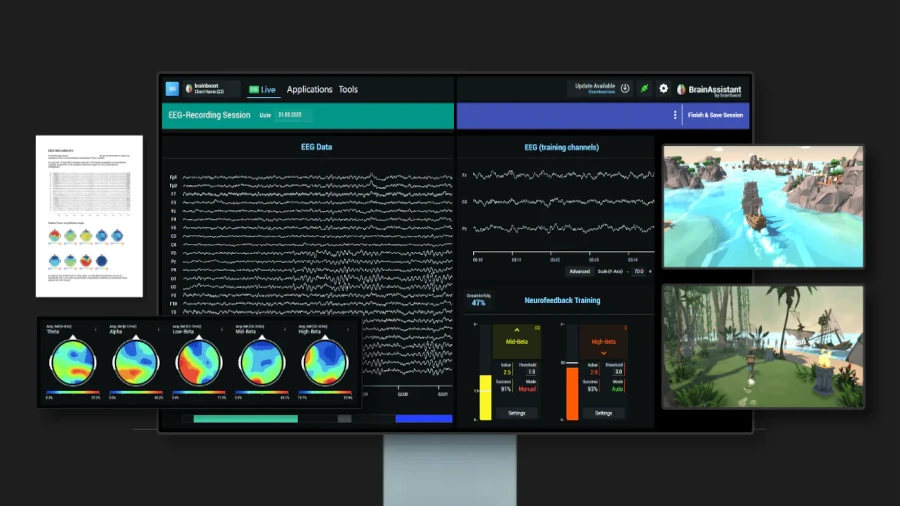
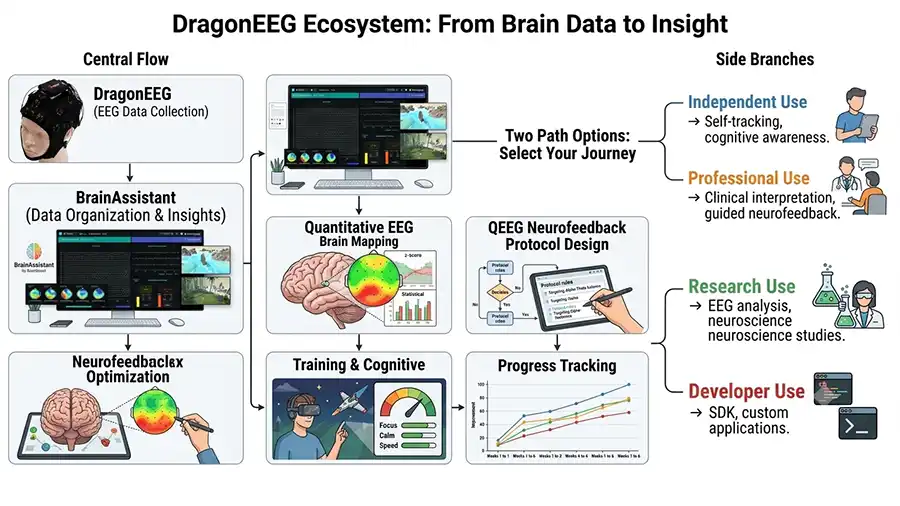
DragonEEG is not only a hardware system for recording brain activity—it is part of an ecosystem that transforms raw EEG data into meaningful insight. At the center of this ecosystem is BrainAssistant, a software layer that helps users interact with their brain data in a structured and practical way.
BrainAssistant supports interpreting EEG recordings and translating them into understandable patterns for quantitative EEG (QEEG) brain mapping and QEEG neurofeedback workflows. Instead of working only with raw signals, users gain access to organized insights that make brain data more accessible and actionable.
Independent Cognitive Performance Training
For users who prefer self-directed exploration, BrainAssistant provides tools for independent cognitive performance tracking. This allows individuals to monitor changes in brain activity over time and observe how different mental states relate to focus, stress, relaxation, and performance.
By working with quantitative EEG brain mapping outputs, users can develop a more structured understanding of their own brain function and track progress across multiple sessions.
Professional-Guided Neurofeedback and Brain Mapping
In addition to independent use, BrainAssistant supports workflows in which users collaborate with specialists to review and interpret EEG data. This enables users to receive more structured guidance based on their brain recordings.
In this model, Dragon EEG serves as the data acquisition tool, while professionals carry out interpretation and design of QEEG neurofeedback protocols in a more guided and structured manner. This creates a flexible system that can adapt to different levels of experience and support needs.
Online Neurofeedback and Remote Specialist Support
DragonEEG is well-suited for remote workflows where EEG data is recorded locally and then shared for analysis. This allows users to participate in online neurofeedback programs without requiring in-person sessions.
Through quantitative EEG brain mapping, qualified professionals export and review recordings and design personalized neurofeedback strategies based on objective brain data.
NeuroGuide Compatibility for Advanced Analysis
For professional environments, DragonEEG supports EDF data export and is compatible with advanced EEG analysis platforms, including NeuroGuide. This enables expert-level brain mapping, statistical EEG analysis, and detailed reporting for research or clinical applications.
This compatibility makes DragonEEG suitable for users who require integration with established quantitative EEG brain-mapping workflows in neuroscience and clinical research.
SDK Access for Developers and Researchers
DragonEEG also provides a free SDK for developers, researchers, and integrators. This allows custom applications to be built on top of the system using programming environments such as C++, C#, Python, Unity, React Native, and more.
This flexibility makes DragonEEG a powerful platform for innovation in neurotechnology, research, and cognitive science applications.
Cross-Platform Support
The system is designed to operate across multiple platforms, including Windows, macOS, Linux, iOS, and Android. This ensures that users can integrate DragonEEG into a wide range of workflows, whether for clinical assessment, research environments, or personal cognitive tracking.
Together, hardware and software form a complete ecosystem that transforms EEG data into structured insights that can support quantitative EEG brain mapping, neurofeedback development, and cognitive performance optimization.
Online QEEG Brain Mapping and Remote Neurofeedback
How Remote Brain Mapping Works
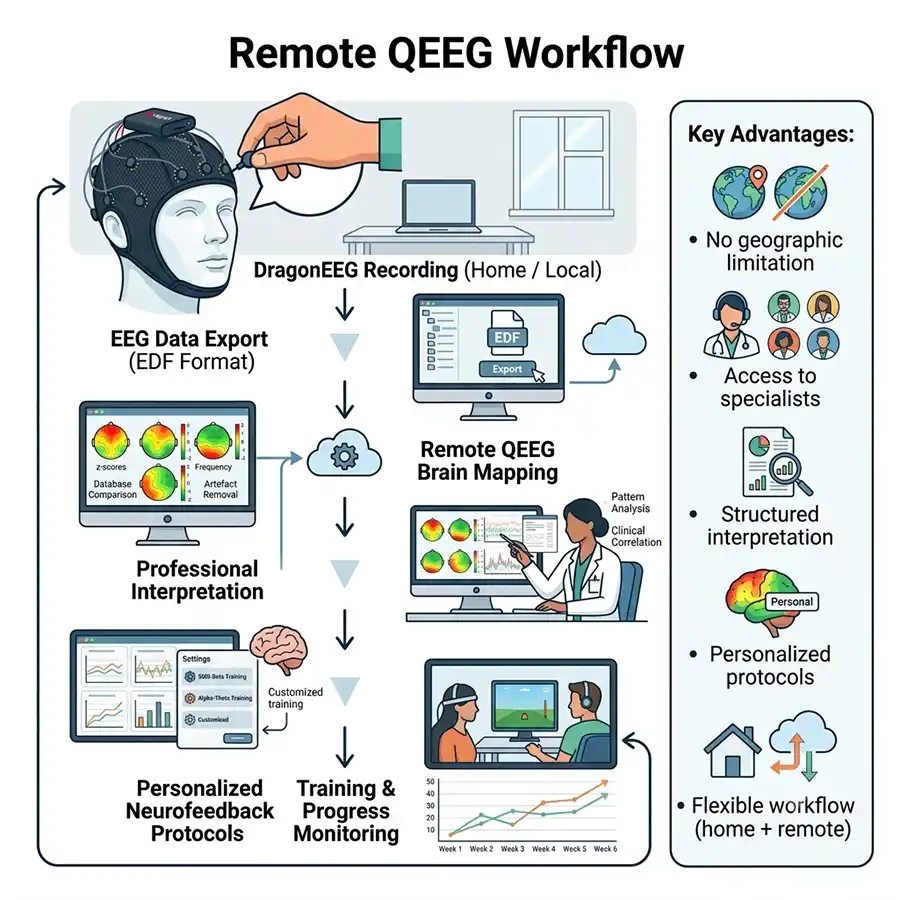
One of the most important advantages of modern quantitative EEG brain mapping is that it does not require in-person sessions. With systems like DragonEEG, brain activity can be recorded locally and then analyzed remotely by qualified professionals.
This approach allows EEG data to be collected in one location and interpreted elsewhere, making advanced QEEG neurofeedback accessible regardless of geographic limitations.
Recording EEG Data at Home or in a Local Setting
DragonEEG enables users to record high-quality 21-channel EEG data in a controlled environment. Once the recording is complete, the data can be exported in standard formats and shared securely for further analysis.
This flexibility allows users to participate in structured brain mapping workflows without needing to visit specialized clinics for every session.
Sharing Data with Qualified Professionals
After EEG recordings are completed, the data can be reviewed by professionals trained in quantitative EEG brain mapping and neurofeedback interpretation. These specialists analyze brainwave patterns, identify functional imbalances, and interpret connectivity between brain regions.
Based on this analysis, structured insights can be developed that support more informed decision-making regarding cognitive training strategies and QEEG neurofeedback protocols.
Receiving Personalized QEEG Reports
In many cases, EEG data analysis yields a structured report outlining key findings related to brain function. These reports may include observations about brainwave distribution, regional activity differences, and potential functional patterns.
Such reports provide a foundation for understanding how the brain is functioning at a deeper level and can serve as a starting point for personalized neurofeedback planning.
Developing Individualized Neurofeedback Protocols
Once brain activity has been analyzed, targeted neurofeedback protocols can be developed based on observed patterns. These protocols are not generic—they are derived from measurable EEG data obtained through quantitative EEG brain mapping.
This ensures that training approaches are aligned with actual brain function rather than generalized assumptions, increasing the precision and relevance of neurofeedback interventions.
The Benefits of Remote Neurofeedback Workflows
Remote EEG analysis and neurofeedback workflows offer several advantages:
- Access to expertise regardless of location
- Flexibility in how and where EEG data is collected
- Ability to combine home-based recording with professional interpretation
- Structured progression from data collection to brain training
For many users, this model offers a practical way to engage with advanced neurotechnology while still receiving expert-level insights from quantitative EEG brain mapping.
From Data Collection to Structured Guidance
DragonEEG supports a complete workflow that connects brain data acquisition with interpretation and neurofeedback planning. This creates a pathway that allows users to move from raw EEG recordings to structured insights and, when needed, to professionally guided QEEG neurofeedback strategies tailored to their unique brain activity patterns.
How to Get Started with Quantitative EEG Brain Mapping
Choosing the Right DragonEEG Configuration
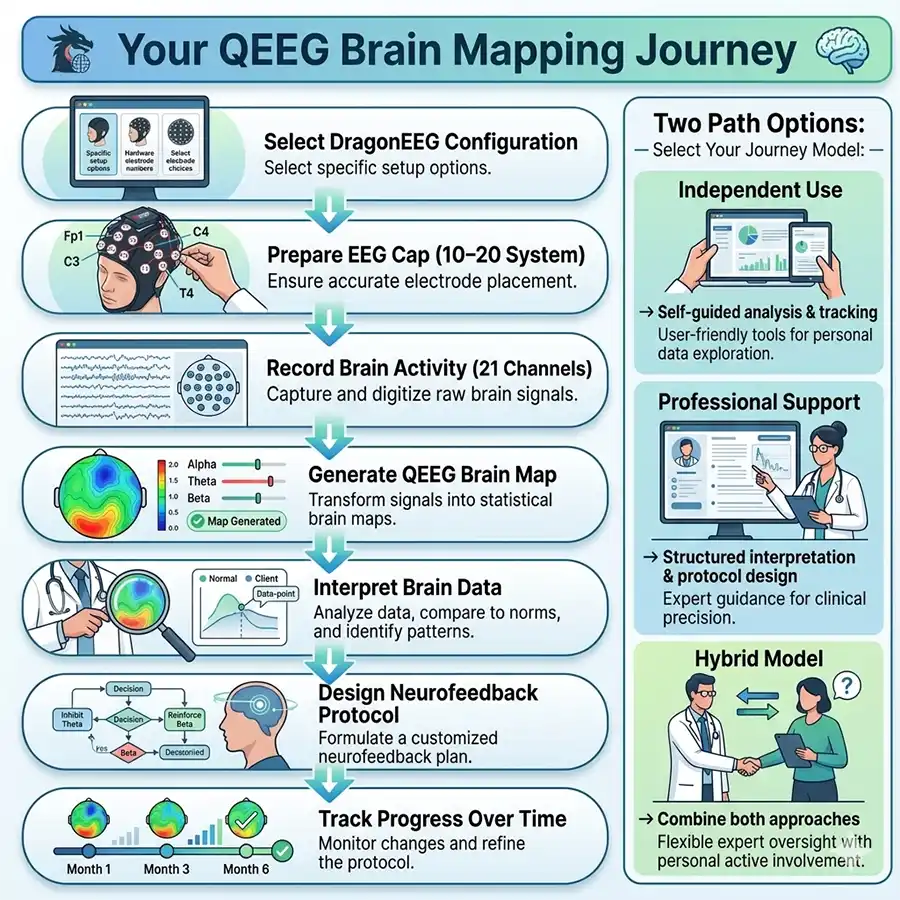
The first step in working with quantitative EEG brain mapping is selecting the appropriate DragonEEG configuration. Depending on the use case, users may choose between dry or wet electrode systems, both of which support high-quality 21-channel EEG recording.
This flexibility allows the system to adapt to different environments, whether for research, clinical use, remote neurofeedback, or cognitive performance assessment.
Preparing the EEG Cap
Before recording begins, the EEG cap is positioned according to the international 10–20 system. Proper setup ensures that each electrode is correctly aligned with its corresponding brain region.
Accurate placement is essential for reliable quantitative EEG brain mapping, as it ensures consistency across sessions and improves the quality of comparative analysis over time.
Recording Brain Activity
Once the cap is prepared, brain activity is recorded across all 21 EEG channels. During this process, electrical signals from different brain regions are captured simultaneously, providing a full-head view of brain function.
These recordings serve as the raw data for later stages of analysis and QEEG neurofeedback protocol development.
Creating a QEEG Brain Map
After recording, the EEG data is processed to generate a quantitative brain map. This map visualizes brainwave activity, regional differences, and functional patterns across the brain.
Through quantitative EEG brain mapping, complex neural activity is transformed into structured visual and numerical representations that can be analyzed and interpreted.
Interpreting Results
Once the brain map is generated, the next step is interpretation. This stage involves identifying patterns in brainwave distribution, connectivity, and regional activation.
Interpretation can be performed independently using supporting software tools or in collaboration with professionals experienced in QEEG neurofeedback and EEG analysis.
Designing a Personalized Neurofeedback Plan
Based on the brain mapping results, targeted neurofeedback protocols can be developed. These protocols are designed to reinforce more optimal brain states and support the regulation of patterns associated with cognitive performance, attention, or stress management.
Because they are based on quantitative EEG brain mapping, these protocols are inherently individualized rather than generic.
Tracking Progress Over Time
One of the key advantages of EEG-based systems is the ability to track changes over time. By repeating recordings at different intervals, users can observe how brain activity evolves in response to training or lifestyle changes.
This makes QEEG neurofeedback a dynamic process rather than a static intervention, allowing for continuous adjustment and optimization of training strategies.
Combining Independent Use with Professional Guidance
Users can choose between independent exploration of EEG data or working with professionals who assist in interpretation and protocol design. In many cases, a hybrid approach is used, where users collect data themselves and then receive structured guidance based on quantitative EEG brain mapping results.
This flexibility allows the system to support both self-directed cognitive optimization and expert-guided neurofeedback workflows.
Technical Specifications of the Dragon EEG Cap
EEG Cap Specifications
DragonEEG is a professional 21-channel EEG cap designed for full-head brain activity recording based on the international 10–20 system. It provides high-density coverage suitable for quantitative EEG brain mapping and advanced QEEG neurofeedback applications.
The system is built to capture synchronized brain activity across multiple regions, enabling detailed analysis of brainwave patterns and functional connectivity.
Electrode Configuration
- 21 EEG channels
- Standard 10–20 electrode placement:
Fp1, Fpz, Fp2, F7, F3, Fz, F4, F8,
T3, C3, Cz, C4, T4,
T5, P3, Pz, P4, T6,
O1, Oz, O2 - 3 poly channels: EMG, ECG, EOG
- Dry or wet electrode options available
- Dry: gold-plated spring-loaded electrodes
- Wet: Ag/AgCl electrodes for stable signal acquisition
Recording Capabilities
- Sampling rate: 500 H
- Measured voltage range: ±0.4 V
- Full-head simultaneous EEG acquisition
- Multi-channel synchronized signal recording
- Suitable for quantitative EEG brain mapping workflows
Connectivity and Communication
- Wireless Bluetooth Low Energy (BLE) connection
- Real-time data transmission
- Mobile and computer compatibility
- Stable connection for research and neurofeedback sessions
Battery Performance
- Battery life: up to 8 hours of continuous operation
- Charging time: up to 4 hours
- Designed for extended recording sessions and multi-session workflows
Software Compatibility
- Free SDK available (C++, C#, Python, React Native, Unity, Xamarin)
- Compatible with:
Windows, macOS, Linux, iOS, Android - Data export in EDF format
- Compatible with NeuroGuide and other EEG analysis platforms
- Supports integration into quantitative EEG brain mapping pipelines
Usability and System Features
- 3 cap sizes included (S, M, L)
- Wireless mobile-friendly operation
- Full 10–20 EEG coverage for consistent positioning
- Designed for research, neurofeedback, and cognitive assessment workflows
Compliance and Quality Standards
- 1-year warranty
- FCC declaration and CE certification (non-medical use)
- Worldwide shipping available
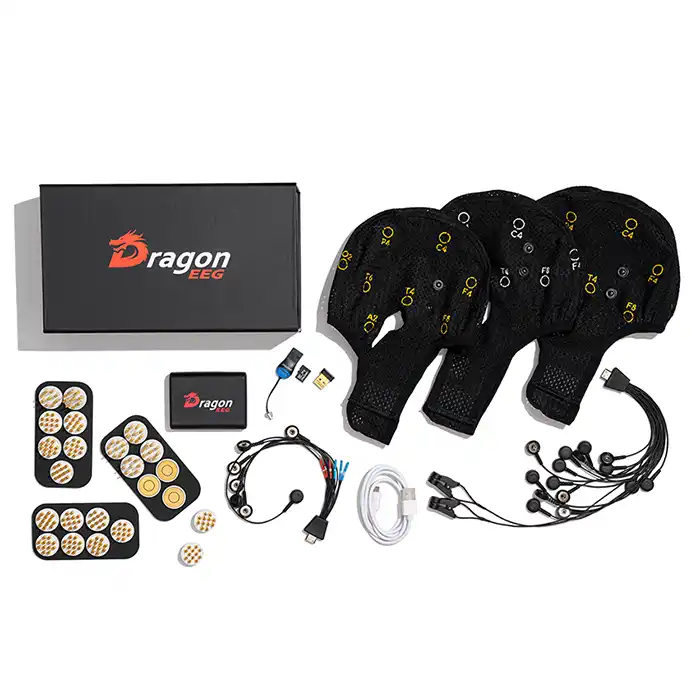
What’s Included in the System
- DragonEEG wireless EEG system
- 21-channel EEG cap (S, M, L sizes)
- Dry or wet electrode setup
- Bluetooth adapter
- SD card and reader
- Accessories for electrode preparation and maintenance
- Setup documentation and training materials
From Specifications to Application
These technical capabilities form the foundation for reliable quantitative EEG brain mapping and advanced QEEG neurofeedback applications. By combining high-density EEG recording, physiological channels, and flexible software integration, DragonEEG provides a complete system for brain data acquisition, analysis, and structured cognitive performance support.
Frequently Asked Questions About Dragon EEG
DragonEEG is a professional 21-channel EEG cap designed for full-head brain activity recording. It is used for quantitative EEG brain mapping, neurofeedback applications, and advanced brain data analysis in research, clinical, and performance settings.
Yes. DragonEEG is designed as a wireless system for use in controlled home or remote environments. However, interpretation of quantitative EEG brain mapping data and design of advanced QEEG neurofeedback protocols may be done independently or with professional guidance.
Yes. DragonEEG is designed for research applications and supports EDF export, SDK integration, and compatibility with EEG analysis platforms such as NeuroGuide. This makes it suitable for neuroscience, cognitive science, and human performance studies involving quantitative EEG brain mapping.
BrainBit Flex is designed for simpler neurofeedback training and ease of use, while DragonEEG provides full-head 21-channel coverage for advanced quantitative EEG brain mapping and more detailed QEEG neurofeedback applications. DragonEEG is intended for deeper analysis, research, and professional workflows.
Not necessarily. DragonEEG can be used independently with supporting software tools. However, many users choose to combine self-recording with professional interpretation to better understand their quantitative EEG brain mapping results and design more effective neurofeedback strategies.
Without quantitative EEG brain mapping, neurofeedback training may rely on general assumptions. Brain mapping provides objective data on brain function, enabling more targeted and personalized QEEG neurofeedback protocols.
Quantitative EEG brain mapping is the process of analyzing raw EEG signals and converting them into structured, visual, and numerical brain maps. These maps show how different brain regions are functioning, including brainwave distribution, asymmetries, and connectivity patterns.
Start Your Journey to Enhance Brain Function Today
Discover the Power of Quantitative EEG Brain Mapping
Understanding the brain is the first step toward improving it. With quantitative EEG brain mapping, brain activity is no longer abstract or invisible—it becomes structured, measurable, and interpretable.
DragonEEG provides the foundation for this process by capturing high-resolution, full-head brain activity data that can be transformed into meaningful insights about cognitive function, attention, stress regulation, and performance patterns.
Transform Brain Data into Actionable Insights
Raw EEG signals alone are not enough to create meaningful change. The real value comes from interpreting this data through structured analysis and translating it into QEEG neurofeedback strategies tailored to the individual brain.
This transformation—from data to insight to training—creates a clear pathway for understanding how the brain functions and how it can be supported through targeted cognitive training approaches.
Build a Personalized QEEG Neurofeedback Program
Every brain is unique. That is why quantitative EEG brain mapping is essential before designing any neurofeedback protocol. It ensures that training is based on real neurological patterns rather than generalized assumptions.
With DragonEEG, users can support the creation of individualized neurofeedback programs that reflect their own brain activity patterns, goals, and cognitive needs.
Combine Technology with Expert Interpretation
DragonEEG is designed as an open and flexible system. It can be used independently or combined with professional interpretation and guidance.
Many users choose to integrate both approaches—collecting EEG data themselves while also receiving structured insights based on quantitative EEG brain mapping and expert-level analysis.
This creates a balanced model that combines accessibility with deeper understanding and precision.
Invest in Better Brain Performance
Improving cognitive performance is not about quick fixes—it is about understanding how the brain functions and working with that information in a structured way.
By using QEEG neurofeedback based on real brain-mapping data, users can take a more informed, data-driven approach to focus, stress management, learning efficiency, and mental performance.
DragonEEG provides the tools to begin this process in a structured and scientifically grounded way.
Final Perspective
At its core, DragonEEG is not just an EEG cap. It is a system for transforming brain activity into structured knowledge through quantitative EEG brain mapping, enabling more informed decisions about neurofeedback training and cognitive optimization.
For those ready to explore brain function in greater depth, it represents a pathway from observation to understanding to structured brain training.