
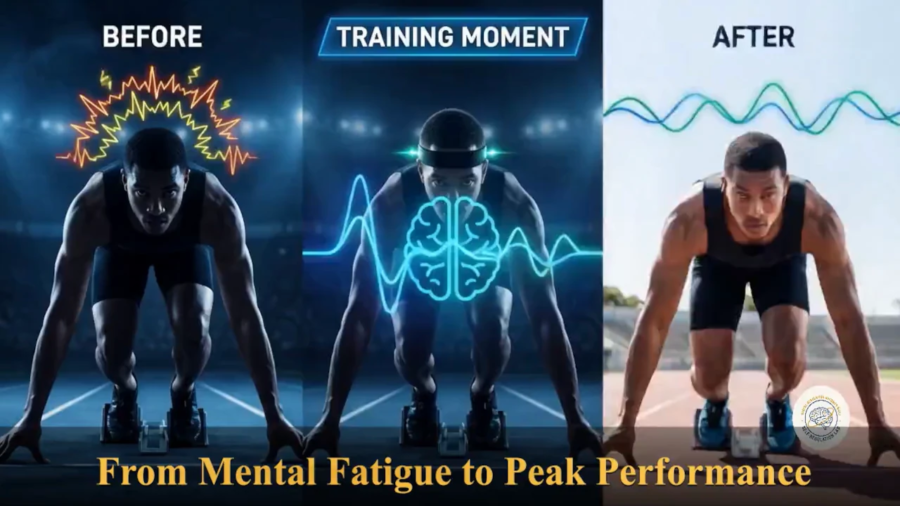
Enhance brain function, improve your problem-solving and decision-making ability, and sharpen your reaction speed through executive function training.
Do you ever feel like your brain is working against you when you need to make a quick decision or react fast? You are not alone. Many people struggle to make decisions under pressure, solve complex problems, or react quickly when it matters most. The good news is that your brain can be trained to perform better. This is where neurofeedback comes in. Through executive function training, you can enhance brain function, improve your problem-solving and decision-making abilities, and sharpen your reaction time.
Whether you want to boost your performance at work, in sports, or in daily life, neurofeedback offers a proven path to improving brain health without medication or invasive procedures. The BrainBit family of neurofeedback devices is designed to help you strengthen the brain networks responsible for executive control, reaction speed, and effective decision-making. This guide covers what your brain actually needs, the protocols with real research behind them, and exactly which BrainBit device gets you there.
Table of Contents
ToggleWhat Is Executive Function and Why Does It Matter?
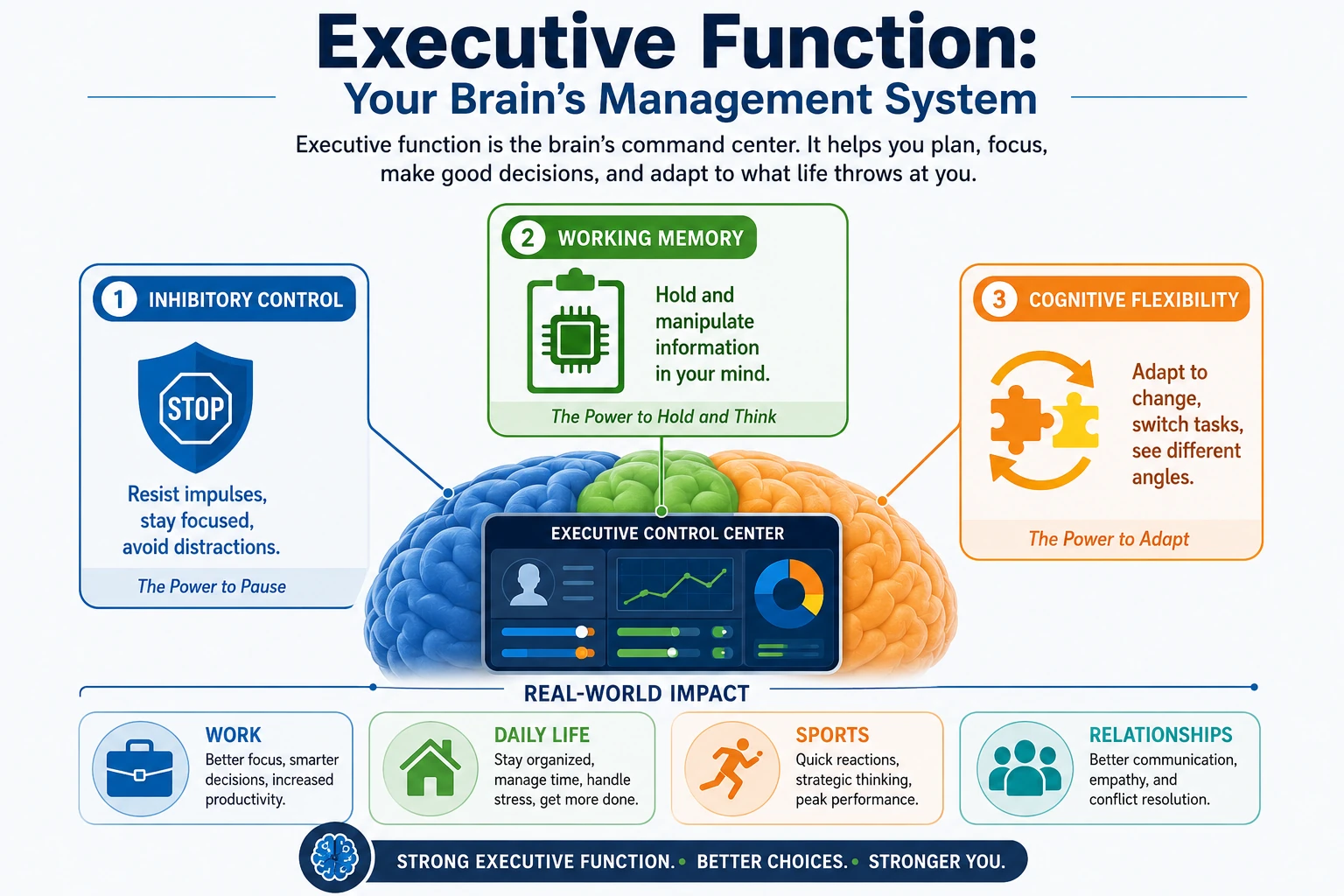
Executive function is your brain’s management system. It is the set of mental skills that help you plan, organize, prioritize, monitor progress, regulate behavior, and make decisions. Without strong executive function, even the simplest tasks can feel overwhelming.
The core components of executive function include:
- Inhibitory control – The ability to resist impulses, stay focused on goals, and avoid distractions. A meta-analysis of neurofeedback training in children with ADHD found statistically significant improvements in this area [7].
- Working memory – The ability to hold and manipulate information in your mind while using it to complete a task. Studies demonstrate that neurofeedback training improves working memory, with effects lasting 6 to 12 months after training [7].
- Cognitive flexibility – The ability to adapt to changing demands, switch between tasks, and think about problems from different angles. Task-based neurofeedback training has been shown to improve cognitive flexibility and executive function performance [7].
Why executive function training matters for daily life, work, and performance
Executive function is not just for the boardroom or the classroom. It affects every aspect of your life.
| Area | How Executive Function Helps |
|---|---|
Work |
Planning projects, meeting deadlines, making decisions under pressure, managing multiple tasks |
Daily Life |
Managing time, controlling impulses, adapting to unexpected changes, solving everyday problems |
Sports & Performance |
Staying focused during competition, making split-second decisions, and regulating emotions under pressure |
Relationships |
Controlling emotional reactions, thinking before speaking, and understanding others’ perspectives |
When executive function is strong, you perform at your best. When it is weak, you struggle with procrastination, impulsivity, poor decision-making, and mental fatigue.
What the Brain Needs for Executive Function Training
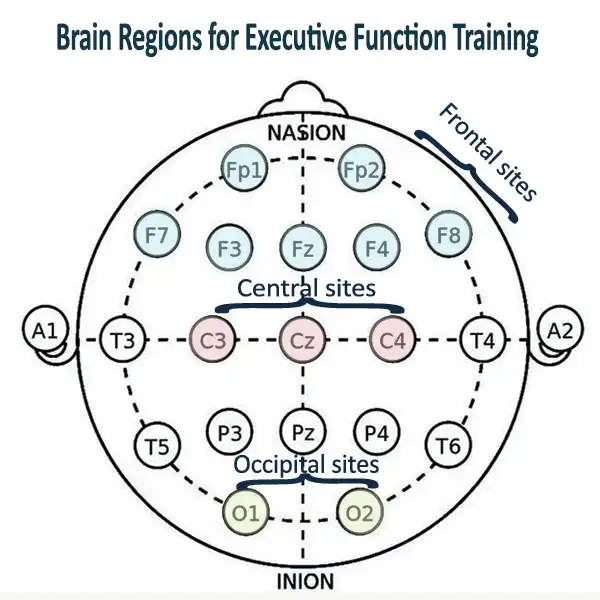
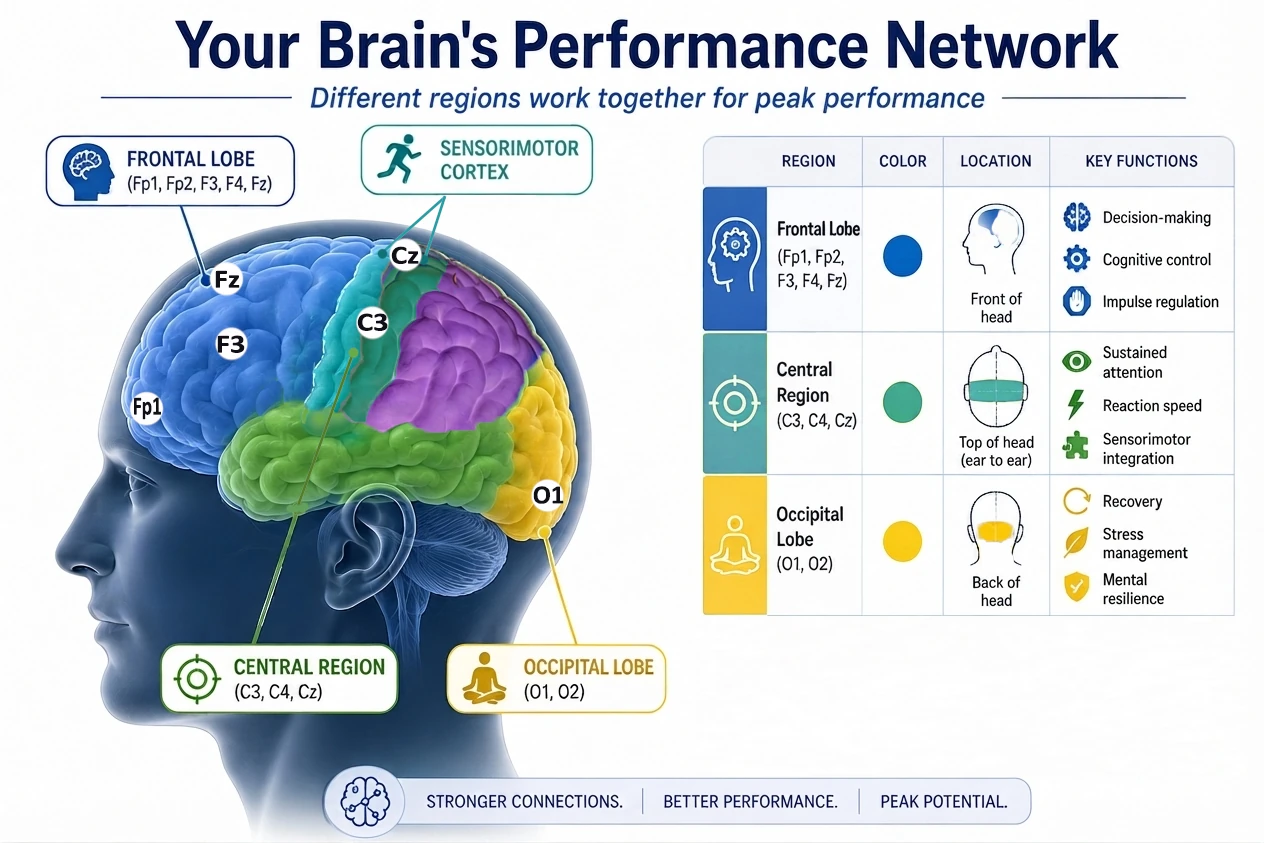
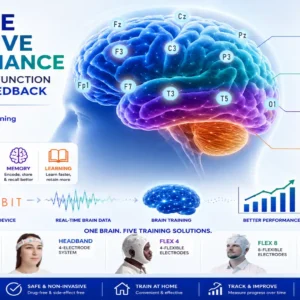
Executive function relies on specific brain networks that work together to keep you focused, adaptable, and in control. The key regions involved include:
- Frontal sites (Fp1, Fp2, F3, F4, Fz) – These regions are the brain’s “command center.” They handle decision-making, cognitive control, planning, and impulse regulation. Research demonstrates that neurofeedback targeting the prefrontal cortex significantly improves executive function performance.
- Central sites (C3, C4, Cz) – These regions support sustained attention, sensorimotor integration, and reaction speed. SMR up-training at central sites enhances motor performance and reduces reaction time.
- Occipital sites (O1/O2) – These regions support recovery, stress management, and mental resilience during demanding cognitive tasks. Alpha training at occipital sites promotes relaxation and reduces mental fatigue.
When these regions work in balance, you can make decisions quickly, adapt to changing situations, and perform under pressure. When they are out of balance, you experience poor decision-making, slow reactions, and inconsistent performance.
Protocols For Executive Function Training With Research Behind Them
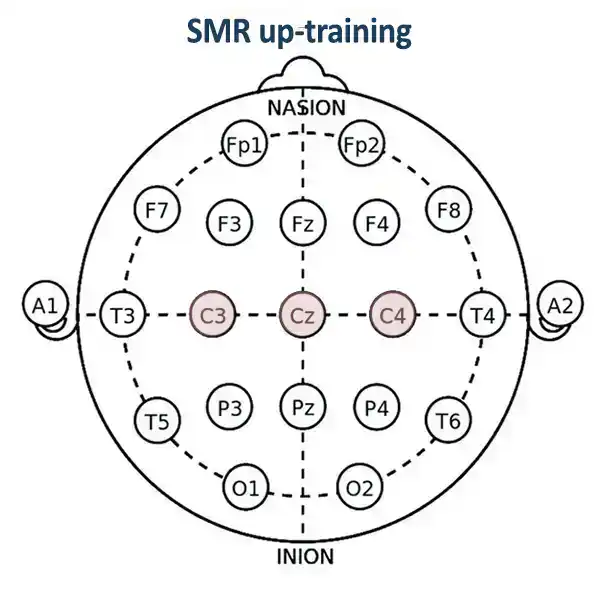
SMR up-training (uptraining 12–15 Hz) at C3, C4, or Cz
It is the most established protocol here. These regions support sustained attention and information processing during complex decisions. A 2024 double-blind, sham-controlled study found that neurofeedback-induced SMR desynchronization (SMR-ERD—event-related desynchronization) directly reduced simple reaction times by down-regulating pre-movement cortical inhibition in the motor cortex, which shortens simple reaction time—a genuine causal mechanism, not just a correlation [1]. A separate 2025 study used a “Comprehensive Oscillatory State Modulation Index” (COSMI) to guide SMR training in professional shooters and found significant improvements in both simple and choice reaction time, sustained at a 4-week follow-up [2].
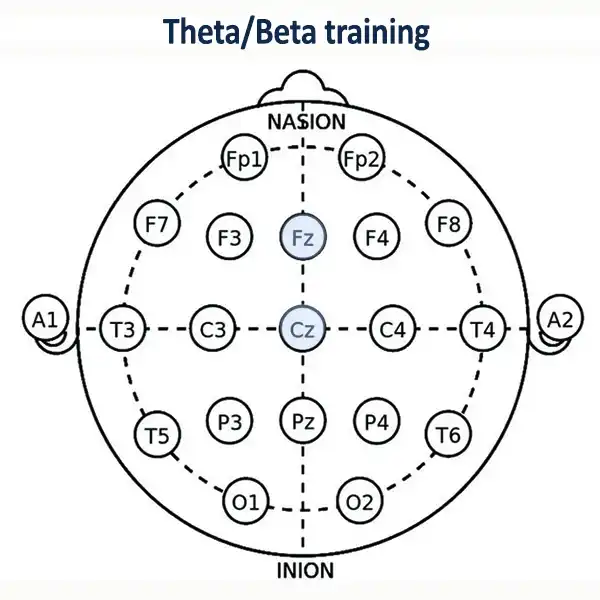
Theta/Beta training at Cz or Fz (reduce 4–8 Hz and increase 15–18 Hz)
This training reduces excessive theta activity linked to distractibility while building beta activity tied to cognitive engagement—a mainstay for attention regulation and executive control. It reduces impulsivity and improves cognitive engagement. Theta/beta training at Cz has been shown to improve executive functioning. TBR (Theta/beta ratio) at central sites is a well-established biomarker for cognitive control, with lower TBR associated with improved decision-making, cognitive control, and executive functioning. Theta/beta training, often combined with alpha training, has also been shown to improve reaction speed in athletes.
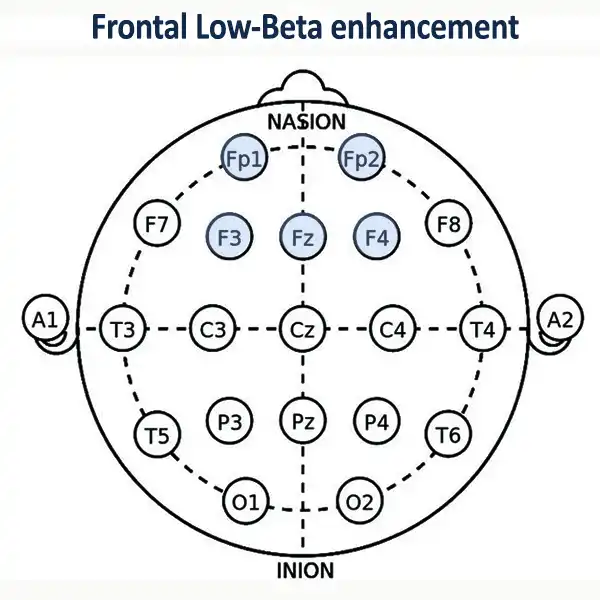
Frontal Low-Beta enhancement (uptraining 15–18 Hz) at Fp1, Fp2, F3, F4, or Fz
It targets the primary drivers of executive decision-making. These sites handle cognitive control, impulse regulation, and the evaluation of options— with beta-band oscillations thought to support top-down control and task-rule maintenance during demanding, sustained decision-making.
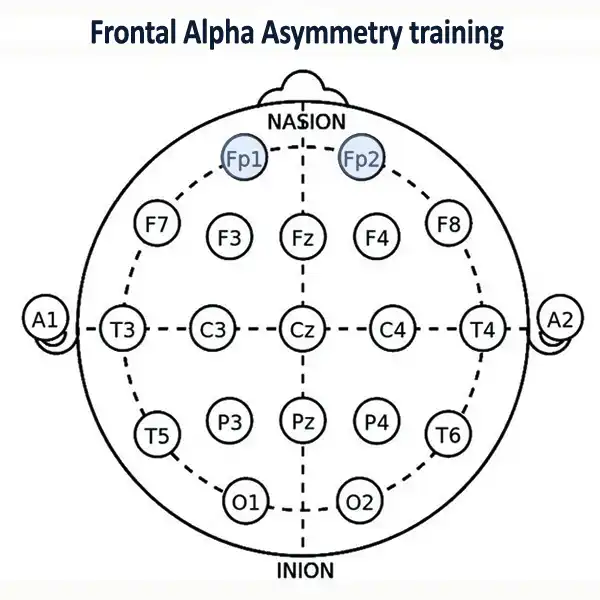
Frontal Alpha Asymmetry training at Fp1/Fp2 (balance alpha)
It trains the balance of activity between the left and right frontal lobes — one of the better-studied protocols in the field. In skilled golfers, a larger shift in this asymmetry predicted a successful putt right after a prior miss [3], direct evidence that this protocol touches real decisions under pressure, not just relaxation.
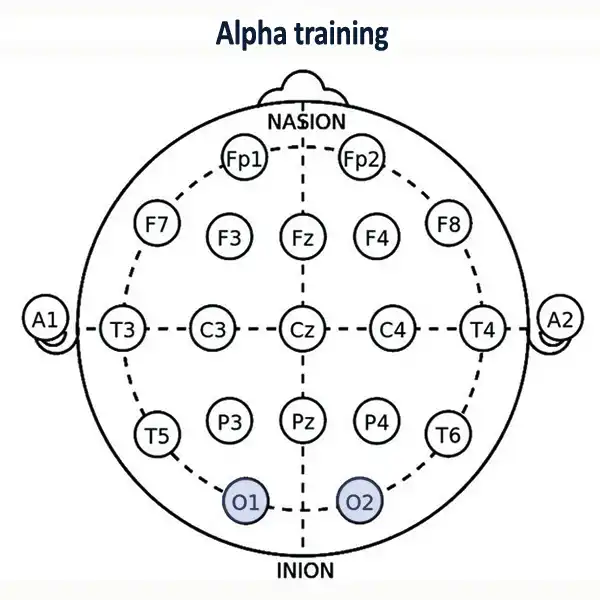
Alpha training at O1/O2 (uptraining 8–12 Hz)
It supports recovery, reduces stress, mental overload, and fatigue, which are essential for clear decision-making under pressure and the resilience that keeps performance from degrading over a long session.
Zooming out
A systematic review of neurofeedback across sport found consistent improvements in reaction time, attention, and self-regulation across disciplines and skill levels, with SMR-plus-theta protocols the most frequently used approach for precision tasks [4], and a 2025 meta-analysis confirmed a moderate positive effect of neurofeedback training on sport motor performance overall [5]. In healthy adults specifically, a meta-analysis found a significant overall effect of neurofeedback on attentional performance [6]. And in children with ADHD, a meta-analysis found neurofeedback produced measurable, sustained gains in inhibitory control and working memory — the two executive functions most often impaired — with effects still detectable 6–12 months later [7]. None of this is a guarantee. Effects vary by protocol, dose, and individual. But it’s a real and growing evidence base.
Important: Focus Training Without the Anxiety
Low-beta training at T3/T4 (15-18 Hz) can sharpen concentration, but because the temporal lobes sit close to circuits involved in emotional processing, individual response can vary—some people respond well, and this region is worth approaching with a bit more awareness than frontal or central sites. If you’re prone to anxiety, alternative routes to the same outcome include SMR training at C3/C4/Cz (focus without temporal training), Frontal Alpha Asymmetry training at Fp1/Fp2 (attention with emotional balance built in), and Alpha training at O1/O2 or T3/T4 (calming, rather than stimulating, the nervous system). This is exactly why electrode coverage matters — not just whether a device can train focus, but whether it offers you a choice of how to train it.
Neurofeedback Protocols for Executive Function, Decision-Making, Reaction Speed Improvement
Based on clinical neurofeedback literature, the following protocols are effective for executive function enhancement:
| Protocol | Frequency | Sites | Purpose |
|---|---|---|---|
SMR up-training |
12–15 Hz |
C3, C4, Cz |
Enhances reaction speed, motor performance, and “relaxed focus”. Research confirms that SMR training reduces reaction time and modulates cortical inhibitory circuits during movement preparation. |
Theta/Beta training |
Reduce 4–8 Hz
Increase 15–18 Hz |
Cz, Fz |
Reduces impulsivity, improves executive function and cognitive control by reducing distractibility and increasing cognitive engagement. |
Frontal Low-Beta enhancement |
15–18 Hz |
Fp1, Fp2, F3, F4, Fz |
Strengthens decision-making, task persistence, and cognitive control during demanding work. |
Frontal Alpha Asymmetry training |
Balance alpha |
Fp1/Fp2 |
Supports emotional regulation, motivation, and performance consistency. Connectivity-based neurofeedback increases EEG frontal asymmetry, a biomarker for emotion regulation. |
Alpha training |
8–12 Hz |
O1/O2 |
Supports recovery from mental fatigue and overload, reduces stress, and builds mental resilience during performance sessions. Alpha/theta training is associated with replicable reductions in frontal beta activity, supporting its role in reducing agitation and anxiety. |
MINDO — Your Everyday Brain Gym
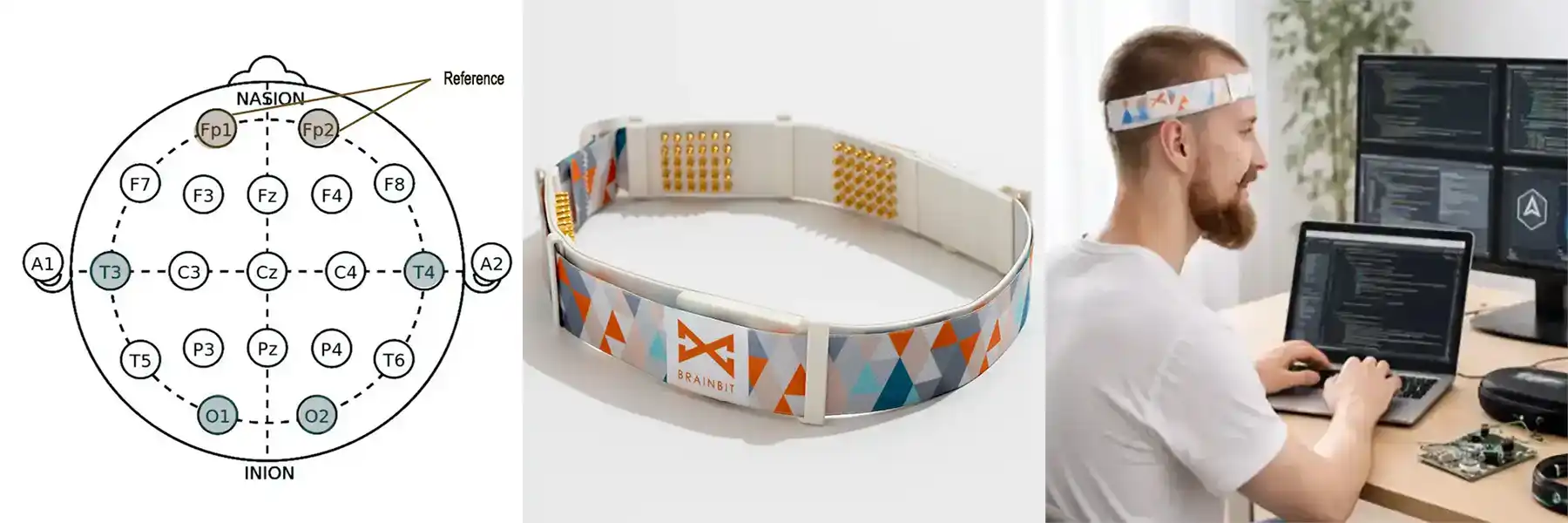
If this is your first EEG device and you want a genuinely simple, guided way to build a daily focus habit, here’s the “aha”: MINDO isn’t trying to be a clinical tool, and that’s the point. Its fixed T3/T4 and O1/O2 electrodes can’t reach the frontal or central sites that drive decision-making and reaction speed directly, so treat it as a recovery and consistency tool, not an executive-function trainer. What it does well is Alpha training at O1/O2 for stress reduction and T3/T4 beta work for basic cognitive engagement, wrapped in 36 gamified sessions that make daily practice something you’ll stick with. If your executive function struggles trace back to a brain that never downshifts, calming that system first is often the real unlock. While not a primary executive function site, T3/T4 can be used for concentration training but carries anxiety risks
Best for: stress-related mental overload rather than direct executive-function training.
Limitations: No frontal access for executive decision-making. No central sites for theta/beta training. Cannot perform Frontal Low-Beta enhancement or Frontal Alpha Asymmetry training.
Headband — The Power User’s Entry Point
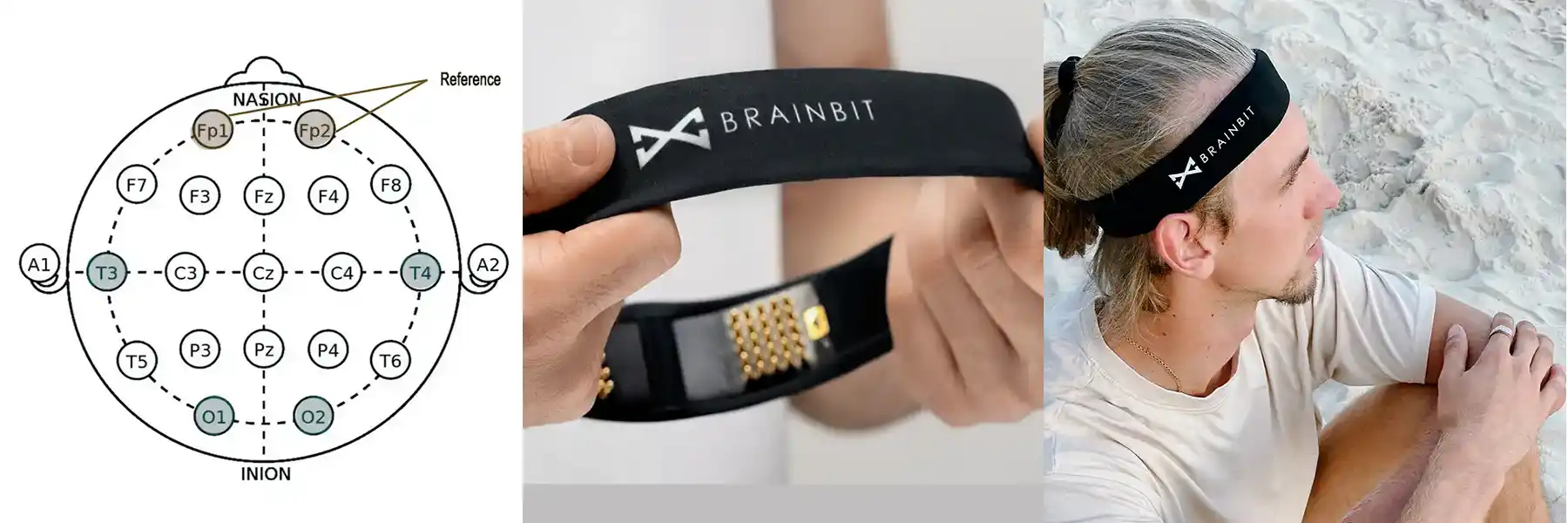
BrainBit Headband has the same fixed T3/T4, O1/O2 placement and the same real limitation on frontal/central training — but if you want to see raw data, not just a game score, this is where it clicks. The Headband ships with a full SDK (Python, Swift, C++, Unity, and more) so you can export raw EEG or build your own protocols.
Best for: someone who’s outgrown gamified wellness apps but isn’t ready to place their own electrodes yet.
Limitations: no frontal access for decision-making or cognitive control; no central sites for reaction-speed or theta/beta training.
Flex 4 — Build Your Own Protocol For Executive Function Training
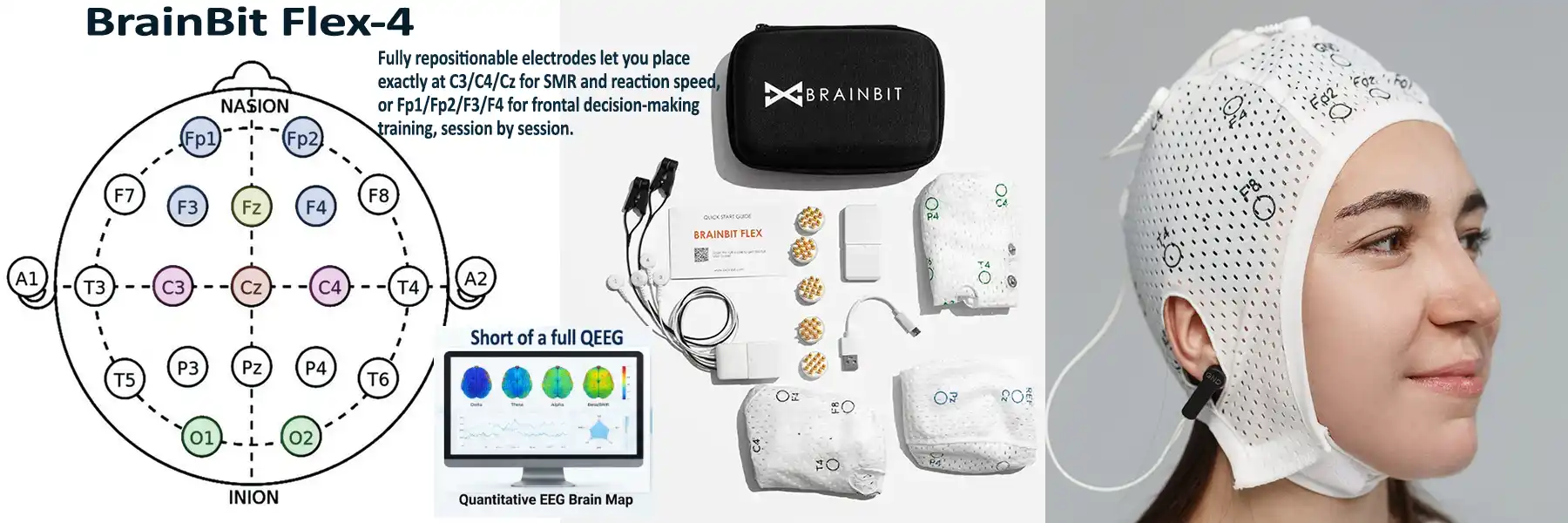
Once you know your goal, this is the device that gets out of your way. BrainBit Flex 4 fully repositionable electrodes let you place exactly at C3/C4/Cz for SMR and reaction speed, or Fp1/Fp2/F3/F4 for frontal decision-making training, session by session.
Protocols:
- SMR up-training at C3, C4, and Cz – enhances focus, reaction speed, and motor performance
- Frontal Low-Beta enhancement at Fp1, Fp2, F3, and F4 – strengthens cognitive control, task persistence and decision-making.
- Theta/Beta training at Cz and Fz – reduces impulsivity, improves reaction speed, and improves cognitive engagement.
- Frontal Alpha Asymmetry training at Fp1/Fp2 – reduces emotional interference in decisions and performance consistency
- Alpha training at O1/O2 – reduces stress and mental overload
Best for: someone who wants precision over breadth and doesn’t mind planning each session with intent.
The trade-off: with 4 channels committed to one protocol, you can’t blend, say, reaction speed and emotional regulation training in the same sitting. Right for someone who wants precision over breadth.
Flex 8 — Train All Functions at Once
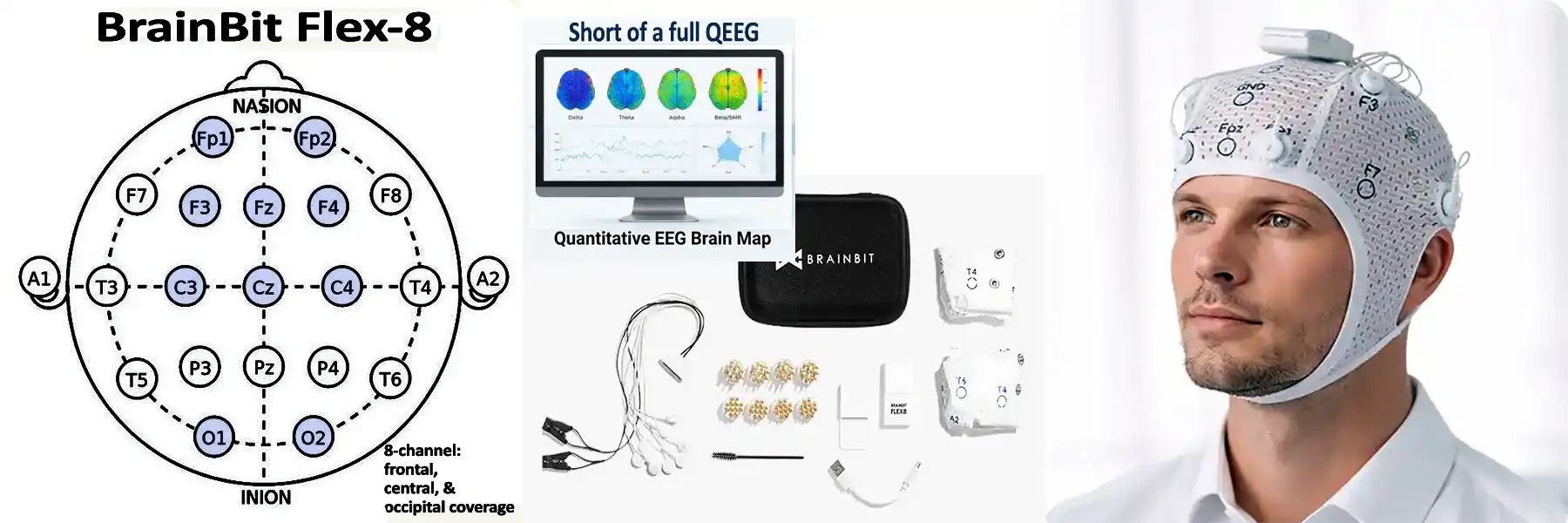
Same repositionable freedom as the Flex 4, minus the trade-off. With 8 channels, Flex 8 can run SMR up-training, Theta/Beta training, Frontal Low-Beta enhancement, Frontal Alpha Asymmetry, and O1/O2 Alpha recovery simultaneously in one session — full frontal, central, and occipital coverage.
Best for: anyone serious about combining decision-making, reaction speed, and recovery into one integrated protocol instead of juggling separate sessions. The most complete platform short of a full QEEG cap.
Headband Pro — The Executive Function Sweet Spot
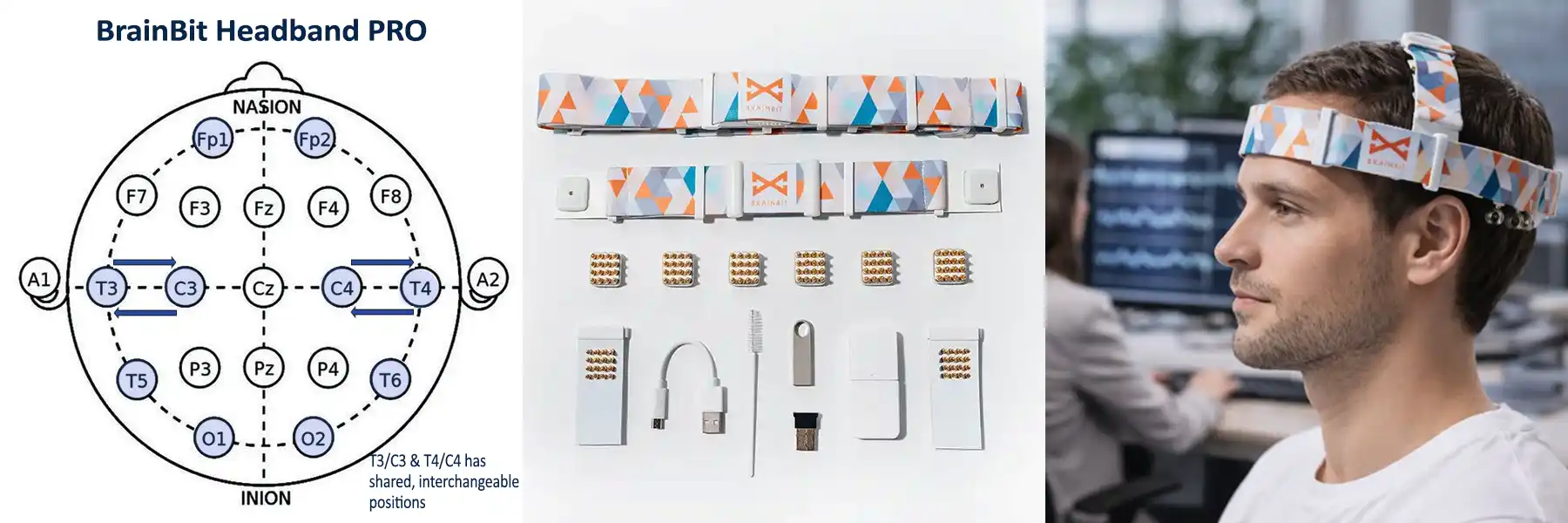
Headband Pro‘s (Fp1, Fp2, C3/T3, C4/T4, T5, T6, O1, O2) central strap uses T3/C3 and T4/C4 as shared, interchangeable positions — you place the sensor at one or the other, not both at once — alongside built-in Fp1/Fp2 (frontal) and O1/O2 (occipital). That’s the “aha”: an 8-channel-capable system reaching nearly every site above, at the convenience of a wearable headband, without you placing anything yourself. Most sessions, you’ll run the strap at C3/C4 for SMR and reaction-speed training. But that same strap can swap to the temporal position instead, trading central SMR and reaction-speed training for calming. Alpha training at T3/T4 — useful if emotional balance is the priority for that session rather than reaction speed. T5/T6 (posterior temporal) are not typically used for executive function training, as they primarily process auditory and visual association.
Protocols:
- SMR up-training at C3 and C4 – enhances focus and motor performance, reduces simple reaction times
- Theta/Beta training at C3/C4 – improves reaction speed
- Frontal Low-Beta enhancement at Fp1 and Fp2 – strengthens decision-making, cognitive control and task persistence
- Frontal Alpha Asymmetry training at Fp1/Fp2 – supports emotional regulation and performance consistency
- Alpha training at O1/O2 – supports recovery and stress management
Best for: most people chasing sharper decisions and faster reactions without learning electrode placement.
Limitations: Fz is not accessible with Headband Pro, which limits Theta/Beta and frontal midline theta protocols. Cz — the gold-standard placement for SMR up-training — is also not accessible, meaning you can’t train SMR at its most studied location. However, C3 and C4 are accessible for SMR training and remain highly effective for reaction speed and attention.
Dragon EEG — Full-Head Precision
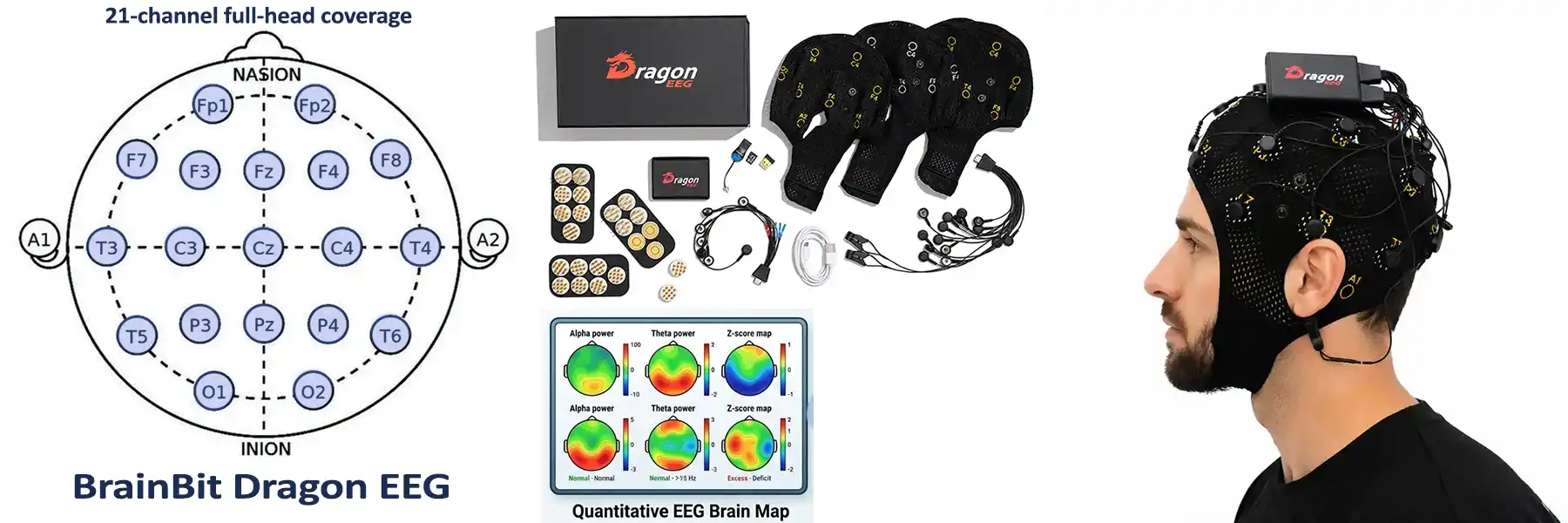
Dragon’s 21-channel full-head coverage is for one specific person: someone who wants a Quantitative EEG (QEEG) brain map to identify their own frontal or central asymmetries before choosing a protocol, rather than working from a general template. “Without QEEG assessment, you’re guessing. With QEEG, you’re training with precision.” It can run every protocol in this article simultaneously and tailor them to what your individual brain map shows.
Best for: practitioners, researchers, or high performers who want a fully personalized plan — the ceiling of what’s available.
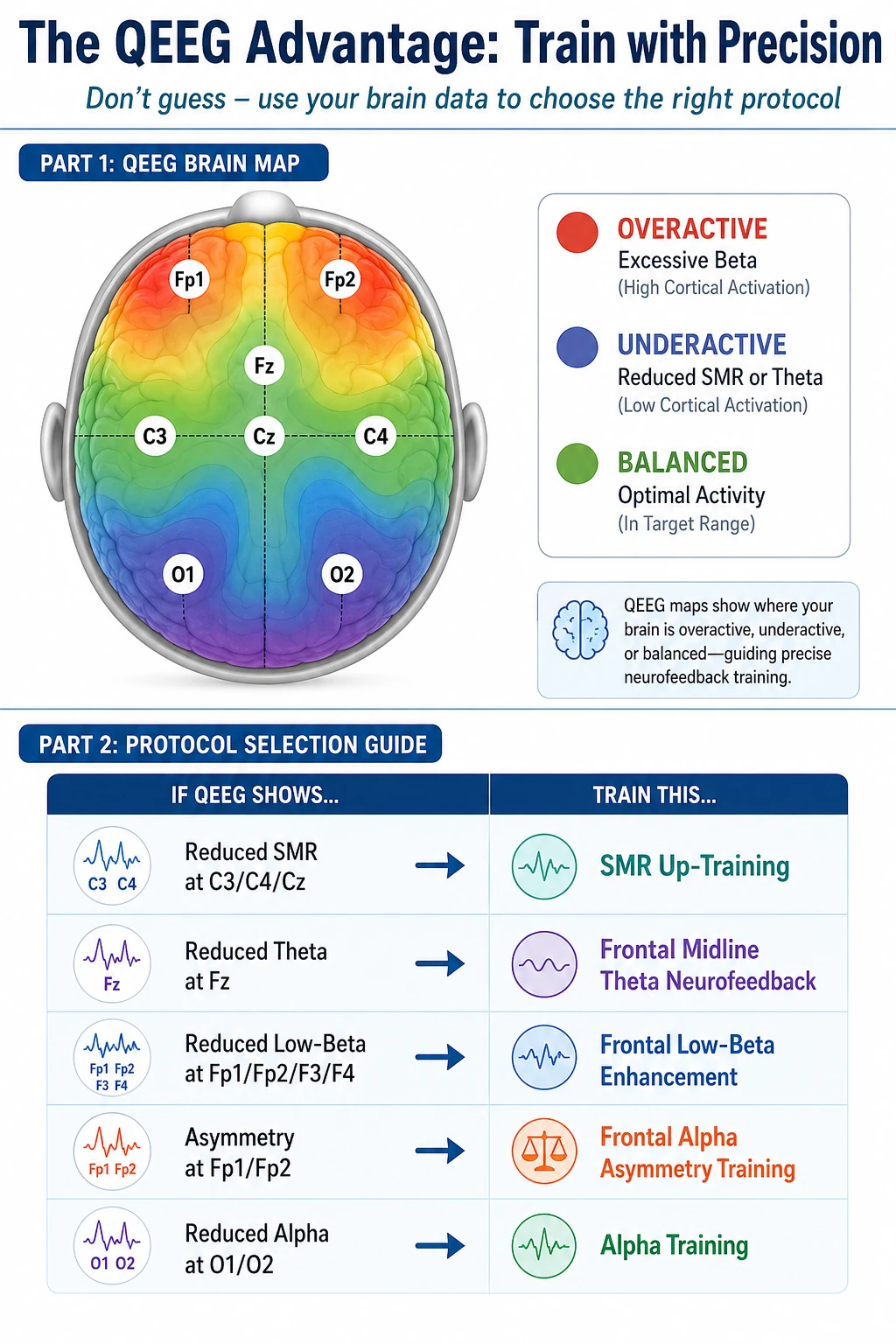
Before any training, a Quantitative EEG (QEEG) brain map can identify which frontal regions are overactive or underactive during decision-making tasks, specific frontal asymmetries affecting cognitive control, and individual brainwave patterns affecting impulsivity and decision-making.
Use QEEG Data to Select Your Protocol
| If QEEG Shows... | This Means... | Your Protocol Should Be... |
|---|---|---|
Reduced SMR (12–15 Hz) at C3/C4/Cz |
Low cortical inhibition capacity, poor reaction speed, low focus and sustained attention capacity | SMR up-training at C3/C4/Cz |
Reduced low-beta (15–18 Hz) at Fp1/Fp2/F3/F4 |
Low cognitive control and decision-making capacity | Frontal Low-Beta enhancement at Fp1/Fp2/F3/F4 |
Reduced frontal midline theta (4–8 Hz) at Fz |
Low executive function and cognitive control | Frontal midline theta neurofeedback at Fz, which is associated with sustained attention and cognitive engagement during demanding tasks [8]. |
Excessive theta (4–8 Hz) at Cz/Fz |
High distractibility and impulsivity, poor executive function and cognitive engagement |
Theta/Beta training at Cz/Fz |
Asymmetry between Fp1 and Fp2 |
Emotional dysregulation affecting decision-making and performance | Frontal Alpha Asymmetry training at Fp1/Fp2 |
Excessive alpha at O1/O2 |
Mental overload and stress impairing decisions |
Alpha down-training at O1/O2 – but with careful monitoring |
Reduced alpha (8–12 Hz) at O1/O2 |
Poor recovery and stress management | Alpha up-training at O1/O2 |
Find Your Fix: The Master Decision Guide
Not sure where to start? Match your primary challenge to a protocol below, then check which device actually gives you access to it. This is the shortcut version of everything above — find your row, and you’ll know exactly what to train and what to buy.
| If Your Primary Challenge Is... | Protocol | Electrode Montage | Why This Works | Device(s) That Can Do This |
|---|---|---|---|---|
Targeting Specific Challenges — Choose Your Protocol | ||||
Slow decision-making, poor cognitive control |
Frontal Low-Beta enhancement (15–18 Hz) |
Fp1, Fp2, F3, F4 |
Strengthens cognitive control and task persistence during demanding decisions | Flex 4, |
Slow simple reaction time |
SMR up-training (12–15 Hz) |
C3, C4, Cz | Directly shortens reaction time by reducing pre-movement cortical inhibition [1] | Flex 4, |
Slow choice reaction time/cognitive processing speed |
SMR up-training with theta monitoring |
Cz |
Improves the speed of choosing between options, not just reacting to one stimulus | Flex 4, |
Motor performance/precision under pressure (sports, fine motor tasks) |
SMR-ERD neurofeedback |
C3, C4 (sensorimotor cortex) |
Trains the same neural populations used in motor imagery and movement preparation | Flex 4, |
Comprehensive reaction-speed training (athletes, precision tasks) |
COSMI-guided SMR training |
Cz, C3, C4 | Multidimensional regulation of SMR, theta, and high-beta together; gains held at 4-week follow-up [2] | Flex 8, |
Impulsivity, poor task engagement, mind-wandering |
Theta/Beta training |
Cz, Fz | Reduces distractibility while building cognitive engagement; supports inhibitory control [7] | Flex 4, |
Emotional interference in decisions, performance inconsistency |
Frontal Alpha Asymmetry training |
Fp1, Fp2 | Balances left/right frontal activity tied to emotional regulation and consistency under pressure [3] | Flex 4, |
Executive function + sustained attention during demanding tasks |
Frontal midline theta neurofeedback |
Fz (or FCz) | Frontal midline theta is associated with cognitive control and sustained engagement during demanding tasks [8]. It is a well-established marker of cognitive control and sustained engagement | Flex 8, |
Stress, mental overload, unclear thinking under pressure |
Alpha training |
O1, O2 |
Reduces stress and mental fatigue, supporting the recovery side of decision-making | All devices: |
Advanced Options — Multi-Protocol & QEEG-Guided Training | ||||
Basic cognitive engagement, no equipment for frontal/central training |
Beta enhancement (15-18 Hz) |
T3, T4 |
Provides some cognitive engagement, but cannot reach the sites that drive executive control — use with caution if anxiety-prone (see important note above) |
MINDO,
Headband |
Multiple challenges at once (decision-making + reaction speed + emotional regulation) |
Combine SMR + Frontal Low-Beta + Frontal Alpha Asymmetry, run simultaneously |
C3, C4, Fp1, Fp2 |
Addresses cognitive control, reaction speed, and emotional consistency in one session instead of separate ones |
Flex 8,
Dragon
Headband Pro |
Full peak-performance training (all functions, one session) |
SMR + Theta/Beta + Frontal Low-Beta + Frontal Alpha Asymmetry + Alpha |
C3, C4, Cz, Fz, Fp1, Fp2, O1, O2 |
Comprehensive, simultaneous coverage of focus, decision-making, emotional regulation, and recovery |
Flex 8,
Dragon |
Want a protocol chosen from your own brain data (QEEG-based neurofeedback), not a general template |
QEEG-guided protocol selection |
Determined by your brain map (up to 21 channels) |
Identifies your specific over/under-active regions before training begins, so nothing is guesswork |
Dragon |
Frequently Asked Questions
Some people notice subtle changes — better focus, less mental fatigue — within 5–10 sessions. Meaningful, lasting change typically takes longer as the brain strengthens new patterns through repetition; research on ADHD populations found the clearest executive-function gains after roughly 1,260 minutes of cumulative training [7]. Consistency matters more than any single session’s length.
Most users start with 2–3 sessions per week . The brain learns through repetition and consistency—regular, shorter sessions are more effective than infrequent, longer ones. Your software will track your progress and help you maintain consistency.
The evidence for reaction speed specifically is some of the strongest in the field — a controlled study found SMR neurofeedback directly shortened reaction times by modulating cortical inhibition before movement [1], and this has been replicated using more sophisticated multi-band protocols in athletes [2]. For decision-making and executive function more broadly, effects are real but more variable across individuals and protocols [6][7].
It’s not required, but highly recommended. It removes the guesswork. A QEEG map from Dragon shows which of your specific brain regions are over- or under-active, so you can select a protocol based on your data rather than a general template.
The Bottom Line
If your goal is genuinely sharper decision-making and faster reaction speed, look for a device that reaches frontal and central sites — that’s Headband Pro, Flex 4, Flex 8, or Dragon. If you’re earlier in the journey and want to build the calm, consistency, and stress resilience that makes executive function training actually stick, MINDO or the standard Headband are honest, affordable starting points.
⚠️ Neurofeedback devices referenced here are non-medical wellness and training tools. They are not intended to diagnose or treat any medical or psychological condition. Individual results vary based on protocol selection, consistency, and personal factors.
References
- Muraoka Y, Iwama S, Ushiba J. Neurofeedback-induced desynchronization of sensorimotor rhythm elicits pre-movement downregulation of intracortical inhibition that shortens simple reaction time in humans: a double-blind, sham-controlled randomized study. Imaging Neuroscience. 2024;2:1-15. doi:10.1162/imag_a_00383.
- Chen F, Liu Y, Lai Y, et al. An intelligent sport training method based on EEG neurofeedback. Sci Rep. 2025;15:37634. doi:10.1038/s41598-025-21590-6
- Chen TT, Wang KP, Cheng MY, Chang YT, Huang CJ, Hung TM. Impact of emotional and motivational regulation on putting performance: a frontal alpha asymmetry study. PeerJ. 2019. https://pmc.ncbi.nlm.nih.gov/articles/PMC6487804/
- Neurofeedback Training Protocols in Sports: A Systematic Review of Recent Advances in Performance, Anxiety, and Emotional Regulation. Brain Sci. 2024;14(10):1036. https://pmc.ncbi.nlm.nih.gov/articles/PMC11506327/
- Yu CL, Cheng MY, An X, Chueh TY, Wu JH, Wang KP, Hung TM. The Effect of EEG Neurofeedback Training on Sport Performance: A Systematic Review and Meta-Analysis. Scand J Med Sci Sports. 2025. doi:10.1111/sms.70055
- Efficacy of neurofeedback training for improving attentional performance in healthy adults: A systematic review and meta-analysis. Imaging Neuroscience. 2024. https://pmc.ncbi.nlm.nih.gov/articles/PMC12224457/
- Louthrenoo O, Boonchooduang N, Likhitweerawong N, Charoenkwan K, Srisurapanont M. The effects of neurofeedback on executive functioning in children with ADHD: a meta-analysis. J Atten Disord. 2022;26(7):976-984. doi:10.1177/10870547211045738
- Enriquez-Geppert S, Smit D, Eschmann KCJ, Marcos-Martínez D, Hornero Sánchez R, Hsieh S, Dehais F, Huster RJ. A mega-analysis of EEG-based frontal-midline theta neurofeedback reveals learning dynamics, individual variability, and response profiles. NeuroImage. 2026. https://www.sciencedirect.com/science/article/pii/S1053811926001370
Add a Comment