
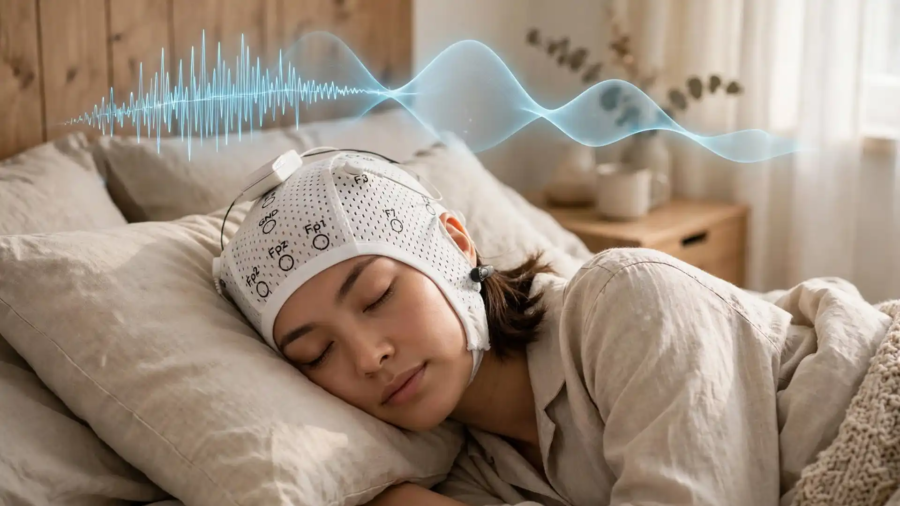
Key takeaways
- Insomnia is often tied to cortical hyperarousal: the sleeping brain stays too alert, with elevated high-frequency EEG activity at sleep onset.
- In 2024, 15.4% of U.S. adults reported trouble falling asleep most days or every day (CDC/NCHS Data Brief No. 559, 2026).
- Neurofeedback for sleep usually trains the sensorimotor rhythm (12-15 Hz) to calm overarousal and support the sleep spindles that protect deep sleep.
- Evidence is promising but mixed; the most rigorous trial found no advantage over placebo, so treat neurofeedback as a complement to proven sleep habits, not a cure.
- Expect gradual change over several weeks of regular sessions, and pair training with consistent sleep hygiene for the best odds.
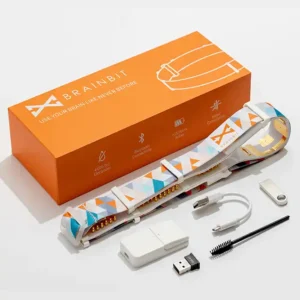
- Top pick for sleep training: A lightweight headband with wind-down and sleep-tracking programs. Compare the full BrainBit family →
If you lie awake with a racing mind, the problem is often an overactive brain that will not downshift into rest. Neurofeedback for sleep aims to retrain that pattern, teaching your brain to produce calmer electrical rhythms so sleep comes more easily. This guide explains how it works, which protocols target insomnia, what the research actually shows, and how to combine brain training with the sleep habits that do the heavy lifting.
Sleep trouble is widespread. In 2024, 15.4% of U.S. adults reported difficulty falling asleep most days or every day, and 18.1% reported trouble staying asleep (CDC/NCHS Data Brief No. 559, 2026). Against that backdrop, a drug-free method that targets the brain directly is worth understanding clearly, including its limits.
How Do Brainwave Patterns Affect Sleep Quality?
Sleep quality tracks closely with the electrical rhythms your brain produces. As of 2024, 30.5% of U.S. adults averaged less than 7 hours of sleep (CDC/NCHS Data Brief No. 559, 2026), and much of that shortfall comes from brains that stay in an alert gear when they should be winding down.
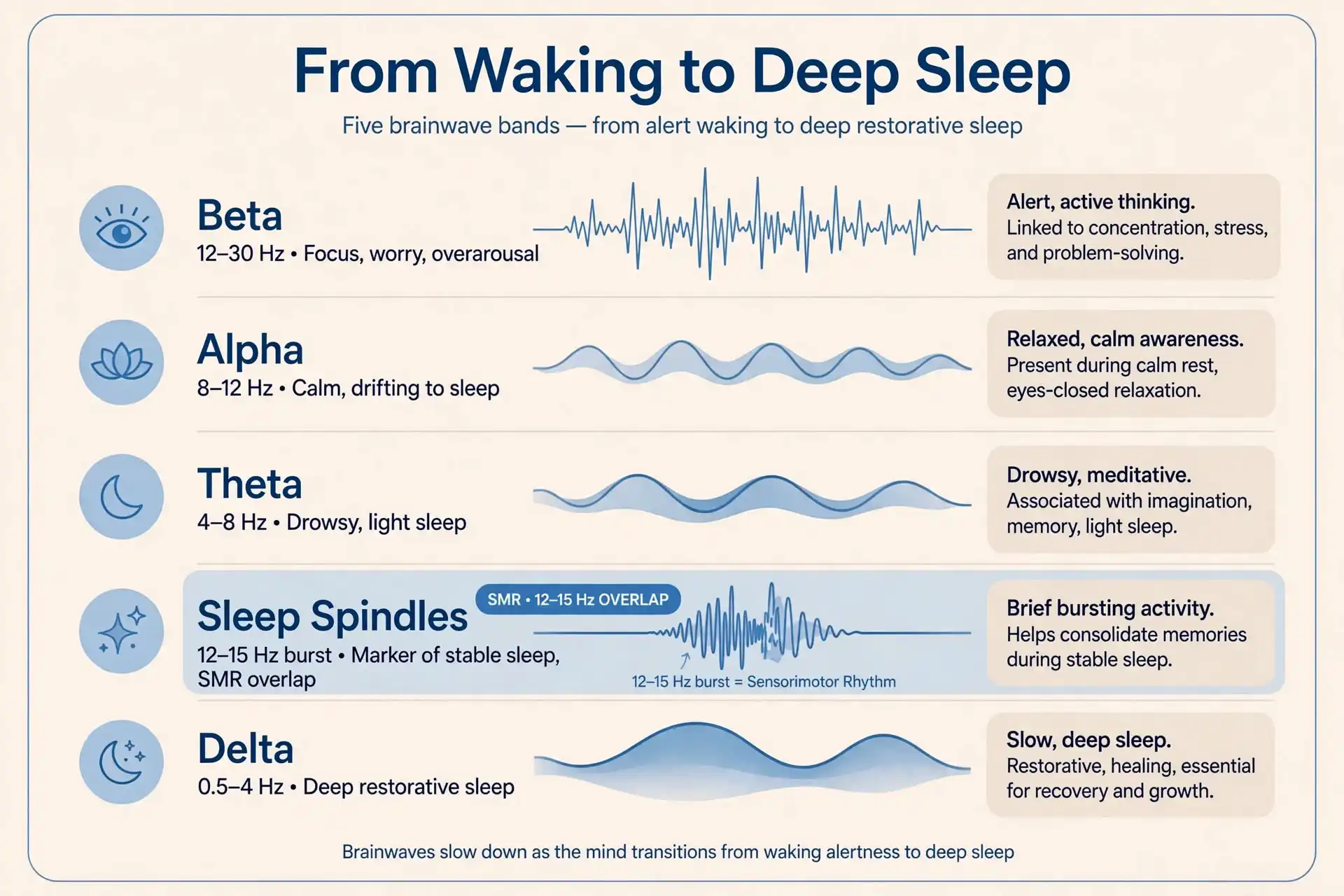
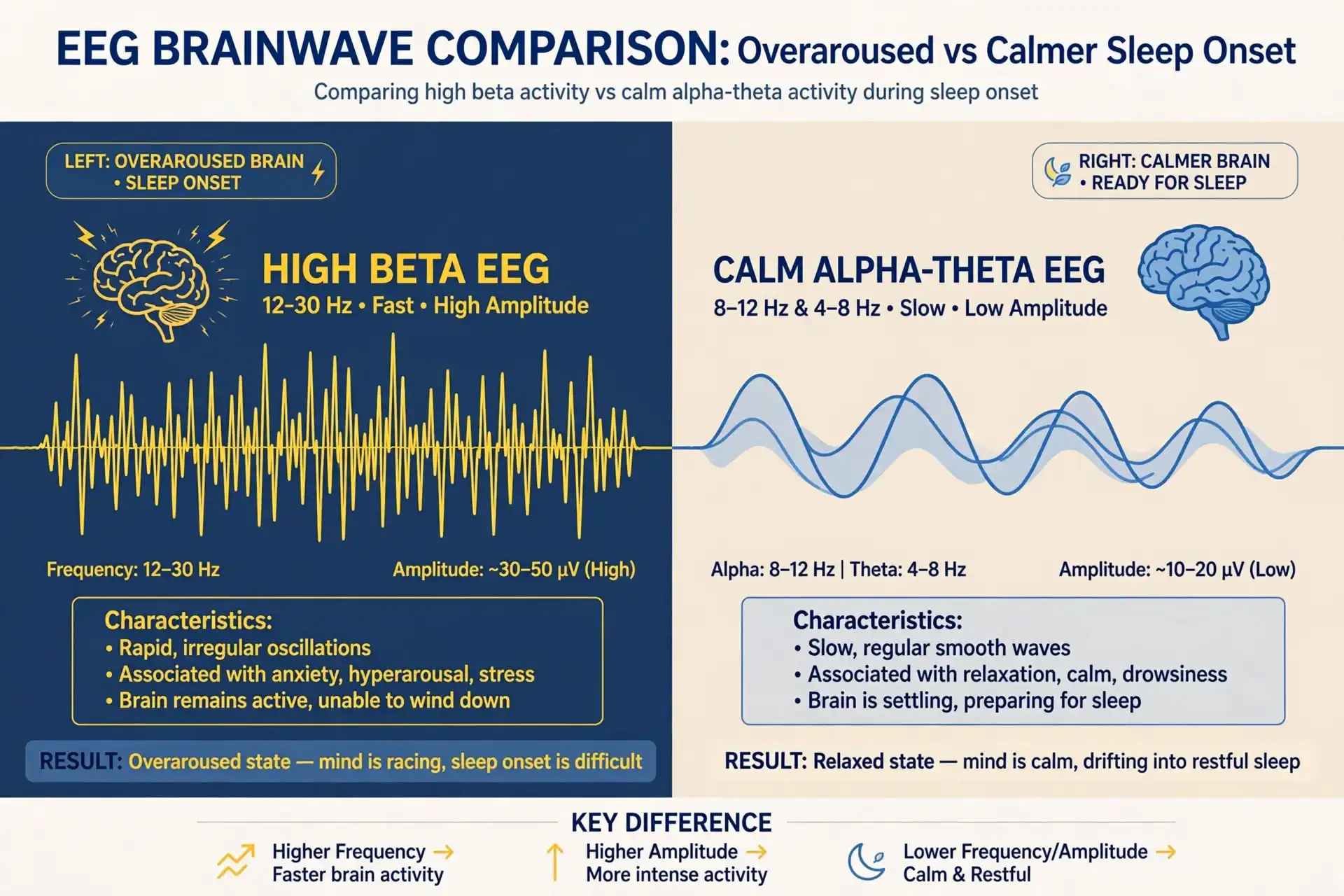
Your brain cycles through distinct frequency bands. Fast beta waves dominate when you are focused or anxious. Slower alpha and theta rhythms appear as you relax and drift off. Deep sleep brings slow delta waves and brief bursts called sleep spindles, which help protect sleep from interruption.
Good sleep depends on a clean handoff between these states. When the fast, waking rhythms refuse to fade at bedtime, the transition stalls. You feel tired yet wired, which is the hallmark of many sleepless nights.
Why Does Overarousal Cause Insomnia?
Insomnia is strongly linked to cortical hyperarousal, a state where the brain keeps running high-frequency activity even as the body tries to rest. Research has repeatedly found elevated beta EEG power at sleep onset and during light sleep in people with insomnia, a signature of a nervous system that will not stand down (PubMed: Perlis et al., Beta EEG activity and insomnia).
Think of it as a dimmer switch stuck near full brightness. The lights should fade as night arrives, but the circuit keeps pushing power. That is why worry, stress, and a buzzing mind are such common companions of poor sleep.
This matters for treatment. If overarousal is the engine of insomnia, then calming that electrical overactivity becomes a logical target. Neurofeedback for sleep steps in here, offering a way to practice downshifting on purpose.
Two protocol families dominate neurofeedback for sleep training.
SMR training targets the sensorimotor rhythm (12–15 Hz) over the central cortex and is the most studied approach for insomnia.
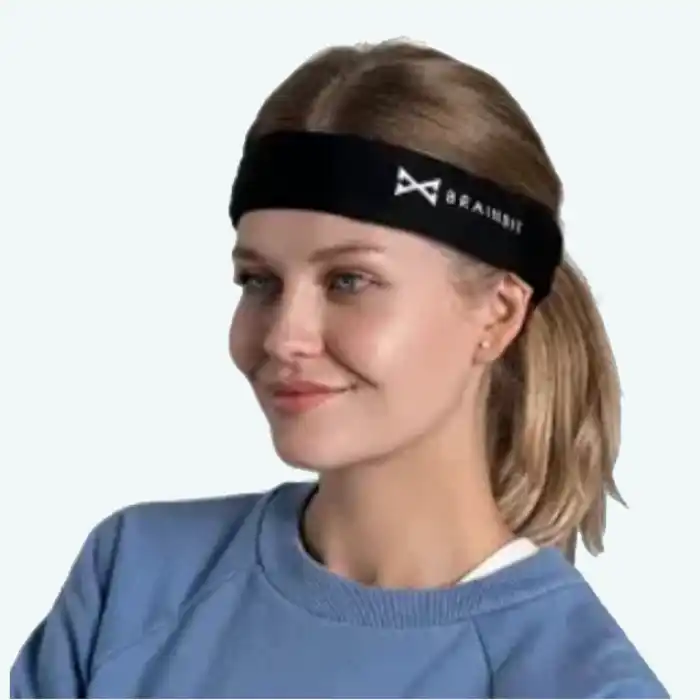
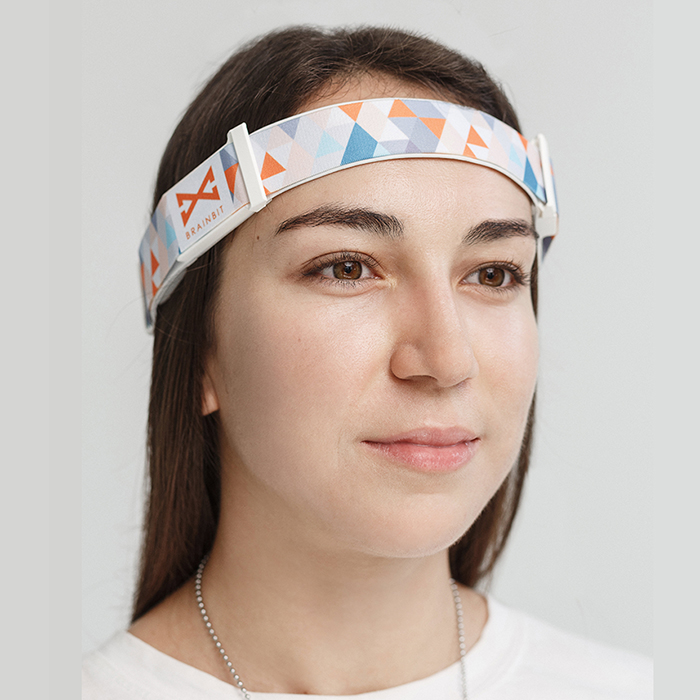
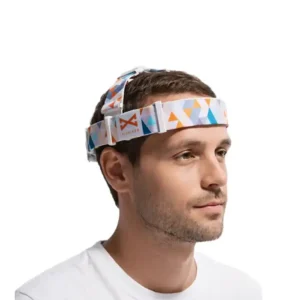
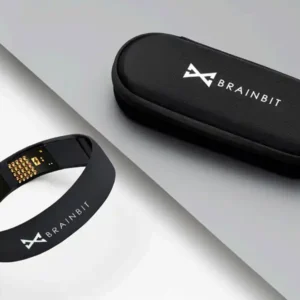
Alpha-theta training works differently — it boosts slower alpha and theta rhythms at the back of the head, easing the pre-sleep transition and quieting a racing mind. Because alpha activity is strongest over the occipital sites (O1 and O2), devices with fixed electrodes there, like the BrainBit MINDO and BrainBit Headband, are built specifically for this relaxation-focused work. The BrainBit Headbands offer a similar path to neurofeedback for sleep training with a slimmer form factor for wind-down sessions.
What Neurofeedback Protocols Are Used for Sleep?
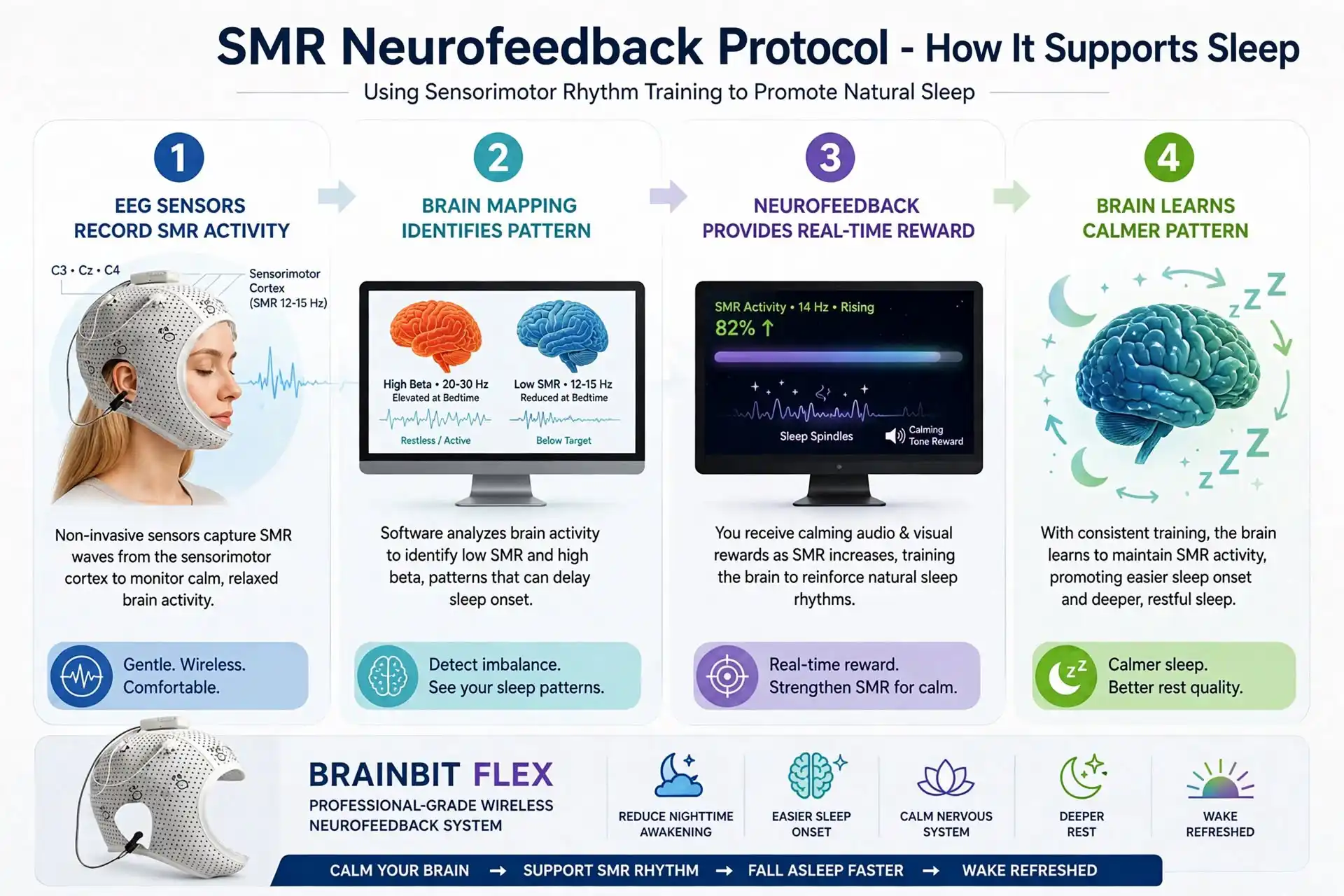
The most common neurofeedback protocol for sleep trains the sensorimotor rhythm (SMR), a 12- 15 Hz band measured over the sensorimotor cortex. The appeal is mechanical: SMR sits in the same frequency range as sleep spindles, so strengthening it may support the rhythms that stabilize deep sleep.
During a session, sensors read your EEG in real time. When your brain produces more of the target rhythm and less of the overaroused beta activity, the system rewards you with feedback: a tone, a game that advances, or a video that plays smoothly. Over many repetitions, the brain learns to favor the calmer pattern.
Other protocols aim to boost slow alpha and theta activity to ease the pre-sleep transition, or to quiet excess fast-wave output. The shared goal is the same: shift the brain away from the hyperaroused state and toward rhythms compatible with rest. For a fuller primer on the underlying mechanism, see What Is Neurofeedback? How Brain Training Really Works.
A fair reading of the science is cautious. The hyperarousal model is solid, and many users report better sleep, but the most rigorous placebo-controlled trial found no clear advantage of SMR neurofeedback over a sham condition, and a 2024 meta-analysis of randomized trials found no additional benefit over control conditions for sleep quality or insomnia severity. Placebo effects appear real and sizable. At the same time, some studies in specific populations — such as people with remitted depression or anxiety and persistent insomnia — show improvements in subjective sleep quality that persist for months. That mixed picture argues for treating neurofeedback for sleep as a promising complement to proven sleep habits, not a proven standalone cure.
How Should You Pair Neurofeedback With Sleep Hygiene?
Brain training works best on a foundation of good sleep habits, because hyperarousal is fed by daily inputs long before you reach the pillow. Caffeine, late screens, irregular bedtimes, and unmanaged stress all keep the fast rhythms running, undercutting any session you do.
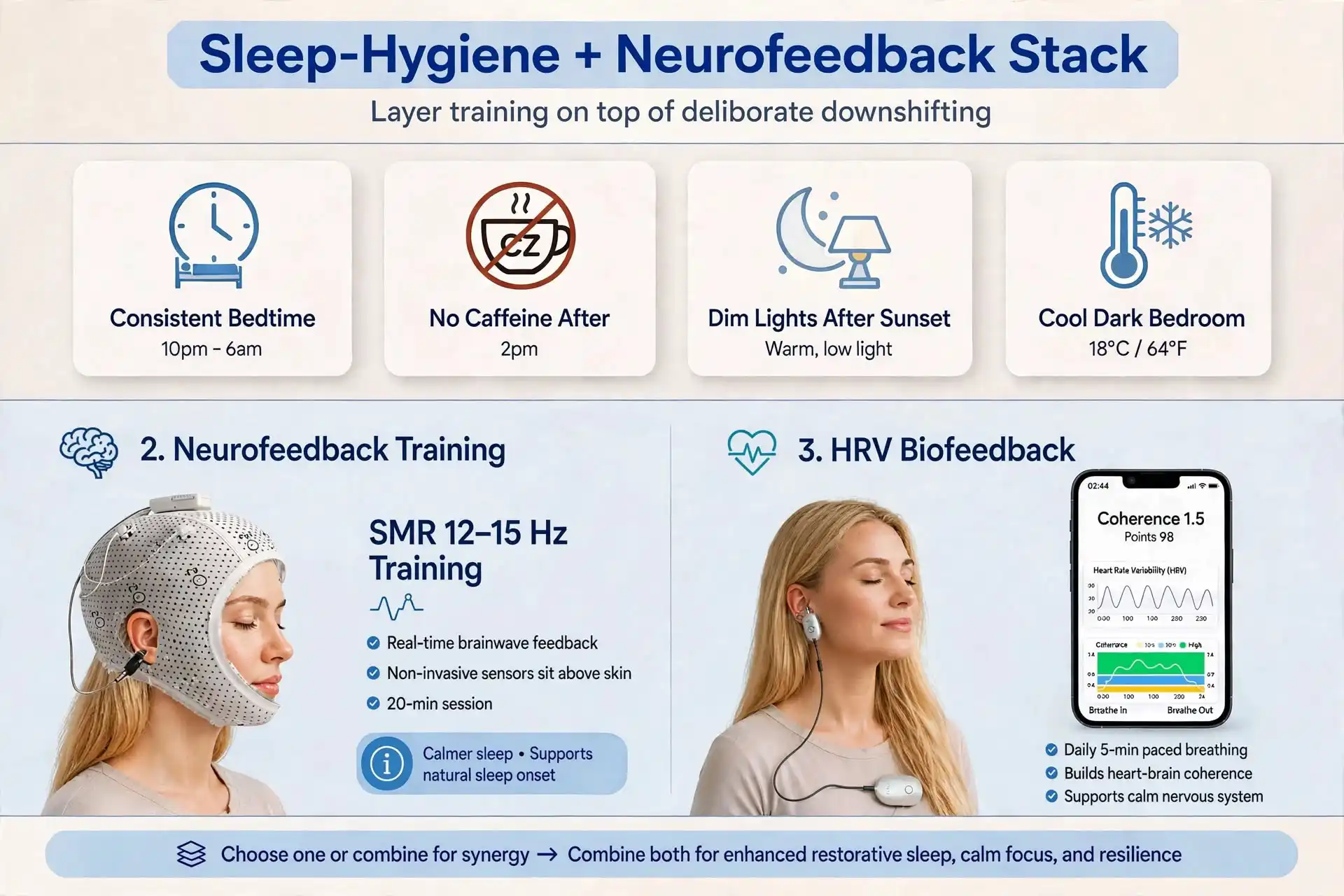
Build the basics first. Keep a consistent wake time, even on weekends. Cut caffeine after midday. Dim lights and step away from screens in the hour before bed. Keep the bedroom cool, dark, and reserved for sleep.
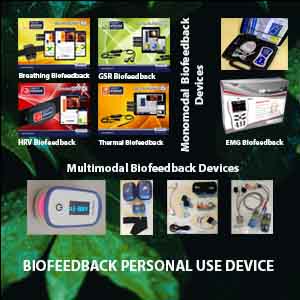
Layer neurofeedback for sleep on top as deliberate practice in downshifting. The habits reduce the load on your nervous system, and the training teaches it to let go. Many people also pair brain training with breath-based methods, such as heart rate variability biofeedback, that lower arousal through the body. Combined, they attack overarousal from two directions.
What Should You Expect in the First Weeks?
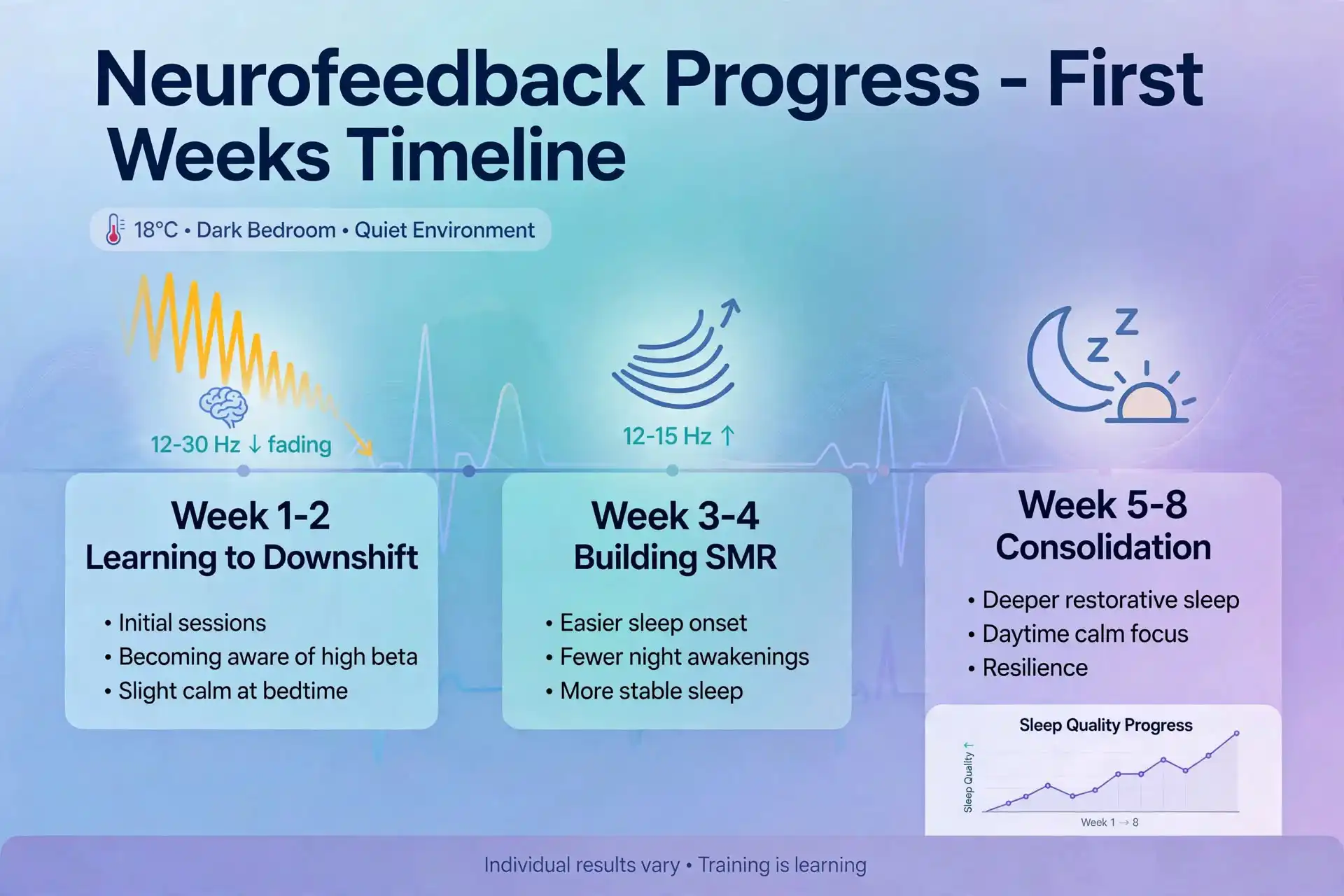
Expect gradual, subtle change rather than an overnight fix. Neurofeedback is a form of learning, so the brain needs repeated sessions, often two or three a week, before new patterns stick. The first wins are usually small: falling asleep a little faster, or waking less often in the night.
Keep a simple sleep log. Note bedtime, rough sleep latency, night wakings, and how you feel in the morning. Patterns over weeks tell you far more than any single night, and they help you separate real progress from normal day-to-day variation.
Set honest expectations about pace. Neurofeedback is a form of learning, and learning takes repetition to become automatic. Do not judge the protocol by your first few nights. Track your sleep for two to three weeks so you can see trends instead of reacting to a single bad night. Some people notice small shifts within the first week; others need a month of consistent sessions before anything changes. Individual variation is normal. What matters most is whether you keep the proven sleep habits in place while you train, because those do the heavy lifting regardless of what the device adds.
Which Home Devices Suit Sleep Training?
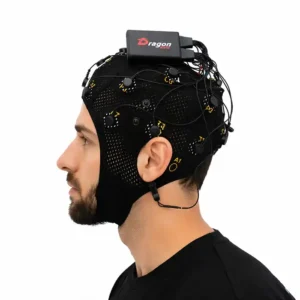
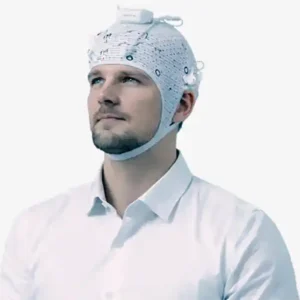
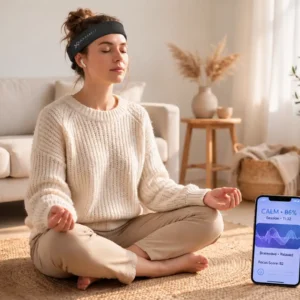
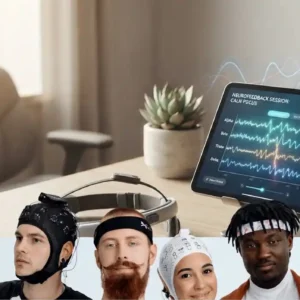
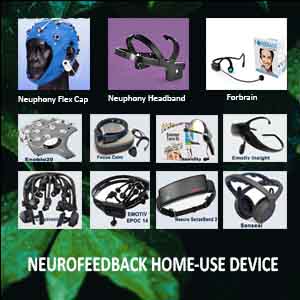
Home neurofeedback has grown as consumer EEG headsets have become more affordable and easier to use. These devices read brain activity through scalp sensors and feed it to an app that guides your training, letting you practice regularly without booking clinic time.
For sleep work, look for a device that measures the relevant frequency bands cleanly, offers a protocol or program aimed at relaxation and downregulation, and provides clear session feedback you can act on. Comfort matters too, since you will wear it repeatedly. We carefully investigate home-use neurofeedback systems and guidance built around exactly this kind of training, which makes them a sensible starting point for matching a device to a sleep goal.
Choosing well takes a little homework. Our guides to selecting a neurofeedback device and to the best home-use EEG headsets walk through the trade-offs in plain terms.
A grounded next step: start a two-week sleep log tonight, tighten one or two sleep hygiene habits you have been skipping, and only then add a home neurofeedback protocol so you can tell what is genuinely moving the needle. If a diagnosed sleep disorder is in play, bring that log to a clinician and treat brain training as a support to proven care, not a substitute for it.
Frequently asked questions
The evidence is mixed and depends on which outcomes you look at. The hyperarousal model behind neurofeedback is well supported, and many users report better sleep. The most rigorous placebo-controlled trial in primary insomnia found no advantage over a sham condition, and a 2024 meta-analysis of randomized trials found no additional benefit over controls for sleep quality or insomnia severity. At the same time, some studies in specific populations — such as people with remitted depression or anxiety and persistent insomnia — show improvements in subjective sleep quality that last for months. Treat neurofeedback for sleep as a complement to established sleep habits, not a replacement for proven care.
The most common is sensorimotor rhythm (SMR) training, which rewards 12-15 Hz activity over the sensorimotor cortex. This band overlaps with sleep spindles, the brain rhythms linked to stable, protected deep sleep.
Most protocols involve repeated sessions over several weeks. Early changes are usually subtle, like falling asleep a little faster or waking less. Consistent practice and good sleep hygiene matter more than any single session.
Home EEG devices are generally low risk because they only read brain activity; they do not deliver current. If you have a diagnosed sleep disorder or a neurological condition, check with a clinician before starting.
No. Cognitive behavioral therapy for insomnia remains the established first-line treatment. Neurofeedback may support your routine, but you should not stop prescribed medication or therapy without medical advice.
Add a Comment