
Key takeaways
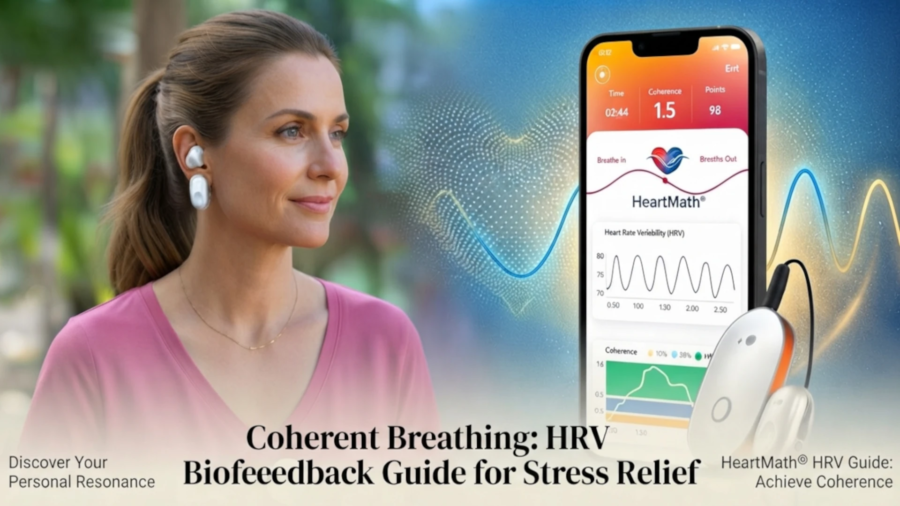
Coherent breathing teaches you to increase heart rate variability by breathing at your personal resonant frequency, usually around six breaths per minute.
Higher resting heart rate variability generally signals a nervous system that recovers well from stress, while chronically low readings track with strain. This is the core focus of this HRV biofeedback guide.
Most people find their resonant breathing rate somewhere between 4.5 and 7 breaths per minute. Learning how to find resonant frequency matters more than forcing exactly six.
A chest-strap ECG sensor gives the cleanest beat-to-beat signal, but a good optical sensor is accurate enough for daily HRV breathing practice.
Short daily coherent breathing sessions beat occasional long ones, so ten focused minutes a day will move your numbers more than an hour once a week.
Coherent breathing is a simple, drug-free practice: you use HRV breathing—breathing slowly while watching your heart rhythm on a screen—and over time your nervous system gets better at shifting out of stress. It works because slow, even, resonant breathing at the right pace amplifies the natural rise and fall of your heart rate, strengthening the reflexes that calm your body down.
This HRV biofeedback guide walks through what heart rate variability signals about stress, how the training retrains your nervous system, how to find resonant frequency for your body, and how to build a routine you will actually keep.
What heart rate variability tells you about stress
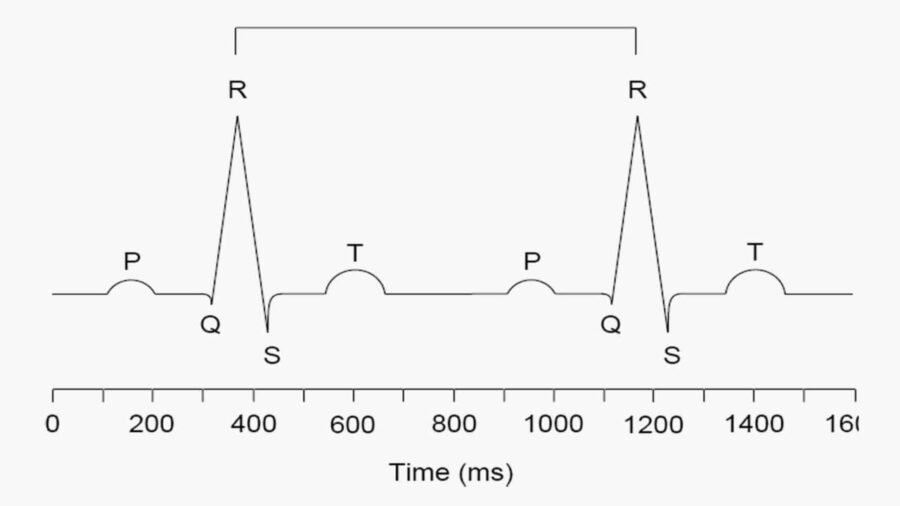
Your heart does not beat like a metronome. The tiny differences in time between one beat and the next are called heart rate variability, or HRV, and those differences are a window into your autonomic nervous system. That system runs the “fight or flight” sympathetic branch and the “rest and digest” parasympathetic branch, and HRV reflects the tug-of-war between them. Coherent breathing is the practice of directly influencing this balance through your breath.
As a general pattern, higher variability means your body can switch gears smoothly and recover well after a stressor. Chronically low variability often tracks with sustained stress, poor sleep, and a nervous system stuck in a guarded state. This is why consistency with HRV breathing and resonant breathing matters—they actively train the body to shift out of that guarded state.
HRV is not a mood score, and a single reading can be thrown off by caffeine, alcohol, a hard workout, or illness. The useful signal is the trend over weeks, measured under similar conditions, such as first thing in the morning.
For stress specifically, HRV is attractive because it is objective. You are not guessing how tense you feel; you are watching a physiological marker that responds to how you breathe and recover. As this HRV biofeedback guide explains, the goal is to use this objective data to guide your practice.
How HRV biofeedback trains the nervous system
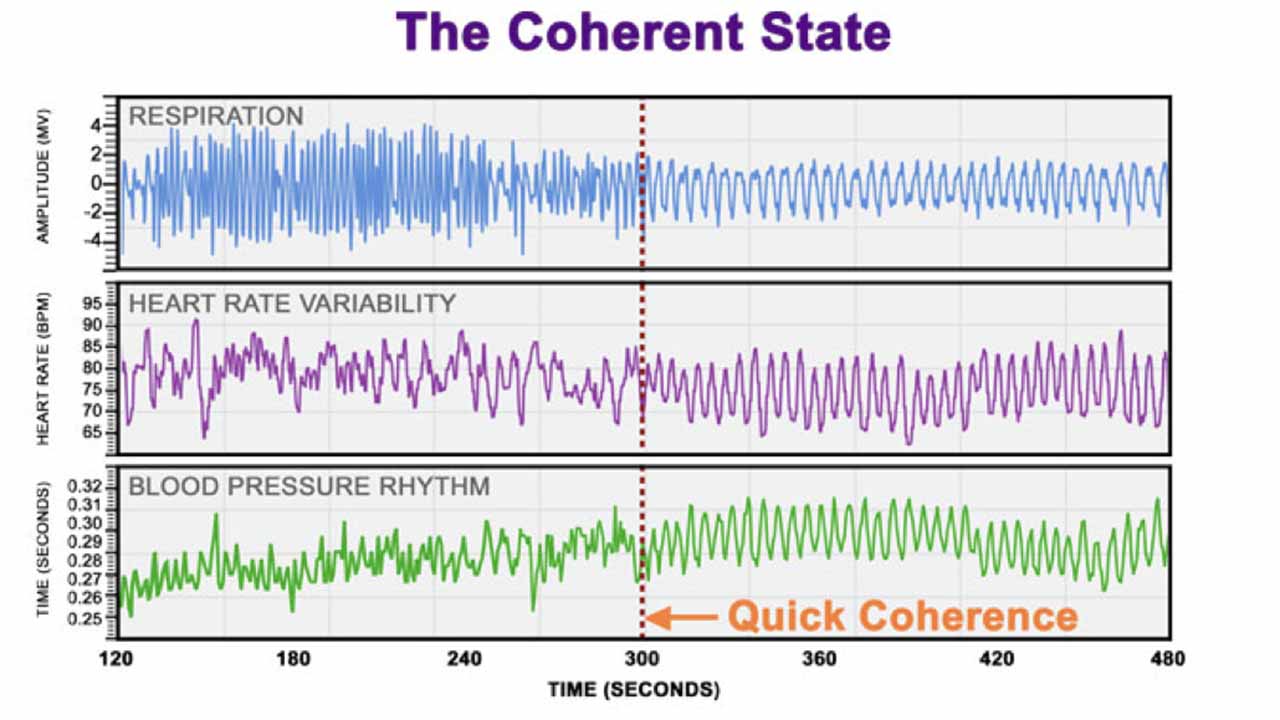
HRV biofeedback works through a loop in your cardiovascular system called the baroreflex, the mechanism that keeps blood pressure stable. When you breathe in, your heart speeds up slightly; when you breathe out, it slows. This natural rhythm is called respiratory sinus arrhythmia. Breathe slowly and evenly at the right pace—a practice known as coherent breathing or resonant breathing—and those swings grow large and smooth, exercising the baroreflex and boosting vagal (parasympathetic) activity.
The biofeedback part is the live display. Instead of guessing whether your HRV breathing is helping, you watch your heart rate curve rise and fall on a screen or app. When your breath and your heart rhythm line up into a clean wave, you can see it happening, and that visible feedback helps you learn the skill far faster than breathing with your eyes shut.
Think of it like exercising a muscle. As this HRV biofeedback guide emphasizes, each session nudges your autonomic system toward better balance, and with repetition, the improved recovery capacity carries over into daily life. Biofeedback for stress is one of the better-studied relaxation approaches, and the US government’s National Center for Complementary and Integrative Health reviews it alongside other relaxation techniques for stress and anxiety if you want an independent overview. The same principle sits behind other brain-and-body training methods, including the neurofeedback approaches explained here.
How to Find Resonant Frequency (Your Resonant Breathing Rate)
The core of this HRV biofeedback guide is learning how to find resonant frequency—the pace at which your heart rate swings the most with each breath during coherent breathing. For most adults, this lands near six breaths per minute, but it is not identical for everyone. Individual resonance rates typically fall somewhere between about 4.5 and 7 breaths per minute, which is why a short test beats blindly forcing exactly six.
Here is a simple way to find yours for HRV breathing:
- Sit upright and relaxed, ideally with a heart rate sensor and an app that shows your live HRV or heart rate curve.
- Breathe in a smooth, even rhythm for two to three minutes at each of these rates: 6.5, 6.0, 5.5, 5.0, and 4.5 breaths per minute. A metronome or paced-breathing visual keeps you steady.
- Watch which rate produces the biggest, smoothest rise and fall in your heart rate. That is your resonance frequency.
- If you have no sensor, start with a 5-second inhale and 5-second exhale (six breaths per minute), then adjust until the breathing feels effortless and your mind settles.
As you practice resonant breathing, breathe through your nose, let the exhale be gentle and complete, and keep the breath low in your belly rather than high in your chest. The goal is a relaxed, sustainable rhythm, not a deep or strained one.
Your Daily HRV Breathing Routine
Consistency matters more than session length. A short, regular practice of coherent breathing retrains your nervous system better than an occasional marathon session. A workable beginner HRV breathing routine looks like this:
- Set a fixed time. Morning or early evening both work. Attaching resonant breathing practice to an existing habit, such as right after brushing your teeth, makes it stick.
- Start with 10 minutes. Sit comfortably, open your app or sensor, and breathe at your resonance rate. Let the feedback guide your coherent breathing toward a smooth wave.
- Keep your eyes on the signal, not on perfection. Some sessions will look cleaner than others. Tired days, caffeine, and stress all show up in the data, and that is normal.
- Practice daily for at least four weeks. This is the window where most structured programs begin to show measurable change in resting readings.
- End with a few normal breaths and notice how your body feels before you get up.
If 10 minutes feels hard to protect, five minutes of HRV breathing done every day still beats skipping. You can lengthen your resonant breathing sessions to 15 or 20 minutes once the habit is solid.
Tools and Sensors That Track HRV Breathing Accurately
You can begin coherent breathing with nothing but a paced-breathing app and your own pulse, but a sensor makes the feedback loop far more useful because you can see your heart rhythm respond in real time. Accuracy depends on how the device reads your heartbeat.
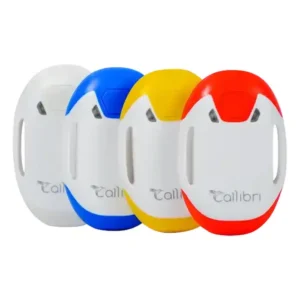
- Chest-strap ECG sensors read the heart’s electrical signal directly and give the cleanest beat-to-beat timing. This is the gold standard for HRV breathing and the best choice if you want precise feedback.
- Optical (PPG) sensors in smartwatches, rings, and fingertip clips measure blood-volume changes under the skin. They are slightly less precise for fine HRV detail, but for resonant breathing practice they are accurate enough and far more convenient.
- Camera-based phone apps estimate your pulse through the camera and flash. They are the least precise but a reasonable free entry point.
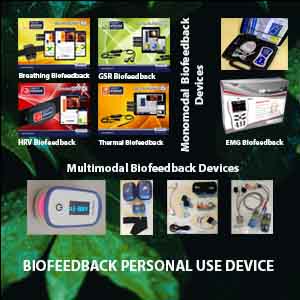
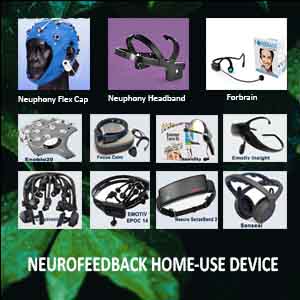
For a drug-free home practice, a purpose-built biofeedback tool pairs a reliable sensor with live breathing guidance. We carefully research and recommend top-rated home-use devices built for exactly this kind of HRV breathing training.
If you are weighing your options, the home biofeedback device buyer’s guide covers what to look for before you spend. Whatever you choose, use the same device and the same measurement conditions each time so your trend data stays comparable.
Tracking Progress and Staying Consistent with HRV Breathing
The most reliable progress marker is your resting HRV trend from your coherent breathing practice, measured under consistent conditions, such as a short reading each morning before coffee. Expect day-to-day bounce; what you want is the multi-week direction. A gradual upward drift in resting HRV, alongside feeling that you recover faster from stressful moments, is the signal that your HRV breathing training is working.
To stay consistent:
- Log your resonant breathing sessions. A simple streak or checkmark keeps the habit visible.
- Watch the trend, not the day. One low reading after a bad night’s sleep means nothing. Judge a four-week average against the previous one.
- Pair data with how you feel. Note your stress or sleep informally so the numbers connect to real life. This is the core lesson of any HRV biofeedback guide.
- Lower the bar on hard days. A three-minute session of coherent breathing preserves the habit when a full one is not realistic.
Coherent breathing rewards patience. The nervous system learns gradually, and the people who benefit most are usually the ones who kept showing up for small daily sessions rather than chasing a perfect number.
The simplest next step is to pick a fixed five-minute slot tomorrow morning, breathe at a steady six breaths per minute for resonant breathing, and start building the one habit this whole HRV breathing practice depends on: showing up again the next day.
Exercise based on what your body tells you—not just what a generic plan says. Can...

Take control of your stress and emotions with the powerful HeartMath Inner Balance Coherence Plus....
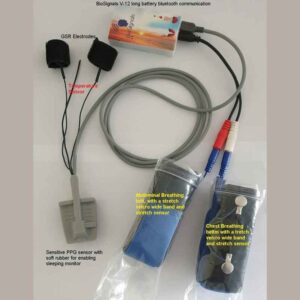
The BioSignals 5 Biofeedback Sensors Device combines advanced tools, including a heart rate variability monitor,...
Frequently asked questions
HRV biofeedback is a training method where you watch a live readout of your heart rate variability while practicing HRV breathing or coherent breathing. Over sessions, this strengthens the body’s natural stress-recovery reflexes.
As outlined in this HRV biofeedback guide, most structured programs run for about four to ten weeks of daily resonant breathing practice. Some people notice a calmer state within a single session, but durable changes in resting physiology take consistent weeks of training.
Aim for roughly six breaths per minute, then test slightly slower and faster rates between 4.5 and 7. This is how to find resonant frequency for coherent breathing. The rate that produces the biggest, smoothest heart rate swing is your personal resonance frequency.
No. You can start resonant breathing with a free paced-breathing app and your own pulse. A heart rate sensor helps you see progress with your HRV breathing, and a chest-strap ECG gives the most accurate signal if you want precise feedback. If you want a dedicated device, explore our recommended home-use biofeedback devices here.



Add a Comment