
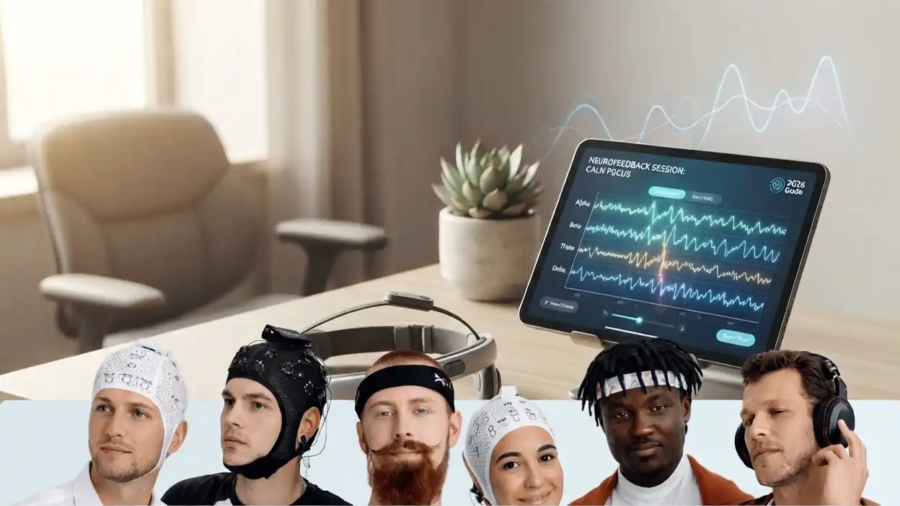
Key takeaways
When learning how to choose a neurofeedback device, start by picking your training goal (focus, calm, sleep, or performance); the goal decides which sensor placement and protocol you actually need.
Sensor count and placement drive signal quality. The clinical 10-20 standard uses 21 electrodes, while most home devices use a few, so match channels to your goal.
Evidence for neurofeedback is mixed: a 2025 JAMA Psychiatry meta-analysis found no significant ADHD symptom benefit under blinded ratings, so set realistic expectations.
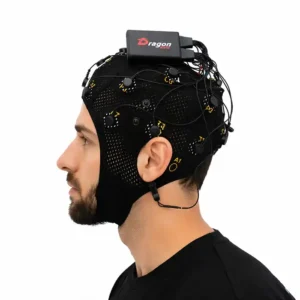
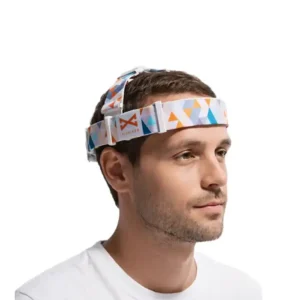
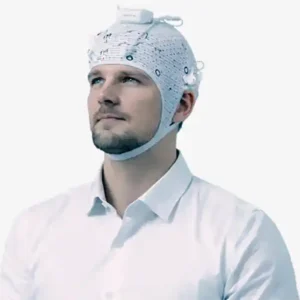
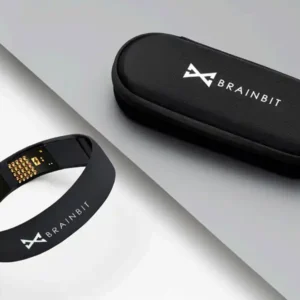
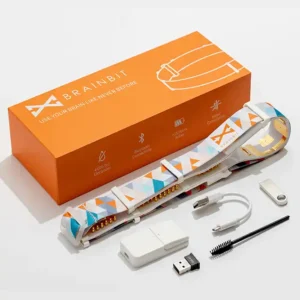
Budget for the whole system, not just the headset. Subscriptions, replacement sensors, and app fees often push neurofeedback equipment cost higher over a year than the device itself. Compare the full BrainBit family.
Start with one question: what do you want your brain training to change? The right neurofeedback device follows from your goal, your tolerance for setup, and the total cost you can sustain, not from the spec with the biggest number. This guide walks you through how to choose a neurofeedback device you will actually keep using, with a decision checklist at the end so you can compare options side by side and buy with confidence.
Neurofeedback works by reading your brain’s electrical activity with EEG sensors and feeding it back to you in real time, usually through sound or a screen, so you can learn to shift your own state. Consumer devices have made this training portable and affordable. That also means more choices, more marketing claims, and more ways to pick the wrong tool.
How to Choose a Neurofeedback Device by Goal First
Your goal is the single most important filter when choosing a device. Someone training for calmer sleep needs something different from someone chasing sharper focus during work or faster recovery after sport. Name the outcome you care about before you compare any hardware, because that outcome decides which sensor placement and training protocol matter — and it is the very first step in learning how to choose a neurofeedback device.
Common goals fall into a few buckets. Stress and relaxation training often targets slower brain rhythms and works well with simple, single-site setups. Focus and attention training usually involves frontal or central sites. Peak performance and sleep goals may require more specific placements or protocols. If stress relief is your aim, it also helps to understand how your device fits alongside other approaches, since the U.S. government’s health agency notes that relaxation methods are most effective when practiced regularly and often combined (NCCIH).
Be honest about expectations too. Evidence for neurofeedback is genuinely mixed. A 2025 JAMA Psychiatry systematic review and meta-analysis of 38 randomized clinical trials with 2,472 participants found no significant improvement in ADHD symptoms when outcomes were rated by assessors who were probably unaware of the treatment (standardized mean difference 0.04; 95% CI, -0.10 to 0.18), though small positive effects appeared when trials used well-established standard protocols (SMD 0.21) (JAMA Psychiatry, 2025). Treat a consumer device as a self-training tool, not a medical treatment, and pick one whose marketing matches that reality.
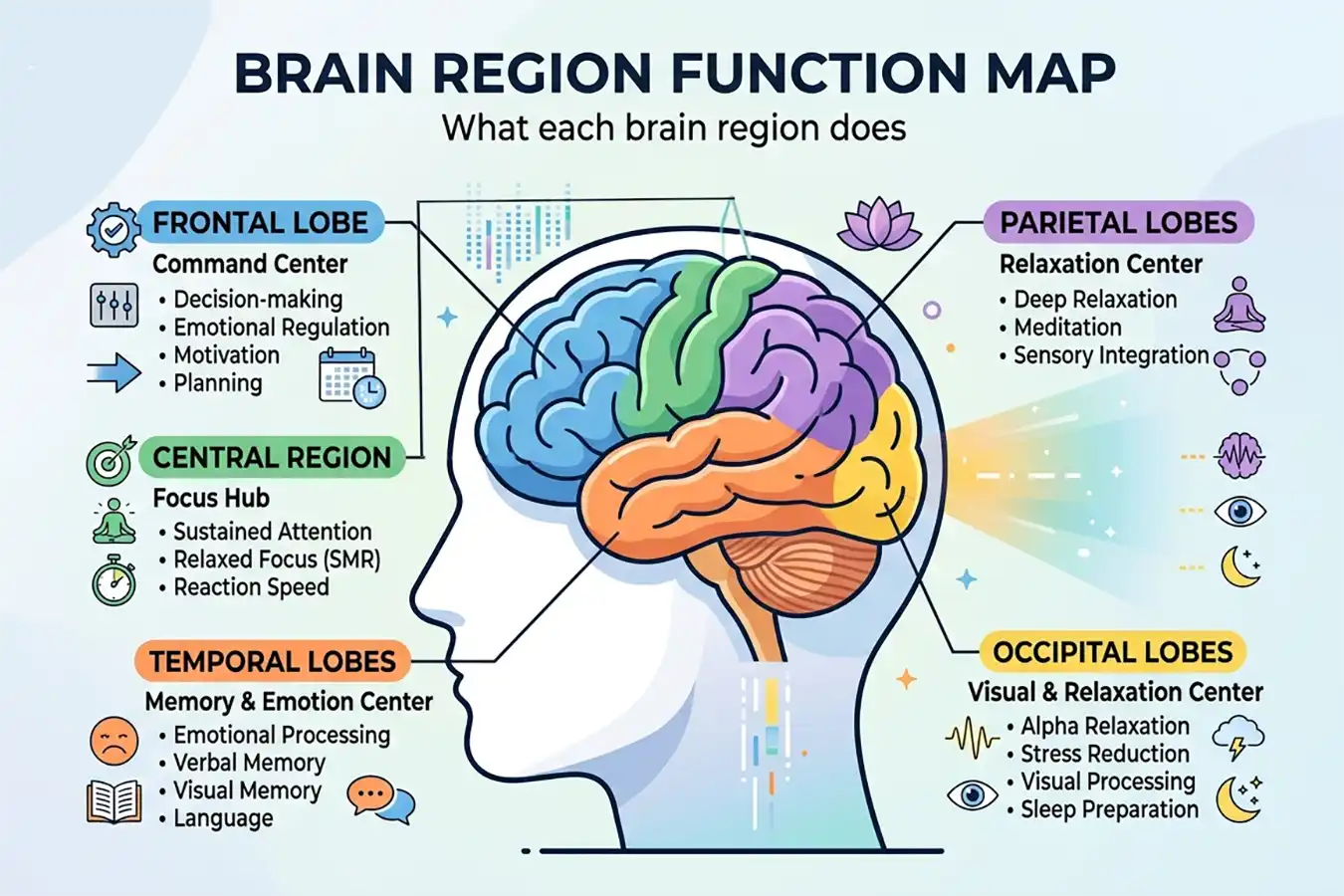
Sensor Count, Placement, and Signal Quality
Sensor count and placement determine how much of your brain the device can actually read, and where. The clinical reference point is the international 10-20 system, adopted in 1958, which places 21 electrodes at fixed proportional distances (10 percent or 20 percent of the skull’s measurements) between landmarks on the head (American Clinical Neurophysiology Society, electrode nomenclature guideline). Most home devices use far fewer channels on purpose, trading coverage for comfort and price — a key trade-off to understand when you are figuring out how to choose a neurofeedback device.
More sensors are not automatically better for you. A single well-placed sensor can drive effective single-site training for calm or focus. Many channels help when you want broader brain mapping or protocols that compare activity across regions. Match the channel count to your goal rather than paying for coverage you will never train.
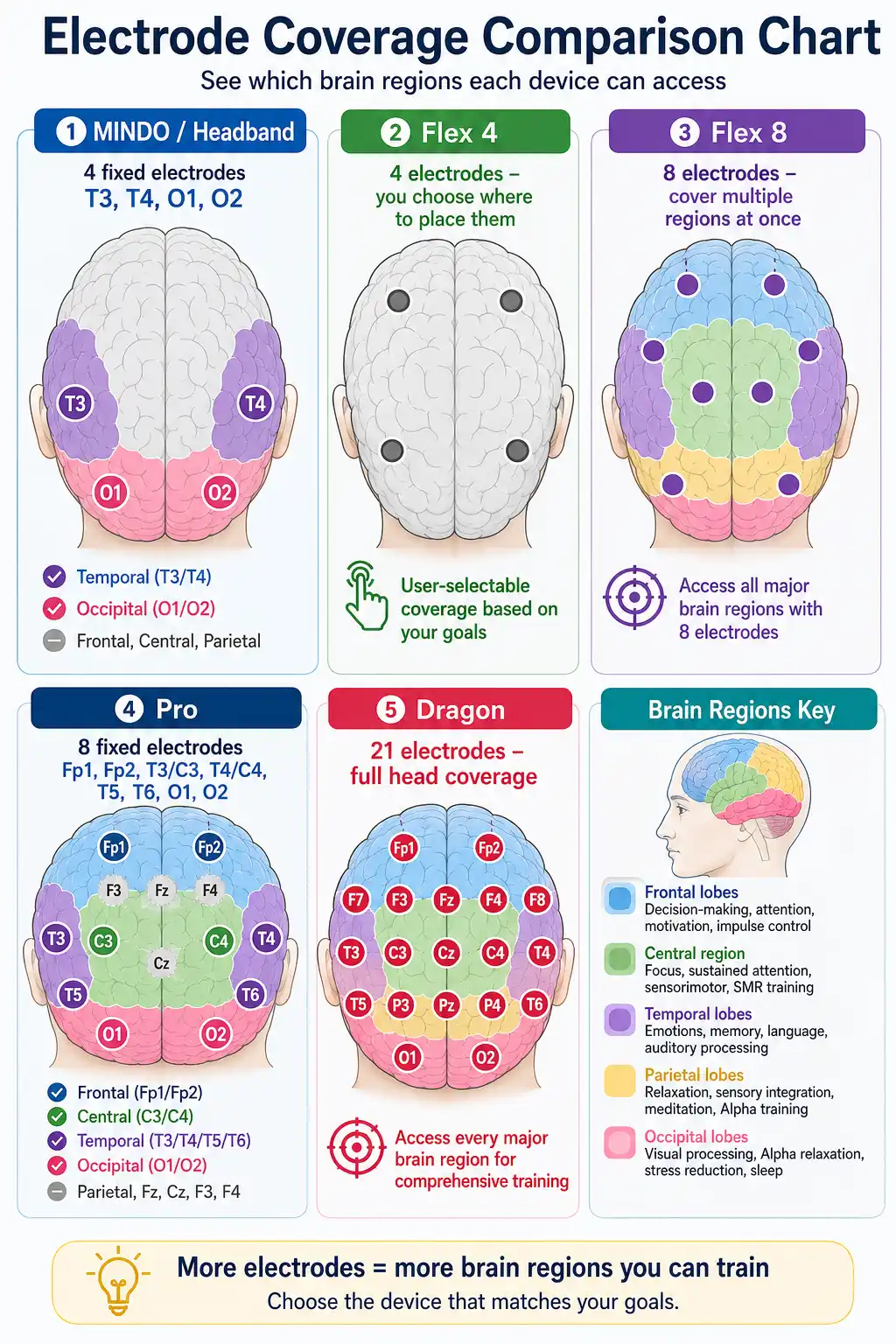
Placement flexibility matters as much as the raw count. Fixed-headband devices put sensors in one region, which is simple but limits what you can train. Devices that let you reposition sensors, or that ship with validated placements for specific goals, give you more room to grow. We carefully research and recommend home-use devices built around goal-specific placements, which spares beginners the guesswork of where to put sensors for a given outcome.
Signal quality is the quiet deciding factor. Dry sensors are convenient and fine for seated sessions, while wet gel electrodes still produce cleaner readings, especially if you move. A device that constantly reports poor contact or noisy data will frustrate you into quitting, so read owner reviews specifically about signal stability before you buy.
App Guidance Versus DIY Flexibility
The software decides whether a device feels like a coach or a research tool. Guided apps walk you through sessions, interpret your data, and automatically adjust difficulty, which suits most people who want results without learning the underlying science. Open, DIY-style platforms expose raw settings and protocols, which rewards tinkerers but overwhelms beginners.
Ask yourself how much you want to learn. If you want to open an app, set it up on the device, and follow a clear program, prioritize strong guided experiences with structured training plans. If you enjoy adjusting thresholds, exporting data, and designing your own protocols, favor platforms that unlock those controls.
A middle path is worth exploring. The best consumer systems start you with guided sessions, then gradually reveal more control as you progress. We carefully investigate home devices whose apps pair guidance with drug-free self-improvement, helping newcomers build a routine before they ever touch advanced settings. Check whether an app receives regular updates, because an abandoned app ages faster than the hardware.
Comfort, Portability, and Battery Life
Comfort determines whether you train at all. A headset that pinches, slides, or takes ten minutes to fit will sit in a drawer no matter how good its specs look. Try to find devices with adjustable bands, light weight, and sensors that make contact without painful pressure, and read reviews from people who wear glasses or have thick hair if that applies to you. When you are learning how to choose a neurofeedback device, comfort is not a luxury—it is a core performance feature.
Portability shapes where and when you train. A compact, wireless device travels with you and fits short sessions between meetings or before bed. A bulkier, wired setup may deliver better signals but tends to anchor you to one spot, which quietly reduces how often you use it. If you plan to train in different rooms or while traveling, portability should rank high on your list of factors for how to choose a neurofeedback device.
Battery life ties these together. Wireless freedom means nothing if you recharge after every session, so look for enough runtime to cover several sessions between charges, plus a charging method that fits your routine. A device that is comfortable, portable, and reliably powered is the one you will reach for on a busy day, and consistency is what makes training work. Remember that neurofeedback equipment cost includes not just the device but also the time and hassle of frequent charging, which can wear down your routine.
In short, comfort, portability, and battery life are the practical pillars that determine whether your training habit survives beyond the first week. Getting them right is a big part of how to choose a neurofeedback device that you will actually stick with.
Total Cost Including Subscriptions
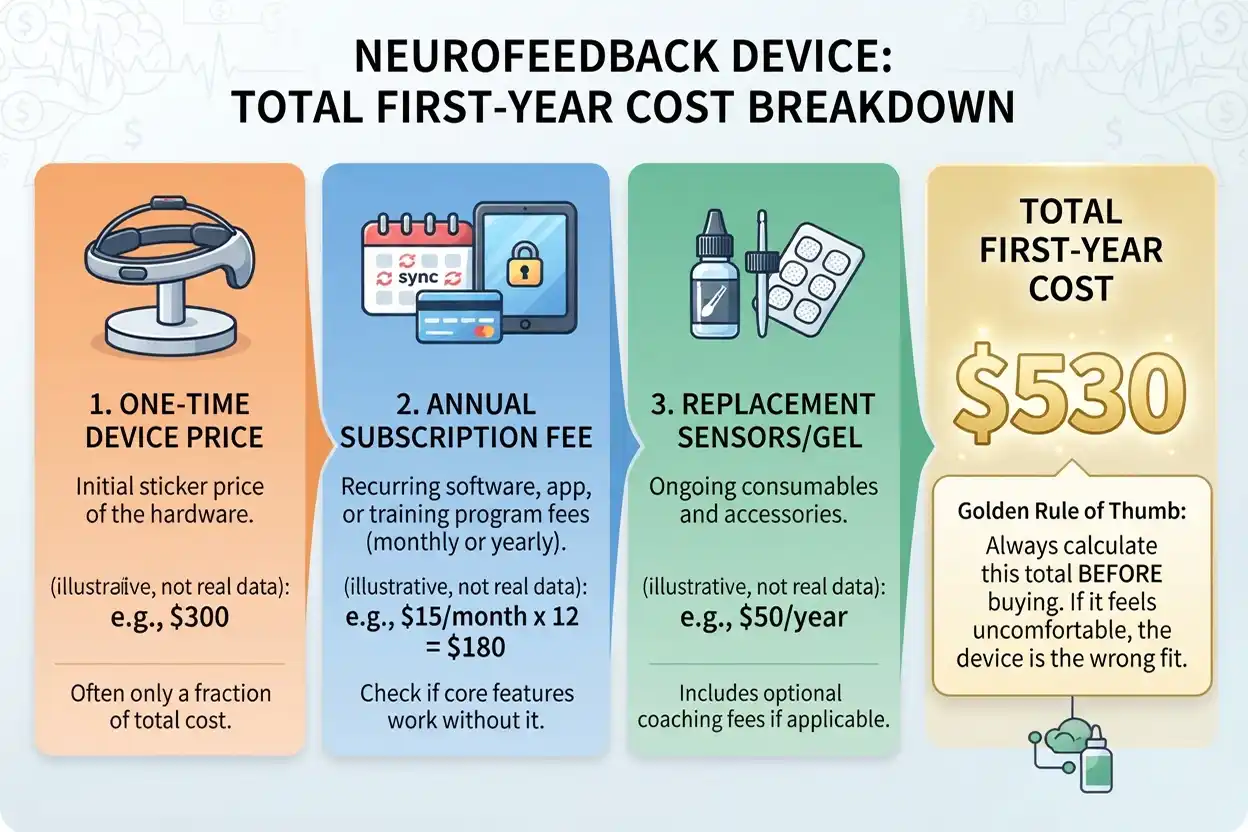
The sticker price is only part of what you pay. Many neurofeedback systems charge ongoing subscription fees for their apps, training programs, or data features, and some require replacement sensors, pads, or conductive gel over time. These recurring costs can add up to more than the hardware over a single year, so calculate total cost of ownership before you commit. When you are figuring out how to choose a neurofeedback device, the subscription line often matters more than the headline price.
Break the real cost into three parts. First, the one-time device price. Second, recurring software or subscription fees, billed monthly or yearly. Third, consumables and accessories, such as replacement electrodes or gel, plus any optional coaching. Mapping these three parts is the most reliable way to compare neurofeedback equipment cost across brands, because two devices with the same sticker price can differ by hundreds of dollars a year once subscriptions kick in.
The consumer EEG and neurofeedback market has grown quickly in recent years as more brands enter the space, which means prices and subscription models vary widely between products. Watch for devices that lock core training behind a subscription, because a lapsed plan can turn an expensive headset into an unusable one. A fair system lets you keep training even if you pause extra features, so confirm what still works without a subscription before you buy. Budgeting for neurofeedback equipment cost up front is one of the most practical steps in how to choose a neurofeedback device you will not regret.
A useful rule of thumb: add the headset price to twelve months of subscription fees and one round of replacement consumables, then compare that one-year total against your budget. If the sum feels uncomfortable, the device is probably the wrong fit, no matter how good its specs look. Keeping this math in mind is central to how to choose a neurofeedback device that stays useful long after the novelty wears off.
A Simple Decision Checklist
Use this checklist to compare any two devices quickly. Work through it in order, because the early questions filter out poor fits before you get distracted by features.
- Goal: Does the device clearly support your main goal (calm, focus, sleep, or performance)?
- Sensors: Does the sensor count and placement match that goal, rather than just offering the biggest number?
- Signal quality: Do owner reviews report stable, low-noise readings for everyday use?
- Guidance: Does the app match how much you want to be coached versus how much you want to control?
- Comfort: Is it comfortable enough that you will wear it several times a week?
- Portability and battery: Does it fit where you will train, with enough runtime between charges?
- Total cost: Have you added subscriptions, consumables, and accessories to the sticker price?
- Lock-in: Does core training still work if you pause or cancel a subscription?
- Expectations: Does the marketing stay honest about what neurofeedback can and cannot do?
Score each device against these points and the right fit usually becomes obvious. If two options tie, let comfort and honest expectations break the tie, since those predict whether you will stick with training long enough to see any change. When you total up the subscription and consumable lines, you may find that neurofeedback equipment cost varies more between devices than the upfront hardware price suggests.
If you are ready to act, write down your single most important goal, then compare two or three devices against the checklist above using that goal as the first filter. Starting from a clear goal, rather than a spec sheet, is the fastest way to pick a neurofeedback device you will keep using, and you can explore goal-specific home devices we carefully research and recommend on our website as one starting point for that comparison. A clear view of neurofeedback equipment cost across your shortlist will often reveal which option is truly the best value over the first year, not just on day one.
Frequently asked questions
It depends on your goal. Single-site training for calm or focus can work with one or two well-placed sensors, while broader brain mapping benefits from more channels. The clinical 10-20 standard uses 21 electrodes, but most consumer devices use far fewer by design. When weighing options, consider how sensor count affects the overall neurofeedback equipment cost, since more channels often mean a higher price and longer setup.
Results are mixed. A 2025 JAMA Psychiatry meta-analysis of 38 randomized trials found no significant benefit for ADHD symptoms under blinded ratings, though smaller effects appeared with standard protocols. Treat consumer devices as training tools, not medical treatments. Even so, understanding neurofeedback equipment cost helps you decide whether a device is worth trying for your personal goals.
Dry sensors are more convenient and fine for seated, stationary training. Wet gel electrodes still give cleaner signals, especially during movement. For most home users doing calm, focused sessions, quality dry sensors are a reasonable trade-off. Keep in mind that wet sensors often add to neurofeedback equipment cost because they require gel, replacement pads, and more maintenance over time.
Add the headset price to recurring costs: app subscriptions, replacement sensors or gel, and any coaching fees. Over a year these extras can exceed the hardware price, so compare total cost of ownership before buying. The true neurofeedback equipment cost is rarely just the device—it is the ongoing investment in software and consumables that keeps training running.


Add a Comment