Biofeedback speech therapy for stuttering

Biofeedback speech therapy for stuttering

Stuttering is an action-induced speech disorder with involuntary, audible, or silent repetitions or prolongations in the utterance of short speech elements (sounds, syllables) and words. Stuttering typically begins in childhood and may persist into adulthood. It can vary in severity, with some individuals experiencing only mild stuttering while others may have more pronounced difficulties speaking fluently. Treatment for stuttering often involves a combination of therapeutic approaches tailored to the individual’s needs and goals. Biofeedback speech therapy for stuttering is a therapeutic technique that can help individuals gain better control over physiological processes, such as muscle tension and stress, that may effectively contribute to stuttering. Several modalities of biofeedback speech therapy for stuttering can be used for treatment to help individuals gain better control over physiological processes that may contribute to disfluency.

What stuttering is?

Stuttering, or stammering, is a speech disorder characterized by disruptions in the normal flow of speech. People who stutter may experience difficulty producing sounds, syllables, words, or phrases, manifesting as repetitions of sounds or words, prolongations of sounds, or blocking, where the person cannot produce any sound for a brief period. These disruptions in speech can be accompanied by physical tension, such as facial grimaces or rapid eye blinking, as well as feelings of frustration and anxiety.

Stuttering typically begins in childhood and may persist into adulthood. It can vary in severity, with some individuals experiencing only mild stuttering while others may have more pronounced difficulties speaking fluently. The exact cause of stuttering is not fully understood, but it is believed to result from genetic, neurological, and environmental factors.

Treatment for stuttering often involves speech therapy. In this approach, a trained speech-language pathologist works with individuals to enhance their fluency and reduce both the frequency and severity of stuttering episodes. Specifically, therapists may use techniques such as speech modification, fluency shaping, and stuttering modification. These methods aim to help individuals manage their speech more effectively. Furthermore, early intervention is crucial for children who stutter. By addressing the issue early, it is possible to prevent the disorder from becoming more ingrained and severe.

It’s important to note that stuttering does not reflect a person’s intelligence or competence, and many individuals who stutter lead successful lives and careers with appropriate support and therapy. Supportive environments and understanding from family, friends, and peers can also play a significant role in helping individuals with stuttering feel more confident and comfortable in their communication.

Pathophysiology of stuttering

The pathophysiology of stuttering, or the underlying biological and neurological processes contributing to the disorder, is not fully understood. Stuttering is believed to be a complex condition influenced by a combination of genetic, neurological, and environmental factors. While researchers continue to study the condition, no single, universally accepted theory explains all aspects of stuttering. However, several hypotheses have been proposed to shed light on the potential mechanisms involved:

Overview

1. Genetic Contributions: Evidence suggests that stuttering may have a genetic component. Studies have shown that stuttering tends to run in families, and certain genetic variations may increase susceptibility to the disorder. However, no specific “stuttering gene” has been identified, and genetics alone cannot account for all cases of stuttering.

2. Neurological Differences: Stuttering involves abnormalities in the brain’s speech-processing areas and neural pathways. Some studies have identified differences in brain structure and function in individuals who stutter. For example, there may be variations in the size or activity of regions like the left inferior frontal gyrus, which is involved in speech production and language processing.

Neural and Developmental Influences on Stuttering

3. Neural Processing Challenges: Stuttering may be associated with differences in how the brain processes speech and language. It is hypothesized that individuals who stutter may have difficulties with the timing and coordination of the neural circuits responsible for speech production, leading to disruptions in fluency.

4. Developmental Factors: Stuttering often begins in childhood during rapid language and speech development. Some researchers suggest that developmental factors, such as the rate at which a child’s speech and language skills develop, may contribute to stuttering. Children who experience a rapid increase in speech demands without a corresponding increase in their abilities for motor control of speech may be more susceptible to stuttering.

Environmental and Psychological Factors

5. Environmental and Emotional Influences: While genetic and neurological factors play a role, environmental and psychological factors can also influence the severity and persistence of stuttering. Stress, anxiety, and social pressure can exacerbate stuttering, while supportive and communicative environments can help individuals manage their stuttering more effectively.

It’s important to note that stuttering is a highly variable condition, and the pathophysiology may differ from one individual to another. Additionally, ongoing research continues to refine our understanding of the disorder, and new insights are regularly emerging. Speech-language pathologists and researchers work together to develop and refine therapies that address the specific needs of individuals who stutter, considering the complex interplay of genetic, neurological, and environmental factors.

Stuttering signs and symptoms

Stuttering signs and symptoms may include:

  • Difficulty starting a word, phrase, or sentence,
  • Prolonging a word or sounds within a word,
  • Repetition of a sound, syllable, or word,
  • Brief silence for certain syllables or words or pauses within a word (broken word),
  • Addition of extra words such as “um” if difficulty moving to the next word is anticipated,
  • Excess tension, tightness, or movement of the face or upper body to produce a word,
  • Anxiety about talking,
  • Limited ability to effectively communicate.

Classification of stuttering

Stuttering can be classified into several categories or types based on various factors, including its characteristics and presentation. The classification of stuttering helps clinicians and researchers understand the nature of the disorder and tailor treatment approaches accordingly. Here are some standard classifications of stuttering:

Types of Stuttering

1. Developmental Stuttering:

  • Developmental stuttering is the most common type and typically begins in childhood as a child learns to speak.
  • It often starts between 2 and 4 when language and speech skills develop.
  • Developmental stuttering can vary in severity, and many children naturally outgrow it with age or through speech therapy.

2. Neurogenic Stuttering:

  • Neurogenic stuttering is associated with neurological conditions or injuries that affect the brain’s speech centers or motor control.
  • It can result from conditions such as strokes, traumatic brain injuries, or other neurological disorders.
    • Neurogenic stuttering may have a sudden onset and typically occurs in adulthood.

3. Psychogenic Stuttering:

  • Psychogenic stuttering is thought to be related to psychological factors and is often a response to stress, anxiety, or psychological trauma.
  • It can occur suddenly and may resolve with appropriate psychological therapy or intervention.

4. Cluttering:

  • Cluttering is a speech disorder characterized by rapid and disorganized speech, which may include frequent interruptions, irregular pacing, and unclear articulation.
  • Unlike stuttering, which involves disruptions in speech flow, cluttering often involves overly rapid and hasty speech.
  • Treatment for cluttering focuses on slowing down speech and improving articulation.

Additional Classifications

5. Acquired Stuttering:

  • Acquired stuttering refers to stuttering that develops later in life due to specific events, such as head injuries, illnesses, or psychological trauma.
  • It can be associated with sudden and noticeable changes in speech fluency.

6. Persistency:

  • This classification considers whether stuttering persists into adulthood or if it is outgrown during childhood.
  • Some individuals continue to stutter into adulthood, while others naturally recover or see significant improvements.

7. Secondary Behaviors:

  • Stuttering may also be classified based on the presence of secondary behaviors. These are physical or verbal reactions to stuttering, such as facial grimaces, eye blinking, or word substitutions, used to avoid stuttering.
  • Stuttering with secondary behaviors can be more complex and challenging to treat.

8. Severity Levels:

  • Stuttering can be classified by severity, ranging from mild to severe. Severity is often determined by the frequency and duration of disfluencies and their impact on communication.

It’s important to note that these classifications are not always mutually exclusive, and some individuals may exhibit characteristics of more than one type of stuttering. Additionally, the presentation and classification of stuttering can vary from person to person. Stuttering is a complex communication disorder, and assessment by a qualified speech-language pathologist is essential to determine the most appropriate treatment and management strategies for each individual.

Stuttering therapy

  • Treatment for stuttering often involves a combination of therapeutic approaches tailored to the individual’s needs and goals. Here is a list of some of the standard therapeutic approaches used for the treatment of stuttering:

Speech Modification Techniques

  • Fluency Shaping: This approach teaches individuals who stutter to speak more fluently by modifying their speech patterns. Techniques may include slowing speech rate, prolonging vowel sounds, and using gentle onsets (soft starts to words).
  • Easy Onset: Encourages individuals to start words or sentences with gentle, easy starts instead of sudden or forceful starts, reducing tension and improving fluency.

Stuttering Modification Strategies:

  • Cancellation: After a stuttering event, individuals pause, acknowledge the stutter, and repeat the word or phrase with reduced tension. Addressing and correcting the stutter improves fluency.
  • Pull-Out: When stuttering occurs, individuals pause and smoothly transition out of the stutter. Corrects the stutter mid-speech for improved fluency.
  • Preparation: Involves anticipating challenging words or situations and using techniques like stretching sounds or lightly tapping. Reduce stuttering by preparing for difficult speech moments.

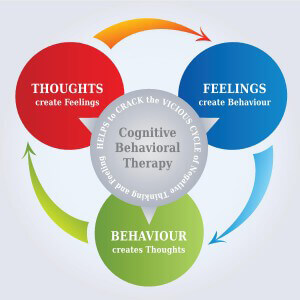
Cognitive-Behavioral Therapy (CBT):

CBT aims to address the emotional and psychological aspects of stuttering, such as anxiety, fear, and negative self-perceptions. It helps individuals develop coping strategies and improve their self-esteem.

Desensitization and Confidence-Building:

Therapy may involve desensitization techniques, such as voluntarily stuttering or speaking in challenging situations to reduce anxiety and build confidence.

Group Therapy:

Group therapy provides a supportive environment for individuals who stutter to practice fluency techniques, share experiences, and gain social confidence.

Parent/Caregiver Training:

Parents and caregivers can learn strategies to create a supportive communication environment for their child who stutters, helping them communicate more comfortably.

Stress and Anxiety Management:

Stress and anxiety can exacerbate stuttering. Techniques such as relaxation exercises, mindfulness, and stress reduction strategies can be integrated into therapy to manage emotional triggers.

Neurofeedback and Biofeedback:

Neurofeedback or biofeedback is used to gain better control over physiological responses associated with stuttering, such as muscle tension or stress.

Electronic Devices and Apps:

Speech therapy apps and devices may provide visual or auditory feedback to assist individuals in monitoring and improving their speech patterns.

Supportive Counseling:

Some individuals find it helpful to engage in counseling to discuss the emotional and psychological aspects of living with stuttering, such as self-acceptance and managing societal pressures.

It’s important to note that stuttering therapy should be personalized to meet the unique needs of each individual. A qualified and experienced speech-language pathologist (SLP) or therapist specializing in stuttering can assess the specific challenges faced by the person who stutters and develop a tailored treatment plan. Early intervention is crucial in helping children who stutter, but therapy can also benefit teenagers and adults. Therapy aims to improve speech fluency, communication confidence, and overall quality of life.

Biofeedback speech therapy for stuttering

Biofeedback speech therapy for stuttering is a therapeutic technique to help individuals gain better control over physiological processes, such as muscle tension and stress, that may contribute to stuttering. While biofeedback is not a standalone treatment for stuttering, it can be a valuable component of a comprehensive therapy program. Here’s how biofeedback can be used in the treatment of stuttering:

1. Muscle Tension Monitoring:

Electromyographic (EMG) biofeedback speech therapy for stuttering can monitor muscle tension, especially in the muscles associated with speech production (e.g., facial muscles and neck muscles).

Individuals who stutter can learn to recognize patterns of excessive muscle tension during speech, which can contribute to disfluencies. Biofeedback provides real-time information about muscle activity, helping them become more aware of tension and relaxation in these muscles.

2. Relaxation Training:

Biofeedback can assist in teaching individuals relaxation techniques to reduce muscle tension and stress.

By seeing or hearing their physiological responses on a biofeedback monitor (e.g., muscle activity or skin conductance), individuals can practice relaxation exercises and learn to control their bodily responses.

3. Stress Reduction:

Stress and anxiety can exacerbate stuttering. Biofeedback can help individuals learn to manage stress and anxiety levels by providing feedback on physiological stress indicators, such as heart rate variability or skin temperature.

Individuals can develop strategies to reduce stress and anxiety during speaking situations with biofeedback.

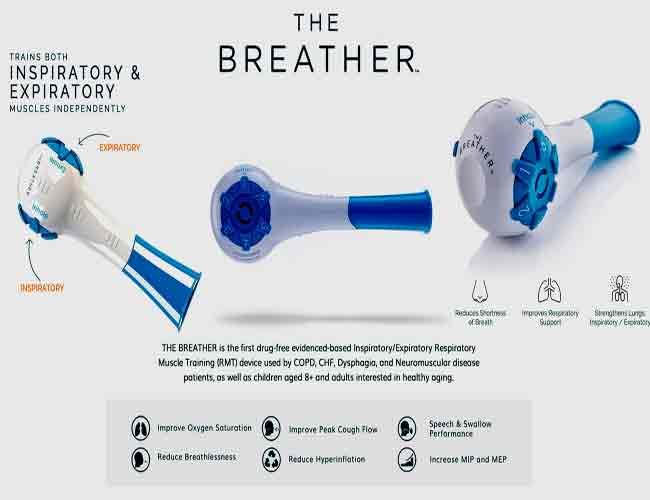
4. Control of Breathing:

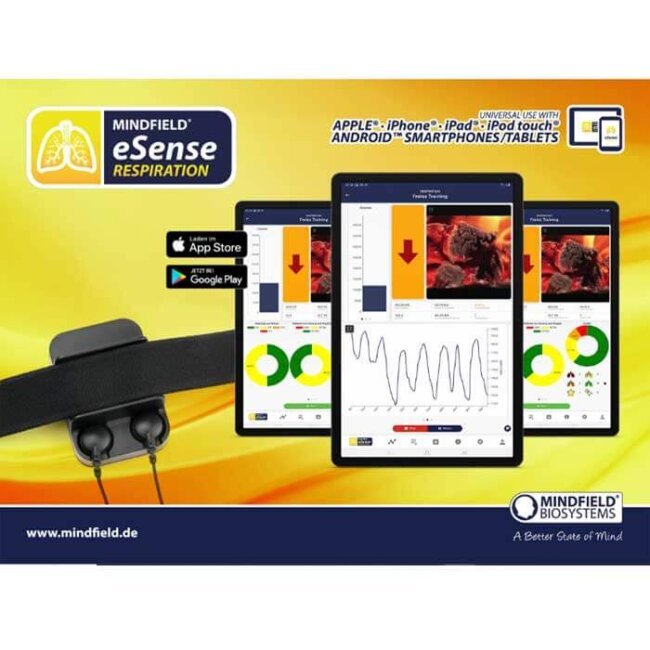
Breathing patterns play a significant role in speech production and fluency. Respiratory biofeedback speech therapy for stuttering can monitor and adjust breathing patterns during speech.

Individuals can learn to control their breath and reduce breath-related disfluencies by providing feedback on respiratory rate and depth.

5. Generalization and Self-Regulation:

The skills learned through biofeedback training can be applied in real-life speaking situations. Individuals can use the self-regulation techniques acquired during biofeedback therapy to improve their speech fluency.

6. Progress Monitoring:

Biofeedback sessions can track and record progress over time, allowing individuals and therapists to assess the effectiveness of relaxation and self-regulation strategies.
It’s important to note that biofeedback is typically used with other evidence-based stuttering therapy approaches, such as speech modification techniques, stuttering modification strategies, and cognitive-behavioral therapy. A qualified speech-language pathologist or therapist specializing in stuttering therapy can integrate biofeedback into an individualized treatment plan based on the specific needs and goals of the person who stutters.

The effectiveness of biofeedback in stuttering treatment can vary from person to person, and the choice to use biofeedback should be made in consultation with a qualified therapist. When integrated appropriately, biofeedback can help individuals become more aware of and better control the physiological factors contributing to stuttering, ultimately improving speech fluency and communication confidence.

What modalities of biofeedback speech therapy for stuttering can be used for effective treatment?

Several modalities of biofeedback can be utilized for stuttering treatment to assist individuals in gaining better control over physiological processes that may contribute to disfluency. Specifically, these modalities provide real-time feedback on specific physiological indicators, which allows individuals to monitor and adjust their responses. For example, here are some of the biofeedback modalities that can be employed in stuttering treatment:

1. Electromyographic (EMG) Biofeedback speech therapy for stuttering:

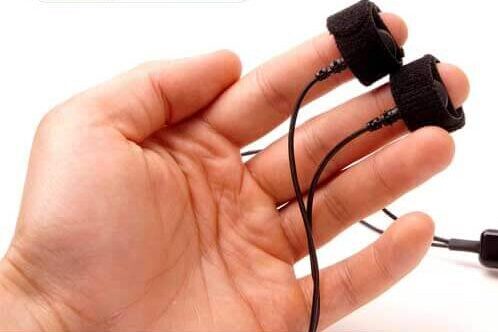
  • EMG biofeedback measures muscle activity and tension by using electrodes placed on the skin’s surface or inside the mouth to monitor the activity of speech-related muscles.
  • For stuttering treatment, EMG biofeedback can help individuals become aware of excessive tension in muscles involved in speech production (e.g., facial and neck muscles).
  • By visualizing muscle activity in real-time, individuals can learn to relax these muscles during speech to reduce tension-related disfluencies.

2. Respiratory Biofeedback:

  • Respiratory biofeedback focuses on monitoring and controlling breathing patterns closely related to speech fluency.
  • To reduce breath-related disfluencies, individuals can use respiratory biofeedback to adjust their breathing rate, depth, and coordination during speech.

3. Heart Rate Variability (HRV) Biofeedback:

  • HRV biofeedback measures the variation in time between successive heartbeats, which reflects the body’s physiological response to stress and relaxation.
  • It can help individuals learn to manage stress and anxiety levels, which can impact stuttering.
  • By increasing heart rate variability, individuals can promote relaxation and reduce the physiological stress response during speaking situations.

4. Skin Conductance Biofeedback:

  • Skin conductance biofeedback monitors the electrical conductance of the skin, which can indicate changes in emotional arousal and stress levels.
  • Individuals can use skin conductance biofeedback to become aware of stress reactions and learn relaxation techniques to reduce stress-related disfluencies.

5. Temperature Biofeedback:

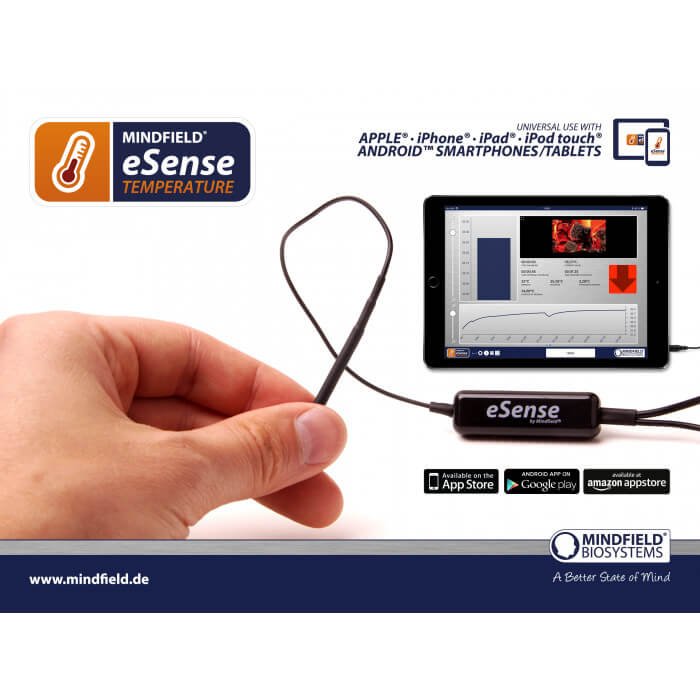
  • Temperature biofeedback measures changes in skin temperature, which emotional and stress responses can influence.
  • It can help individuals learn to regulate their body’s temperature and reduce the physiological effects of stress on speech.

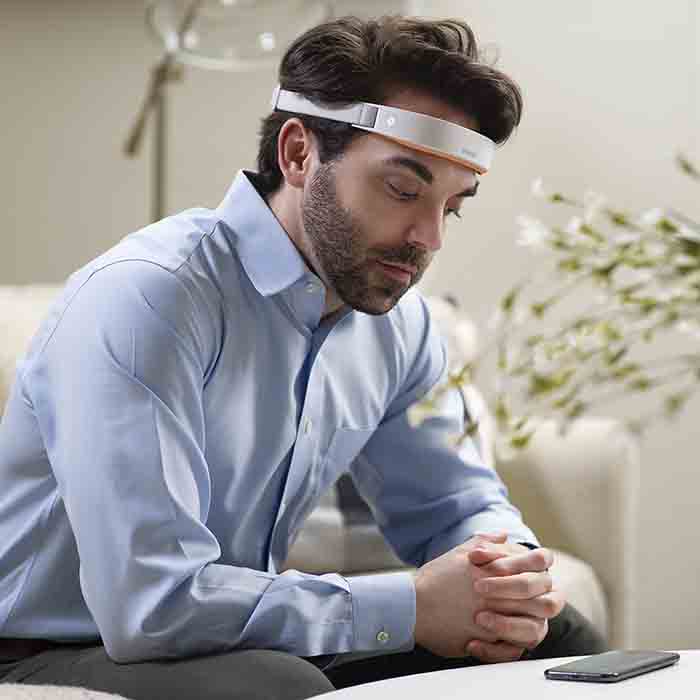
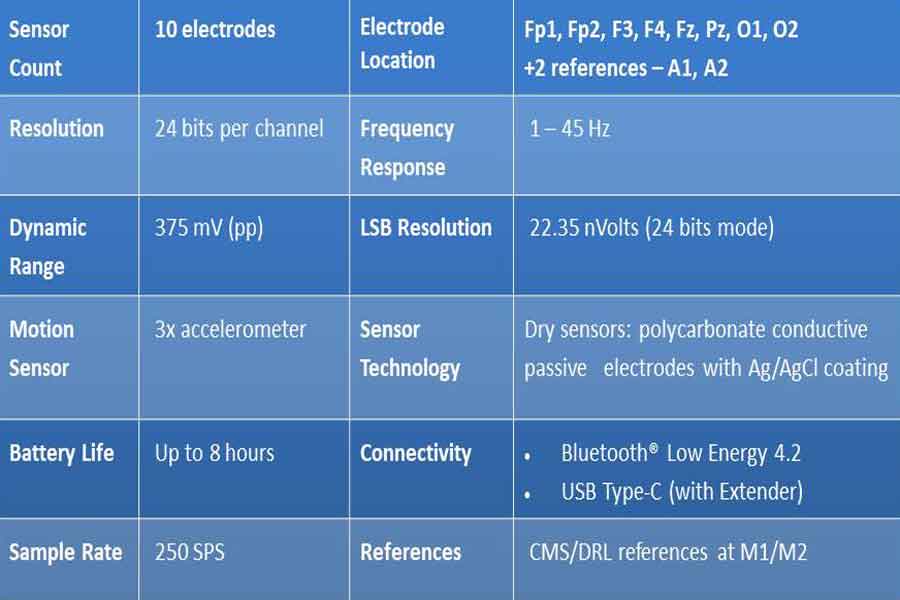
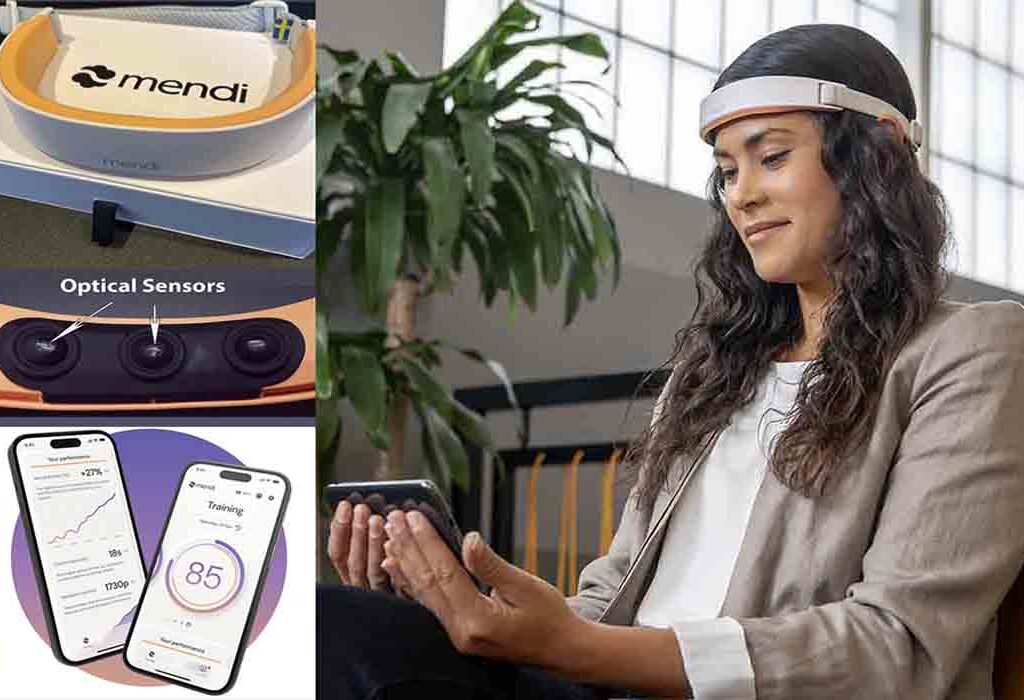
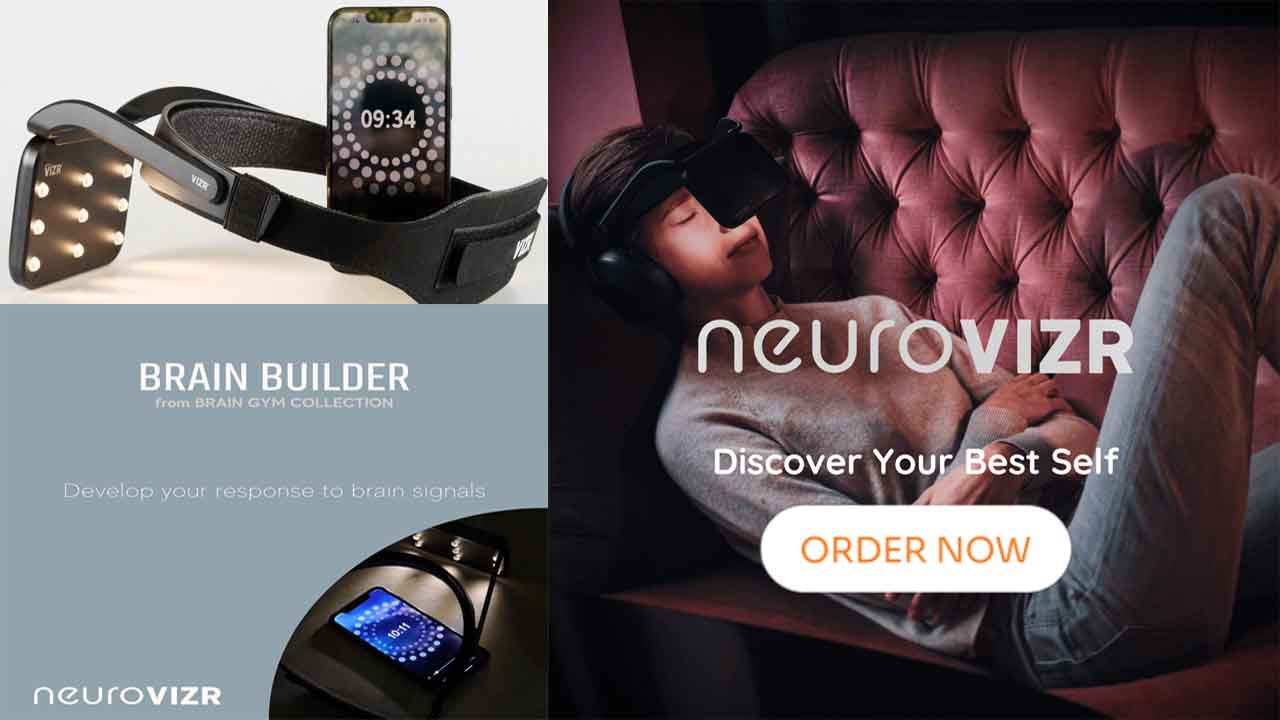
6. Neurofeedback or Brainwave (EEG) Biofeedback speech therapy for stuttering:

EEG biofeedback, or neurofeedback, monitors brainwave activity and provides feedback on brainwave patterns to help individuals regulate brain activity associated with speech production and anxiety.

7. Biofeedback Apps and Software:

  • Various biofeedback apps and software programs are available for smartphones and computers.
  • These apps may provide visual or auditory feedback on physiological indicators and can be used for self-regulation and practice outside therapy sessions.

The choice of biofeedback modality depends on the specific needs and goals of the individual who stutters. Therefore, it should be determined in collaboration with a qualified speech-language pathologist or therapist who specializes in stuttering therapy. In addition, biofeedback is often integrated into a comprehensive stuttering therapy program. Furthermore, it is combined with other evidence-based therapeutic approaches to help individuals improve speech fluency and enhance communication confidence.

Role of EMG biofeedback in the treatment of stuttering

EMG (Electromyography) biofeedback is a therapeutic technique that can be used as a component of the treatment of stuttering. Its primary role is to assist individuals who stutter in gaining greater awareness and control over the muscle tension and coordination involved in speech production. Here’s how EMG biofeedback can be beneficial in the treatment of stuttering:

Benefits of EMG Biofeedback in Stuttering Treatment

1. Muscle Tension Awareness: EMG biofeedback provides real-time feedback on the activity of specific muscles involved in speech production, such as the muscles around the mouth, lips, jaw, and throat. By monitoring muscle activity, individuals who stutter can become more aware of patterns of excessive tension and learn to recognize when they are tensing these muscles unnecessarily.

2. Tension Reduction: The visual or auditory feedback provided by EMG biofeedback can help individuals reduce excessive muscle tension during speech. When they see or hear that they are tensing their speech muscles, they can work to relax and release that tension, which can lead to smoother and more fluent speech.

3. Muscle Coordination: Stuttering often involves disruptions in the coordination of speech muscles. EMG biofeedback can help improve muscle coordination by assisting individuals to learn to activate and deactivate the relevant muscles correctly during speech.

4. Biofeedback-Based Practice: EMG biofeedback allows individuals to practice speech with immediate feedback in a controlled environment. This practice can help them develop new, more fluent speech patterns while reducing tension-related behaviors.

Additional Considerations for EMG Biofeedback

5. Self-Regulation: Individuals can learn to self-regulate their muscle tension and speech patterns over time without needing continuous biofeedback. They can carry the skills and awareness gained from biofeedback sessions into everyday communication.

6. Individualized Therapy: EMG biofeedback can be tailored to the specific needs of each stutterer. Therapists can target specific muscle groups and patterns of tension unique to the individual’s speech difficulties.

It’s important to note that EMG biofeedback is often used as part of a comprehensive stuttering therapy program, which may include other therapeutic approaches such as speech modification techniques, stuttering modification strategies, and cognitive-behavioral therapy. The choice of therapy approaches, including EMG biofeedback, will depend on the individual’s specific needs and goals for improving their fluency and reducing stuttering.

As with any therapeutic intervention, the effectiveness of EMG biofeedback in stuttering treatment can vary from person to person. Therefore, it should be administered and supervised by a qualified speech-language pathologist or therapist specializing in stuttering therapy and can tailor the treatment plan to the individual’s unique needs.

EMG electrode placement sites for biofeedback for stuttering

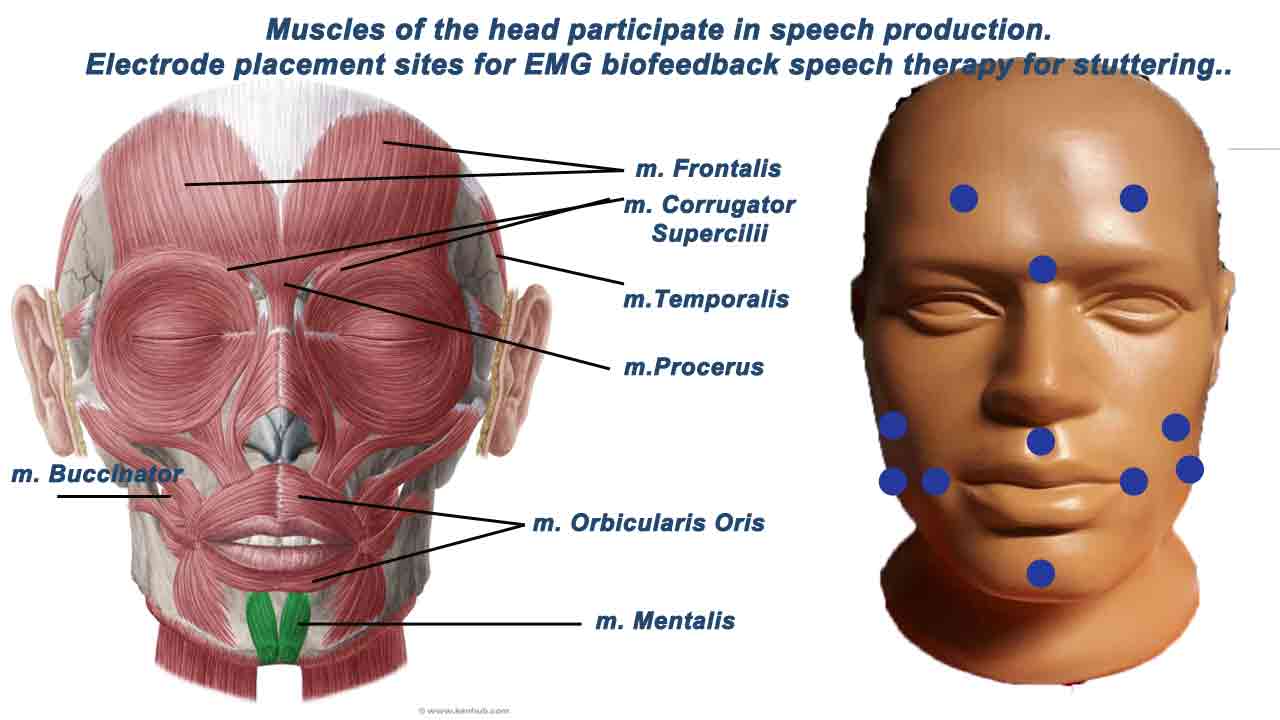
Electromyography (EMG) biofeedback involves placing electrodes on specific muscle groups associated with speech production and providing visual or auditory feedback to the individual about the activity of these muscles. This feedback can assist in reducing tension and improving muscle coordination during speech. Here are some common electrode placement sites for EMG biofeedback in stuttering therapy:

Head Muscles:

1. Orbicularis Oris Muscle: The orbicularis oris muscle is a circular muscle that surrounds the mouth and plays a significant role in speech production. This muscle controls lip movements during speech, and excessive tension in this muscle can lead to difficulties in articulation and fluency. EMG electrodes can be placed on the corners of the mouth or along the upper and lower lips to monitor muscle activity. This can help individuals become aware of excessive muscle tension and facilitate relaxation.

2. Mentalis Muscle: The mentalis muscle is located in the chin area and can be involved in the lower lip and chin movements during speech. Excessive tension in this muscle can lead to difficulties in articulation and fluency. Electrodes can be placed on the chin to monitor this muscle’s activity and help individuals reduce unnecessary tension.

3. Frontalis Muscle: The frontalis muscle is located in the forehead and involves facial expressions. Although not directly related to speech, it can be monitored to assess overall muscle tension and relaxation.

4. Facial Muscles: Various facial muscles, including the frontalis (forehead) and corrugator supercilii (between the eyebrows), can become tense during stuttering moments, contributing to facial tension that may impact speech.

5. Buccinator Muscle: This muscle is located in the cheeks and controls the oral cavity during speech. Tension in the buccinator muscle can influence articulation.

6. Temporalis Muscle: This muscle is located on the side of the head. It can influence jaw movement and tension.

7. Masseter Muscle: The masseter muscle is part of the jaw muscles and can contribute to jaw tension during speech.

8. Palatal Muscles: These are muscles of the soft palate (velum), such as the palatoglossus and palatopharyngeus, which affect resonance and articulation.

Neck muscles

Upper Neck Muscles

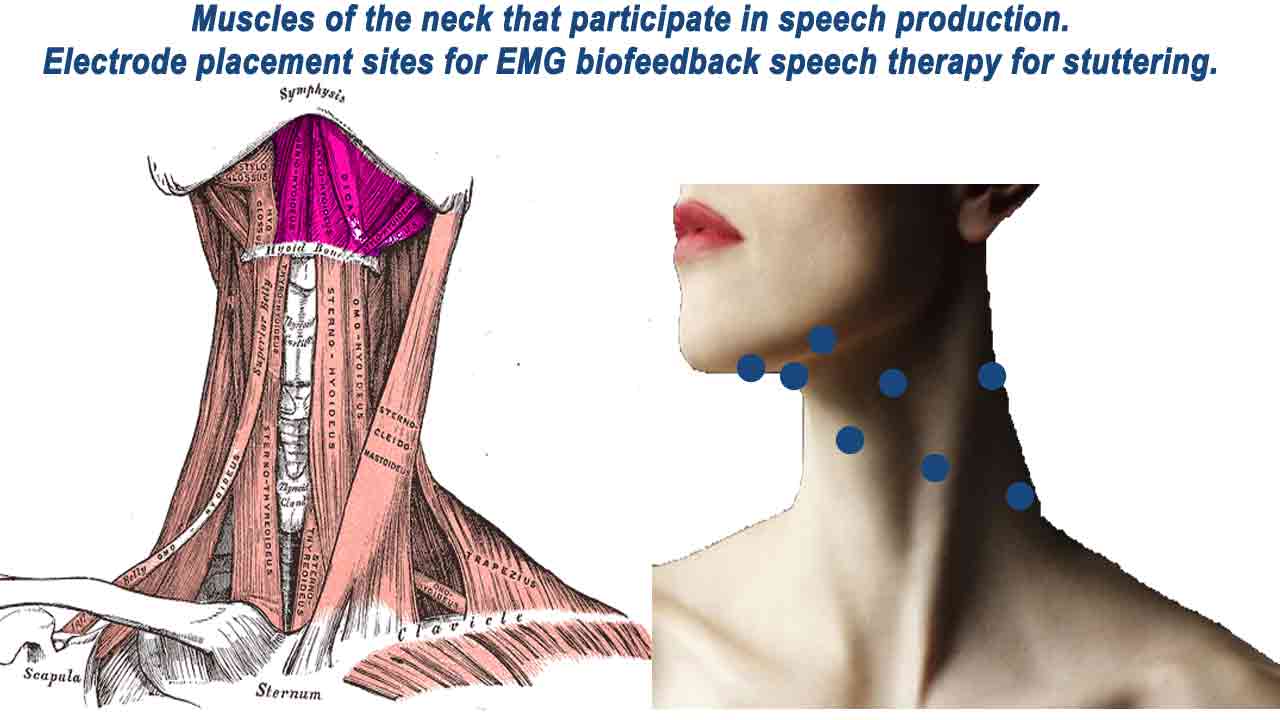
1. Suprahyoid Muscles: The suprahyoid muscles include the digastric and mylohyoid, which play a role in laryngeal control and swallowing. The suprahyoid muscles are located under the chin and beneath the jaw and are involved in jaw and tongue movement during speech, laryngeal control, and swallowing. Tension in these muscles can affect vocal control and fluency.
Electrodes may be placed along the neck or jawline to monitor the activity of these muscles.

2. Infrahyoid Muscles: The infrahyoid muscles (sternohyoid and omohyoid) are under the chin, below the suprahyoid muscles. They can influence laryngeal control and voice production and are also involved in speech-related movements. Monitoring and training these muscles can help reduce tension-related disfluencies.
Electrodes can be placed in the neck area to monitor these muscles.

3. Platysma Muscle: The platysma muscle is a thin sheet covering the front of the neck. It can contribute to neck tension during speech. Electrodes may be placed along the neck to monitor platysma muscle activity.

Lower Neck and Upper Back Muscles

4. Trapezius Muscle: The trapezius muscle is a large muscle that extends down the neck and upper back. Specifically, the upper portion of the trapezius muscle in the neck and upper back can become tense during stuttering. It may contribute to neck and shoulder tension, affecting overall speech tension.

5. Sternocleidomastoid (SCM) Muscle: The sternocleidomastoid muscle runs from the base of the skull to the collarbone and sternum. Tension in the SCM can affect head and neck posture and potentially contribute to speech tension.

6. Scalene Muscles: The scalene muscles are located on the sides of the neck and play a role in neck movement and respiration. Tension in the scalenes can affect overall neck tension and posture during speech.

7. Longus Colli Muscle: This muscle is situated in the anterior (front) of the neck and contributes to neck flexion and head movement. Monitoring and training this muscle can help reduce tension in the front of the neck.

These muscles collectively contribute to the coordination, tension, and control involved in speech production. Monitoring and training them with EMG biofeedback can assist individuals who stutter in becoming more aware of and regulating muscle activity to improve speech fluency and reduce disfluencies.

The electrode placements may vary based on the individual’s unique speech patterns and muscle tension. EMG biofeedback aims to help individuals become more aware of muscle tension patterns and learn to control and reduce tension during speech, ultimately improving fluency.

Role of Breathing Biofeedback in Stuttering Treatment

Breathing biofeedback can be a helpful component of stuttering therapy by assisting individuals in developing better control over their breathing patterns during speech. Proper breathing techniques can contribute to improved speech fluency and reduced stuttering. Here’s the role of breathing biofeedback in the treatment of stuttering and how it can be performed:

1. Increased Awareness: Breathing biofeedback helps individuals become more aware of their breathing patterns, such as shallow or irregular breathing, which can contribute to stuttering.

2. Controlled Breathing: It teaches individuals how to control their breath, allowing for more relaxed and controlled speech production.

3. Reduction of Tension: Proper breathing techniques can help reduce overall muscle tension, including tension in the speech muscles, enhancing speech fluency.

4. Anxiety Management: Breath control techniques can also be beneficial for managing anxiety, which can exacerbate stuttering. Deep, slow breaths can promote relaxation and reduce anxiety-related tension.

Performing Breathing Biofeedback for Stuttering

Here are the general steps for Breathing biofeedback:

1. Assessment: The therapist will first assess the individual’s current breathing patterns and their impact on speech fluency. This may involve monitoring chest, diaphragmatic, or abdominal breathing and the rate and depth of breaths.

2. Sensor Placement: Small sensors or electrodes may be attached to the individual’s chest, abdomen, or other relevant areas to monitor breathing patterns. These sensors are connected to a biofeedback device.

3. Feedback Display: The biofeedback device provides real-time visual or auditory feedback based on the individual’s breathing patterns. This feedback can be displayed on a computer screen or through audio cues.

4. Training: The therapist will guide the individual through exercises and techniques to improve their breathing patterns. This may include exercises to promote diaphragmatic breathing (deep belly breathing) and control breath rate and rhythm.

5. Practice: The individual practices these techniques while receiving feedback from the biofeedback device. They learn to adjust their breathing to achieve smoother and more controlled speech.

6. Generalization: Over time, the goal is for the individual to apply these breathing techniques in everyday communication, not just during therapy sessions. The therapist helps the individual transfer these skills to real-life situations.

7. Progress Monitoring: Progress is monitored throughout therapy to track improvements in breathing patterns and speech fluency. Adjustments to the treatment plan can be made as needed.

The effectiveness of Breathing biofeedback speech therapy for stuttering can vary from person to person, and it is essential to work with a qualified speech-language pathologist or therapist who can tailor the treatment to the individual’s specific needs and goals.

Role of Heart Rate Variability biofeedback speech therapy for stuttering

Heart Rate Variability (HRV) biofeedback is a therapeutic technique for treating stuttering, particularly for managing stress and anxiety, which are known to exacerbate stuttering. HRV biofeedback focuses on regulating the variation in time between successive heartbeats, which reflects the body’s physiological response to stress and relaxation.

Here’s the role of HRV biofeedback in stuttering treatment and how it works:

1. Stress Reduction: Stuttering often occurs or worsens in stressful situations. HRV biofeedback helps individuals learn to manage stress by providing real-time feedback on their physiological responses, such as heart rate variability. By increasing HRV, individuals can promote relaxation and reduce the physiological stress response during speaking situations.

2. Anxiety Management: Anxiety is a common trigger for stuttering. HRV biofeedback can teach individuals to regulate their anxiety levels by monitoring changes in heart rate variability. As they become more skilled in HRV control, they can apply these techniques to reduce anxiety associated with speaking.

3. Emotional Regulation: Stuttering can lead to negative emotions, which can exacerbate speech difficulties. HRV biofeedback can help individuals better control their emotional responses by promoting emotional regulation and resilience.

4. Improved Self-Regulation: HRV biofeedback enhances an individual’s self-regulating physiological responses. This can be especially valuable during stuttering moments, as individuals can learn to stay calm and composed, reducing the likelihood of disfluencies caused by increased tension.

How HRV Biofeedback Works

1. Sensor Placement: HRV biofeedback typically involves placing sensors on the individual’s skin, often on the chest or wrists, to monitor heart rate variability.

2. Data Collection: The sensors continuously collect data on the time intervals between heartbeats (R-R intervals) representing HRV.

3. Real-Time Feedback: The collected data are processed and displayed in real-time on a computer screen or through a mobile app. Individuals can see graphical representations of their HRV.

4. Breathing Techniques: HRV biofeedback often incorporates specific breathing techniques, such as slow, deep diaphragmatic breathing. The individual is guided to synchronize their breathing with the displayed HRV pattern.

5. Feedback and Practice: As individuals practice controlled breathing and see changes in their HRV patterns, they learn to associate specific breathing techniques with increased HRV and reduced stress. This reinforces relaxation and stress reduction skills.

6. Progress Monitoring: Individuals can monitor their progress in increasing HRV and reducing stress and anxiety levels over time. They may see improvements in their ability to remain calm during speaking situations and experience fewer stuttering incidents.

7. Generalization: The self-regulation skills learned through HRV biofeedback can be applied in real-life speaking situations, helping individuals manage stress and anxiety while communicating.

HRV biofeedback, when integrated into a comprehensive stuttering therapy program, can be a valuable tool for individuals seeking to reduce the impact of stress and anxiety on their speech fluency. It empowers them with the skills to regulate their physiological responses better, ultimately contributing to improved speech confidence and fluency.

Role of acoustic biofeedback in stuttering treatment

Acoustic biofeedback is a therapeutic tool used in stuttering treatment to help individuals manage their speech patterns and improve fluency. Specifically, it provides real-time auditory feedback on different aspects of speech. As a result, individuals can monitor and adjust their speech production more effectively. Here’s how acoustic biofeedback plays a role in stuttering treatment:

Introduction to Acoustic Biofeedback in Stuttering Treatment

1. Awareness of Stuttering Patterns: Acoustic biofeedback helps individuals who stutter to become more aware of their patterns, including the frequency and severity of disfluencies (stuttering moments). By hearing their speech in real time, individuals can identify specific problem areas and patterns.

2. Monitoring Speech Rate: Acoustic biofeedback can provide feedback on speech rate or speak too quickly, contributing to stuttering. Individuals can learn to adjust their speaking rate to a more comfortable and controlled pace.

3. Smoothness and Fluency: Acoustic biofeedback can highlight moments of speech tension or disruptions in the flow of speech. By listening to their speech in real time, individuals can work on producing smoother, more fluent speech patterns.

4. Pitch and Volume Control: Some acoustic biofeedback systems can provide feedback on pitch and volume variations in speech. This can help individuals achieve consistent pitch and volume levels, contributing to fluency.

Advanced Applications and Benefits of Acoustic Biofeedback

5. Delay or Altered Auditory Feedback: In some cases, acoustic biofeedback systems introduce a slight delay or alter the pitch of the individual’s voice. These alterations can create a “choral” effect, which may reduce stuttering and improve fluency for some individuals.

6. Practice and Self-Regulation: Acoustic biofeedback allows individuals to practice speech techniques and strategies while receiving immediate feedback. With guidance from a speech-language pathologist, they can develop self-regulation skills to adjust their speech in real time.

7. Transfer to Everyday Communication: Acoustic biofeedback therapy aims to help individuals generalize the skills learned in therapy sessions to their everyday communication. They can apply the techniques and strategies to reduce stuttering and improve fluency in real-world situations.

8. Progress Tracking: Acoustic biofeedback sessions can track and record progress. This data can be used to evaluate the effectiveness of therapy and adjust the treatment plan as needed.

The choice of therapy approaches and the inclusion of acoustic biofeedback will depend on the individual’s specific needs and goals for improving their fluency and reducing stuttering.

As with any therapeutic intervention, the effectiveness of acoustic biofeedback in stuttering treatment can vary from person to person. Therefore, it should be administered and supervised by a qualified speech-language pathologist or therapist specializing in stuttering therapy who can tailor the treatment plan to the individual’s needs.

How to perform acoustic biofeedback for stuttering

Performing acoustic biofeedback for stuttering typically involves using specialized equipment and software under the supervision of a qualified speech-language pathologist or therapist specializing in stuttering therapy. 

Here’s a general overview of how acoustic biofeedback for stuttering can be performed:

Initial Steps and Setup for Acoustic Biofeedback Therapy

1. Assessment and Evaluation:

  • Before starting acoustic biofeedback therapy, the speech-language pathologist (SLP) will conduct a comprehensive assessment to evaluate the individual’s stuttering patterns, speech characteristics, and specific needs.
  • The SLP will determine which aspects of speech (e.g., speech rate, fluency, pitch, volume) would benefit from acoustic biofeedback.

2. Selecting and Setting Up Equipment:

  • The SLP will choose appropriate acoustic biofeedback equipment and software based on the individual’s therapy goals and needs. This may include software designed for speech therapy that provides real-time auditory feedback.
  • The equipment typically includes a microphone to capture the individual’s speech and speakers or headphones to deliver the auditory feedback.

3. Baseline Recording:

  • The initial session may involve recording the individual’s baseline speech patterns without biofeedback. This helps establish a starting point for therapy and provides a reference for progress.
Conducting Biofeedback Sessions and Progress Monitoring

4. Biofeedback Sessions:

  • During biofeedback sessions, the individual will speak into the microphone while the system provides real-time auditory feedback.
  • The feedback may focus on problematic aspects of speech, such as speaking rate, pitch, or fluency. For example, the system might provide auditory cues when the individual speaks too quickly or stutters.
  • Based on the feedback provided, the individual will work with the SLP to develop strategies for adjusting their speech. This may involve practicing speaking at a more controlled rate, producing smoother speech, or adjusting pitch and volume.
  • The individual and SLP will review and discuss the feedback during the session, identifying areas for improvement and setting goals for future sessions.

5. Practice and Generalization:

  • The individual will practice the techniques learned in biofeedback sessions and attempt to generalize them to real-world communication situations.
  • The SLP will work with the individual to apply the strategies learned in therapy to everyday speaking scenarios, such as conversations with family and friends and in various social contexts.

6. Progress Tracking and Adjustments:

  • Progress will be monitored and tracked throughout therapy using data collected during biofeedback sessions.
  • The SLP will make adjustments to the treatment plan based on the individual’s progress, changing therapy goals as needed.

7. Termination and Maintenance:

  • Therapy may continue until the individual achieves their therapy goals or experiences significant improvement in fluency and stuttering management.
  • After therapy is completed, individuals may benefit from periodic follow-up sessions to maintain their progress and address any challenges.

The SLP will tailor the treatment plan to the individual’s unique needs and provide guidance and support throughout therapy. Acoustic biofeedback is just one component of a comprehensive stuttering therapy program that may include other therapeutic approaches and techniques.

Use of the Forbrain audio-vocal biofeedback device in the treatment of stuttering

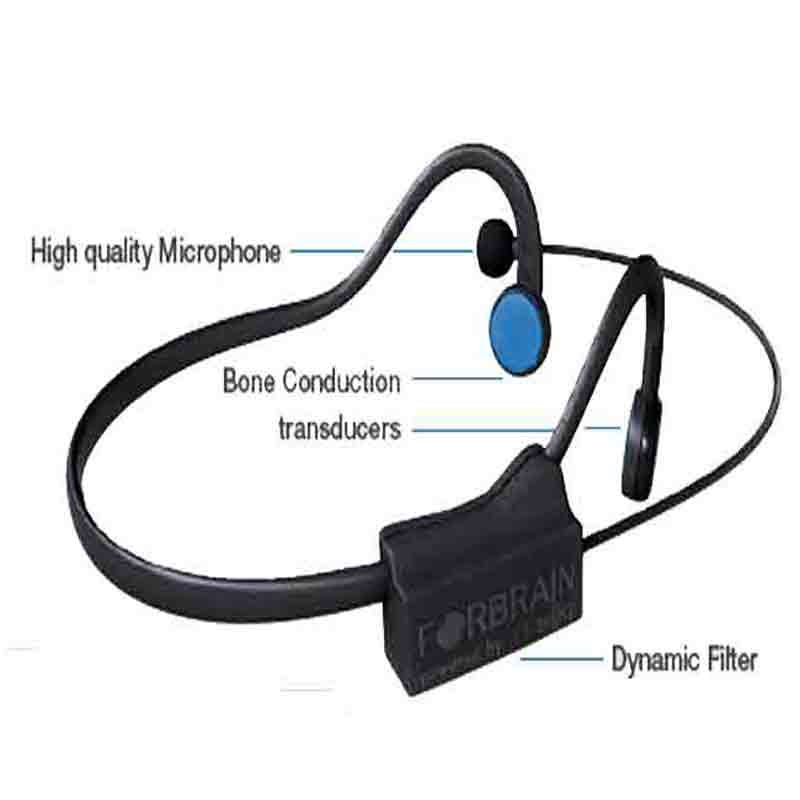
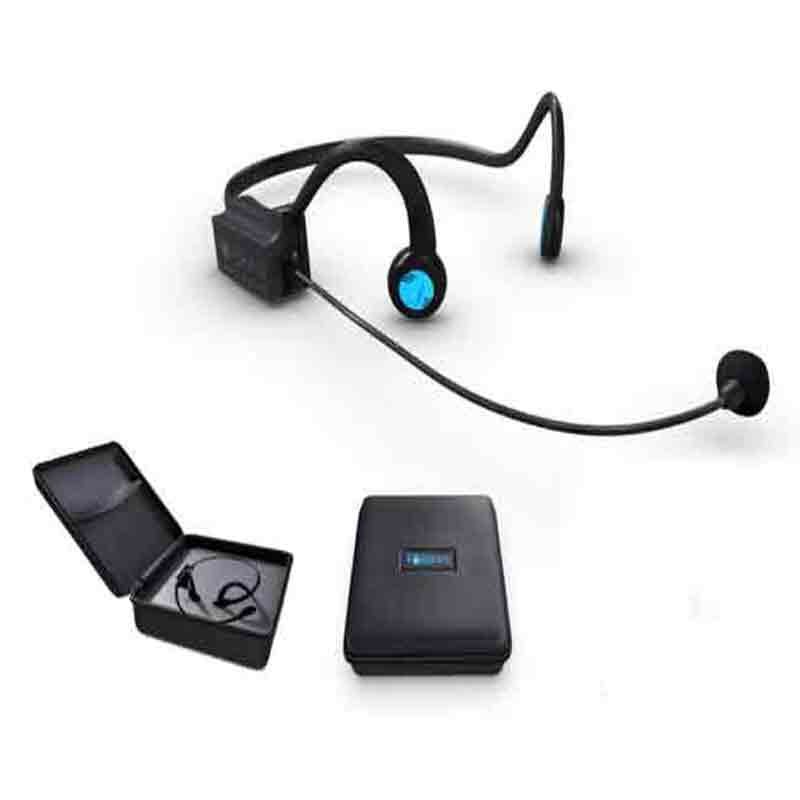
The Forbrain audio-vocal biofeedback device was marketed as a tool that combines bone conduction and auditory feedback to help individuals improve their speech and communication skills. It was primarily designed to assist with various speech and language challenges, including stuttering. Here’s how the Forbrain device is typically used and its potential role in the treatment of stuttering:

1. Auditory Feedback: The Forbrain device includes a microphone and bone conduction technology that delivers auditory feedback directly to the wearer’s ears. It enhances the perception of their voice as they speak.

2. Voice Enhancement: Forbrain is designed to provide more precise and resonant auditory feedback, which can help individuals become more aware of their speech patterns, including any stuttering or disfluencies.

3. Speech Practice: Users can practice speaking while wearing the device, which provides real-time auditory feedback, allowing individuals to monitor their speech.

4. Attention and Focus: Forbrain also aims to help users improve their attention and concentration. Wearing the device during speech practice may help individuals become more focused on their speech, which can indirectly help reduce stuttering.

5. Neurological Training: Forbrain may promote neuroplasticity, potentially leading to improved speech fluency and reduced stuttering.

Forbrain improves self-awareness, which makes speech easier to correct. It also helps correct the processing of sensory and auditory information and improves listening skills.

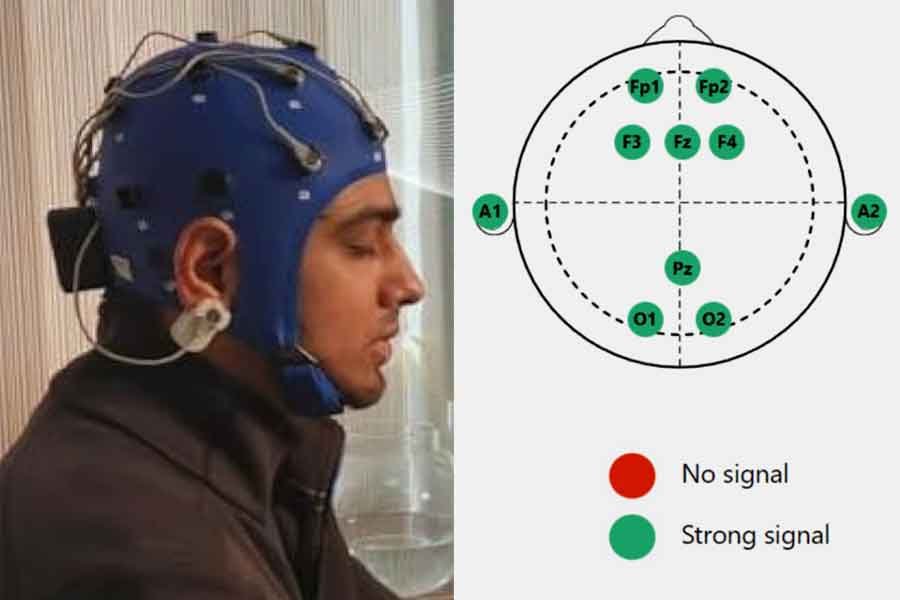
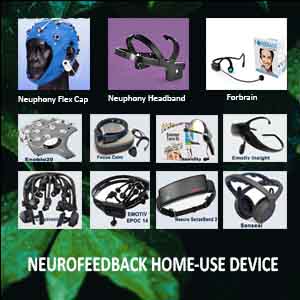
Role of neurofeedback in the treatment of stuttering. How to perform?

Brain Regions and Electrodes for Speech Neurofeedback

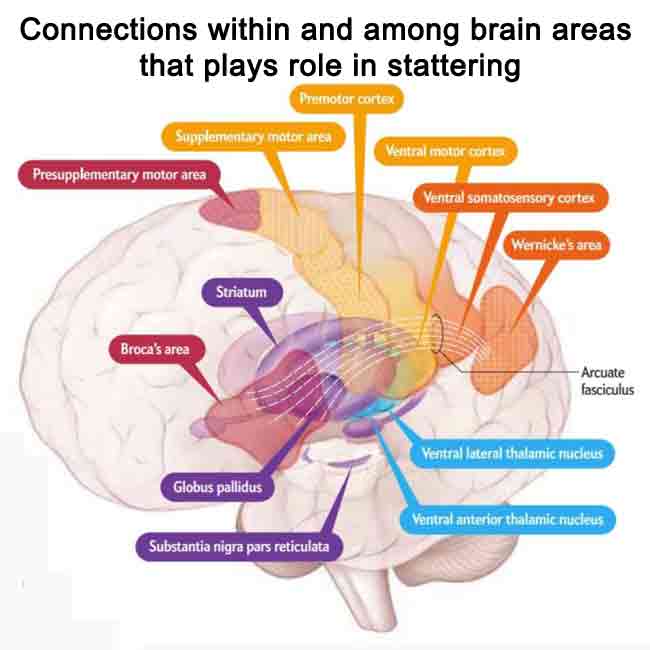
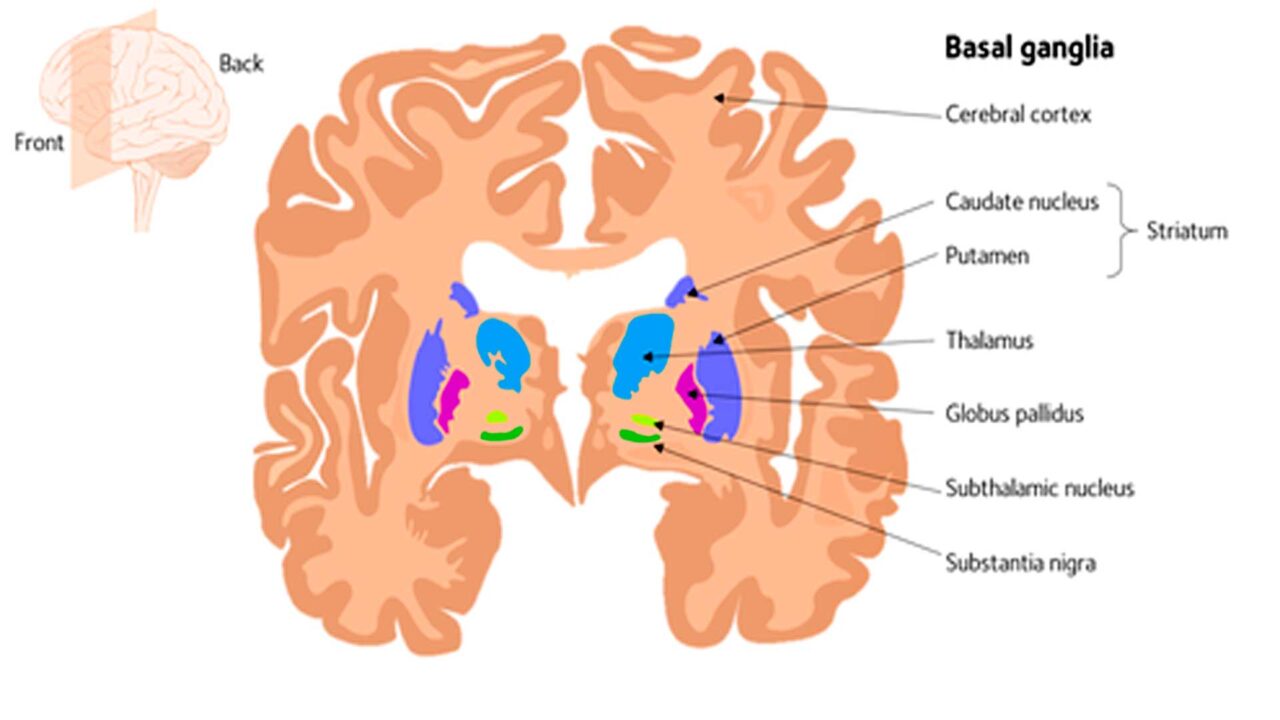
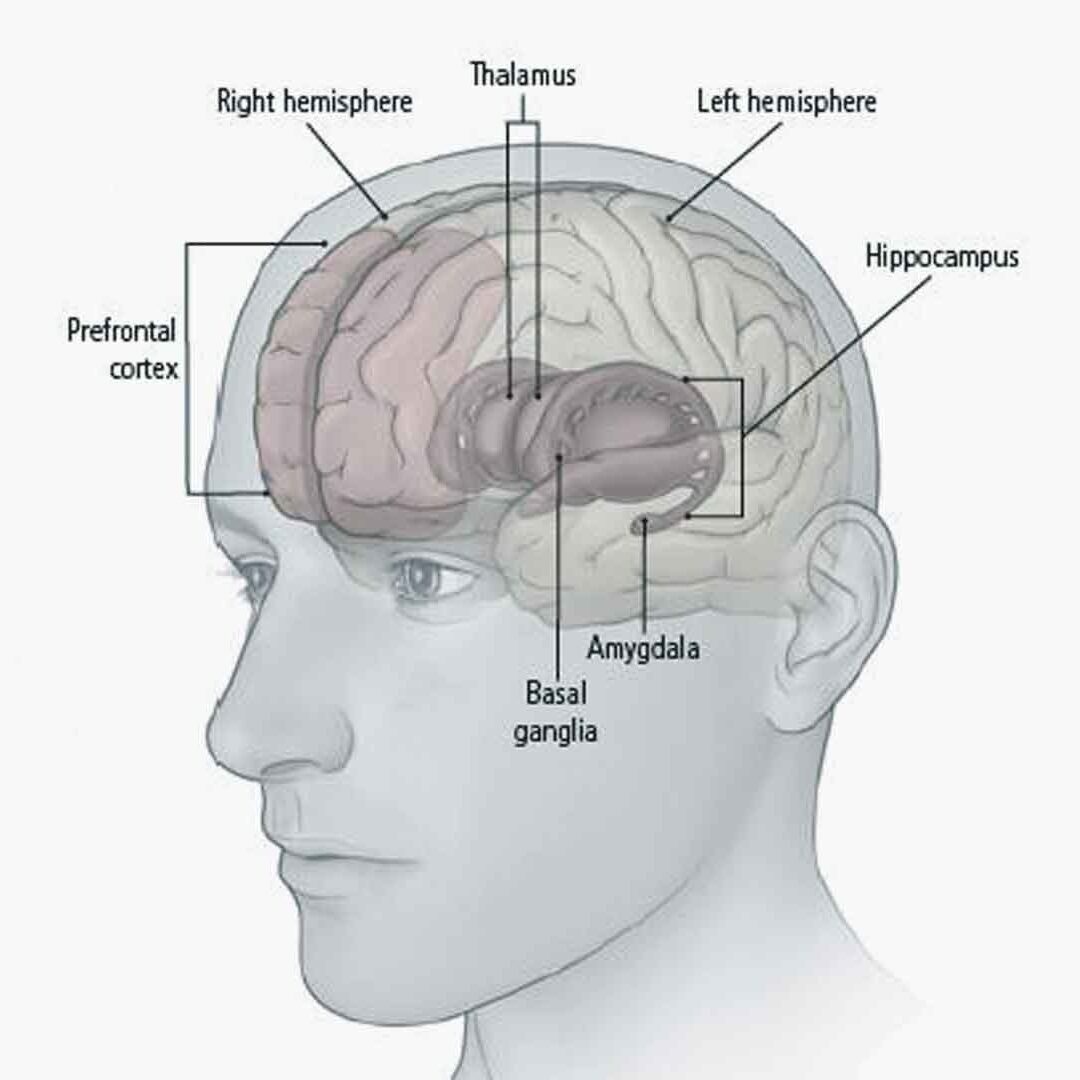
Stuttering has been linked to weakness in the fibers that carry nerve impulses among three regions: the thalamus, which relays sensory signals; the basal ganglia, which coordinates movements; and the cerebral cortex, which is involved in cognition and integration of sensory and motor signals.

There are many connections within and among these brain areas. A key fiber link in the cortex is the arcuate fasciculus, which shows deficiencies in people who stutter. Other potentially poor connections are within the basal ganglia and the network linking all areas, such as the cortico-basal ganglia-thalamocortical loop.

1. Brain Regions Linked to Stuttering
Stuttering has been linked to weaknesses in the neural connections among three key brain regions:

  • Thalamus: Relays sensory signals.
  • Basal Ganglia: Coordinates movements.
  • Cerebral Cortex: Involved in cognition and integration of sensory and motor signals.

2. Key Fiber Links and Deficiencies
Important connections include:

Arcuate Fasciculus: A key fiber link in the cortex that shows deficiencies in individuals who stutter.
Cortico-Basal Ganglia-Thalamocortical Loop: A network linking all areas may exhibit poor connections in stuttering.

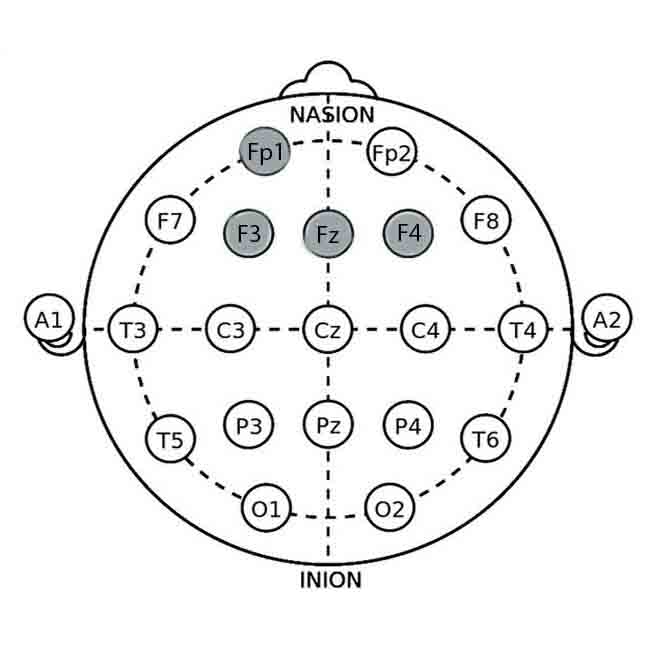
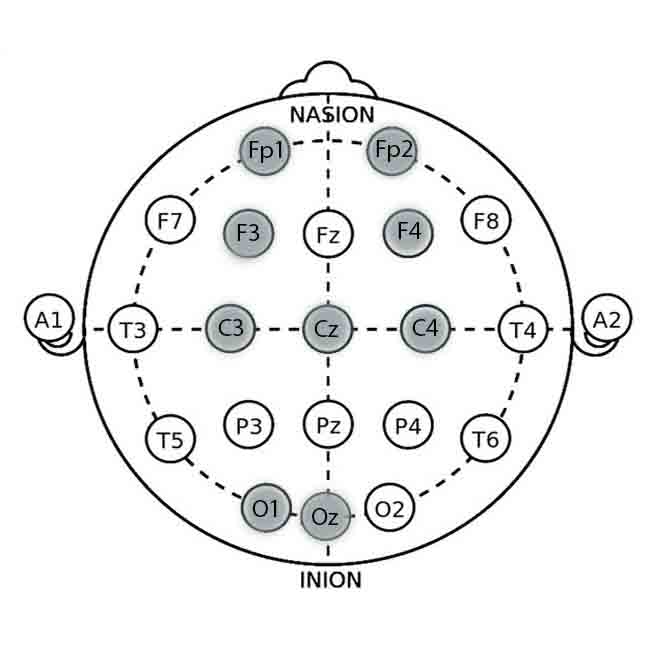
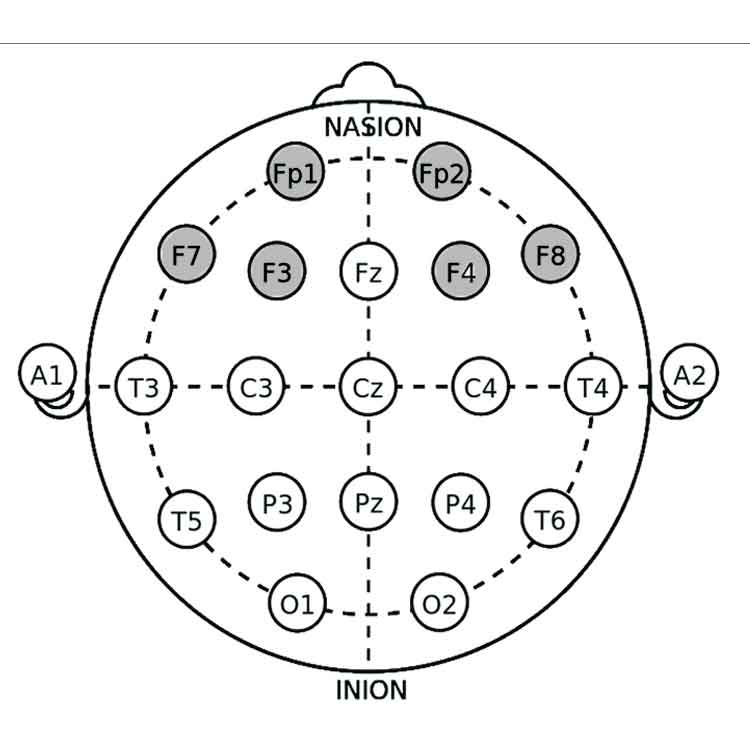
Electrode Placement Using the International 10-20 System

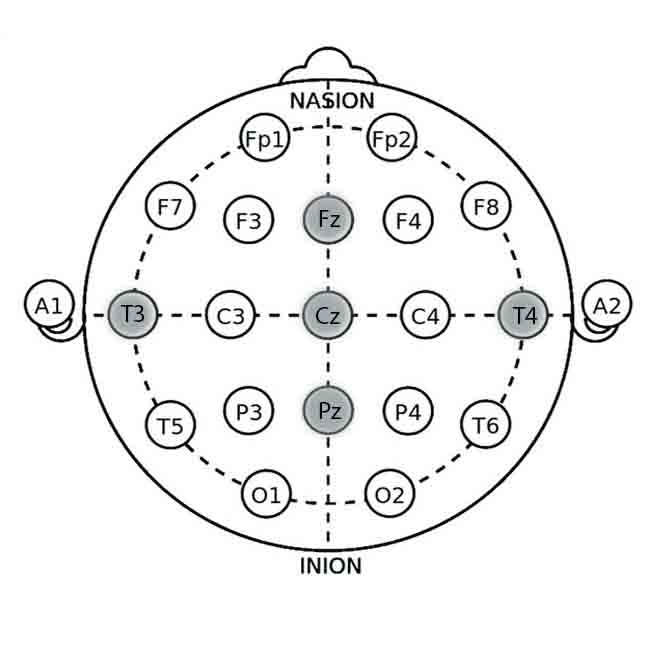
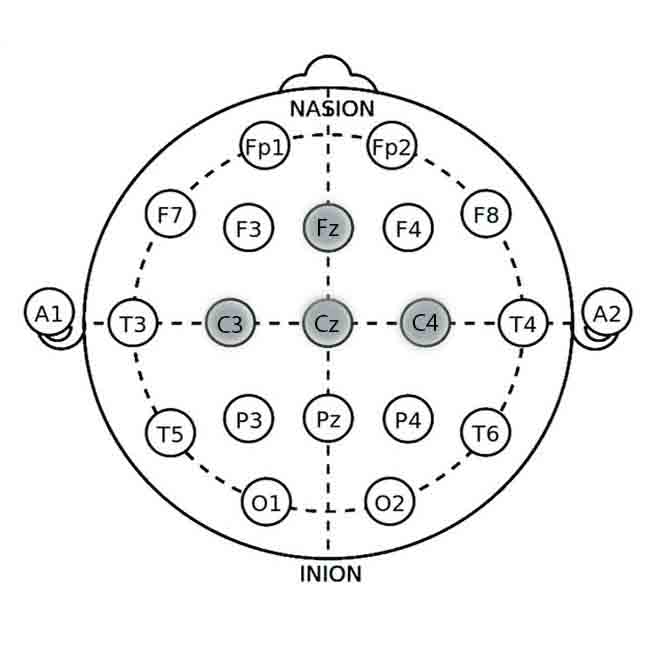
The International 10-20 System is a standardized method for electrode placement used in electroencephalography (EEG) to locate specific areas of the scalp relative to underlying brain regions. While the primary focus of the 10-20 system is on general brain activity monitoring, it can be adapted for speech neurofeedback by targeting areas of the brain associated with language and speech processing. Here are some electrode placement sites based on the 10-20 System that can be relevant for speech neurofeedback:


1. Frontal Electrodes:
F7 and F8: These electrodes are located over the left and right frontal lobes. They may be relevant for speech neurofeedback as the frontal lobes involve various aspects of language production and executive functions.

2. Temporal Electrodes:
T3 and T4: These electrodes are positioned over the left and right temporal lobes, which are crucial for language comprehension, auditory processing, and speech.

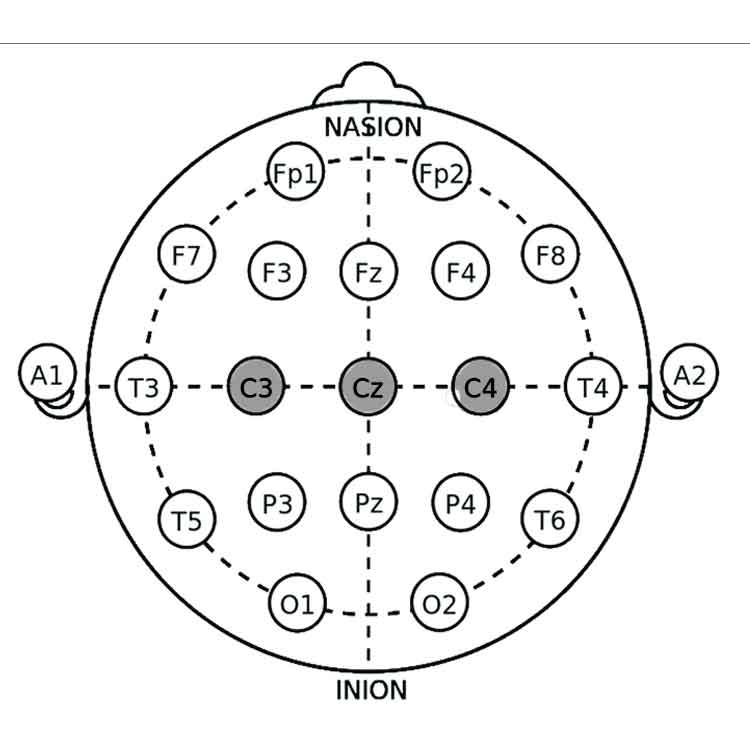
3. Central Electrodes:
C3 and C4: These electrodes are situated over the central region of the scalp and may be relevant for speech neurofeedback as they are associated with motor functions, including motor control of speech.

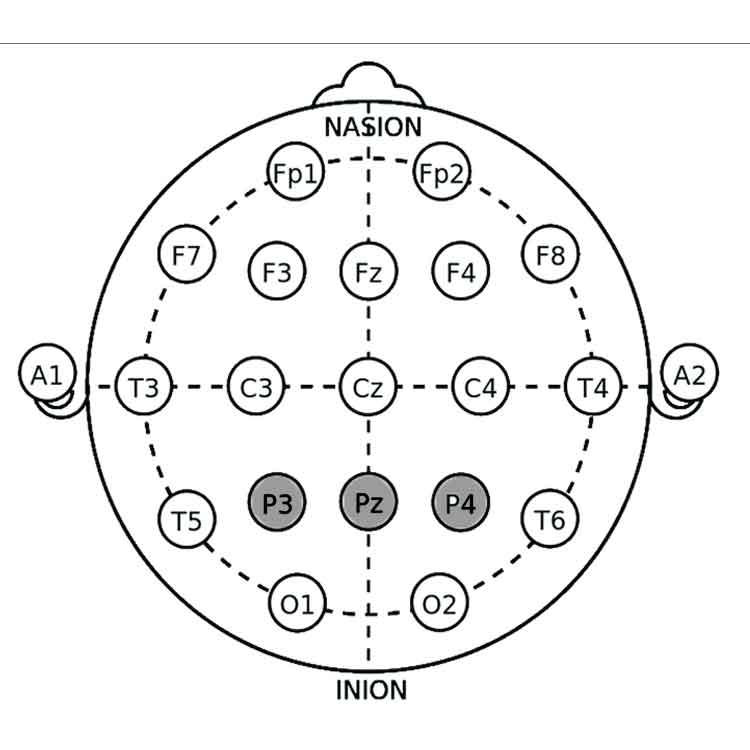
4. Parietal Electrodes:
P3 and P4: These electrodes are located over the left and right parietal lobes, which are involved in various aspects of language processing and sensory integration.

5. Frontocentral Electrodes:
FC5 and FC6: Positioned between the frontal and central regions, these electrodes may capture neural activity related to speech planning and execution.

Specific Electrode Areas for Speech Fluency

6. Supplementary Motor Area (SMA):
FCz: Located at the midline of the scalp, FCz is associated with motor planning and may be relevant for speech motor control.

7. Broca’s Area (Left Hemisphere):
F5 and F3: These electrodes are located over the left frontal region and may particularly interest speech neurofeedback, as Broca’s area is essential for language production and speech fluency.

8. Wernicke’s Area (Left Hemisphere):
T5: Positioned over the left temporal lobe, T5 may be associated with language comprehension and processing.

9. Angular Gyrus (Left Hemisphere):
P5: Over the left parietal lobe, P5 may play a role in language processing and comprehension.

Neurofeedback for Stuttering Management

Neurofeedback can be effective in rewiring the brain in the specific brain area responsible for speech fluency and by regulating the conditions concomitant to stuttering.

1. Stress and Anxiety Management: Stress and anxiety can often exacerbate stuttering. Neurofeedback may help individuals learn to regulate their stress response and reduce anxiety levels, indirectly contributing to improved fluency by reducing tension associated with stuttering.

2. Attention and Concentration: Neurofeedback can be used to train individuals to enhance their attention and concentration abilities. Improved attention control may help individuals who stutter maintain focus on their speech and reduce the likelihood of stuttering interruptions.

3. Relaxation and Self-Regulation: Neurofeedback can teach individuals self-regulation skills, which may be beneficial for managing emotional responses and muscle tension during speech production.

It’s important to note that the choice of electrode placement should be guided by the specific objectives of the speech neurofeedback therapy and the individual’s unique needs. Electrode positions can be adjusted to target brain regions associated with speech production, language comprehension, and fluency. Additionally, a qualified clinician or therapist with expertise in neurofeedback for speech and language disorders should be consulted to determine the most appropriate electrode montage for achieving therapeutic goals.

The electronic devices that can be used for treatment of stuttering

Several electronic devices and technologies can be used to assist in the treatment and management of stuttering. These devices often use traditional speech therapy techniques to provide real-time feedback and enhance therapy outcomes. Here is a list of some electronic devices and their descriptions:

Wearable and Tactile Devices

1. SpeechEasy Device:

  • SpeechEasy is a wearable electronic device that resembles a hearing aid. It uses delayed auditory feedback (DAF) or altered auditory feedback (AAF) to provide real-time auditory feedback to stuttering individuals.
  • How It Works: When the person speaks, their voice is slightly delayed or altered in pitch, which can reduce the frequency and severity of stuttering.

2. VibroTactile Feedback Devices:

  • These devices provide tactile (vibratory) feedback to help individuals monitor and control their speech rate and fluency.
  • How They Work: VibroTactile feedback devices can be worn as wristbands or placed on the skin. They vibrate in response to specific speech patterns, providing a tactile cue to slow down or ease tension.

3. FluencyMaster Device:

  • FluencyMaster is a handheld electronic device designed to assist individuals in practicing fluency-enhancing techniques.
  • How It Works: The device generates a metronome-like beat with which individuals can synchronize their speech to achieve a more controlled and fluent speech pattern.

Digital and Biofeedback Tools

4. Apps and Software:

  • Various smartphone and computer apps are available to support individuals in practicing speech techniques and monitoring their progress.
  • Some apps provide visual or auditory feedback, such as fluency charts or metronome-like cues, to assist with speech modification and fluency shaping.

5. Voice Analysis Software:

  • Specialized voice analysis software can analyze speech patterns and provide visual feedback on pitch, intensity, and speech rate.
  • This software can help individuals and therapists track progress and identify areas for improvement.

6. Biofeedback Devices:

  • Biofeedback devices can monitor physiological indicators of stress and tension, which can be associated with stuttering.
  • They may include sensors for measuring muscle tension, heart rate variability, or skin conductance. The data can help individuals learn to manage stress during speech.

7. Mobile Communication Devices:

  • Mobile devices such as smartphones and tablets offer various apps and tools to aid individuals in communication, including text-to-speech apps, speech synthesis software, and augmentative and alternative communication (AAC) apps.

It’s important to note that the effectiveness of electronic devices in stuttering treatment can vary from person to person. These devices are often used as adjuncts to traditional speech therapy techniques, and selecting a specific device should be based on an individual’s needs, goals, and preferences. A qualified speech-language pathologist or therapist specializing in stuttering therapy can help assess whether and how these devices may be beneficial and guide their use.

Conclusion

Biofeedback Speech Therapy for Stuttering represents a promising and innovative approach to stuttering treatment. This therapeutic method harnesses the power of real-time physiological feedback to empower individuals who stutter with tools for enhanced fluency and communication confidence. Through the precise monitoring and training of muscles, breathing patterns, and even neural activity, biofeedback speech therapy offers a holistic approach to address the multifaceted challenges associated with stuttering.

By delving into biofeedback speech therapy’s principles, techniques, and potential benefits for stuttering, we have uncovered a dynamic strategy that goes beyond traditional interventions. It equips individuals to gain better control over muscle tension, reduce stress and anxiety, and even modulate neural patterns related to speech production.

Biofeedback speech therapy for stuttering is a testament to the evolution of speech therapy practices, driven by a commitment to improving the lives of those affected by stuttering. This innovative approach reflects the interdisciplinary nature of stuttering therapy, drawing on insights from psychology, physiology, and neurology to provide a comprehensive toolkit for clinicians and individuals alike.

As we look ahead, the continued research and application of biofeedback techniques in stuttering therapy promise even more personalized and effective treatments. Tailoring therapy plans to each individual’s unique needs, addressing their specific muscle tension patterns, emotional triggers, and neural responses, is a significant advancement in the field.

Biofeedback Speech Therapy for Stuttering reminds us that innovation, coupled with a deep understanding of the challenges faced by individuals who stutter, can lead to transformative results. As clinicians and researchers continue to explore the potential of biofeedback in stuttering therapy, we can anticipate brighter prospects for those seeking to unlock the fluent and confident communicators within themselves.

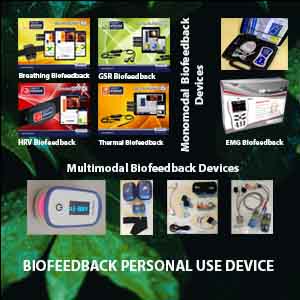
Biofeedback Speech Therapy for Stuttering Home Use Device

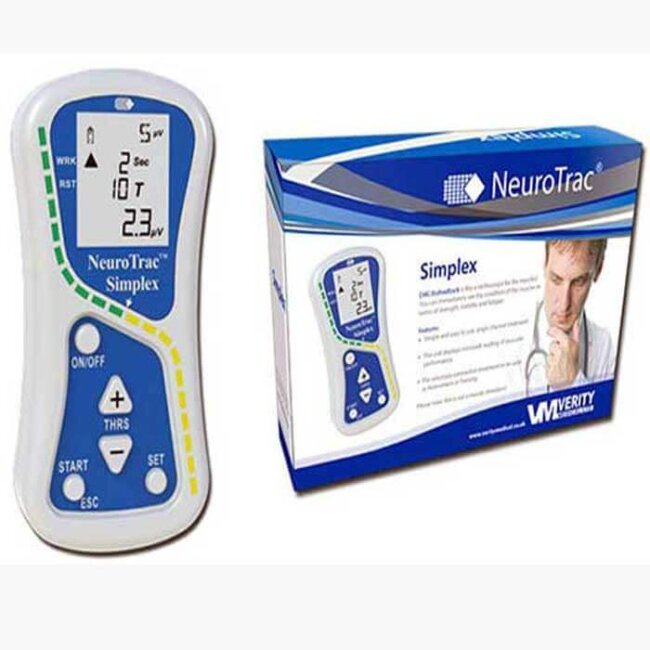
EMG Biofeedback Speech Therapy for Stuttering Home Use Device

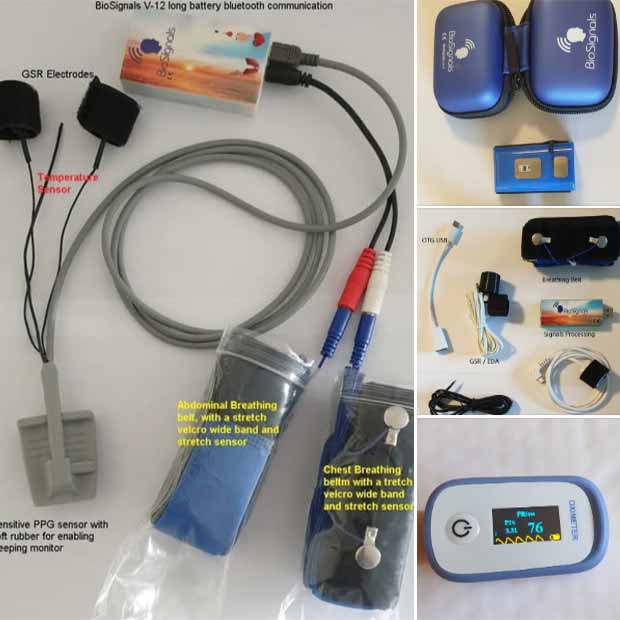
Breathing Biofeedback Speech Therapy for Stuttering Home Use Device

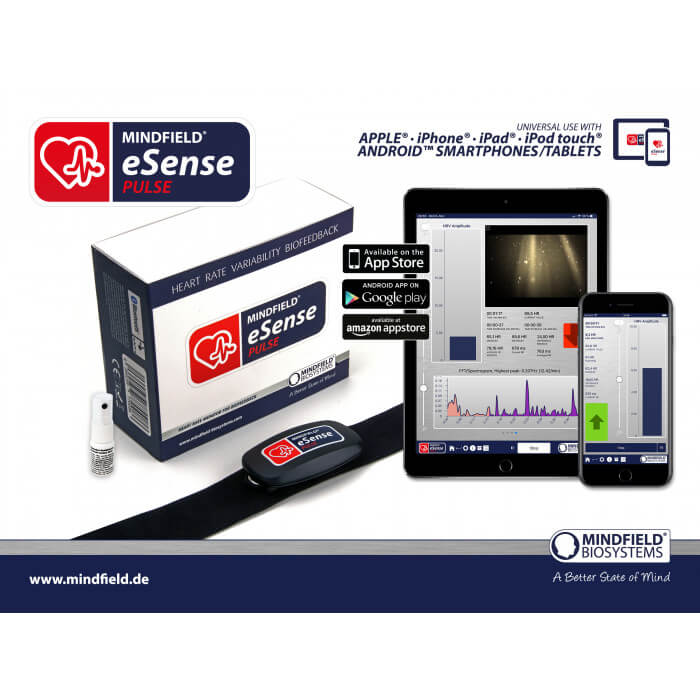
HRV Biofeedback Speech Therapy for Stuttering Home Use Device

Temperature Biofeedback Speech Therapy for Stuttering Home Use Device

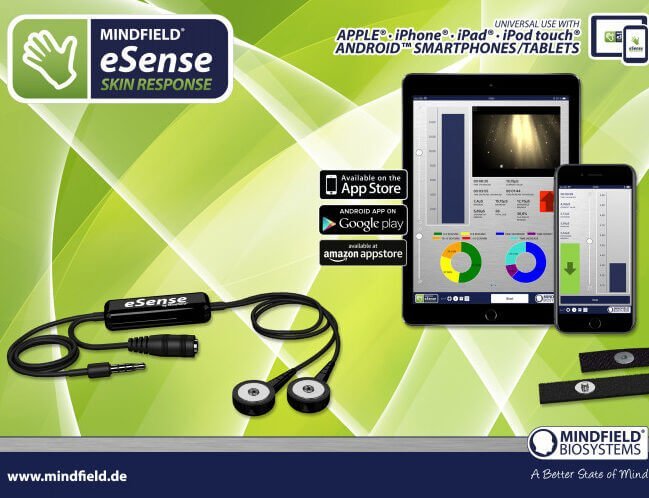
Skin Conductance Biofeedback Speech Therapy for Stuttering Home Use Device

Acoustic Biofeedback Speech Therapy for Stuttering Home Use Device

Motor tics

Neurofeedback for Tourette Syndrome

Tourette Syndrome and other tics disorders affect millions of people worldwide, often presenting significant challenges in daily life. While traditional treatments for Tourette’s focus on managing symptoms with medication or behavioral therapy, a growing body of research highlights the potential of neurofeedback for Tourette Syndrome as a non-invasive and effective alternative. This innovative approach targets the neurological roots of the condition, offering hope for long-term improvement in tic disorder treatment. In this article, we’ll explore how neurofeedback works, its benefits, and why it’s emerging as a promising treatment for Tourette’s.

Classification and Types of Tic Disorders

Tic disorders can usually be classified as motor, vocal, or Tourette’s syndrome, which is a combination of both. Motor and vocal tics can be short-lived (transient) or chronic. Tourette’s is considered to be a chronic tic disorder.

Children with transient tic disorder will present with one or more tics for at least 1 month but for less than 12 consecutive months. The onset of the tics must have been before the individual turned 18. Motor tics are more commonly seen in cases of transient tic disorder than vocal tics. Tics may vary in type and severity over time. According to the American Academy of Child and Adolescent Psychiatry, a transient tic disorder, or provisional tic disorder, affects up to 10% of children during their early school years.

Tic disorders that appear before age 18 and last for 1 year or more may be classified as chronic tic disorders. These tics can be either motor or vocal, but not both. Chronic tic disorders are less common than transient tic disorders, with less than 1% of children affected.

If the child is younger at the onset of a chronic motor or vocal tics disorder, they have a greater chance of recovery, with tics usually disappearing within 6 years. People who continue to experience symptoms beyond age 18 are less likely to see their symptoms resolved.

Some research suggests that tics disorder are more common among children with learning disabilities and are seen more in special education classrooms. Children within the autism spectrum are also more likely to have tics.

Tourette’s Syndrome: Characteristics and Prevalence

Tourette’s syndrome (TS) is the most severe and least common tics disorder. The Centers for Disease Control and Prevention (CDC) reports that the exact number of people with TS is unknown. CDC research suggests that half of all children with the condition are not diagnosed. Currently, 0.3% of children aged 6 to 17 in the US have been diagnosed with TS. Symptoms of TS vary in their severity over time. For many people, symptoms improve with age. TS is often accompanied by other conditions, such as attention deficit hyperactivity disorder (ADHD) and obsessive-compulsive disorder (OCD).

The onset of Tourette syndrome is usually in childhood between the ages of 2 and 21 years. The disorder affects more males than females, with a ratio of approximately three males to 1 female. Tourette’s is a highly individualistic disorder with differing levels of severity, frequency, and impairment. 

Neurodevelopmental Insights into Tourette’s Syndrome

Tourette Syndrome is a neurodevelopmental disorder characterized by persistent, chronic, and involuntary tics. These tics manifest as either motor (motor movements) or phonic (vocalizations) and can range from simple tics, such as blinking, sniffing, and head twitching, to more complex tics, such as repetitive swearing, spinning, and jumping. The cause of Tourette’s is unknown, but both hereditary and nongenetic factors likely contribute to its development.

While the exact cause of Tourette Syndrome is unknown, it is believed that the presence of tics is associated with abnormalities in the brain. In particular, it is suggested that there is a distribution in the circuits linking the basal ganglia (the site that controls voluntary motor movements, eye movements, and emotion) to the frontal cortex.

Individuals with Tourette Syndrome exhibit impaired performance on cognitive tasks involving memory, attention, reading, and writing. These impairments are often more severe in individuals diagnosed with comorbid ADHD, who also display less cognitive flexibility. It is estimated that 70% of patients with Tourette Syndrome exhibit ADHD-type behaviors, and as such, Tourette Syndrome can be a debilitating diagnosis for many people.

Having tics doesn’t mean someone has Tourette’s syndrome. Tics have to be present for at least one year to be classified as Tourette’s syndrome, and at least one of the tics has to be vocal.

Symptoms of Tic Disorder

The defining symptom of tic disorders is the presence of one or more tics. These tics can be classified as:

  • Motor tics: These include tics, such as head and shoulder movements, jerking of the head, twisting the neck, rolling the eyes, blinking, jerking, banging, clicking fingers, or touching things or other people. Motor tics appear before vocal tics, although this is not always true.
  • Vocal tics are sounds such as coughing, blowing, throat clearing, grunting, or repeating words or phrases.

Tics can also be divided into the following categories:

  • Simple tics are sudden and fleeting tics that use a few muscle groups. Examples include nose twitching, eye darting, or throat clearing.
  • Complex tics: These involve coordinated movements using several muscle groups. Examples include hopping or stepping in a certain way, gesturing, or repeating words or phrases.

An uncomfortable urge, such as an itch or tingle, usually precedes tics. While holding back from performing the tic is possible, this requires much effort and often causes tension and stress. Relief from these sensations is experienced upon performing the tic.

The symptoms of tic disorders may:

  • worsen with emotions, such as anxiety, excitement, anger, and fatigue,
  • worsen during periods of illness,
  • worsen with extreme temperatures,
  • occur during sleep,
  • vary over time,
  • vary in type and severity,
  • improve over time.

Causes and risk factors for Tourette's syndrome and Tic Disorders

The exact cause of tic disorders is unknown. However, recent studies in Tourette’s research have identified specific gene mutations that may play a role. Brain chemistry, especially the brain chemicals glutamate, serotonin, and dopamine, also seems essential.

Tics with a direct cause fall into a different diagnostic category. These include tics due to:

  • head injuries,
  • stroke,
  • infections,
  • poisons,
  • surgery,
  • other injuries.

In addition, tics can be associated with more serious medical disorders, such as Huntington’s disease or Creutzfeldt-Jakob disease.

Risk factors for tic disorders include:

  • Genetics: Tics tend to run in families, so there may be a genetic basis for these disorders.
  • Sex: Men are more likely to be affected by tic disorders than women.

Conditions associated with tic disorders

Conditions associated with tic disorders, especially in children with TS, include:

  • anxiety
  • ADHD
  • depression
  • autistic spectrum disorder
  • learning difficulties
  • OCD
  • speech and language difficulties
  • sleep difficulties

Other conditions associated with tic disorders are those related to the effects of tics on self-esteem and self-image. Some research has found that children with TS or any chronic tic disorder experience a lower quality of life and lower self-esteem than those without one of these conditions.

In addition, the Tourette Association of America says that people with TS often experience difficulties with social functioning due to their tics and associated conditions, such as ADHD or anxiety.

Neurofeedback for Tourette Syndrome - Tourette graphic

Brain changes in Tourette's Syndrome and Tic Disorders

Neurobiological Features of Tourette’s Syndrome and ADHD

The frequent comorbidity of TS and ADHD may reflect a common underlying neurobiological substrate, and studies confirm the hypothesized involvement of frontostriatal circuits in both TS and ADHD. However, poor inhibitory control and volumetric reductions in frontostriatal circuits appear to be core features of ADHD. In contrast, reduced volumes of the caudate nucleus and activation and hypertrophy of prefrontal regions that likely help suppress tics seem to be core features of TS. (Neuroimaging of tic disorders with co-existing attention-deficit/hyperactivity disorder – Kerstin J. Plessen, M.D., Jason M. Royal, D.M.A., and Bradley S. Peterson, M.D.)

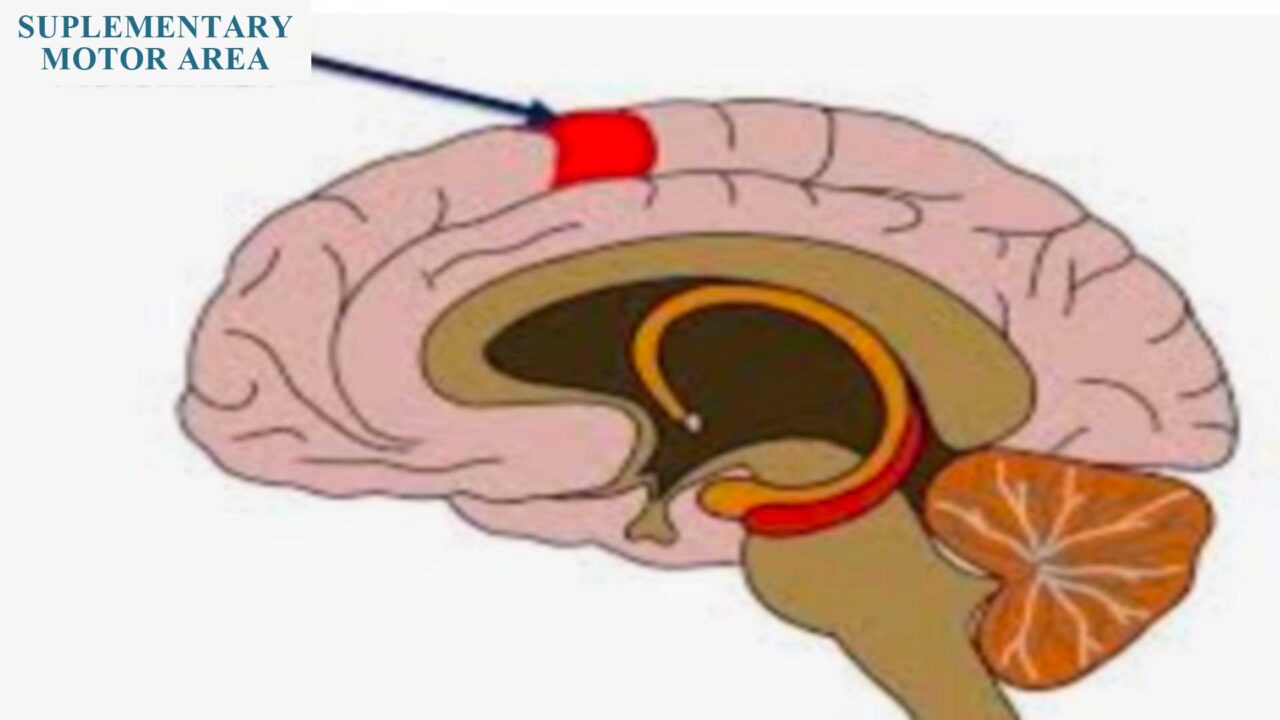
Activity in the brain’s supplementary motor area (SMA) has been associated with tics. The investigators placed tic patients in the MRI scanner and conducted a real-time functional magnetic resonance imaging neurofeedback session. The patients could see the SMA light up and try to control that area by focusing their thoughts on it. The patients who received the real neurofeedback had a greater reduction in tics on the Yale Global Tic Severity Scale than those in the sham control group.

Brain Imaging Insights into Tourette’s Syndrome

Researchers at Washington University School of Medicine in St. Louis have identified areas in the brains of children with Tourette’s syndrome that appear markedly different from those in the brains of children without the disorder. 

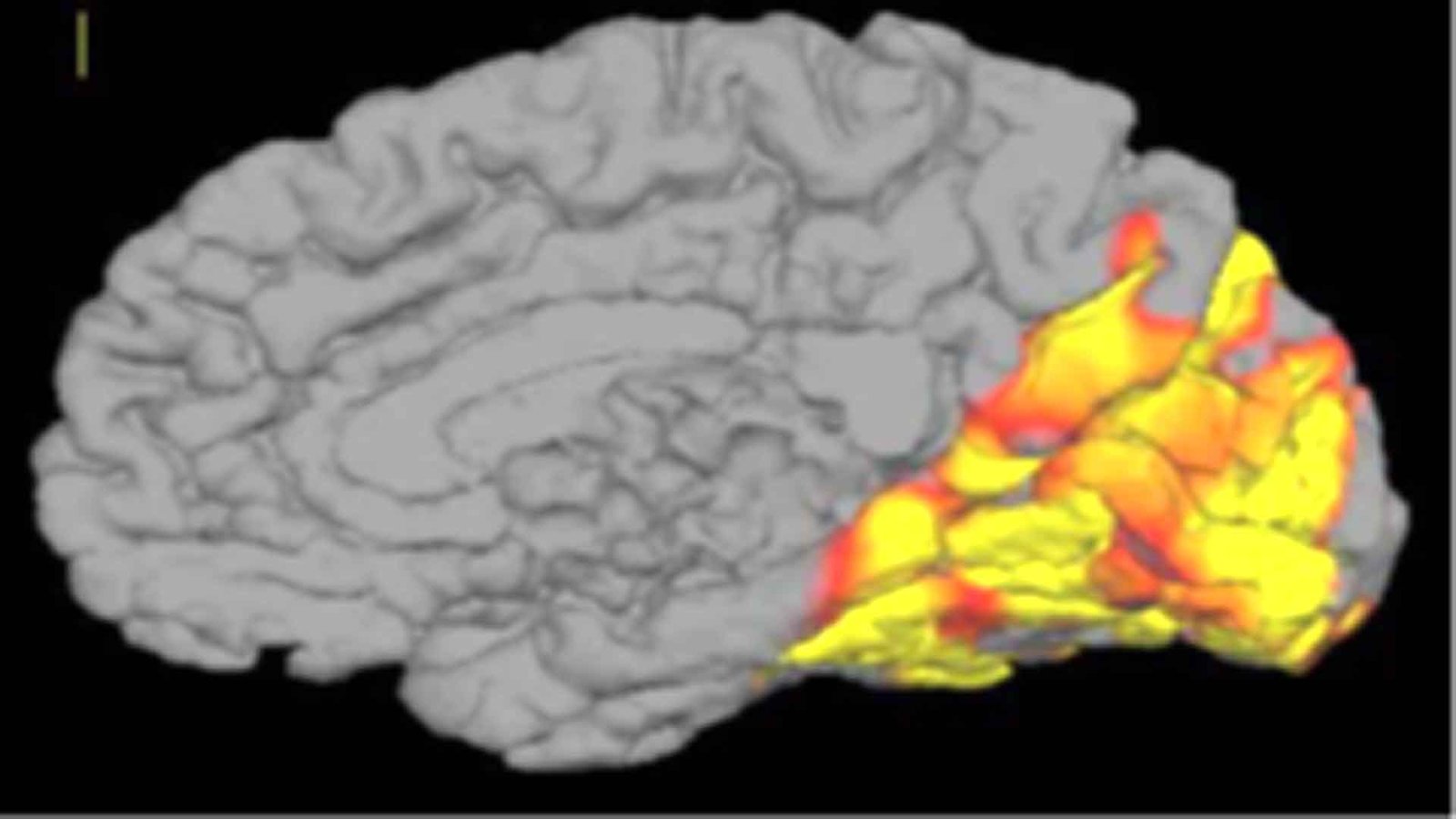
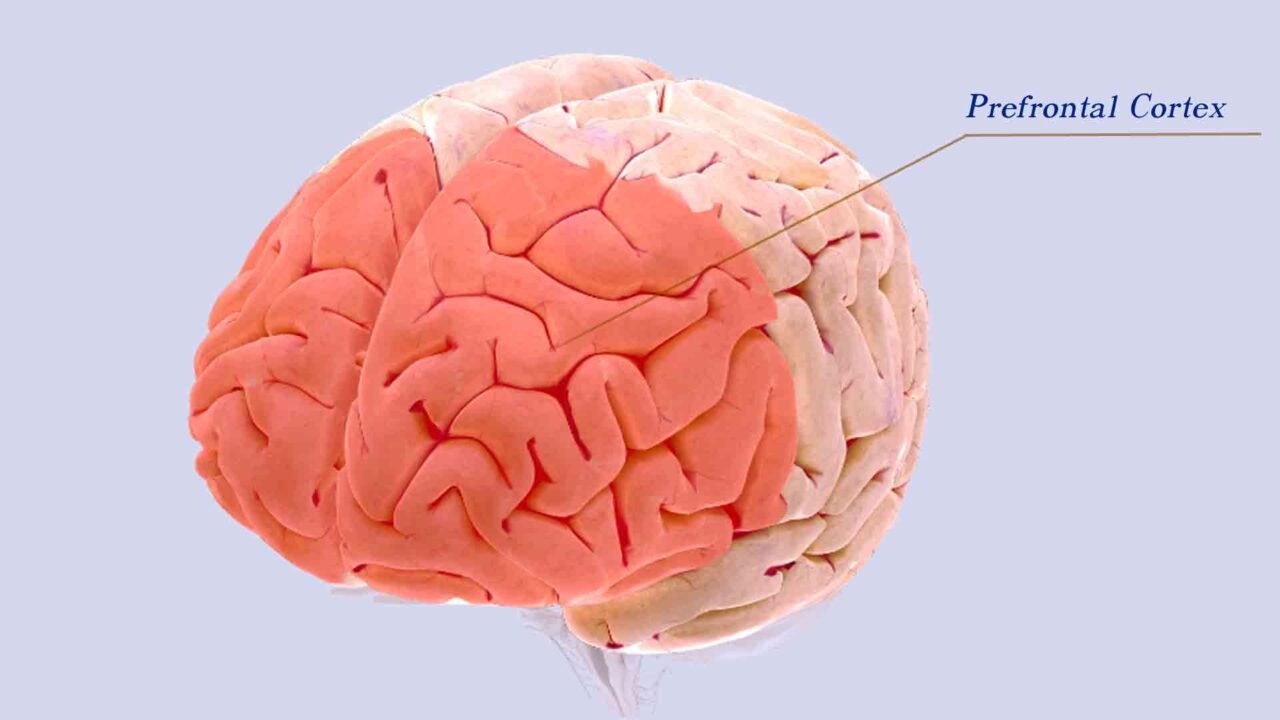
In kids with Tourette’s, the researchers also found less white matter around the orbital prefrontal cortex, just above the eyes, and in the medial prefrontal cortex, also near the front, than in kids without the condition.

White matter acts like the brain’s wiring. Unlike the axons in gray matter, axons in white matter are coated with myelin and transmit signals to gray matter. Less white matter could mean less efficient transmission of sensations, whereas extra gray matter could mean nerve cells send extra signals.

In a scan of a child with Tourette’s, yellow indicates an area with less white matter than in the same brain region in kids who don’t have the disorder. The scans also revealed that the brains of kids with Tourette’s have more gray matter (the posterior thalamus, hypothalamus, and midbrain) than those of children without the condition.

Neurofeedback for Managing Tics and Executive Function Deficits

Deficits in executive functioning, which contribute to ADHD symptoms, also appear in TS, with the same losses of structural integrity in the cortico-striatal and cortico-thalamic pathways common to both disorders. Neurophysiological processes underlying these deficits in executive functioning can be modulated with neurofeedback.

Clinical researchers Chuanjun Zhuo and Li Li (2014) found that neurofeedback training improved motor and vocal tic symptoms (e.g., reduced tic frequency and intensity) in adolescents with refractory Tourette syndrome.

Simone Messerotti Benvenuti et al. (2011) used an SMR up-training/Theta down-training schedule for 16 sessions, followed by six more sessions of purely SMR up-training. SMR increase was better obtained when SMR up-training was administered alone, whereas Theta decrease was observed after both types of training

After 40 SMR training sessions, 75% of patients demonstrated increased SMR production and a positive change in the theta/beta ratio.

Researchers hypothesized that training the sensorimotor cortex would increase voluntary muscle control and eliminate tics.

Neurofeedback for Tourette syndrome and Tic Disorders

Neurofeedback training is a self-regulation strategy. The brain is trained at the point where the tics are to reduce or eliminate them. In a brain with TS, there is over-arousal. The motor system is highly excitable. The overarching need is for this brain to experience calming, both generally and specifically regarding motor circuits. When such calming is achieved, the tics (motor and vocal) may be reduced.

Neurofeedback practitioners have seen significant symptom improvement in most cases with the right approach. Nonetheless, every case is different, and sometimes you may not experience a reduction in tics, but overall, you should feel more relaxed and notice better sleep quality. This condition appears to benefit from long-term training.

Presently, medications used to treat tics can cause unforeseen side effects, whereas neurofeedback therapy can be tailored to more accurately target the area of the brain that needs changing.

By Dr. Clare Albright – “Neurofeedback – Transforming Your Life With Brain Biofeedback” – www.neurofeedbackbook.com

Neurofeedback for Tourette Syndrome - Protocols

1. Sensor Placement:

Neurofeedback for Tourette syndrome typically involves applying electrodes to specific sites on the scalp according to the 10-20 system, a standardized method for locating and measuring EEG electrode placements. 

Common electrode sites include Cz (vertex), Fz (midline frontal), C3/C4 (left and right central), and Pz (midline parietal).

2. Frequency Bands:

Neurofeedback protocols often target specific frequency bands associated with neurological functioning. For TS, protocols may focus on training specific frequencies like the sensorimotor rhythm (SMR) and beta waves. SMR is associated with motor control and inhibition and is often implicated in TS symptomatology.

3. Operant Conditioning:

The neurofeedback for Tourette Syndrome involves operant conditioning, where individuals learn to regulate their brain activity in response to visual or auditory feedback. In the case of TS, patients might receive positive feedback when their brain activity corresponds to a desired state (e.g., reduced hyperactivity in specific brain regions).

Electrode Application Sites According to 10-20 System

1. Cz (Vertex): Often associated with overall brain regulation.

Relevance: The central region of the motor cortex is crucial for motor control, which is often dysregulated in TS.

2. Fz (Midline Frontal): May target prefrontal areas associated with impulse control.

• Relevance: Associated with executive function and impulse control, which are often impaired in individuals with TS.

3. C3/C4 (Left and Right Central): Relevant for sensorimotor rhythm and motor control.

C3 – Relevance: Involved in motor control and coordination, targeting this area can help reduce motor tics.

C4 – Relevance: Also involved in motor control; targeting this area can help balance neural activity related to motor functions.

4. Pz (Midline Parietal): Associated with sensory processing and integration.

Neurofeedback Protocols for Tourette Syndrome

The protocol involves training individuals to increase or decrease specific brainwave activity at the targeted locations to improve motor control and reduce tics.

Sensorimotor Rhythm (SMR) Training

This protocol focuses on increasing SMR (12-15 Hz) activity to promote calm and reduce motor tics.

  • Target Brainwaves: SMR (12-15 Hz)
  • Goal: Increase SMR activity to enhance motor inhibition and reduce hyperactivity in the motor cortex.

Procedure:
1. Electrode Placement: Place electrodes at C3 (left sensorimotor cortex), Cz (reference), and C4 (optional for bipolar montage).
2. Baseline Recording: Record baseline SMR activity for 5-10 minutes.
3. Feedback Mechanism: Provide real-time feedback using visual (e.g., a moving bar or animation) or auditory (e.g., tone) cues. Positive feedback is given when SMR activity increases.
4. Training Sessions: Conduct 20-30 minutes of training sessions, 2-3 times per week, for 20-40 sessions.
5. Progress Monitoring: Use tic severity scales and follow-up qEEG to assess changes.

Theta/Beta Ratio Training

This protocol aims to balance theta (4-8 Hz) and beta (15-30 Hz) wave activity to improve attention and impulse control.

  • Target Brainwaves: Theta (4-8 Hz) and Beta (15-30 Hz)
  • Goal: Decrease theta activity and increase beta activity to improve cognitive control and reduce impulsivity.

Procedure:
1. Electrode Placement: Place electrodes at Fz (frontal midline) and Cz (reference).
2. Baseline Recording: Record baseline theta and beta activity for 5-10 minutes.
3. Feedback Mechanism: Provide feedback using visual or auditory stimuli. Positive feedback occurs when theta decreases and beta increases.
4. Training Sessions: Conduct 20-30 minutes of training sessions, 2-3 times per week, for 20-40 sessions.
5. Progress Monitoring: Utilize attention and impulse control scales and follow-up qEEG to track progress.

Alpha/Theta Training

This protocol focuses on increasing alpha (8-12 Hz) and theta (4-8 Hz) waves to promote relaxation and reduce anxiety, which can exacerbate tics.

  • Target Brainwaves: Alpha waves (8-12 Hz) and Theta waves (4-8 Hz)
  • Goal: Increase alpha and theta activity to reduce stress and improve emotional regulation.

Procedure:

1. Electrode Placement: Place electrodes at Cz and Fz (reference).
2. Baseline Recording: Record baseline alpha and theta activity for 5-10 minutes.
3. Feedback Mechanism: Use calming visual or auditory feedback. Positive feedback is provided when alpha and theta waves increase.
4. Training Sessions: Conduct 20-30 minutes of training sessions, 2-3 times per week, for 20-40 sessions.
5. Progress Monitoring: Use anxiety and stress scales and follow-up qEEG to monitor changes.

Effectiveness of Neurofeedback for Tourette Syndrome

Research on neurofeedback for Tourette syndrome is still in its early stages, and findings vary. Some studies suggest positive outcomes, such as reduced tic severity and improved impulse control, while others report mixed or inconclusive results.

Studies Supporting Effectiveness:

1. A study by Sokhadze et al. (2010) found that neurofeedback training significantly reduced tic frequency and improved behavioral measures in TS patients.
2. Gevensleben et al. (2014) reported positive effects of neurofeedback on tic reduction and attentional control in children with TS.

Studies with Mixed Results:

1. Dehghani-Arani et al. (2013) found improvements in tic severity and cognitive performance but reported variability in individual responses.
2. Holtmann et al. (2011) observed improved tic severity but did not find significant effects on comorbid symptoms.

Challenges and Considerations:

  • The heterogeneity of Tourette syndrome poses a challenge, as individuals may respond differently to neurofeedback.
  • The lack of standardized protocols across studies makes it difficult to draw consistent conclusions.
  • More extensive, well-controlled studies with long-term follow-up are needed to establish the efficacy and generalizability of neurofeedback for TS.

In conclusion, while promising evidence supports the effectiveness of neurofeedback for Tourette syndrome, further research is needed to establish standardized protocols, determine optimal electrode placements, and address variability in treatment outcomes. Neurofeedback for Tourette syndrome holds the potential to be a complementary

FAQ: Neurofeedback for Tourette Syndrome

How does neurofeedback work to reduce tics in Tourette Syndrome?

Neurofeedback trains the brain to self-regulate its over-aroused and hyperexcitable motor circuits. By providing real-time feedback on brainwave activity, it teaches individuals to increase calming rhythms (like SMR) and decrease hyperactive patterns, leading to a reduction in the frequency and intensity of both motor and vocal tics.

Is neurofeedback an effective treatment for Tourette Syndrome and tic disorders?

Research shows promising results. Studies cited in the document found that neurofeedback training significantly improved motor and vocal tic symptoms in adolescents, with one study showing 75% of patients successfully increased the brainwaves associated with better motor control after training.

What is the most common neurofeedback protocol for Tourette Syndrome?

A primary protocol is Sensorimotor Rhythm (SMR) Training. This involves increasing SMR waves (12-15 Hz) in central brain areas (e.g., site C3) to enhance motor inhibition and promote calmness in the motor cortex, which directly helps reduce tics.

How many neurofeedback sessions are needed for Tourette Syndrome?

A typical course involves 20 to 40 sessions. Sessions are usually 20-30 minutes long and are recommended 2 to 3 times per week to help the brain learn and maintain new, calmer patterns of activity.

Can neurofeedback for Tourette Syndrome help with co-existing conditions like ADHD?

Yes. Since conditions like ADHD and anxiety are very common in people with Tourette’s, neurofeedback is beneficial. Protocols often improve executive function, impulse control, and relaxation, which can alleviate symptoms of these co-existing conditions alongside tics.

How does neurofeedback for Tourette Syndrome compare to medication?

While medications can cause side effects and only manage symptoms, neurofeedback addresses the underlying neurological dysregulation. It is a learning-based process that teaches the brain to self-correct, offering the potential for long-term improvement without reliance on pharmaceuticals.

Where are the electrodes placed during neurofeedback for tics?

Common placement sites are over brain areas responsible for motor control and regulation. Key sites include Cz (vertex, for overall regulation), C3/C4 (over the sensorimotor cortex for motor tics), and Fz (midline frontal, for impulse control).

COVID and Anxiety

COVID 19 – How to Cope with Stress, Anxiety and Fears

The outbreak of diseases, such as the coronavirus disease 2019 – COVID 19, may be stressful for all of us. Fear and anxiety about a COVID 19 disease and quarantine stress can be overwhelming and cause strong emotions in adults and children.

Stress is a natural response that can be both useful and harmful. A good amount of stress can propel us to achieve a task. However, continued high levels of stress can be harmful to the body.

Coping with stress, anxiety and fears is crucial during COVID 19 and quarantine isolation.

Neeuro + Biofeedback and Neurofeedback Therapy FREE Stress Relief Kit

Too much stress can lead to multiple negative outcomes, including:

1. Weakened immune system
2. High blood pressure and cholesterol
3. Unnecessary weight gain

This can lead to a weakened immune system, high blood pressure and cholesterol, and even gaining weight.

COVID19 stress

Stress Management can make you, your loved ones, and your community stronger.

Using the latest patented technologies from Singapore, we can now help you manage stress using an app designed by Neuroscientists.

That’s why Neeuro has partnered with Biofeedback and Neurofeedback Therapy to help you and your loved ones enjoy your stay at home!

LISTEN WITH BOTH HEADPHONES. This is music infused with frequencies that can help you RELAX during these stressful times.

Listen to it only with headphones! It will be the first time that you will listen to a song with your brain and not only with your ears.

WHO recommends listening to music to relax and maintain your mental health.

You can find out more about this music here.

Download the Galini App FREE and enjoy it for 14 days.

Neeuro + Biofeedback and Neurofeedback Therapy Join Forces to Help Combat Stress

Galini Helps You Manage Stress,
Anytime, Anywhere

Galini is an app that can measurably manage stress, carefully tailored to provide you optimal Relaxation and Mindfulness.

Galini App Images

How Galini Stress Relief Kit
Helps You Relax

STEP 1: LISTEN
The special audio frequencies (binaural beats) in the tracks, coupled with calming visualisations of peaceful scenes, can coax your mind into a state of deep relaxation.

STEP 2: BREATHE
Breathing techniques are designed to stimulate specific parts of the brain to modulate the mind and body and bring about a deep sense of peace to your whole person.

STEP 3: MOVE
You will be guided through slow and deliberate movements while the screen interacts with you. This helps to regulate your focus and induce an increased awareness of your internal sensations and of the immediate environment.

COVID and Mental Health

COVID 19 –“Stay At Home”. How to Stay Mentally Healthy In COVID 19 Quarantine

A recent review of research, published in The Lancet, found that COVID 19 quarantine is linked with post-traumatic stress disorder (PTSD) symptoms, confusion, and anger, with some research suggesting these effects are long-lasting. Given that the coronavirus crisis is likely to be with us for some time, the mental health implications can’t be dismissed.

Don’t know what else you can do WITH your KIDS during COVID 19 quarantine? Instead of just watching TV, Youtube, playing some random games, here’s a useful SOLUTION for you!

Train your brains using the latest app to keep yourselves SHARP so that you and your kids can be mentally healthy together!

At any stage of life, our brains have the ability to adapt and change. This ability is known as “neuroplasticity”. With the right practice, the brain can become stronger, just like a muscle.

For children, the benefits are:

  • Paying better attention in class;
  • Remembering instructions and formulas;
  • Reducing careless mistakes

For adults, some of the benefits are:

  • Sharper mind;
  • Reducing forgetfulness;
  • Finishing multiple tasks faster
Neeuro Senzeband for whole family

You can best use this period to your advantage.

Using the latest patented technologies from Singapore, you can now train by playing specially designed games by Neuroscientists that can help you enhance your brain power!

That’s why Neeuro has partnered with Biofeedback and Neurofeedback Therapy to help you and your loved ones enjoy your stay at home!

Memorie is an app that puts together games designed by neuroscientists to improve attention, memory and other cognitive skills.

Memorie offers a complete mental fitness training programme.

With brain stimulation games, you can challenge yourself and test your skills in attention, memory, multi-tasking, spatial and decision making.

How This FREE Memorie Brain Training Kit Can Train
Your 5 Cognitive Skills

SKILL #1: ATTENTION
Memorie’s attention training games encourage players to gain a higher attention span to process new concepts and complete daily tasks with more ease.

SKILL #2: MEMORY
Memory is important for storing and retrieving information. Training lets us improve aspects such as working memory that helps in solving problems, etc.

SKILL #3: DECISION MAKING
By training logic and reasoning skills, we can make more mindful decisions by organising relevant information and outlining alternatives.

SKILL #4: SPATIAL ABILITY
Spatial training is relevant for math (e.g. Understanding shapes and distances), using maps, and even for sports.

Neurofeedback in Depression

Neurofeedback for depression. Protocols

Depression is one of the most common mental disorders and the number one cause of disability worldwide. Traditionally, depression has been treated with therapy and medication, both of which have limitations. Even with medication, countless depression sufferers continue to struggle. Medication doesn’t teach the brain how to get out of the unhealthy brain pattern of depression. While drugs can serve some positive benefits, there are numerous problems with these medications, including unwanted side effects and reliance on the medication. Neurofeedback for depression can help restore healthier brain patterns and eliminate depression by teaching the brain to get “unstuck” and better modulate itself. It works on the root of the problem, altering the brain patterns associated with depression. It can bring lasting brain changes, is non-invasive, and produces no undesirable side effects.

Understanding Depression: A Common Yet Serious Mental Health Condition

Feeling down from time to time is a regular part of life. However, when emotions such as hopelessness and despair take hold and won’t go away, you may have depression. More than just sadness in response to life’s struggles and setbacks, depression changes how you think, feel, and function in daily activities. It can interfere with your ability to work, study, eat, sleep, and enjoy life. Just trying to get through the day can be overwhelming. If depression is left untreated, it can become a severe health condition.

Depression is one of the most common mental disorders and the number one cause of disability worldwide. It can affect anyone at almost any age. It is estimated that 10% to 15% of the general population will experience clinical depression in their lifetime. The World Health Organization estimates 5% of men and 9% of women experience depressive disorders in any given year. Over half of the people who experience depression will experience anxiety at the same time. The financial costs of depression are tremendous, with the global costs per year of depression and anxiety estimated to be $1.15 trillion.

CAUSES OF DEPRESSION

There’s no single cause of depression. It can occur for various reasons and has many triggers.
For some people, an upsetting or stressful life event, such as bereavement, divorce, illness, redundancy, or job or money worries, can be the cause.

Different causes can often combine to trigger depression. For example, you may feel low after being ill and then experience a traumatic event, such as a bereavement, which brings on depression.

People often talk about a “downward spiral” of events that leads to depression. For example, if your relationships with your partner break down, you’re likely to feel low, you may stop seeing friends and family, and you may start drinking more. All of this can make you feel worse and trigger depression.

Some studies have also suggested that you’re more likely to get depression as you get older and that it’s more common in people who live in complex social and economic circumstances.

Common causes of depression

Common causes of depression

Stressful events

Most people take time to come to terms with stressful events, such as bereavement or a relationship breakdown. When these stressful events occur, your risk of becoming depressed increases if you stop seeing your friends and family and try to deal with your problems on your own.

Personality

You may be more vulnerable to depression if you have certain personality traits, such as low self-esteem or being overly self-critical. This may be due to the genes you’ve inherited from your parents, your early-life experiences, or both.

Family history

Since it can run in families, some people likely have a genetic susceptibility to depression. If someone in your family has had depression in the past, such as a parent, sister, or brother, it’s more likely that you’ll also develop it. However, there is no single “depression” gene. Your lifestyle choices, relationships, and coping skills matter as much as genetics.

Giving birth

Some women are particularly vulnerable to depression after pregnancy. The hormonal and physical changes, as well as the added responsibility of a new life, can lead to postnatal depression.

Loneliness and isolation

Feelings of loneliness, caused by things such as becoming cut off from your family and friends, can increase your risk of depression. However, having depression can cause you to withdraw from others, exacerbating feelings of isolation.

Alcohol and drugs

When life is getting people down, some of them try to cope by drinking too much alcohol or taking drugs. This can result in a spiral of depression.
Cannabis can help you relax, but there’s evidence that it can also bring on depression, particularly in teenagers.

“Drowning your sorrows” with a drink is also not recommended. Alcohol affects the chemistry of the brain, which increases the risk of depression.

Chronic illness or pain

The mind links to the body. If you are experiencing a physical health problem, you may discover changes in your mental health as well.
You may have a higher risk of depression if you have a longstanding or life-threatening illness, such as coronary heart disease or cancer.
Head injuries are also an often under-recognized cause of depression. A severe head injury can trigger mood swings and emotional problems.
Some people may have an underactive thyroid (hypothyroidism) resulting from problems with their immune system. In rarer cases, a minor head injury can damage the pituitary gland, a pea-sized gland at the base of the brain that produces thyroid-stimulating hormones.
This can cause many symptoms, such as extreme tiredness and a lack of interest in sex (loss of libido), which can, in turn, lead to depression.

SIGNS AND SYMPTOMS OF DEPRESSION

Depression varies from person to person, but there are some common signs and symptoms. It’s important to remember that these symptoms can be part of life’s average lows. But the more symptoms you have, the stronger they are, and the longer they’ve lasted, the more likely it is that you’re dealing with depression.

Depression is an ongoing problem, not a passing one. It consists of episodes during which the symptoms last at least two weeks. Depression can last for several weeks, months, or years.

10 common symptoms of depression:

  1. Feelings of helplessness, hopelessness, emptiness, despair, and sadness. A bleak outlook – nothing will ever improve, and you can do nothing to improve your situation.
  2. Loss of interest in previously pleasurable daily activities. You no longer care about former hobbies, pastimes, social activities, or sex. You’ve lost your ability to feel joy and pleasure.
  3. Appetite or weight changes. Significant weight loss or weight gain – a change of more than 5% of body weight in a month.
  4. Sleep changes. Either insomnia, especially waking in the early morning hours, or oversleeping.
  5. Anger or irritability. Feeling agitated, restless, or even violent. Your tolerance level is low, your temper is short, and everything and everyone gets on your nerves.
  6. Loss of energy. You may feel fatigued, sluggish, and physically drained. Your whole body may feel heavy, and even small tasks may be exhausting or take longer.
  7. Self-loathing. Strong feelings of worthlessness or guilt. You harshly criticize yourself for perceived faults and mistakes.
  8. Reckless behavior. You engage in escapist behavior such as substance abuse, compulsive gambling, reckless driving, or dangerous sports.
  9. Concentration problems. Trouble focusing, making decisions, or remembering things.
  10. Unexplained aches and pains. There has been an increase in physical complaints such as headaches, back pain, aching muscles, stomach pain, breast tenderness, and bloating.

TYPES OF DEPRESSION

Depression comes in many shapes and forms. Defining the severity of depression—whether it’s mild, moderate, or significant—can be complicated. However, understanding the type of depression you have can help you manage your symptoms and receive the most effective treatment.

Mild and moderate depression

Mild and moderate depression are the most common types of depression. More than simply feeling blue, the symptoms of mild depression can interfere with your daily life, robbing you of joy and motivation. Those symptoms become amplified in moderate depression and can lead to a decline in confidence and self-esteem.

Recurrent, mild depression (dysthymia)

Dysthymia is a type of chronic “low-grade” depression. More days than not, you feel mildly or moderately depressed, although you may have brief periods of everyday mood.

  • The symptoms of dysthymia are not as intense as the symptoms of major depression, but they last a long time (at least two years).
  • Some people also experience major depressive episodes on top of dysthymia, a condition known as “double depression.”
  • If you suffer from dysthymia, you may feel like you’ve always been depressed. Or you may think that your continuous low mood is “just the way you are.”

Major depression

Major depression occurs less frequently than mild or moderate depression and features severe, relentless symptoms.

  • Left untreated, major depression typically lasts for about six months.
  • Some people experience just a single depressive episode in their lifetime, but major depression can be a recurring disorder.

Atypical depression

Atypical depression is a common subtype of major depression with a specific symptom pattern. It responds better to some therapies and medications than others, so identifying it can be helpful.

  • People with atypical depression experience a temporary mood lift in response to positive events, such as after receiving good news or while out with friends.
  • Other symptoms of atypical depression include weight gain, increased appetite, sleeping excessively, a heavy feeling in the arms and legs, and sensitivity to rejection.

Seasonal affective disorder (SAD)

For some people, the reduced daylight hours of winter lead to a form of depression known as seasonal affective disorder (SAD). SAD affects about 1% to 2% of the population, particularly women and young people. Seasonal Affective Disorder can make you feel completely different from who you are in the summer: hopeless, sad, tense, or stressed, with no interest in friends or activities you normally love. SAD usually begins in the fall or winter, when the days grow shorter, and lasts until spring’s brighter days.

Understanding the underlying cause of your depression may help you overcome the problem. However, whether you’re able to isolate the causes of your depression or not, the most important thing is to recognize that you have a problem, reach out for support, and pursue the coping strategies that can help you to feel better.

Depression in children and teens

Biological and Genetic Factors in Childhood Depression

Approximately 2% of preschool and school-age children are also affected by depression. A depressive disorder in children does not have one specific cause. Biologically, depression is linked to a deficiency of the neurotransmitter serotonin in the brain, smaller sizes in some brain areas, and increased activity in other parts of the brain. Girls are more likely than boys to receive a diagnosis of depression, which researchers believe results from various factors, including biological differences based on gender and how society encourages girls to interpret and respond to their experiences differently from boys.

There is thought to be at least a partial genetic component to the pattern of children and teens with a depressed parent, who are as much as four times more likely to develop the disorder. Children who have depression or anxiety are more prone to have other biological problems, like low birth weight, suffering from a physical condition, trouble sleeping, etc.

Psychological and Environmental Contributors to Childhood Depression

Psychological contributors to depression include low self-esteem, negative social skills, negative body image, being excessively self-critical, and often feeling helpless when dealing with adverse events. Children who suffer from conduct disorder, attention deficit hyperactivity disorder (ADHD), clinical anxiety, or who have cognitive or learning problems, as well as trouble engaging in social activities, also have a higher risk of developing depression.

Depression may be a reaction to life stresses, like trauma, including verbal, physical, or sexual abuse, the death of a loved one, school problems, bullying, or suffering from peer pressure.

Other contributors to this condition include poverty and financial difficulties in general, exposure to violence, social isolation, parental conflict, divorce, and other causes of disruptions to family life. Children who have limited physical activity, poor school performance, or who lose a relationship are at higher risk for developing depression, as well.

General symptoms of depression in children

Impact of Depression on Daily Functioning and Major Symptoms

Depression often prevents sufferers from performing daily activities, such as getting out of bed, getting dressed, excelling at school, or playing with peers. General symptoms of a major depressive episode, regardless of age, include having a depressed mood or irritability or difficulty experiencing pleasure for at least two weeks and having at least five of the following signs and symptoms:

  • Feeling sad or blue and irritable or seeming that way as observed by others (for example, tearfulness or otherwise looking persistently sad or angry),
  • Significant appetite changes, with or without substantial weight loss, failing to gain weight appropriately, or gaining excessive weight,
  • Change in sleep pattern: trouble sleeping or sleeping too much,
  • Physical agitation or retardation (for example, restlessness or feeling slowed down),
  • Fatigue or low energy/loss of energy,
  • Difficulty concentrating,
  • Feeling worthless, excessively guilty, or tending to self-blame,
  • Thoughts of death or suicide

Childhood and Teen Depression: Symptoms and Behavioral Changes

Children with depression may also experience the classic symptoms, but may exhibit other symptoms as well, including:

  • Impaired performance of schoolwork,
  • Persistent boredom,
  • Quickness to anger,
  • Frequent physical complaints, like headaches and stomachaches,
  • More risk-taking behaviors and less concern for their safety (examples of risk-taking behaviors in children include unsafe play, like climbing excessively high or running in the street).

Depression in infants

Parents of infants and children with depression often report noticing the following behavior changes in the child:

  • Crying more often or more quickly,
  • Increased sensitivity to criticism or other negative experiences,
  • More irritable mood than usual or compared to others their age and gender, leading to vocal or physical outbursts, defiant, destructive, angry, or other acting out behaviors,
  • Eating patterns, sleeping patterns, or a significant increase or decrease in weight change, or the child fails to achieve the appropriate weight gain for their age,
  • Unexplained physical complaints (for example, headaches or abdominal pain),
  • Social withdrawal, in that the youth spends more time alone, away from friends and family,
  • Developing more “clinginess” and more dependent on specific relationships,
  • Overly pessimistic, hopeless, helpless, excessively guilty, or feeling worthless,
  • Expressing thoughts about hurting him or herself or engaging in self-injury behavior,
  • Young children may act younger than their age or than they had before (regress).
  • Younger children may have difficulty expressing how they feel in words. This can make it harder for them to explain their feelings of sadness.

Physical changes, peer pressure, and other factors can contribute to depression in teenagers. They may experience some of the following symptoms:

  • Withdrawing from friends and family,
  • Difficulty concentrating on schoolwork,
  • Feeling guilty, helpless, or worthless,
  • Restlessness, such as an inability to sit still

Hamilton Depression Rating Scale (HAM-D)

For over 40 years, clinicians regarded the Hamilton Rating Scale for Depression (often abbreviated as HRSD, HDRS, or Ham-D) as the ‘gold standard’ and the most widely used assessment scale for depression.

The widely available scale has two standard versions: 17 or 21 items, with scores ranging from 0 to 4.
The first 17 items measure the severity of depressive symptoms. For example, the interviewer rates the level of agitation clinically noted during the interview or how the mood impacts an individual’s work or leisure pursuits.
The extra four items on the extended 21-point scale measure factors that might be related to depression but are not thought to be measures of severity, such as paranoia or obsessive and compulsive symptoms.

Classification of symptoms can be expanded to:

  • 0 – absent;
  • 1 – mild;
  • 2 – moderate;
  • 3 – severe;
  • 4 – incapacitating
    In general, the higher the total scores, the more severe the depression.

The Hamilton Depression Rating Scale is designed for clinicians to administer after a structured or unstructured interview to determine the patient’s symptoms. The total score is calculated by summing the individual scores from each question.

  • Scores below seven generally represent the absence or remission of depression,
  • Scores between 7-17 represent mild depression,
  • Scores between 18-24 represent moderate depression,
  • Scores 25 and above represent severe depression
    The maximum score is 52 on the 17-point scale.

The Brain Changes that Matter in Neurofeedback for Depression

Brain Chemistry Imbalances

The Role of Neurotransmitters in Depression

One potential biological cause of depression is an imbalance in the neurotransmitters that are involved in mood regulation. Certain neurotransmitters, including dopamine, serotonin, and norepinephrine, play crucial roles in regulating mood.

Neurotransmitters are chemical substances that facilitate communication between different areas of the brain. When certain neurotransmitters are in short supply, it may lead to the symptoms we recognize as clinical depression.
It’s often said that depression results from a chemical imbalance, but research suggests that depression doesn’t spring from simply having too much or too little of certain brain chemicals. Two people might have similar symptoms of depression, but the problem on the inside, and therefore what treatments will work best, may be entirely different.

How Neurotransmitters Work in the Brain

Neurotransmitters are chemicals that relay messages from neuron to neuron. Antidepressant medications tend to increase the concentration of these substances in the spaces between neurons (the synapses). In many cases, this shift appears to give the system enough of a nudge so that the brain can do its job more effectively.

A combination of electrical and chemical signals allows communication within and between neurons. When a neuron becomes activated, it passes an electrical signal from the cell body down the axon to its end (known as the axon terminal), where chemical messengers called neurotransmitters are stored. The signal releases neurotransmitters into the space between the neuron and the dendrite of a neighboring neuron, called a synapse. 

The Neurotransmitter Cycle and Reuptake Process

As the concentration of a neurotransmitter rises in the synapse, neurotransmitter molecules begin to bind with receptors embedded in the membranes of the two neurons. Once the first neuron has released a certain amount of the neurotransmitter, a feedback mechanism (controlled by that neuron’s receptors) instructs the neuron to stop pumping it out and start taking it back into the cell. This process is called reabsorption or reuptake. Enzymes break down the remaining neurotransmitter molecules into smaller particles.

1. An electrical signal travels down the axon.
2. Chemical neurotransmitter molecules are released.
3. The neurotransmitter molecules bind to receptor sites.
4. The second neuron picks up the signal and is either passed along or halted.
5. The first neuron also picks up the signal, causing reuptake, the process by which the cell that released the neurotransmitter takes back some of the remaining molecules.

Brain cells usually produce neurotransmitters that keep senses, learning, movement, and mood perking along. But in some people who are severely depressed or manic, the complex systems that accomplish this go awry.

Key Neurotransmitters Involved in Depression

Scientists have identified many different neurotransmitters. Here is a description of a few believed to play a role in depression:

  • Acetylcholine enhances memory and is involved in learning and recall.
  • Serotonin helps regulate sleep, appetite, and mood and inhibits pain. Research supports the idea that some depressed people have reduced serotonin transmission. Low levels of serotonin byproducts have been linked to a higher risk for suicide.
  • Norepinephrine constricts blood vessels, raising blood pressure. It may trigger anxiety and be involved in some types of depression. It also seems to help determine motivation and reward.
  • Dopamine is essential to movement. It also influences motivation and influences how a person perceives reality. Problems in dopamine transmission have been associated with psychosis, a severe form of distorted thinking characterized by hallucinations or delusions. It’s also involved in the brain’s reward system, so it is thought to play a role in substance abuse.
  • Glutamate is a small molecule believed to act as an excitatory neurotransmitter and to play a role in bipolar disorder and schizophrenia. Lithium carbonate, a well-known mood stabilizer used to treat bipolar disorder, helps prevent damage to neurons in the brains of rats exposed to high levels of glutamate. Other animal research suggests that lithium might stabilize glutamate reuptake. This mechanism may explain how the drug smoothes out the highs of mania and the lows of depression in the long term.
  • Gamma-aminobutyric acid (GABA) is an amino acid that researchers believe acts as an inhibitory neurotransmitter. It is thought to help quell anxiety.

The Neurotransmitter Theory and Treatments for Depression

The neurotransmitter theory of depression suggests that having too much or too little of certain neurotransmitters causes, or at least contributes to, depression. While this explanation is often cited as a significant cause of depression, it remains unproven, and many experts believe that it doesn’t paint a complete picture of the complex factors that contribute to depression.

Medications to treat depression often focus on altering the levels of certain chemicals in the brain. Some of these treatments include selective serotonin reuptake inhibitors (SSRIs), serotonin-norepinephrine reuptake inhibitors (SNRIs), monoamine oxidase inhibitors (MAOIs), and tricyclic antidepressants (TCAs).

Areas of the brain affected by depression

Certain areas of the brain help regulate mood. Researchers believe that nerve cell connections, nerve cell growth, and the functioning of nerve circuits are more important than levels of specific brain chemicals and that these factors have a significant impact on depression.

The use of brain imaging technology (positron emission tomography (PET), single-photon emission computed tomography (SPECT), and functional magnetic resonance imaging (fMRI)) has led to a better understanding of which brain regions regulate mood and how depression may affect other functions, such as memory. 

Many functional neuroimaging studies on mood disorders have shown evidence for dysfunction in the medial frontal cortex (MFA and PFm), the orbital frontal cortex (PFo), and the medial and anterior temporal lobes. 

Compared with healthy controls, patients with MDD show altered activation in the orbital and medial frontal cortex during exposure to emotionally charged stimuli and during reward-processing tasks. Patients with cerebrovascular disease who develop depression have lesions in the orbital and medial frontal cortex, but other cerebrovascular patients – those without depression – do not. 

Patients with Parkinson’s disease who manifest depression show altered metabolism or blood flow in the orbital and medial frontal cortex compared to non-depressed Parkinson’s patients or healthy controls. Furthermore, cortical volume and thickness reductions occur in several parts of the frontal cortex in depressed patients, with the most reliable and best-characterized abnormalities occurring in the PFo area, the sulcal part, and the subgenual frontal cortex. In these critical parts of the MFa, the reduction in cortical volume arises before the onset of symptoms in patients at high familial risk for depression, appears early in the course of the illness, persists across depressive episodes, and occurs consistently in the most severe cases.

Brain areas that play a significant role in depression include the amygdala, thalamus, and hippocampus.

Amygdala

The amygdala is part of the limbic system, a group of structures deep in the brain associated with emotions such as anger, pleasure, sorrow, fear, and sexual arousal. It is activated when a person recalls emotionally charged memories, such as a frightening situation. Activity in the amygdala is higher when a person is sad or clinically depressed, and this increased activity continues even after recovery from depression.

Thalamus

The thalamus receives most sensory information and relays it to the appropriate part of the cerebral cortex, which directs high-level functions such as speech, behavioral reactions, movement, thinking, and learning. Some research suggests that bipolar disorder may result from problems in the thalamus, which helps link sensory input to pleasant and unpleasant feelings.

Hippocampus

The Role of the Hippocampus in Depression

The hippocampus is part of the limbic system and is central to long-term memory and recollection processing. The interplay between the hippocampus and the amygdala might account for the adage “once bitten, twice shy.” This part of the brain registers fear when a barking, aggressive dog confronts you, and the memory of such an experience may make you wary of dogs you come across later in life.

Research shows that the hippocampus is 9% to 13% smaller in some depressed people compared with those who were not depressed. Stress, which plays a role in depression, may be a key factor here since experts believe that stress can suppress the production of new neurons (nerve cells) in the hippocampus. Researchers are exploring possible links between the sluggish production of new neurons in the hippocampus and low moods.

How Neurofeedback for Depression and EEG Studies Aid Depression Treatment

An exciting aspect of antidepressants supports the neuron production theory. While these medications quickly boost neurotransmitter levels, it often takes weeks for people to feel relief from their depression symptoms. This delay suggests that mood improves as neurons grow and form new connections, a process that takes time. This is where neurofeedback for depression proves to be highly effective.

Neurofeedback for depression stimulates positive brain neuroplasticity, rewires neuron connections, and enhances brain function by creating a healthy neural network. Changes in brain region activity in patients with depression can be detected using electroencephalographic (EEG) recordings. EEG offers new diagnostic and predictive possibilities for depression. In 2008, researchers discovered a simple EEG marker, Alpha asymmetry, which could predict a patient’s response to antidepressants even before treatment begins. This finding opens new avenues for personalizing treatment and provides renewed hope for patients and healthcare practitioners.

EEG Biomarkers in Neurofeedback for Depression

Brain Networks and Depression: Insights from EEG Studies

Specific brain networks mediate distinct emotions and behaviors, and changes in interaction patterns are associated with differential cerebral activation. EEG studies provide valuable information about brain functioning patterns during cognitive or emotional tasks in patients with depression.

With a quantitative electroencephalogram (QEEG), it is possible to observe several patterns that include optimal states of psychic balance but also states of fear, anxiety, panic, anger, impatience, and depression.

Studies have identified specific symptoms in the depressed population for two types of depression: one with symptoms of hopelessness and another with symptoms of agitation.

Types of Depression: Hopelessness and Agitated Depression

The symptoms of depression with hopelessness are sadness, loss or significant decline of interest in performing activities previously considered pleasurable, social withdrawal, altered appetite, changes in sleep quality, slowing of speech, and, in some cases, mutism, fatigue, guilty feelings, cognitive disorders, and thoughts related to death. These symptoms are associated with a reversal or asymmetry of alpha waves (8- 12 Hz). Thus, in the average non-depressed population, the importance of the right hemisphere was observed, represented by eight even points (Fp2, F4, F8, C4, T4, P4, T6, and O2) of the international 10-20 electroencephalography mapping system. 

These points, in the average non-depressed population, contained around 10 to 15% more alpha waves when compared to the left hemisphere represented by eight odd points (Fp1, F3, F7, C3, T3, P3, T5, and O1), as the alpha waves emit less energy compared to beta waves. This same ideal alpha pattern is expected in the posterior region of the brain at five points (T5, P3, Pz, P4, and T6) when compared to the anterior region, also at five points (F7, F3, Fz, F4, and F8), totaling 26 points, divided into two groups of 13.

The symptoms of agitated depression are irritation, impatience, overemotional, and difficulty concentrating and paying attention, and subjects struggle to create a routine and maintain it. These symptoms are linked to reversals of beta waves (15-23 Hz), which are in the non-depressed population expected to be around 5% higher in the left hemisphere (Fp1, F3, F7, C3, T3, P3, T5, and O1) and in the anterior brain (F7, F3, Fz, F4 and F8) compared to the right hemisphere (Fp2, F4, F8, C4, T4, P4, T6 and O2) and posterior portion of the brain (T5, P3, Pz, P4 and T6), respectively. 

QEEG and Neurofeedback for Depression Treatment

In 2008, it was found that a very simple electroencephalographic marker (Alpha asymmetry) could be used not only for diagnostic but also for prognostic purposes: to predict the response to antidepressants before the initiation of pharmacologic treatment, which could aid in the choice of treatment.

While qEEG shows excellent promise in predicting antidepressant medication response and ending the need for lengthy “medication trials,” neurofeedback for depression has been repeatedly found effective in activating brain areas responsible for depression and helping people re-engage with life.

The use of qEEG to map brain function makes the depressed brain visible. Using qEEG, we can see the brain areas that have become less active, reflecting the patient’s disengagement. More importantly, we can target these areas with neurofeedback for depression to reactivate them, allowing the brain to normalize itself.

TREATMENT FOR DEPRESSION

Limitations of Traditional Depression Treatments

Traditionally, depression has been treated with therapy and medication, both of which have limitations.
Antidepressants can help treat moderate-to-severe depression. Several classes of antidepressants are available:

  • selective serotonin reuptake inhibitors (SSRIs)
  • monoamine oxidase inhibitors (MAOIs)
  • tricyclic antidepressants
  • atypical antidepressants
  • selective serotonin and norepinephrine reuptake inhibitors (SNRIs).

Challenges with Medication and Response Rates

Specific side effects of antidepressants can worsen depression in a small percentage of individuals:

  • nausea
  • headaches
  • sleep disturbances
  • agitation
  • sexual problems
  • suicidal thoughts
  • irritability

Even with medication, countless depression sufferers continue to struggle. Medication doesn’t teach the brain how to get out of the unhealthy brain pattern of depression. While drugs can serve some positive benefits, there are numerous problems with these medications, including unwanted side effects and reliance on the medication, making it difficult to stop taking them and manage one’s mood on one’s own. If medications are stopped, symptoms often return. In addition, people can become tolerant of medications, necessitating a dosage increase or medication change, which may produce new side effects. Despite the availability of effective clinical treatments for depression, 30-40% of these patients still fail to respond significantly to antidepressant therapy.

Cognitive Behavioral Therapy and Neurofeedback for Depression

Depression is a multifaceted mental health condition that affects millions worldwide, impacting their emotional well-being, relationships, and daily functioning. While there are various therapeutic approaches to addressing depression, Cognitive Behavioral Therapy (CBT) stands out as one of the most influential and evidence-based treatments available.

By understanding the underlying mechanisms of CBT and its application in treating depressive symptoms, mental health professionals can equip themselves with powerful tools to assist individuals in overcoming this debilitating condition.

Through a collaborative and empowering approach, CBT offers hope and healing to those navigating the complex terrain of depression, guiding them toward a brighter and more fulfilling future.

Neurofeedback for depression can help restore healthier brain patterns and eliminate depression by teaching the brain to get “unstuck” and better modulate itself. It teaches the brain to regulate mood. Neurofeedback for depression works on the root of the problem, altering the brain patterns associated with depression. It can bring lasting brain changes, is non-invasive, and produces no undesirable side effects.

NEUROFEEDBACK FOR DEPRESSION. HOW CAN NEUROFEEDBACK HELP?

People who have depression show asymmetry in their frontal lobes. Specifically, the left frontal lobe has significantly less activation in people with depression than in people without depression. Decreased left-sided frontal activation is thought to be associated with a deficit in the approach system (which can generate positive moods). Hence, people with these deficits are more prone to depressive disorders.

Right-sided frontal activation is related to withdrawal-related emotions, such as anxiety disorders. Interestingly, this right-sided activation was associated with selective spatial deficits, which are often reported to accompany depression and may account for the issues with the decoding of nonverbal behavior in people with depression.

Underlying pathophysiological mechanisms have been identified in depression, and research has shown that neurofeedback for depression can target these physiological mechanisms to reduce depressive symptoms.

In 2016, Wang and colleagues highlighted the benefits of neurofeedback for depression on the left and correct frontal activity alpha asymmetry in patients with major depressive disorder.

In 2017, studies by Young and colleagues found evidence to suggest that neurofeedback for depression can significantly decrease depressive symptoms by increasing activity surrounding positive memories. The study suggests a strong correlation between the roles of the amygdala and the recovery of depression.

Young and colleagues (2018) investigated the correlations between changes in depression scores and changes in amygdala connectivity and the effects of neurofeedback training on these changes. They found that neurofeedback for depression increased connectivity between the amygdala and regions involved in self-referential, salience, and reward processing. Results showed that the specific amygdala connectivity was significantly correlated with improvement in depressive symptoms.

NEUROFEEDBACK FOR DEPRESSION. TRAINING PROTOCOLS

Neurofeedback represents an exciting complementary option in the treatment of depression that builds upon a vast body of research on electroencephalographic correlates of depression. 

The most commonly used neurofeedback training protocols for depression focus on Alpha interhemispheric asymmetry and the Theta/Beta ratio in the left prefrontal cortex. In some cases, to reduce anxiety, it may be necessary to reinforce the decrease of Beta-3.

The Hammond depression neurofeedback training protocol – reinforces beta arousal while inhibiting alpha and theta arousal in the left frontal area at electrode sites Fp1 and F3.

Patients should receive active neurofeedback from the left amygdala (LA) or the left horizontal segment of the intraparietal sulcus (control region). Pre-/post- resting-state functional connectivity measures showed that abnormal LA hypo-connectivity in depressed patients was reversed after therapy with neurofeedback for depression. 

Clinical experience demonstrated that occasionally a patient reported becoming overactivated by the reinforcement of 15-18 Hz beta, feeling somewhat more irritable and anxious, and having some difficulty falling asleep. Therefore, the protocol was modified so that while inhibiting alpha and theta activity, 15-18 Hz beta was reinforced for 20-22 minutes, and then the reinforcement band was changed to 12-15 Hz for the last 8-10 minutes.

Key Electrode Application Sites to Perform Neurofeedback for Depression Treatment

1. F3 (Left Dorsolateral Prefrontal Cortex – DLPFC):

  • Location: Frontal lobe, 30% of the distance from the nasion (bridge of the nose) to the inion (the prominent bump at the back of the head) and 20% from the midline.
  • Relevance: Associated with positive mood regulation and approach behavior. Activity in this area is often reduced in individuals with depression.

2. F4 (Right Dorsolateral Prefrontal Cortex – DLPFC):

  • Location: Frontal lobe, analogous to F3 on the right side of the head.
  • Relevance: While F4 is often related to negative emotions, balancing activity between F3 and F4 can be crucial in mood regulation.
Electrode placement sites for Neurofeedback in Depression

3. Fp1 (Left Prefrontal Cortex):

  • Location: Frontal pole, 10% of the distance from the tip.
  • Relevance: Involved in executive function and mood regulation. Targeting Fp1 can help enhance positive affect and cognitive control.

4. Cz (Central Midline):

  • Location: The scalp vertex, halfway between the nasion and inion, and equally spaced between the left and right preauricular points (just above the ears).
  • Relevance: Often used as a reference or ground electrode in neurofeedback sessions.

Neurofeedback Protocols for Depression Management

Alpha Asymmetry Protocol

This protocol balances the alpha wave activity between the left and right prefrontal cortex, particularly at F3 (left) and F4 (right).

  • Target Brainwaves: Alpha waves (8-12 Hz)
  • Goal: Increase alpha activity at F3 and decrease alpha activity at F4 to reduce left-right asymmetry, as greater left alpha activity relative to the right is often associated with depression.

Procedure:

1. Electrode Placement: Place electrodes at F3, F4, and Cz (reference).
2. Baseline Recording: Record baseline alpha activity for 5-10 minutes.
3. Feedback Mechanism: Provide real-time feedback using visual (e.g., a moving bar or video) or auditory (e.g., tone) cues. When the desired alpha asymmetry is achieved (i.e., more balanced alpha activity), the feedback becomes positive (e.g., the bar grows, the video plays, or the tone changes pleasantly).
4. Training Sessions: Conduct 20-30 minutes of training sessions, 2-3 times per week, for 20-40 sessions.
5. Progress Monitoring: Use depression rating scales and follow-up qEEG to assess changes.

Alpha-Theta Training

This protocol focuses on increasing alpha and theta waves to promote relaxation and reduce anxiety, which can help alleviate depressive symptoms.

  • Target Brainwaves: Alpha waves (8-12 Hz) and Theta waves (4-8 Hz)
  • Goal: Increase the amplitude of alpha and theta waves, particularly during relaxed wakefulness.

Procedure:

1. Electrode Placement: Place electrodes at Fp1 and Cz (reference).
2. Baseline Recording: Record baseline alpha and theta activity for 5-10 minutes.
3. Feedback Mechanism: Provide feedback through a calming visual (e.g., a serene landscape) or auditory (e.g., nature sounds) stimuli. Positive feedback occurs when alpha and theta amplitudes increase.
4. Training Sessions: Conduct 20-30 minutes of training sessions, 2-3 times per week, for 20-40 sessions.
5. Progress Monitoring: Use depression rating scales and follow-up qEEG to track progress.

Beta/SMR Training Protocol

This protocol focuses on increasing low beta (12-15 Hz) or sensorimotor rhythm (SMR) waves to enhance cognitive function and stabilize mood.

  • Target Brainwaves: Beta waves (12-15 Hz)
  • Goal: Increase low beta/SMR activity associated with calm focus and emotional stability.

Procedure:

1. Electrode Placement: Place electrodes at F3 (for left DLPFC) and Cz (reference).
2. Baseline Recording: Record baseline beta/SMR activity for 5-10 minutes.
3. Feedback Mechanism: Use visual (e.g., a moving object) or auditory (e.g., a musical tone) feedback. Positive feedback is provided when beta/SMR activity increases.
4. Training Sessions: Conduct 20-30 minutes of training sessions, 2-3 times per week, for 20-40 sessions.
5. Progress Monitoring: Utilize depression rating scales and follow-up qEEG to monitor changes.

High Beta Downtraining Protocol

This protocol aims to reduce high beta (18-30 Hz) activity, which is often associated with anxiety and reflective thinking in depression.

  • Target Brainwaves: High beta waves (18-30 Hz)
  • Goal: Decrease high beta activity to reduce anxiety and rumination.

Procedure:

1. Electrode Placement: Place electrodes at Fz (midline frontal) and Cz (reference).
2. Baseline Recording: Record baseline high beta activity for 5-10 minutes.
3. Feedback Mechanism: Use visual or auditory feedback. Negative feedback (e.g., screen dims, tone lowers) occurs when high beta activity is excessive, encouraging reduction.
4. Training Sessions: Conduct 20-30 minutes of training sessions, 2-3 times per week, for 20-40 sessions.
5. Progress Monitoring: Use depression and anxiety scales along with follow-up qEEG to track progress.

EFFECTIVENESS OF NEUROFEEDBACK FOR DEPRESSION

Neurofeedback for depression retrains the dysfunctional brain patterns associated with depression, making it a powerful treatment tool. With neurofeedback for depression, the brain practices healthier patterns of mood regulation. Sessions can range from twice to several times a week and average 30 minutes each.

Those with depression often notice improvement after only a few sessions, but for the brain to thoroughly learn to make healthier patterns consistently, several brain training sessions are required. With sufficient practice, the brain learns to make these healthy patterns and regulate mood independently.

Neurofeedback can help depression sufferers get their lives back. Your brain changes when you are depressed, and neurofeedback can help it relearn healthier patterns, giving those who suffer from depression a way out of the prison of their minds.

Before treatment

HAM (Hamilton Depression Scale)=28
HAS((Hamilton Anxiety Scale)=20

After treatment

HAM (Hamilton Depression Scale)=10
HAS((Hamilton Anxiety Scale)=8

The maps before treatment, shown in red in the first row, indicate significant overactivation in alpha and beta frequencies. The rating scale for depression (HAM) indicates severe depression, and the anxiety scale (HAS) indicates moderate severity. The post-treatment maps show that alpha and beta frequencies are no longer significantly elevated. The HAM score indicates mild depression, and the anxiety scale is within the normal range.

After neurofeedback for depression, about 77.8% of the patients made significant improvements during 1 year of follow-up, not only symptoms of depression but also anxiety, obsessive rumination, withdrawal, and introversion, while ego-strength has improved.

OTHER RECOMMENDATION HOW TO COPE WITH DEPRESSION

Reach out to other people. Isolation fuels depression, so reach out to friends and loved ones, even if you feel like being alone or don’t want to be a burden to others. The simple act of talking to someone face-to-face about how you think can be an enormous help. The person you speak to doesn’t have to be able to fix you. They need to be a good listener who’ll listen attentively without being distracted or judging you.

Get moving. When you’re depressed, just getting out of bed can seem daunting, let alone exercising. However, regular exercise can be as effective as antidepressant medication in countering the symptoms of depression. Take a short walk or put some music on and dance around. Start with small activities and build up from there.

Eat a mood-boosting diet. Reduce your intake of foods that can adversely affect your moods, such as caffeine, alcohol, trans fats, sugar, and refined carbs. Increase mood-enhancing nutrients, such as Omega-3 fatty acids.

Find ways to engage again with the world. Spend some time in nature, care for a pet, volunteer, and pick up a hobby you used to enjoy (or take up a new one). You won’t feel like it at first, but you will feel better as you participate in the world again.

FAQ: Neurofeedback for depression

How does neurofeedback work to treat depression?

Neurofeedback trains your brain to correct the abnormal electrical patterns and imbalances associated with depression. Using real-time EEG feedback, it teaches the brain to self-regulate, increasing activity in underactive areas (like the left frontal lobe) and calming overactive ones, leading to improved mood regulation.

Is neurofeedback an effective treatment for depression?

Yes, research shows it is highly effective. Studies cited in the document indicate that neurofeedback can significantly reduce depressive symptoms. One result showed that 77.8% of patients made significant improvements that were sustained over a one-year follow-up period.

What are the main neurofeedback protocols for depression?

The most common protocols target specific brainwave imbalances. Key protocols include the Alpha Asymmetry Protocol (balancing activity between the brain’s hemispheres), Beta/SMR Training (increasing calm, focused attention in the left prefrontal cortex), and Alpha-Theta Training (promoting deep relaxation).

How many neurofeedback sessions are needed for depression?

A typical course involves 20 to 40 sessions. Sessions are usually 20-30 minutes long, 2 to 3 times per week. Lasting change requires enough practice for the brain to learn and stabilize the new, healthier patterns.

What are the side effects of neurofeedback for depression?

Neurofeedback is a non-invasive, drug-free training method. The document states it produces no undesirable side effects. It does not involve electricity entering the brain; instead, it uses feedback to guide the brain toward self-regulation.

How does neurofeedback for depression compare to antidepressant medication?

Unlike medication, which manages symptoms chemically, neurofeedback addresses the root cause by teaching the brain to correct its own dysfunctional patterns. This can lead to more lasting changes without the reliance on medication or its typical side effects, such as nausea, sleep disturbances, and sexual problems.

REFERENCES

Ribas VR, De Souza MV, Tulio VW, Pavan MD, Castagini GA, et al. (2017) Treatment of Depression with Quantitative Electroencephalography (QEEG) of the TQ-7 Neuro-feedback System Increases the Level of Attention of Patients. J Neurol Disord 5:340. doi:10.4172/2329-6895.1000340

Bruder et al., 2008 – Bruder, G. E., Sedoruk, J. P., Stewart, J. W., McGrath, P. J., Quitkin, F. M., & Tenke, C. E. (2008). Electroencephalographic alpha measures predict therapeutic response to a selective serotonin reuptake inhibitor antidepressant: pre- and post-treatment findings. Biological Psychiatry, 63(12), 1171-1177. doi:10.1016/j.biopsych.2007.10.009

Wang, S. Y., Lin, I. M., Peper, E., Chen, Y. T., Tang, T. C., Yeh, Y. C., … & Chu, C. C. (2016). The efficacy of neurofeedback among patients with major depressive disorder: preliminary study. NeuroRegulation, 3(3), 127

Young, K. D., Siegle, G. J., Zotev, V., Phillips, R., Misaki, M., Yuan, H., Drevets, W. C., & Bodurka, J. (2017). A randomized clinical trial of real-time fMRI amygdala neurofeedback for major depressive disorder: Effects on symptoms and autobiographical memory recall. The American Journal of Psychiatry. Vol.174(8), pp. 748-755.)

Young, K. D., Siegle, G. J., Misaki, M., Zotev, V., Phillips, R., Drevets, W. C., & Bodurka, J. (2018). Altered task-based and resting-state amygdala functional connectivity following real-time fMRI amygdala neurofeedback training in major depressive disorder. Neuroimage: Clinical, 691-703. Doi: 10.1016/j.nicl.2017.12.004

Neurofeedback for migraine vs medicine

Neurofeedback for Migraines. Neurofeedback Protocols.

Migraine is a debilitating illness with long-term consequences for the brain. Research has explored the origins of migraine and suggests that it is an electrical phenomenon initiated in the occipital cortex. Assessments of the brain using the EEG have found abnormal electrical activity supporting this idea. Neurofeedback for migraines is a treatment targeting electrical firing patterns in the brain. Many research data have shown that Neurofeedback therapy for migraines successfully suppresses abnormal brain wave activity, leading to a significant decrease in migraine frequency and improvement in associated psychoneurological states such as anxiety, depression, and sleep.

WHAT IS MIGRAINE? CAUSES, SYMPTOMS, AND PATHOPHYSIOLOGY.

Migraine is a severe health problem, the second most common primary headache, affecting 3-10 to 30-38% of the world’s population and negatively affecting quality of life. It is a disabling neurological condition characterized by episodic attacks of usually unilateral headache, with a pulsating character and light and sound intolerance, associated with nausea and vomiting.

The tendency to suffer from migraine has a genetic component, but a series of internal and external factors can trigger attacks.

Migraine is a disease with many faces. The most common form is migraine without aura, occurring in about 80% of patients, while migraine with aura occurs in about 20% of patients.

Migraines cost approximately 5 billion euros annually in the European Union and around 29 billion in the USA, encompassing expenses for diagnosis, treatment, reduced productivity, and work absences.

The incidence of migraine before puberty is more significant in boys than in girls. It reaches maturity in both sexes within 12 years and attains its highest level in the age range of 30–40. After puberty, the ratio changes and increases in favor of women, and at age 40, it is 3.5:1. After age 40, migraine symptoms generally become less severe, except for women in perimenopause, and it is rare for migraine headaches to begin in a person’s fifties.

Migraine trigger checklist

Migraine trigger checklist

The main symptoms of migraine are recurring, severe, most often localized in one half of the head (hemicrania), and throbbing headache, which can last from 4 to 72 hours. It usually begins in the temporal region, in the eyeballs, or in the frontal region. Pain may also occur in the face and neck. A migraine attack may cause visual disturbances, heightened sensitivity in the hands, dizziness, tinnitus, and increased sensitivity to light or noise. At the end of an attack, nausea and vomiting may occur.

There are migraines with and without aura. Aura is a complex of neuropsychological symptoms that anticipate the onset of pain, become the first signs of a migraine, or develop simultaneously with a headache. A spasm of cerebral vessels, occurring in the initial stage of an attack, causes these symptoms.

Symptoms associated with Migraine are:

  • Severe pain in the head or eyes;
  • Being worse on one side of the head;
  • Nausea
  • Vomiting;
  • Dizziness ;
  • Perceiving an aura;
  • Blurred or tunnel vision;
  • Seeing auras;
  • Photophobia (sensitivity to light);
  • Phonophobia (sensitivity to sound);
  • Osmophobia (sensitivity to smells);
  • Poor concentration;
  • Ringing in the ears;
  • Sweating;
  • Feeling very hot or very cold;
  • Abdominal pain (which can sometimes cause diarrhea);
  • A frequent need to urinate. 

The pathogenesis of migraine

The Evolving Understanding of Migraine Pathogenesis

The pathogenesis of migraine has long been a subject of discussion among scientists.

The vascular theory states that intracranial vasodilation after vasoconstriction causes typical headaches and triggers the aura. However, new research has debunked this theory. Despite emerging findings, scientists still struggle to clarify the exact mechanisms and genetic determinants.

For years, people believed cerebral vasoconstriction triggered the aura before headaches. Now, researchers understand that neural dysfunction, not ischemia from vasoconstriction, causes the aura.

The frequency with which migraine attacks occur may vary from once in a lifetime to almost daily, an indication that the degree of migraine predisposition differs individually. 

Triggers, Vulnerability, and the Phases of Migraine

It is necessary to consider both the factors that influence a person’s susceptibility to a migraine attack and the mechanisms that trigger the attack and its associated symptoms.

Acute migraine attacks occur in the context of an individual’s inherent level of vulnerability. The greater the vulnerability/lower the threshold, the more frequent attacks occur. Internal or environmental triggers initiate attacks when they are sufficiently intense, activating a series of events that culminate in a migraine headache. Many migraineurs experience vague vegetative or affective symptoms as much as 24 hours before the onset of a migraine attack. This phase is called the prodrome and should not be confused with the aura phase.

The aura phase consists of focal neurological symptoms that persist for up to one hour. Symptoms may include visual, sensory, or language disturbance, as well as symptoms localizing to the brainstem.

Within an hour of the resolution of the aura symptoms, the typical migraine headache usually appears with its unilateral throbbing pain and associated nausea, vomiting, photophobia, or phonophobia. Without treatment, the headache may persist for up to 72 hours before ending in a resolution phase, often characterized by deep sleep.

Genetic Factors and the Familial Nature of Migraine

For up to twenty-four hours after the spontaneous throbbing has resolved, many patients may experience malaise, fatigue, and a transient return of head pain in a similar location for a few seconds or minutes following coughing, sudden head movement, or Valsalva maneuvers. This phase is sometimes referred to as the migraine hangover (postdrome).

Researchers increasingly recognize that many individuals inherit their vulnerability to migraines.

Migraine is, in essence, a familial episodic disorder whose key marker is a headache, with certain associated features. One of the most critical aspects of the pathophysiology of migraine is the inherited nature of the disorder. It is clear from clinical practice that many patients have first-degree relatives who also suffer from migraines. Reports indicate that parents have transmitted migraines to their children since the seventeenth century, and numerous studies have documented a positive family history.

Researchers have assigned familial hemiplegic migraine (FHM) to chromosome 19p13 in approximately 50% of the documented families.

The biological basis for the linkage to chromosome 19 is mutations involving the Ca 2.1 (P/Q) type voltage-gated calcium channel CACNA1A gene. Dysfunction of these channels might impair serotonin release and predispose patients to migraine or impair their self-aborting mechanism.

Migraine aura

A migraine aura is a focal neurological disturbance manifesting as visual, sensory, or motor symptoms. Visual aura occurs in about 30% of patients and is driven by neural activity. It affects the visual field, indicating the involvement of the visual cortex, starting at the center and propagating to the periphery at a speed of 3 mm/min. Blood flow studies in patients have also shown that focal hyperemia precedes the spreading of oligemia. However, some researchers conclude that the aberrant firing of neurons evokes migraine aura.

Shown is the entire hemisphere from a posterior-medial view. The aura-related changes appeared first in the extrastriatal cortex. The spread of the aura began and was most systematic in the representation of the lower visual field, becoming less regular as it progressed into the representation of the upper visual field.

WHAT KIND OF CHANGES IN THE BRAIN CAUSE THE MIGRAINE?

The study of the anatomy and physiology of pain-producing structures in the cranium and the central nervous system’s modulation of input has led to the conclusion that migraine involves alterations in the subcortical aminergic sensory modulatory systems that influence the brain widely.

Available research data have shown that no structural differences have been found in individuals with migraine compared to individuals without migraine. This research suggests that migraine is an electrical phenomenon initiated within the brain’s cortex. This phenomenon is known as Cortical Spreading Depression (CSD), a wave of electrophysiological hyperactivity that spreads forward through the brain from the occipital lobes. This wave affects the cortex in several ways. For example, it alters the electrical polarity of neurons, decreases blood flow and associated oxygen levels in the cortex, and alters the degree of vasodilation within the cortical vascular system. These changes release nerve-irritating chemicals into the brain. These chemicals irritate the pain, transmitting the “trigeminal” nerve system in the meninges, the sensitive membranes that cover the brain. The result is severe blinding pain.

Consequences of migraine to the brain are:

  • impaired ability in tests of short and long-term memory,
  •  small areas of stroke-like damage to the brain,
  • with a high frequency of Migraine (more than three attacks per month) show significantly more areas of damage than those with fewer attacks,
  • with a history of Migraines longer than 15 years were found to have more changes in the brain than those with a shorter history,
  • higher frequency migraines show abnormalities in both white and gray matter of the brain,
  • people with migraine are more at risk for future strokes,
  • show a predilection toward damage in the following sites:
    – frontal lobe
    – limbic system
    – parietal lobes
    – brainstem
    – cerebellum

Chronic migraine comorbidities

WHAT EEG CHANGES CAN BE OBSERVED IN PEOPLE WITH MIGRAINES?

EEG Anomalies and Their Relationship to Migraine

There are two ways in which anomalies in the EEG have been associated with migraine: via the relationship of migraine to seizure activity and as a function of slow brain waves found elsewhere in the brain. Migraine and epilepsy frequently coexist and are often difficult to differentiate. Both migraine and seizure-prone individuals show abnormal occipital discharges that are typically high voltage (200–300 mV), with a diphasic morphology and a unilateral or bilateral occipital and posterior-temporal distribution.

Abnormal EEG Activity and Neurofeedback Applications

Migraine have been associated with abnormal EEG activity elsewhere in the brain. Both unilateral and bilateral increased delta wave activity have been recorded during a hemiplegic migraine and attacks of migraine with disturbed consciousness. It is shown that in the waking, non-migraine state, there are slow waves in the theta range (48 hertz). Neurofeedback therapy for migraines has been used to target and suppress this slow-wave activity in both adults and children, resulting in a concomitant reduction in the frequency and intensity of migraines. Some research has shown that neurofeedback blood flow-up training in the frontal cortex results in a 70% reduction in migraine frequency, compared with a 50% reduction using medication alone. NFB training is also associated with decreases in anxiety, depression, and improved sleep, each of which has been associated with migraines.

Emerging Tools and EEG Patterns in Migraine Research

Newer methods, such as EEG frequency analysis and topographic brain mapping, are promising tools in this field. To date, mostly small studies have been published, yielding somewhat inconsistent results. A pattern of increased alpha rhythm variability (and/or asymmetry) emerges during the headache-free phase. A topographic brain mapping study has reported significant asymmetry of alpha and theta during headache.

The EEG patterns observed in migraine patients seem to suggest a possible physiological connection between sleep, hyperventilation, and migraine.

EEG activity seems to change shortly before the attack. This suggests that migraineurs are most susceptible to attack when anterior QEEG delta power and posterior alpha asymmetry values are high.
Occipitoparietal and temporal alpha power were more asymmetric before the attack compared with the interictal baseline

Different studies found increased power in 19 cortical areas in the delta (1.5-3.5 Hz), theta (4.0-7.5 Hz), and high-frequency beta (21-30 Hz) bands. Multiple types of research have shown significant abnormalities in the high-frequency beta band (21-30 Hz) in the parietal, central, and frontal regions.

How Neurofeedback Training Manage Migraines?

Despite a large number of medications being used to treat migraine today, only 20% of patients report their effectiveness. Many develop resistance to medications, and therefore, the dose of the drug is gradually increased, which is required to achieve the effect of relieving headaches. Often, the medication is accompanied by side effects.

Changes in the biological parameters of brain activity and brain waves are often recorded in patients with migraines. Neurofeedback is a recently developed technology for treating migraines that involves recording changes in brain wave activity and transmitting information about the condition through audio and video signals to the patient. Based on these audio and video signals, the patient learns how to manage his condition to regulate brain wave activity and normalize it. Normalization of wave activity leads to a significant decrease in both the frequency and intensity of headaches. Initially, these changes are unstable but gradually become stable and permanent. It becomes possible (after about ten sessions of treatment) to manage the condition without the support of special equipment and computer programs.

Migraine research points to electrophysiological anomalies in the brain as correlates of migraine headaches. Neurofeedback, as a therapy, is specifically designed to target dysregulated firing patterns in the brain. Research has demonstrated the ability of NFB to successfully treat anomalous brainwave patterns in various conditions, most notably in the case of migraines.

After performing diagnostic scanning and obtaining brain mapping patterns of migraine patients, some clinicians provide neurofeedback training with an increase in SMR and low beta (12-15 Hz) and a decrease in theta (4-7Hz) and high beta (21-30 Hz) at each affected site, with five sessions for each affected site.

qEEG Before and after Neurofeedback for Migraines

Electrode Placement and Detailed Neurofeedback Protocols for Migraine Management

Key Electrode Sites for Migraine Neurofeedback

1. Fz (Frontal Midline):

  • Location: Frontal lobe, on the midline, 20% of the distance from the nasion (bridge of the nose).
  • Relevance: This site is associated with emotional regulation and autonomic control. Targeting this site can help manage stress and reduce the frequency and intensity of migraines.

2. Cz (Central Midline):

  • Location: The scalp vertex, halfway between the nasion and inion, and equally spaced between the left and right preauricular points (just above the ears).
  • Relevance: The central region is involved in general arousal regulation and is often used as a reference or active site for enhancing overall neural stability.
Electrode Application Sites for Migraine Neurofeedback Management

3. Pz (Parietal Midline):

  • Location: Parietal lobe, on the midline, 50% of the distance from the nasion to the inion.
  • Relevance: Involved in sensory processing and pain perception. Targeting Pz can help modulate sensory processing related to migraine pain.

4. T3 (Left Temporal Lobe):

  • Location: Temporal lobe, 20% above the preauricular point.
  • Relevance: This area is associated with stress and emotional regulation. Training in this area can help manage triggers related to emotional stress.

5. T4 (Right Temporal Lobe):

  • Location: Temporal lobe, analogous to T3 on the right side.
  • Relevance: Similar to T3, it helps balance activity related to emotional stress and can assist in reducing migraine frequency.

Neurofeedback Protocols for Migraine

The protocol involves training individuals to increase or decrease specific brainwave activity at the targeted locations to promote relaxation, improve stress management, and reduce migraine symptoms.

Alpha Enhancement Protocol

This protocol focuses on increasing alpha (8-12 Hz) activity to promote relaxation and reduce stress, which are common migraine triggers.

  • Target Brainwaves: Alpha waves (8-12 Hz)
  • Goal: Increase alpha activity to enhance relaxation and reduce stress-related migraine triggers.

Procedure:
1. Electrode Placement: Place electrodes at Fz and Pz with Cz as the reference.
2. Baseline Recording: Record baseline alpha activity for 5-10 minutes.
3. Feedback Mechanism: Provide real-time feedback using visual (e.g., calming images) or auditory (e.g., soothing sounds) cues. Positive feedback is given when alpha activity increases.
4. Training Sessions: Conduct 20-30 minutes of training sessions, 2-3 times per week, for 20-40 sessions.
5. Progress Monitoring: Assess changes using headache frequency, intensity diaries, and follow-up qEEG.

SMR Training Protocol

This protocol focuses on increasing sensorimotor rhythm (SMR, 12-15 Hz) activity to promote calmness and reduce hyperarousal that can trigger migraines.

  • Target Brainwaves: SMR (12-15 Hz)
  • Goal: Increase SMR activity to enhance motor inhibition and promote calmness.

Procedure:

1. Electrode Placement: Place electrodes at Cz with reference electrodes at mastoids (A1 and A2).
2. Baseline Recording: Record baseline SMR activity for 5-10 minutes.
3. Feedback Mechanism: Provide real-time feedback using visual or auditory cues. Positive feedback is given when SMR activity increases.
4. Training Sessions: Conduct 20-30 minutes of training sessions, 2-3 times per week, for 20-40 sessions.
5. Progress Monitoring: Monitor changes with headache frequency, intensity diaries, and follow-up qEEG.

Theta/Beta Ratio Training

This protocol aims to balance theta (4-8 Hz) and beta (15-20 Hz) wave activity to improve cognitive control and reduce stress, which can contribute to migraine frequency.

  • Target Brainwaves: Theta (4-8 Hz) and Beta (15-20 Hz)
  • Goal: Decrease theta activity and increase beta activity to improve cognitive control and reduce stress.

Procedure:

1. Electrode Placement: Place electrodes at T3 and T4 with Cz as the reference.
2. Baseline Recording: Record baseline theta and beta activity for 5-10 minutes.
3. Feedback Mechanism: Provide feedback using visual or auditory stimuli. Positive feedback occurs when theta decreases and beta increases.
4. Training Sessions: Conduct 20-30 minutes of training sessions, 2-3 times per week, for 20-40 sessions.
5. Progress Monitoring: Track progress using headache frequency, intensity diaries, and follow-up qEEG.

Alpha/Theta Training

This protocol focuses on increasing alpha (8-12 Hz) and theta (4-8 Hz) waves to promote relaxation and reduce anxiety and panic, which are common migraine triggers.

  • Target Brainwaves: Alpha waves (8-12 Hz) and Theta waves (4-8 Hz)
  • Goal: Increase alpha and theta activity to reduce stress and improve emotional regulation.

Procedure:

1. Electrode Placement: Place electrodes at Fz and Cz (reference).
2. Baseline Recording: Record baseline alpha and theta activity for 5-10 minutes.
3. Feedback Mechanism: Use calming visual or auditory feedback. Positive feedback is provided when the frequency of alpha and theta waves increases.
4. Training Sessions: Conduct 20-30 minutes of training sessions, 2-3 times per week, for 20-40 sessions.
5. Progress Monitoring: Monitor changes with headache frequency, intensity diaries, and follow-up qEEG.

Frequently used Neurofeedback Protocol for migraine management as follows:

Left-sided headaches – at C3 (T3)

  • down-trained: 2-7 Hz and high-frequency beta
  • up-trained: 15-18 Hz

Right-sided headaches – at C4 (T4)

  • down-trained: 2-7 Hz and high-frequency beta
  • up-trained: 12-15 Hz

The average number of neurofeedback sessions required for a significant change is 20-30. A person can get a neurofeedback session as often as twice a day, with at least a two-hour break in between. It is recommended that a person attempt neurofeedback at least two or three times a week until the sessions are completed. Results appear to solidify and occur more quickly when done more frequently.

How effective is neurofeedback for migraines?

Neurofeedback for migraines can help with dysfunctions in the central nervous system, such as the increased excitability of the cerebral cortex. Because it works directly with the central nervous system, Neurofeedback training can be highly effective in stabilizing the excitability of the cerebral cortex, resulting in reduced headaches, decreased sensitivity, and improvements in other symptoms associated with Migraines.
The researchers concluded that “Neurofeedback appears to be dramatically effective in abolishing or significantly reducing headache frequency in patients with recurrent migraines. It also increases the quality of life and performance.

Walker (Walker, J. E. (2011). QEEG‐Guided Neurofeedback for Recurrent Migraine Headaches. Clinical EEG and Neuroscience, 42(1), 59‐61. doi:10.1177/155005941104200112) examined the effects of neurofeedback therapy versus drug therapy in 71 patients with recurrent migraine headaches. After completing a quantitative electroencephalogram (QEEG) procedure, all results indicated an excess of high-frequency beta activity (21‐30 Hz). 

Twenty‐five patients chose to continue with drug therapy for their recurring migraines, while 46 of the 71 patients selected neurofeedback training. Of those who decided on neurofeedback therapy, the majority (54%) reported complete elimination of their migraines, 39% experienced a significant reduction in migraine frequency of more than 50%, and 4% experienced a decrease of less than 50%. Only one patient did not report a reduction in headache frequency. The control group of participants who opted to continue drug therapy as opposed to neurofeedback experienced no change in headache frequency (68%), a reduction of less than 50% (20%), or a reduction greater than 50% (8%). Overall, the study demonstrates that neurofeedback is significantly effective in reducing the frequency of headaches in patients with recurrent migraines.

Effectiveness of Neurofeedback vs. Drug Management of the Migraine

Neurofeedback Effectiveness for Migraines

Complete abolishment of the migraines
54%
Significant reduction in migraine frequency of greater than 50%
39%
Decrease in migraine frequency of less than 50%
4%
No change in migraine frequency
Web Designer 0.5%

Drug Therapy Effectiveness for Migraines

Complete abolishment of the migraines
Web Designer 1%
Significant reduction in migraine frequency of greater than 50%
8%
Decrease in migraine frequency of less than 50%
20%
No change in migraine frequency
68%

After Neurofeedback for migraines, the reduction in headache frequency and intensity was usually sustained at the 14.5-month follow-up assessment.

Some of the benefits of neurofeedback for migraines:

  • It helps to retrain the brain and optimize the functioning of the entire brain by removing barriers and improving the connections and brainwave activity in a particular region of the brain or among different regions.
  • It releases old, stuck, or abnormal patterns to create new, more effective, stronger, and organized patterns.
  • Training protocols are generated from the initial QEEG brain mapping. Training involves audiovisual feedback that INVOLUNTARILY teaches the individual to self-regulate the abnormal brain wave patterns presented to them on a computer screen in several ways.
  • There are no contraindications or side effects of neurofeedback for migraines.

Effective Use of Various Biofeedback Modalities for Migraine Management

Various modalities of biofeedback, including Electromyography (EMG), Heart Rate Variability (HRV), Temperature, and Galvanic Skin Response (GSR), can also be effectively utilized in the management of migraines. 

EMG biofeedback helps individuals become aware of and reduce muscle tension, which can alleviate headache symptoms. 

HRV biofeedback trains individuals to regulate their heart rate variability, promoting autonomic balance and reducing stress, a common trigger of migraines. 

Temperature biofeedback involves monitoring peripheral skin temperature to enhance relaxation and decrease physiological arousal, thus helping to prevent migraines. 

GSR biofeedback measures the skin’s electrical conductance, which varies in relation to sweat gland activity, providing insights into stress and arousal levels. By learning to modulate these physiological responses, individuals with migraines can manage their symptoms more effectively, complementing traditional neurofeedback approaches. For more detailed information on various biofeedback modalities used in Migraine Management, please visit the Article “Biofeedback for Migraines: How to Choose.”

FAQ: Neurofeedback for Migraines

How does neurofeedback work to treat migraines?

Neurofeedback trains your brain to self-regulate abnormal electrical activity linked to migraines. It uses real-time feedback to suppress disruptive brainwave patterns and promote healthier ones, reducing both the frequency and intensity of attacks.

Is neurofeedback an effective treatment for migraine?

Yes, studies show high effectiveness. In one study, over 90% of patients experienced significant relief, with 54% achieving complete cessation of migraines and 39% reducing their frequency by more than half.

What is a typical neurofeedback protocol for migraine?

Protocols are personalized, but common ones include increasing calming sensorimotor rhythm (SMR, 12-15 Hz) waves or enhancing relaxing alpha waves (8-12 Hz). For one-sided pain, training often targets specific sites like C3 for left-sided headaches or C4 for right-sided ones.

How many neurofeedback sessions are needed for migraine relief?

Most people need 20 to 30 sessions to see significant and lasting change. We typically recommend 2 to 3 sessions per week for the best results.

How does neurofeedback compare to medication for migraine?

Research shows that neurofeedback can be more effective for long-term reduction. While medications often only manage symptoms, neurofeedback addresses the underlying brain dysregulation, leading to sustained improvement for many patients.

What brain changes cause migraine attacks?

Migraines often involve an “electrical storm” in the brain called Cortical Spreading Depression. This wave of hyperactivity starts in the occipital cortex and triggers pain pathways, releasing chemicals that irritate the trigeminal nerve.

Can I use a neurofeedback device at home to manage migraine?

Yes, home-use devices like the Mendi headband are available. However, for treating a clinical condition like migraines, it is essential to begin with a professional assessment and a qEEG brain map to ensure the correct protocol is used.

ADHD in boys

Neurofeedback for ADHD Management

Attention Deficit Hyperactivity Disorder (ADHD) has become one of the most common neurodevelopmental and psychiatric disorders of childhood (3% to 7% of school-age children) that persists into adolescence and adulthood in 40-60% of cases. ADHD treatment’s main strategies are the use of pharmacological therapy, omega-3, multivitamins, and multi-minerals. Neurofeedback for ADHD management is a non-pharmacological intervention based on neuroplasticity characteristics of the brain and utilizes cognitive behavioral therapeutic elements to gain access to and practice brain activity. In fact, several organizations worldwide are investigating claims that neurofeedback therapy for ADHD is as effective as pharmacological therapy, but significantly longer-lasting and free of side effects. This becomes more true if we consider the current friendly use of neurofeedback devices for ADHD management at home, school, university, and workplace.

Understanding ADHD in Children

Attention-deficit hyperactivity disorder (ADHD) is the most commonly diagnosed behavioral disorder in children, but it is also often misunderstood and the subject of controversy. As a result, confusion surrounding the disorder has led to both under- and over-treatment of children. Currently, doctors primarily diagnose ADHD by referring to the criteria outlined in the Diagnostic and Statistical Manual of Mental Disorders, Fourth Edition, Text Revision (DSM-IV, 1994) or the International Statistical Classification of Diseases and Related Health Problems, 10th Revision (ICD-10, World Health Organization, 1992).

ADHD is a childhood-onset disorder characterized by inattention, hyperactivity, and impulsivity. Notably, the impact of ADHD on society is enormous. It imposes significant financial costs, causes stress for families, and leads to adverse academic and vocational outcomes. Moreover, it harms children’s self-esteem. Children with ADHD are easily recognized in clinics, schools, and at home due to their noticeable behaviors.

Challenges and Controversies in ADHD Across the Lifespan

Children with ADHD often struggle with daydreaming and distraction, finding it hard to stay focused for long periods. Additionally, their impulsive actions can result in accidents, difficulties with peers, and classroom disruptions. Hyperactivity, demonstrated through fidgeting and excessive talking, frustrates both teachers and parents. Consequently, schools typically have a low tolerance for such behavior, and parents struggle to manage their children in crowds or enforce reasonable sleep schedules. As these children enter their teenage years, hyperactivity and impulsivity may decrease, but ADHD symptoms persist. Unfortunately, teens with ADHD often experience low self-esteem, strained relationships, and an increased risk of delinquency, smoking, and substance abuse.

The diagnosis of ADHD in adults has generated much debate. Some researchers argue that most cases of ADHD are resolved by adulthood, questioning the validity of adult ADHD diagnoses. However, others believe that diagnosing ADHD in adults is both reliable and valid. Longitudinal studies have shown that as many as two-thirds of children with ADHD continue to have impaired symptoms into adulthood. In adults, restlessness often replaces hyperactivity. Throughout the life cycle, individuals with ADHD frequently experience comorbid conditions such as conduct, depression, bipolar, and anxiety disorders.

ADHD Symptoms in Children and Teenagers

ADHD is divided into three subtypes:

  • predominantly inattentive (ADHD-PI or ADHD-I),
  • predominantly hyperactive-impulsive (ADHD-PH or ADHD-HI), and
  • combined type (ADHD-C).

The symptoms of ADHD in children and teenagers are well-defined, and they’re usually noticeable before the age of 6. They occur in multiple situations, such as at home and school.

Inattentiveness

The main signs of inattentiveness are:

  • having a short attention span and being easily distracted
  • making careless mistakes – for example, in schoolwork
  • appearing forgetful or losing things
  • being unable to stick to tasks that are tedious or time-consuming
  • appearing to be unable to listen to or carry out instructions
  • constantly changing activity or task
  • having difficulty organizing tasks.

Hyperactivity and impulsiveness

The main signs of hyperactivity and impulsiveness are:

  • being unable to sit still, especially in calm or quiet surroundings
  • constantly fidgeting
  • being unable to concentrate on tasks
  • excessive physical movement
  • excessive talking
  • being unable to wait their turn
  • acting without thinking
  • interrupting conversations
  • little or no sense of danger

These symptoms can cause significant problems in a child’s life, such as underachievement at school, poor social interaction with other children and adults, and problems with discipline.

Challenges Faced by Children with ADHD

Children with ADHD often face significant challenges in their daily lives. These challenges can include underachievement at school, poor social interactions with peers and adults, and issues with discipline. One common symptom of ADHD, both in children and adults, is the inability to focus for extended periods on tasks. People with ADHD tend to get easily distracted, which makes it difficult for them to maintain focus on an activity, assignment, or chore. However, there is a lesser-known and more controversial symptom called hyperfocus. While other conditions can include hyperfocus as a symptom, here we will focus on how it relates to ADHD.

Understanding Hyperfocus in ADHD

Hyperfocus refers to the intense concentration that some individuals with ADHD experience. ADHD isn’t just a deficit of attention but rather a difficulty in regulating attention on desired tasks. Mundane tasks may feel impossible to focus on, while more engaging activities can be entirely absorbing. For instance, a person with ADHD may struggle with homework or work projects but can spend hours fully engrossed in video games, sports, or reading. During hyperfocus, they become so immersed in what they enjoy that they lose track of time, neglect other responsibilities, and ignore their surroundings. Although this intense concentration sometimes leads to productive work, it can also cause people to have less constructive activities.

Harnessing and Managing Hyperfocus in ADHD

Managing hyperfocus, especially in children, is crucial for their growth and development. It’s important to find interests that steer them away from isolated activities and promote social interaction, such as music or sports. For adults with ADHD, hyperfocus can also be a challenge at work and home. Rather than forbidding certain activities, the key is to harness their focus by making work or school more stimulating. Although difficult for children, this strategy can become advantageous for adults, particularly in the workplace. Finding a job aligned with their interests allows individuals with ADHD to thrive, using hyperfocus to their benefit.

Video – More screen tine leads to ADHD

Correlation Between ADHD and High Levels of Cell Phone Use

The Struggle with Mobile Phone Use in Children with ADHD

As a parent of a child with ADHD, you might notice how intensely your child’s attention can be focused on technology. Games, texting, the internet, and social media often capture their full attention. These aspects of mobile phone use provide a constant flow of feedback and stimulation, keeping the brain’s pleasure centers highly engaged. This makes it especially difficult to pull your child away from their phone. While researchers have not yet proven that excessive phone use increases the risk of ADHD, it’s essential to encourage thoughtful and limited phone use. There is a known correlation between high levels of cell phone use and ADHD, which raises questions about the impact of mobile technology on attention levels in children and teens.

Some studies suggest that children who frequently use their phones for calls and games are at higher risk for developing ADHD symptoms. However, it’s also possible that kids already experiencing ADHD symptoms, like inattention or hyperfocus, are drawn to these activities. For children with ADHD, the combination of hyperfocus and mobile technology can turn into a risky behavioral pattern.

Behavioral and Cognitive Dependence on Mobile Devices

Unlike other children who may lose interest in a smartphone game or app after a short time, kids with ADHD are more likely to become dependent on their devices. This dependency can be both behavioral and cognitive in nature. Behaviorally, kids may get caught in a loop of endlessly checking social media apps or trying to reach the next level in a game. Cognitively, they may become hyper-focused on their phone, constantly thinking about it or experiencing distress when they are unable to access it. This reliance on mobile devices can lead to other mental health issues, including anxiety, depression, sleep disturbances, and low self-esteem.

The cognitive aspect of this dependence may manifest when a child becomes distressed if their phone dies or if they can’t sleep without it nearby. Hyperfocus on technology not only distracts from important tasks but can also interfere with emotional regulation and day-to-day functioning. It’s essential to recognize how deeply these devices can draw a child with ADHD in, making them feel disconnected from their surroundings and responsibilities.

Managing Hyperfocus and Reducing Phone Dependence

While hyperfocus can create challenges, it can also be managed in ways that benefit a child with ADHD. Parents play a critical role in managing the time and content their children spend on phones. By keeping mobile devices out of bedrooms, parents can support healthy sleep habits. Providing alternative activities that are just as stimulating, but non-digital, is key to reducing phone dependency without it feeling like a punishment. Encourage activities that engage your child’s interests outside of screens, such as spending time at the park, visiting a museum, or going swimming.

Helping your child develop interests that foster social interaction, such as sports or music, can effectively reduce their reliance on mobile devices. Neurofeedback therapy for ADHD has also shown great promise in managing ADHD symptoms, improving memory, attention, concentration, and focus. These improvements can ultimately help curb a child’s addiction to phones and computers, offering a healthy, balanced approach to managing both ADHD and screen time.

Related conditions in children and teenagers with ADHD

Although not always the case, some children may also have signs of other problems or conditions alongside ADHD, such as:

  • Anxiety disorder – which causes your child to worry and be nervous much of the time; it may also cause physical symptoms, such as a rapid heartbeat, sweating, and dizziness
  • Oppositional defiant disorder (ODD) – this is harmful and disruptive behavior, particularly towards authority figures, such as parents and teachers.
  • Conduct disorder – this often involves a tendency towards highly antisocial behavior, such as stealing, fighting, vandalism, and harming people or animals.
  • Depression
  • Sleep problems – finding it difficult to get to sleep at night and having irregular sleeping patterns
  • Autistic spectrum disorder (ASD) – this affects social interaction, communication, interests, and behavior.
  • Epilepsy – a condition that affects the brain and causes repeated fits or seizures
  • Tourette’s syndrome – a condition of the nervous system characterized by a combination of involuntary noises and movements (tics)
  • Learning difficulties – such as dyslexia or dyscalculia.

ADHD Symptoms in Adults

In adults, the symptoms of ADHD are more difficult to define. This is mainly due to a lack of research into adults with ADHD.

As ADHD is a developmental disorder, it cannot develop in adults without first appearing during childhood. However, the symptoms of ADHD often persist from childhood into a person’s teenage years and then adulthood.

Any additional problems or conditions experienced by children with ADHD, such as depression or dyslexia, may also continue into adulthood. By the age of 25, an estimated 15% of people diagnosed with ADHD as children still have a full range of symptoms, and 65% still have some symptoms that affect their daily lives. Hyperactivity tends to decrease in adults, while inattentiveness tends to worsen as adult life pressures increase. Adult symptoms of ADHD also tend to be far more subtle than childhood symptoms.
Some specialists have suggested the following as a list of symptoms associated with ADHD in adults:

  • Impulsiveness
  • Excessive activity or restlessness and edginess
  • Carelessness and lack of attention to detail
  • Continually starting new tasks before finishing old ones
  • Poor organizational skills and problems prioritizing
  • Poor time management skills
  • Problems focusing on a task
  • Poor planning
  • Trouble multitasking
  • Continually losing or misplacing things
  • Forgetfulness
  • Difficulty keeping quiet and speaking out of turn
  • Blurting out responses and often interrupting others
  • Frequent mood swings, irritability, and a quick temper
  • Low frustration tolerance
  • Trouble coping with stress
  • Extreme impatience
  • Taking risks in activities, often with little or no regard for personal safety or the safety of others – for example, driving dangerously.

Related conditions in adults with ADHD

Although ADHD doesn’t cause other psychological or developmental problems, as with ADHD in children and teenagers, ADHD in adults can occur alongside several related problems or conditions and make treatment more challenging.

  • Mood disorders. Many adults with ADHD also have depression, bipolar disorder, or another mood disorder. While mood problems aren’t necessarily due directly to ADHD, a repeated pattern of failures and frustrations due to ADHD can worsen depression.
  • Anxiety disorders. Anxiety disorders occur pretty often in adults with ADHD. Anxiety disorders may cause overwhelming worry, nervousness, and other symptoms. Anxiety is getting worse because of the challenges and setbacks caused by ADHD.
  • Learning disabilities. Adults with ADHD may score lower on academic testing than adults of their age, intelligence, and education without ADHD. Learning disabilities can include problems with understanding and communicating.
  • Other psychiatric disorders. Adults with ADHD are at increased risk of other psychiatric disorders, such as personality disorders, intermittent explosive disorder, and substance abuse.
    – personality disorders – conditions in which an individual differs significantly from the average person in terms of how they think, perceive, feel, or relate to others
    – bipolar disorder – a condition affecting your mood, which can swing from one extreme to another
    obsessive-compulsive disorder (OCD) – a condition that causes obsessive thoughts and compulsive behavior.

The behavioral problems associated with ADHD can also cause problems such as difficulties with relationships and social interaction.

Genetic Factors in ADHD Development

The exact cause of ADHD remains unclear, though researchers believe a combination of factors may contribute to it. One key area of focus involves genetics, particularly a gene linked to dopamine production. Dopamine is a chemical that helps the brain regulate consistent attention. Researchers suspect that ADHD may be connected to this gene, as dopamine plays a crucial role in attention control. ADHD often runs in families, and in many cases, the genes inherited from parents are considered a significant factor in developing the condition. Studies have shown that parents and siblings of a child with ADHD are more likely to have the condition as well. However, the inheritance of ADHD is complex and does not appear to be caused by a single genetic issue.

Additional Contributing Factors to ADHD

While genetics play a significant role, other factors may also contribute to the development of ADHD. Some researchers suggest that brain injuries or infections may be potential contributors. Additionally, exposure to certain conditions before birth, such as a lack of oxygen or exposure to substances like alcohol or nicotine, could increase the risk of ADHD. Premature birth is another factor linked to the condition. Moreover, difficult experiences during early childhood may influence the likelihood of developing ADHD. These factors, in combination with genetics, create a multifaceted picture of what may lead to ADHD.

ADHD SYMPTOM CHECKLISTS

Does My Child Have Attention Deficit Hyperactivity Disorder (ADHD or ADD)?

Only a mental health professional can tell for sure whether symptoms of distractibility, impulsivity, and hyperactivity are severe enough to suggest a positive ADHD diagnosis. The ADHD Checklist for Boys and Girls tests may provide behavioral clues and suggestions about next steps. This questionnaire is designed to determine whether your child demonstrates symptoms similar to those of attention-deficit/hyperactivity disorder (ADHD). Download and print out the NICHQ Vanderbilt Assessment Scale.  If you answer yes to a significant number of these questions, consult a licensed mental health practitioner. An accurate diagnosis can only be made through clinical evaluation.

Scoring Instructions for the NICHQ Vanderbilt Assessment Scales

These scales should NOT be used alone to make any diagnosis. You must consider information from multiple sources. Scores of 2 or 3 on a single Symptom question often reflect frequently occurring behaviors. Scores of 4 or 5 on Performance questions reflect problems in performance.

The initial assessment scales, for parents and teachers, have two components: symptom assessment and impairment in performance. On both the parent and teacher initial scales, the symptom assessment screens for symptoms that meet the criteria for both inattentive (items 1–9) and hyperactive-impulsive (items 10–18) ADHD.
To meet DSM-IV criteria for the diagnosis, one must have at least six positive responses to either the inattentive nine or hyperactive nine core symptoms or both. A positive response is a 2 or 3 (often, very often) (you could draw a line straight down the page and count the positive answers in each subsegment). There is a place to record the number of positives in each subsegment and a place for a total score for the first 18 symptoms (add them up).

Screening for Comorbidities and Performance Impairment

The initial scales also have symptom screens for three other comorbidities: oppositional-defiant, conduct, and anxiety/ depression. These are screened by the number of positive responses in each of the segments separated by the “squares.” The specific item sets and number of positives required for each co-morbid symptom screen set are detailed in the PDF file.
The second section of the scale includes a set of performance measures, scored 1 to 5, with scores of 4 and 5 indicating a problem.
To meet the criteria for ADHD, there must be at least one item of the Performance set in which the child scores a 4 or 5; i.e., there must be impairment, not just symptoms, to meet diagnostic criteria. The sheet has a place to record the number of positives (4s, 5s) and an Average Performance Score—add them up and divide by the number of Performance criteria answered.

Adult ADHD Self-Report Scale (ASRS) Symptom Checklist

Many adults have been living with Adult Attention-Deficit/Hyperactivity Disorder (Adult ADHD) and don’t recognize it. Why? Because its symptoms are often mistaken for a stressful life. If you’ve felt this type of frustration most of your life, you may have Adult ADHD.

The following 6-question Adult Self-Report Scale-Version 1.1 (ASRS-V1.1) Screener questionnaire can be used as a starting point to help you recognize the signs/symptoms of Adult ADHD, but is not meant to replace consultation with a trained healthcare professional. An accurate diagnosis can only be made through a clinical evaluation. Regardless of the questionnaire results, if you have concerns about the diagnosis and treatment of Adult ADHD, please discuss your concerns with your physician.

The Adult Self-Report Scale Symptom Checklist is intended for people 18 or older. Download below.

WHAT PARTS OF THE BRAIN ARE AFFECTED BY ADHD?

In children with ADHD, several brain regions and structures (pre-frontal cortex, striatum, basal ganglia, and cerebellum) tend to be smaller by roughly 5%.
ADHD brains have low levels of a neurotransmitter called norepinephrine, which is linked arm-in-arm with dopamine. The ADHD brain has impaired neurotransmitter activity in four functional regions.

1. Frontal Cortex
This region controls high-level functions:

  • Attention
  • Executive Function
  • Organization
    This region orchestrates our high-level functioning: maintaining attention, organization, and executive function. A dopamine deficiency within this brain region might cause inattention, problems with organization, and impaired executive functioning.

2. Limbic System
This region is located deeper in the brain and regulates emotions and attention. A dopamine deficiency in this region might result in restlessness, inattention, or emotional volatility.

3. Basal Ganglia
These neural circuits regulate communication within the brain. Information from all brain regions enters the basal ganglia and is relayed to the correct sites in the brain. A dopamine deficiency in the basal ganglia can cause inter-brain communication and information to “short-circuit,” resulting in inattention or impulsivity.

4. Reticular Activating System
This is the major relay system among the many pathways that enter and leave the brain. A dopamine deficiency here can cause inattention, impulsivity, or hyperactivity.
These four regions interact, so a deficiency in one area may cause a problem in one or more of the others. ADHD results from problems in one or more of these regions.

NEUROPATHOPYSIOLOGY OF ADHD

The Role of Dopamine in Brain Function

The human brain contains millions of neurons that secrete dopamine. These cells are distributed across different regions, each responsible for various functions. These include movement, cognitive functions, memory, and essential management skills like decision-making and planning, which enable attention and learning. Dopamine is also released when we experience pleasure or success as part of the brain’s positive feedback regulation system. This system allows us to strengthen desired behaviors and progress toward our goals. It operates through neural pathways that generate feelings of pleasure, motivation, and concentration. Dopamine secretion increases when we feel motivated or interested in completing a task. This, in turn, boosts motivation, attention, and the sensation of success.

ADHD and Brain Dysfunction

ADHD is linked to multiple neurophysiological deficits. Recent theories combine clinical symptoms and neuropsychological challenges within the framework of specific brain dysfunctions. Cognitive deficits in ADHD may arise from dysfunctions in the frontostriatal or mesocortical brain networks, both of which involve the dopaminergic system. Additionally, difficulties with reward processing are likely connected to problems in the mesolimbic dopaminergic system (Sagvolden et al., 2005; Sonuga-Barke, 2005). 

Research suggests that these deficits can be present even in the resting brain. A more fundamental neuronal network approach points to Default Mode-Network (DMN) activity as a significant issue. DMN activity, typically prominent during rest, may interfere with the brain’s task-related networks, leading to challenges in state regulation and periodic attention lapses (Sonuga-Barke and Castellanos, 2007; Castellanos and Proal, 2012). This interference explains why neurofeedback is particularly effective in managing ADHD, offering long-lasting results.

Pharmacological and Non-Pharmacological ADHD Treatments

Pharmacological treatments, especially stimulants like methylphenidate and amphetamine sulfate and non-stimulants like Atomoxetine, have proven to be highly effective in alleviating ADHD symptoms (Banaschewski et al., 2006; King et al., 2006). These medications work by increasing norepinephrine levels in the brain. Stimulants achieve this by promoting norepinephrine synthesis, while non-stimulants slow the breakdown of norepinephrine. Once the brain’s norepinephrine levels are balanced, the individual’s hyperactivity, inattentiveness, and impulsivity diminish. 

However, these effects only last as long as the medication is active. The problem with stimulant drugs like Adderall and Ritalin is the potential for addiction, as individuals need more of the drug to continue feeling in control and focused. Researchers have questioned the long-term effectiveness of these medications (Molina et al., 2009; van de Loo-Neus et al., 2011). Side effects, non-responsiveness, and social stigma have increased interest in non-pharmacological treatments (Sonuga-Barke et al., 2013; Daley et al., 2014).

BRAIN WAVES IN ADHD

ADHD has been associated with specific clinical behavioral symptoms for many years. Recently, interest has been focused on ADHD to determine whether specific abnormal EEG patterns correlate with clinical manifestations of ADHD.
Multiple studies have determined that children with ADHD have more significant theta activity compared to gender and age-matched controls. Other studies showed increased delta activity coupled with decreased alpha and beta activities.

Additionally, abnormalities in the theta/beta ratio are one of the most significant measures of EEG alterations in ADHD.
Some researchers describe significantly increased theta/low beta and theta/alpha ratios in patients with ADHD.
Brain scans show that ADHD brains produce more low-frequency delta or theta brain waves than do neurotypical brains and often show a shortage of high-frequency beta brain waves linked to focus and impulse control.

NEUROFEEDBACK FOR ADHD MANAGEMENT

Neurofeedback as an Alternative to Medications for ADHD

EEG Biofeedback, also known as Neurofeedback (NFB), is a non-pharmacological intervention for ADHD management that incorporates cognitive behavioral therapy elements to train and regulate brain activity. Many organizations worldwide are exploring the claims that neurofeedback therapy for ADHD can be as effective as pharmaceutical treatments in helping children with ADHD. For example, a course of neurofeedback sessions may have the same effect as regularly taking psychostimulant medications like Ritalin. However, unlike medication, neurofeedback therapy for ADHD often eliminates the need for ongoing treatment after the course completion, reducing reliance on drugs altogether.

The brain’s functioning and a person’s behavior are interconnected. Changes in behavior can alter the brain and vice versa. Neurofeedback therapy for ADHD focuses on changing behavior by training the brain in a positive, natural manner. The primary goal is to increase the brain’s capacity for beta waves while reducing the occurrence of delta and theta waves, thereby improving attention and focus.

How Neurofeedback Therapy for ADHD Works and Its Proven Efficacy

Recent clinical trials have produced intriguing findings, showing that ADHD brains exhibit distinct EEG patterns. The results also confirm the effectiveness of neurofeedback protocols focusing on theta suppression/beta enhancement, as well as theta suppression/alpha enhancement, in reducing ADHD symptoms. 

Theta/beta training aims to reduce theta band activity (4–8 Hz) and increase beta band activity (13–20 Hz) in the electroencephalogram (EEG). This corresponds to an alert, focused, yet relaxed state, addressing the cortical arousal aspects of ADHD. The alpha enhancement protocol, in particular, is more effective in reducing omission errors, enhancing attention, and improving cognitive performance in individuals with ADHD.

The Role of Home Neurofeedback Devices and Dopamine Reinforcement

Neurofeedback training allows individuals to self-regulate their brainwave frequency. Numerous home-use neurofeedback headset devices are now available, enabling users to practice brain training from the comfort of their own homes. These devices measure brain frequencies in real-time while the user plays a video game that responds to their brainwaves. The trainee can score points in the game only when their brainwave frequency aligns with the desired state for attention or relaxation.

When the trainee reaches the correct brainwave frequency, they experience success, activating the brain’s reinforcement system and naturally increasing dopamine secretion. This dopamine release enhances attention and motivates the trainee to maintain the correct brainwave state. Over time, the brain learns to remember how to reach the desired frequency, enabling the individual to support improved focus and behavior in daily life, even without the use of the neurofeedback device. This process leads to long-lasting reductions in ADHD symptoms, making neurofeedback a powerful tool for ADHD management.

Key Electrode Sites for ADHD Neurofeedback

1. Fz (Frontal Midline):

  • Location: Frontal lobe, on the midline, 20% of the distance from the nasion (bridge of the nose).
  • Relevance: Associated with attention, impulse control, and executive function. Targeting Fz can help improve these areas.

2. Cz (Central Midline):

  • Location: The scalp vertex, halfway between the nasion and inion and equally spaced between the left and right preauricular points (just above the ears).
  • Relevance: Central region involved in motor control and general arousal regulation. Often used as a reference site.
Electrode Application Sites for ADHD Neurofeedback Management

3. C3 (Left Sensorimotor Cortex):

  • Location: Left hemisphere, 20% of the distance from the midline along the central line.
  • Relevance: Involved in motor control and coordination, relevant for reducing hyperactivity.

4. C4 (Right Sensorimotor Cortex):

  • Location: Right hemisphere, analogous to C3 on the right side.
  • Relevance: Also involved in motor control, balancing neural activity related to motor functions.

Neurofeedback Protocols for ADHD Management

The protocol involves training individuals to increase or decrease specific brainwave activity at the targeted locations to improve attention, impulse control, and executive function.

Theta/Beta Ratio Training

This protocol aims to balance theta (4-8 Hz) and beta (15-20 Hz) wave activity to improve attention and reduce impulsivity.

  • Target Brainwaves: Theta (4-8 Hz) and Beta (15-20 Hz)
  • Goal: Decrease theta activity and increase beta activity to improve cognitive control and reduce symptoms of ADHD.

Procedure:

1. Electrode Placement: Place electrodes at Fz and Cz (reference).
2. Baseline Recording: Record baseline theta and beta activity for 5-10 minutes.
3. Feedback Mechanism: Provide real-time feedback using visual (e.g., a game or moving bar) or auditory (e.g., tone) cues. Positive feedback occurs when theta decreases and beta increases.
4. Training Sessions: Conduct 20-30 minutes of training sessions, 2-3 times per week, for 20-40 sessions.
5. Progress Monitoring: Utilize attention and impulse control scales and follow-up qEEG to track progress.

SMR Training Protocol

This protocol focuses on increasing sensorimotor rhythm (SMR, 12-15 Hz) activity to enhance motor inhibition and reduce hyperactivity.

  • Target Brainwaves: SMR (12-15 Hz)
  • Goal: Increase SMR activity to enhance motor inhibition and promote calmness.

Procedure:

1. Electrode Placement: Place electrodes at C3 (left sensorimotor cortex) and Cz (reference).
2. Baseline Recording: Record baseline SMR activity for 5-10 minutes.
3. Feedback Mechanism: Provide real-time feedback using visual or auditory cues. Positive feedback is given when SMR activity increases.
4. Training Sessions: Conduct 20-30 minutes of training sessions, 2-3 times per week, for 20-40 sessions.
5. Progress Monitoring: Use attention and hyperactivity rating scales and follow-up qEEG to monitor changes.

Alpha/Theta Training

This protocol balances alpha (8-12 Hz) and theta (4-8 Hz) waves to promote relaxation and improve cognitive control.

  • Target Brainwaves: Alpha waves (8-12 Hz) and Theta waves (4-8 Hz)
  • Goal: Increase alpha activity and decrease theta activity to enhance relaxation and attention.

Procedure:

1. Electrode Placement: Place electrodes at Fz and Cz (reference).
2. Baseline Recording: Record baseline alpha and theta activity for 5-10 minutes.
3. Feedback Mechanism: Use calming visual or auditory feedback. Positive feedback is provided when alpha increases, and theta decreases.
4. Training Sessions: Conduct 20-30 minutes of training sessions, 2-3 times per week, for 20-40 sessions.
5. Progress Monitoring: Use attention and relaxation scales and follow-up qEEG to monitor changes.

Effectiveness of Neurofeedback Therapy for ADHD management

DECREASE OF ADHD SYMPTOMS AFTER NFB TRAINING
After 2 sessions of NFB 37%
After 10 sessions of NFB 60%
After 20 sessions of NFB 78%

Moreover, long-term follow-up studies with children who have been successfully treated with neurofeedback have shown that the improved attention and memory abilities of these children remain stable long after treatment has ended. These children also learn to manage their emotional status in different stressful situations. In other words, abnormal brainwave patterns are permanently normalized without the use of toxic drugs. It is also important to note that drugs do not improve the child’s ability to learn, but neurofeedback therapy for ADHD does.
Research indicates that neurofeedback is most effective for children over six years old with average or high intelligence. Usually, 30-50 treatment sessions (30-45 minutes each) are required for successful treatment at a rate of 2-3 sessions per week.

After 1-5 sessions 

ATTENTION
16%
MEMORY
10%
STRESS MANAGEMENT
34%

6 -10 sessions 

31%
24%
66%

11 – 20 sessions  

60%
56%
86%

20+ sessions 

67%
73%
91%

HOME USE DEVICE FOR NEUROFEEDBACK FOR ADHD MANAGEMENT

Neurofeedback Devices for Personal and Medical Use

Neurofeedback devices serve medical and non-medical purposes, with a fine line between the two. The non-medical use of neurofeedback often focuses on personal improvement, helping users enhance relaxation, attention, focus, concentration, and self-awareness. It can also support activities like meditation, counseling, or hypnosis, and even aid in achieving altered states of consciousness. These applications can be done without professional intervention. However, when neurofeedback is used to address a medical condition, such as relieving symptoms of a disorder, professional help becomes necessary.

Although neurofeedback systems are designed to let users control a computer for recreational, educational, or entertainment purposes, they are not considered medical instruments. Detailed information about various neurofeedback devices for home use, including methods and indications, is available online. A device claiming to aid in relaxation or alleviate symptoms related to a disorder is considered a medical device. The primary difference lies in how the device is marketed and utilized—whether for personal improvement or medical treatment.

Distinctions Between Medical and Non-Medical Neurofeedback

While both medical and non-medical neurofeedback systems share similar functions, their use depends on user intent and labeling. The benefits of neurofeedback may differ in either context, but the expectations and applications set them apart. For example, using neurofeedback to improve attention and concentration could be considered a personal improvement tool. However, if it’s employed to address conditions like Attention Deficit Hyperactivity Disorder (ADHD), it may fall under medical treatment.

Neurofeedback intended to reduce ADHD symptoms, especially if it is used to avoid stimulant medications like Ritalin, is generally considered medical. On the other hand, when parents, teachers, or counselors use neurofeedback in an educational setting to help a child achieve focused relaxation and academic improvement, the procedure is viewed as educational rather than medical treatment. The distinction relies on the purpose of the neurofeedback intervention.

Neurofeedback and the Brain’s Neuroplasticity

Neurofeedback capitalizes on neuroplasticity, the brain’s ability to change and adapt by forming new connections between nerve cells. This process occurs naturally whenever we learn a new skill, as the brain strengthens pathways that link different areas. The more these pathways are activated, the better the brain performs the associated tasks.

Neurofeedback therapy for ADHD is a type of learning where responses are shaped by their consequences. It provides ideal conditions for learning because it helps the brain recognize when it’s producing healthier brainwave patterns. This positive change is reinforced, and the user is given multiple opportunities to practice during a session. As the brain strengthens these healthier pathways, neurofeedback therapy for ADHD supports long-term focus, attention, and self-regulation improvement.

Excellent Brain ADHD Neurofeedback Home Training Kit

Neurosky Puzzlebox Orbit Bundle EEG Headset

Biofeedback Home Use Device

Various modalities of biofeedback, including Electromyography (EMG), Heart Rate Variability (HRV), Temperature, and Galvanic Skin Response (GSR), can also be utilized in the management of Attention-Deficit/Hyperactivity Disorder (ADHD). EMG biofeedback helps individuals gain awareness and control over muscle tension, which can reduce physical restlessness and hyperactivity often associated with ADHD. HRV biofeedback trains individuals to regulate their heart rate variability, promoting autonomic balance and improving emotional regulation and stress resilience. Temperature biofeedback involves monitoring peripheral skin temperature to enhance relaxation and decrease physiological arousal, thereby aiding concentration and impulse control. GSR biofeedback measures the skin’s electrical conductance, which varies in response to sweat gland activity and can provide insights into stress and arousal levels. By learning to modulate these physiological responses, individuals with ADHD can improve their focus, reduce impulsivity, and manage stress more effectively, complementing traditional neurofeedback approaches.

ADHD OTHER MANAGEMENT MEANS

DIET AND NATURAL SUPPLEMENT IN ADHD

  • Proteins
  • Balanced Meals
  • B Vitamins
  • Zinc, Iron, and Magnesium
  • Multivitamins/ Multimineral
  • Picamilon
  • Proteins

Foods rich in protein, such as lean beef, pork, poultry, fish, eggs, beans, nuts, soy, and low-fat dairy products, can help alleviate symptoms of ADHD. The body uses Protein-rich foods to make neurotransmitters, the chemicals released by brain cells to communicate with each other. Protein can also prevent surges in blood sugar, which increases hyperactivity.

  • Balanced Meals

A well-balanced diet, including vegetables, complex carbohydrates, fruits, and a sufficient amount of protein, tends to lead to behavior that is more consistently under control.

  • B Vitamins

Studies suggest that B vitamin supplements may improve IQ scores and reduce aggression and antisocial behavior in children who are deficient in B vitamins. Vitamin B-6 may also increase the brain’s
levels of dopamine, a neurotransmitter that improves alertness.

  • Zinc, Iron, and Magnesium

Zinc synthesizes dopamine and boosts the effects of some ADHD stimulant medications, such as Ritalin and Concerta; low levels of zinc correlate with inattention. Iron is also necessary for making dopamine; low levels of iron may cause cognitive deficits and severe ADHD. Adequate magnesium levels keep the brain calm.

  •   Multivitamins/Multiminerals

Daily recommended values of vitamins and minerals are essential for any child, especially one with ADHD. A daily multivitamin/multimineral will ensure that he gets what he needs.

  • Picamilon

Combining the B-vitamin niacin and gamma-aminobutyric acid, picamilon improves blood flow to the brain. It has been shown to improve alertness and attention, as well as reduce aggressive behavior.

OMEGA 3 IN ADHD MANAGEMENT

Omega-3 Fatty Acids and Brain Health Throughout Life

It is now widely recognized that omega-3 fatty acids play a crucial role in brain health. Our needs for EPA (Eicosapentaenoic Acid) and DHA (Docosahexaenoic Acid) shift throughout life, meaning the optimal balance of these fatty acids in our diet also changes. For children, DHA is essential for growth and development. The brain, central nervous system (CNS), and retina rely heavily on DHA during fetal development, and this need continues into early childhood.

Children under five, in particular, require DHA to support their brain and CNS development. If they take omega-3 supplements, they must ensure they contain DHA to meet their developmental needs.

Changing Omega-3 Needs and the Role of EPA

As children grow older, particularly after age five, their brain and CNS development slows down. At this stage, their need for DHA decreases, and increasing the intake of EPA becomes essential. Studies have shown that EPA is beneficial for improving children’s behavior, academic performance, focus, and attention. Additionally, it can help reduce aggression.

For adolescents and adults, EPA remains in high demand. Research strongly correlates low EPA levels with a higher risk of mental health issues such as depression, dyslexia, and dyspraxia. Low levels of EPA are also linked to physical health problems, including heart disease, joint and bone conditions, and neurodegenerative diseases like multiple sclerosis (MS) and Parkinson’s disease. Fortunately, most of the body’s EPA needs can be met by consuming EPA-rich oils, fish, marine products, organic greens, and pastured animal products.

Omega-3 for ADHD and Recommended Supplementation

Recent studies suggest that children with ADHD may have omega-3 deficiencies, and taking a daily omega-3 supplement could help reduce symptoms while improving focus and cognitive function. Although researchers have not yet determined the optimal omega-3 dosage for ADHD, it is generally recommended that children between the ages of four and six start with a 500 mg daily supplement of omega-3; for children aged seven and older, a 1000 mg dosage is advised.

The most effective omega-3 supplements for managing ADHD symptoms contain an EPA-to-DHA ratio of 2:1 and Vitamin E. One highly effective supplement is eVitamins Ultra Omega 3, which provides 750 mg of omega-3, 500 mg of EPA, and 250 mg of DHA. This combination has shown an 85% effectiveness rate in reducing ADHD symptoms, with effects lasting up to six months.

SPORT IN ADHD MANAGEMENT

The Impact of Physical Activity on Children with ADHD

Regular physical activity, even just 30 minutes to an hour a day, can make a huge difference in a child’s mental and physical health, particularly for those with ADHD. Active children with ADHD often sleep better and experience fewer emotional outbursts at home and school. Being part of a team or learning the rules of a new activity provides structure, organization, and a sense of accomplishment. Involvement in sports also helps children develop communication and social skills, improve coordination, and build self-esteem. Additionally, exercise lowers the risk of depression, which is a common concern for people with ADHD.

Social and Emotional Benefits of Sports for Children with ADHD

Sports offer both physical fitness and social interaction, which can be particularly beneficial for children with ADHD. These activities help them bond with peers, come out of their shells, and build friendships. Finding an activity that helps them gain confidence and self-esteem is essential. Sports offer a healthy alternative to isolating behaviors, such as sitting alone or spending excessive time in front of the television. By engaging in physical activities, children with ADHD can benefit from improved self-confidence and social skills, which in turn positively impact their overall well-being.

Choosing the Right Sport for Your Child

When deciding which sport is best for your child with ADHD, involve them in the decision-making process. Ask what interests them, and support their choices. If they enjoy their work, they’re more likely to excel and have a great time. Many kids are exposed to different athletic activities at school, camp, or after-school programs, allowing them to discover what they like most.

The best after-school activities for kids with ADHD often include swimming, track and field, cross-country, horseback riding, tennis, baseball, basketball, gymnastics, martial arts, soccer, wrestling, and archery. Your child might take a few tries to find the right fit, so try different activities in various seasons. Be patient, and let them explore their interests at their own pace. Never underestimate your child’s potential just because they have ADHD.

Many successful individuals, including athletes like Michael Phelps, Simone Biles, Michael Jordan, and Terry Bradshaw, have thrived despite having ADHD. Artists like Jim Carrey, Adam Levine, and writer Jenny Lawson have shared their inspiring stories of living with and succeeding despite ADHD.

Frequently Asked Questions about Neurofeedback Therapy for ADHD

Is neurofeedback therapy for ADHD as effective as medication?

Neurofeedback can be as effective as psychostimulant medications like Ritalin in reducing ADHD symptoms. A key advantage is that its effects are often long-lasting after a full course of treatment, unlike medication, which only works while active in the system.

What are the main brainwave patterns targeted in ADHD neurofeedback?

The primary patterns are:

  • Excessive Theta Waves: Linked to daydreaming and inattention.
  • Reduced Beta Waves: Linked to focus and impulse control.
  • High Theta/Beta Ratio: This is a significant biomarker for ADHD. The main protocol involves suppressing theta waves and enhancing beta waves.
How long does it take to see results from neurofeedback for ADHD?

Improvements are gradual. The research shows symptom reduction of 37% after 2 sessions, 60% after 10 sessions, and 78% after 20 sessions. Significant improvements in attention and memory are typically seen after 11-20 sessions.

How many neurofeedback sessions are needed for ADHD?

A successful treatment typically requires 30 to 50 sessions, each lasting 30 to 45 minutes. These sessions are typically conducted at a rate of 2-3 times per week to ensure consistency and optimal results.

Can neurofeedback therapy for ADHD be done at home?

Yes, there are personal-use best neurofeedback devices for ADHD (such as Mendi, NeuroSky, NeuroVizr, etc.) that allow for home training. These devices often use video games that respond to your brainwaves, providing real-time feedback. However, for medical treatment of ADHD symptoms, professional guidance is recommended.

How does neurofeedback for ADHD provide long-lasting results?

Neurofeedback leverages the brain’s neuroplasticity—its ability to form new neural connections. By repeatedly rewarding the brain for producing healthier wave patterns, it “learns” and strengthens these pathways. This creates a new, stable baseline for focus and behavior, reducing the need for ongoing treatment.

Anxiety Disorders

Neurofeedback for Anxiety Disorders

Anxiety disorders are some of the most prevalent mental health challenges, often severely impacting a person’s ability to live a fulfilling life. Neurofeedback for anxiety offers a natural and effective approach to managing these disorders by reshaping and rewiring brain activity rather than simply masking symptoms. As one of the best treatment methods, neurofeedback therapy for anxiety, this method helps individuals gain long-term control over their mental health. If you’re seeking the best neurofeedback device for anxiety, you can find options designed to support your journey to a calmer, more balanced mind.

Anxiety is a normal and often healthy emotion. Anxiety is a natural human reaction that involves the mind and body. It serves a crucial, essential survival function. Anxiety is an alarm system that is activated whenever a person perceives a danger or threat. When a person feels threatened, under pressure, or facing a stressful situation, the body responds with the fight-or-flight response. Because anxiety makes a person alert, focused, and ready to head off potential problems, a little anxiety can help us do our best in situations that involve performance and motivation to solve problems.

But anxiety that’s too strong and long-lasting can interfere with doing our best. Too much anxiety can cause people to feel overwhelmed, tongue-tied, or unable to do what they need to do. When a person regularly feels disproportionate levels of anxiety, then it is likely to cross the line from normal anxiety into the territory of an anxiety disorder, and it might become a medical disorder. Anxiety Disorders are among the most common mental health issues and can be disabling, preventing a person from living the life that they want. But the good thing is that Anxiety Disorders are highly treatable. Neurofeedback for anxiety disorder management is very effective, with long-lasting results.
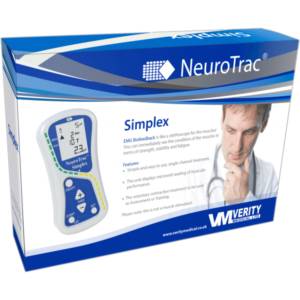
Symptoms of Anxiety Disorders

To treat anxiety, it is necessary to recognize the symptoms and manifestations promptly. The symptoms may not resolve on their own; if left untreated, they can begin to take over a person’s life. It’s essential to seek support early if you’re experiencing anxiety.

Anxiety disorders are often a group of related conditions, and symptoms may vary from person to person. One person can get panicky at the thought of some problem; others may struggle with a disabling fear or uncontrollable, intrusive thoughts, and someone else may suffer from intense anxiety attacks that strike without warning. Yet another may live in constant tension, worrying about anything and everything. But despite their different forms, all anxiety disorders illicit an intense fear or worry out of proportion to the situation at hand.

The symptoms of anxiety disorder often include the following:

  • restlessness, and a feeling of being “on edge”;
  • uncontrollable feelings of worry;
  • increased irritability;
  • concentration difficulties;
  • sleep difficulties, such as problems in falling or staying asleep.

In addition to the primary symptom of excessive and irrational fear and worry, other common emotional symptoms of an anxiety disorder include:

  • Feelings of apprehension or dread;
  • Watching for signs of danger;
  • Anticipating the worst;
  • Trouble concentrating;
  • Feeling tense and jumpy;
  • Irritability;
  • Feeling like your mind’s gone blank.

But anxiety is more than just a feeling. As a product of the body’s fight-or-flight response, anxiety also involves a wide range of physical symptoms, including:

  • Pounding heart;
  • Sweating;
  • Headaches;
  • Stomach upset;
  • Dizziness;
  • Frequent urination or diarrhea;
  • Shortness of breath;
  • Muscle tension or twitches;
  • Shaking or trembling;
  • Insomnia

Because of these physical symptoms, anxiety sufferers often mistake their disorder for a medical illness. They may visit many doctors and make numerous trips to the hospital before their anxiety disorder is finally recognized.

Types of Anxiety Disorders

There are different types of anxiety. The most common is the following.

Generalized Anxiety Disorder (GAD)

A person feels anxious most days, worrying about many different things for six months or more.
Suppose constant worries and fears distract a person from his day-to-day activities, or he is troubled by a persistent feeling that something terrible will happen. In that case, this person may be suffering from generalized anxiety disorder (GAD). People with GAD are chronic worrywarts who feel anxious nearly all of the time, though they may not even know why.

Anxiety related to GAD often manifests in physical symptoms like chest pain, headache, tiredness, tight muscles, insomnia, stomach upset or vomiting, restlessness, and fatigue. Generalized anxiety can lead a person to miss school or avoid social activities. With generalized anxiety, worries can feel like a burden, making life feel overwhelming or out of control.

Social Anxiety Disorder

A person with a social anxiety disorder has an intense fear of being viewed negatively by others, being criticized, embarrassed, or humiliated, even in everyday situations, such as speaking publicly, eating in public, being assertive at work, or making small talk. It is also known as social phobia.

Social anxiety disorder can be thought of as extreme shyness. In severe cases, individuals avoid social situations altogether. Performance anxiety is the most common type of social phobia.

Phobias and Irrational Fears

A person with a phobia feels an unrealistic or exaggerated fear of a particular object, activity, or situation that, in reality, presents little to no danger. He may go to great lengths to avoid the object of fear, but unfortunately, avoidance only strengthens the phobia.
There are many different types of phobias. Common phobias include a fear of animals (such as snakes and spiders), a fear of flying, and a fear of heights.

Panic Attacks and Panic Disorder

A person has panic attacks, which are intense, overwhelming, and often uncontrollable feelings of anxiety combined with a range of physical symptoms. Someone having a panic attack may experience shortness of breath, chest pain, dizziness, and excessive perspiration. Sometimes, people experiencing a panic attack think they are having a heart attack or are about to die.

If a person has recurrent panic attacks or persistent fears for more than a month, they’re said to have panic disorder. Panic disorder is characterized by repeated, unexpected panic attacks, as well as fear of experiencing another episode. Agoraphobia is an intense fear of panic attacks that causes a person to avoid going anywhere where a panic attack could occur.

Other Conditions Where Anxiety is Present

Obsessive-Compulsive Disorder (OCD)

A person has ongoing unwanted/intrusive thoughts and fears that cause anxiety and seem impossible to stop or control. Although people may acknowledge these thoughts as silly, they often try to relieve stress by carrying out certain behaviors or rituals.

For a person with OCD, anxiety takes the form of obsessions (evil thoughts) and compulsions (actions that try to relieve anxiety). For example, a fear of germs and contamination can lead to constantly washing hands and clothes.

Post-Traumatic Stress Disorder (PTSD)

Post-traumatic stress disorder (PTSD) can happen after a person experiences a traumatic or life-threatening event (e.g., war, assault, accident, disaster). Symptoms of PTSD can include difficulty relaxing, nightmares or flashbacks of the event, hypervigilance, startling easily, withdrawing from others, and avoidance of anything related to the event. PTSD is diagnosed when a person has symptoms for at least a month.

Separation Anxiety Disorder

While separation anxiety is a normal stage of development, if anxieties intensify or are persistent enough to get in the way of school or other activities, your child may have a separation anxiety disorder. Children with a separation anxiety disorder may become agitated at just the thought of being away from mom or dad and complain of sickness to avoid playing with friends or going to school.

Anxiety Disorder Risk Factors

Researchers are finding that both genetic and environmental factors contribute to the risk of developing an anxiety disorder. Although the risk factors for each type of anxiety disorder can vary, some general risk factors for all kinds of anxiety disorders include:

  • Temperamental traits of shyness or behavioral inhibition in childhood;
  • Exposure to stressful and negative life or environmental events in early childhood or adulthood;
  • A history of anxiety or other mental illnesses in biological relatives;
  • Some physical health conditions, such as thyroid problems, heart arrhythmias, or caffeine or other
    substances/medications can produce or aggravate anxiety symptoms.
  • Inflammation affects subcortical and cortical brain circuits associated with motivation, motor activity, and cortical brain regions associated with arousal, anxiety, and alarm.

There is a surprising specificity in the impact of inflammation on behavior. Researches show that inflammation not only occurs in depression but also in multiple other psychiatric diseases, including anxiety disorders, bipolar disorder, personality disorders, and schizophrenia. These data suggest that inflammation is transdiagnostic in nature, occurring in subpopulations of patients with several psychiatric disorders. It is revealed that Yoga and alpha meditation increase parasympathetic outflow and consequently decrease inflammation.
A physical health examination is helpful in the evaluation of a possible anxiety disorder.

Self Test for Anxiety

This Self-Assessment Test for Anxiety is called the General Anxiety Disorder screening tool with seven questions (GAD-7). It can help you find out if you might have an anxiety disorder that needs treatment. It calculates how many common symptoms you have and, based on your answers, suggests where you might be on a scale from mild to severe anxiety.

Hamilton Anxiety Rating Scale (HAM-A) for Rating by Clinicians

The Hamilton Anxiety Rating Scale (HAM-A) was one of the first rating scales developed to measure the severity of anxiety symptoms. It is still widely used today in clinical and research settings. The scale is intended for adults, adolescents, and children and should take approximately ten to fifteen minutes to administer.

The central value of HAM-A is to assess the patient’s response to a course of treatment rather than as a diagnostic or screening tool. By administering the scale serially, a clinician can document the results of drug treatment, psychotherapy, or neurofeedback.

The scale consists of 14 items, each defined by a series of symptoms, and measures both psychic anxiety (mental agitation and psychological distress) and somatic anxiety (physical complaints related to anxiety).

Brain Region and Anxiety Disorders from Neurofeedback Management Perspective

Typically, the brain manages our fear and anxiety without allowing them to interfere with our daily functioning. If there’s a nearby threat, different brain areas help us make sense of the danger by amplifying or quelling our anxiety and fear.

The various anxiety disorders involve many different areas of the brain. These areas reflect both the uniqueness of each of these disorders and the features that they have in common. Anxiety is the result of interaction between several different brain regions — a fear network. No one brain region drives anxiety on its own. Instead, interactions among many brain areas are critical for how we experience anxiety. Contemporary models of anxiety disorders have primarily focused on amygdala-cortical interactions. We only feel anxiety when signals from the amygdala overpower the cognitive brain and into our consciousness. If you rationalize that, the cognitive brain network overtakes and suppresses the emotional fear network.

Symptoms of anxiety disorders are thought to result in part from a disruption in the balance of activity in the emotional centers of the brain rather than in the higher cognitive centers.

The Role of the Frontal Cortex in Emotion and Anxiety Regulation

The higher cognitive centers of the brain reside in the frontal lobe.

The prefrontal cortex (PFC) is responsible for executive functions, including planning, decision-making, predicting consequences for potential behaviors, and understanding and moderating social behavior.

The orbitofrontal cortex (OFC) processes information, regulates impulses, and influences mood. This region is crucial for the self-regulation of emotions and the relearning of stimulus-reinforcement associations.

The medial OFC is implicated in the fear of extinction. Functional changes of the medial OFC primarily accompany the successful treatment of spider phobia.

In contrast to mOFC, anterolateral OFC (lOFC) has been associated with adverse effects and obsessions, and thus, dysfunctional lOFC may underlie different aspects of specific anxiety disorders.

The ventromedial prefrontal cortex (vmPFC) is involved in reward processing and visceral emotional responses.
In the healthy brain, these frontal cortical regions regulate impulses, emotions, and behavior via inhibitory top-down control of emotional-processing structures. The ventromedial prefrontal cortex is involved in dampening the signals coming from the amygdala. Patients with damage to this brain region are more likely to experience anxiety since the brakes on the amygdala have been lifted.

The Limbic Cortex: Its Role in Anxiety and Emotional Processing

The emotional-processing brain structures are referred to as the limbic cortex.
It includes the insular cortex and cingulate cortex. The limbic cortex integrates pain’s sensory, affective, and cognitive components and processes information regarding the internal bodily state. Dysfunction in the posterior cingulate cortex (PCC) may play an important role in anxiety psychopathology. 

A relative gray matter deficit was found in the right anterior cingulate cortex of patients with panic disorder (PD) compared with controls. Deactivation in PCC while listening to threat-related words alternating with emotionally neutral words. The dorsal anterior cingulate cortex (DACC) amplifies fearful signals from the amygdala. When anxious patients are shown pictures of frightened faces, the DACC and amygdala ramp up their interaction, producing palpable anxiety. People without anxiety show little to no response.
Compared with controls, a relative increase in gray matter volume was also found in the left insula of patients with panic disorder (PD).

The Hippocampus: Its Role in Stress, Memory, and Anxiety Disorders

The hippocampus is another structure within the limbic system. It has tonic inhibitory control over the hypothalamic stress-response system and plays a role in negative feedback for the hypothalamic–pituitary–adrenal (HPA) axis. Because all old memories depend on the hippocampus, this structure is involved in anxiety disorders that are generated by memories of painful experiences, such as post-traumatic stress disorder (PTSD). 

Studies do show that people who have suffered the stress of incest or military combat have a smaller hippocampus. This atrophy of the hippocampus might explain why such people experience explicit memory disturbances, flashbacks, and fragmentary memories of the traumatic events in question. Research shows that the hippocampus is also smaller in some depressed people. Stress, which plays a role in both anxiety and depression, may be a key factor here since there is some evidence that stress may suppress the production of new neurons (nerve cells) in the hippocampus.

Fear and Anxiety: The Amygdala’s Role in Emotional Responses

The amygdala processes emotionally salient external stimuli and initiates the appropriate behavioral response. It is responsible for the expression of fear and aggression, as well as species-specific defensive behaviors, and plays a role in the formation and retrieval of emotional and fear-related memories. The amygdala plays a central role in anxiety disorders. It warns us when danger is present in our environment, triggering the fear reaction and then the fight-or-flight response to get us out of it. 

Some studies have shown that monkeys with damage to the amygdala exhibit unusual stoicism in the face of frightening stimuli, such as a nearby snake.
The amygdala generates fear responses, whereas cortical regions, specifically the medial orbitofrontal cortex (mOFC) and the ventromedial prefrontal cortex (vmPFC), are implicated in fear extinction. The central nucleus of the amygdala is heavily interconnected with cortical areas, including the limbic cortex. It also receives input from the hippocampus, thalamus, and hypothalamus. It plays a vital role in anxiety disorders that involve specific fears, such as phobias. Researchers have also observed that a group of very anxious children had a larger amygdala, on average, than a group of normal children.

The amygdala acts as a sensor of threats or a lack of control, communicating the need for a reaction to the hypothalamus. The hypothalamus, in turn, releases corticotropin-releasing hormone (CRH), which binds to the adenohypophysis, causing it to produce adrenocorticotropic hormone (ACTH). ACTH binds to the adrenal cortex and adrenal medulla.

Brain Structure and Neurotransmitter Imbalances in Anxiety Disorders

Researchers have shown that the left superior temporal gyrus, the midbrain, and the pons are additional structures that exhibit differential increases in gray matter.

In addition to the differences in the size of various brain structures, abnormally high or low activity in a particular region of the brain may be another kind of anomaly that results in anxiety disorders.

In addition to the activity of each brain region, the neurotransmitters providing communication between these regions must also be considered

Increased activity in emotion-processing brain regions in patients with an anxiety disorder could result from decreased inhibitory signaling by gamma-aminobutyric acid (GABA) or increased excitatory neurotransmission by glutamate. Well-documented anxiolytic and antidepressant properties of drugs that act primarily on monoaminergic systems have implicated serotonin, norepinephrine, and dopamine in the pathogenesis of mood and anxiety disorders.

Neurofeedback for Anxiety Disorders

Understanding Anxiety’s Impact on Health

Chronic anxiety and stress can increase catecholamine release, decrease growth hormones, and aberrantly activate immune and inflammatory cascades. As such, stress and anxiety can directly influence illness progression and can lead to irritable bowel syndrome exacerbations and increased cardiovascular risk. Increased frequency of general anxiety disorder has been found in people with asthma, cancer, and chronic pain.

This comorbidity of anxiety with chronic illness can cause increased morbidity, mortality, and decreased quality of life. Poorly controlled anxiety reduces the quality of life of many healthy individuals and is a crucial symptom of numerous neuropsychiatric and psychosomatic conditions.

Anxiety in Children and Traditional Treatment Approaches

For young children who perceive the world as a threatening place, a wide range of conditions can trigger anxious behaviors that then impair their ability to learn and interact socially with others. Chronic and intense fear early in life affects the development of the stress response system and influences the processing of emotional memories.

Traditional treatments for anxiety include psychological treatments such as cognitive therapy, cognitive behavioral therapy, exposure therapy, and self-help groups, as well as pharmacological modalities such as benzodiazepines and antidepressants. While these treatments are common, medications often treat only the symptoms and may cause addiction without addressing the root causes of anxiety.

Although anxiety medication may temporarily help with anxiety relief, it usually doesn’t address the root cause, and it negatively reinforces avoidant behaviors instead of learning how to deal with stress and uncomfortable feelings. Medications treat the symptoms and do not correct the source of the problem in the brain. Besides, many anxiolytics may cause addictions.

Cognitive Behavioral Therapy for Anxiety

The most common anxiety treatment is psychotherapy. Psychotherapy, specifically Cognitive Behavioral Therapy (CBT) for Anxiety, has been shown through research to be very effective in addressing the symptoms associated with anxiety.

Neurofeedback vs. Medication for Anxiety Disorders

Cognitive Behavioral Therapy remains a popular treatment for anxiety disorders, but medications often reinforce avoidant behaviors without addressing the root causes of anxiety. Neurofeedback, a non-invasive alternative, offers similar efficacy to medicines without the drawbacks. By teaching the brain to self-regulate, neurofeedback helps reduce or eliminate the need for medications, offering a long-term solution to anxiety. Research suggests that neurofeedback produces stable effects over time, while the benefits of medications usually fade after discontinuation.

Anxiety disorder management with Neurofeedback is almost as effective as medication and helps reduce or eliminate the use of these medications.

How Neurofeedback Works for Anxiety Management

Neurofeedback is all about teaching the brain to self-regulate and reduce or eliminate symptoms of anxiety disorders. Neurofeedback works subconsciously, controlled 90 to 95% of the time. Through measurement and reinforcement, you learn to regulate your brainwave activity. Quite simply, you are reinforced for changing brainwaves at a subconscious level through the use of computers. Almost any brain, regardless of its level of function (or dysfunction), can be trained to function better. Research has shown that the long-term effects of neurofeedback in anxiety disorders are stable over time, in contrast to the anxiolytic medication, which has an impact for a short period after discontinuation.

The first step in Neurofeedback for anxiety disorder treatment is to evaluate and measure brainwaves in different brain areas, revealing their functioning and activity. EEG reveals areas of the brain with excessive or deficient activity. It could also show which areas are not communicating well with other regions. 

QEEG Brain Mapping

Specific brainwave patterns are associated with certain neuropsychological functions and conditions. Therefore, qEEG brain mapping may yield exact results.

The qEEG analysis allows specialists to see precisely excessive activation in part of the fear network in the brain in anxiety disorders. Once we know the source of the problem, we target that area for change through neurofeedback brain training. This allows you to reshape your brain, not just mask your symptoms.

People suffering from anxiety disorders often have over-activation in brain regions such as the right insula, hippocampus, and amygdala. Theory today suggests that anxiety disorders involve deficits in cognitive skills, such as the control of attention, and these mental aspects of the disorders are the most likely targets for neurofeedback for anxiety disorders management, whose effects are thought to be mediated mainly through cognitive skill enhancement.

Targeting Specific Brainwaves in Neurofeedback for Anxiety

From a neurofeedback management perspective, the alpha band (8-12 Hz) asymmetry with prevalence in the left frontal cortex has emerged as the most prominent electroencephalographic (EEG) correlate of both anxiety and depression in right-handed people, followed by excessive band power in beta 1 (12-20 Hz) and beta two waves (20-30 Hz) in the right parietal lobe. There is also research that shows the association of anxiety disorders with high beta in conjunction with a decrease in Low Beta activity in the temporal lobes
Neurofeedback for anxiety disorders enables people to control changed brain activation, reducing their anxiety levels consciously

Neurofeedback Protocols and Long-Term Anxiety Management

Since its first study, anxiety disorder neurofeedback management has used a wide range of EEG target frequency bands and protocols. This includes frequencies in the alpha, beta, and theta ranges, which comprise almost half of the typically measured spectrum of frequencies.

SMR Protocol

Healthy alpha asymmetry and regulation of alpha power bands with Neurofeedback have been successfully used to treat anxiety disorders and depression. Increasing the power of sensorimotor rhythm (SMR) bands (12-15 Hz) over the sensorimotor cortex has been used successfully to improve memory and sleep quality

Alpha/Beta3 ratio protocol

Increasing the alpha/beta ratio (9.5-12 Hz/23-38 Hz) at the parietal lobe has been shown to improve anxiety, depression, sleep quality, and executive functions. 

The combination of both protocols, the SMR followed by the alpha/beta3 ratio, leads to an overall improvement in the symptoms reported by patients with anxiety disorders. The neurofeedback training protocol usually lasts 20 sessions, during which the individual is trained to increase beta 1 (12-15 Hz) at C4 with eyes open, followed by closed-eyes training designed to improve the alpha/beta three ratio (9.5-12 Hz/23-38 Hz) at P4. Researches show marked improvement in anxiety, depression, and sleep quality, as well as some improvement in executive functions.

EEG biofeedback protocols for the treatment of anxiety disorders have included alpha enhancement (e.g., Hardt & Kamiya, 1978), theta enhancement (e.g., Satterfield et al., 1976), and alpha-theta enhancement (Peniston & Kulkosky, 1991) paradigms. Information regarding the location of sensors, frequency bands to be reinforced/inhibited, and the type of feedback is provided below. 

Electrode Locations and Effect

Fp1 (Left Prefrontal Cortex):

Location: Frontal pole, 10% of the distance from the Nasion (bridge of the nose).
Relevance: Involved in cognitive control and emotional regulation. Increasing alpha activity here can promote relaxation.

Fp2 (Right Prefrontal Cortex):

Location: Frontal pole, 10% of the distance from the Nasion.
Relevance: Associated with stress and anxiety responses. Training can help balance activity levels and reduce symptoms of anxiety.

F3 (Left Dorsolateral Prefrontal Cortex – DLPFC):

Location: The frontal lobe is 30% of the distance from the Nasion to the inion and 20% from the midline.
Relevance: Involved in cognitive control and emotional regulation. Enhancing alpha or SMR activity in this area can help reduce anxiety.

F4 (Right Dorsolateral Prefrontal Cortex – DLPFC):

Location: Frontal lobe, analogous to F3 on the right side.
Relevance: Balancing activity with F3 can help regulate anxiety-related imbalances.

Cz (Central Midline):

Location: The scalp vertex, halfway between the Nasion and inion, and equally spaced between the left and right preauricular points (just above the ears).
Relevance: Often used as a reference or ground electrode in neurofeedback sessions, it is also involved in general arousal and relaxation.

Alpha enhancement protocol

  • Sensor location – O1, Oz (most common); C3, C4 (less common). 
  • Reinforced frequencies – 8-13 Hz.
  • Reinforced EEG pattern – Percentage of time the patient produces alpha amplitudes above a threshold
    (e.g., ten microvolts), or patient production of alpha amplitudes above a set point
    (e.g., 19-21 microvolts).
  • Feedback modality – Auditory (tones and verbal feedback); eyes are typically closed during training.
  • Timing of sessions – Ranges from daily to weekly.

Theta enhancement protocol

  • Sensor location – Oz or C4.
  • Reinforced frequencies – Maintaining 3.5- to 7.5-Hz activity above a preset microvolt threshold while suppressing 8- to 12-Hz production below a specified microvolt threshold
  • Feedback modality: It is primarily auditory with the eyes closed; visual feedback is provided when surface electromyographic (EMG) feedback is provided.
  • Timing of sessions – Daily to weekly.

How Neurofeedback Training Reduces Anxiety and Enhances Brain Function

During the Neurofeedback procedure, the computer measures brainwave activity through the electrodes placed on the scalp (watch video). When input falls into acceptable and healthy parameters, the system generates pleasant stimuli (audio or video feedback) to reinforce the change. A movie plays consistently with a ding each time a preset goal is achieved. This process is enjoyable, and since the brain craves this simple reinforcement, it typically begins to change within a few seconds of the session’s commencement. 

This operant conditioning is continued over numerous neurofeedback sessions to reinforce transient changes in brain function using the patient’s input as a guide. The brain begins to regulate through this reinforcement process, and symptoms start to reduce. With neurofeedback, it is possible to address and treat subconscious fears or worries. This is often the only way to gain access to the origin of anxiety/panic attacks.

Most people require two Neurofeedback sessions per week, and the number of sessions varies based on the individual and the specific issue. While some people notice a reduction in symptoms after the first session, others may experience a gradual improvement over time. The effects are often felt within the first few sessions; further training makes these permanent. Neurofeedback management of anxiety disorders calms the CNS so that a child, teen, or individual with anxiety can learn to manage stress in healthy ways.

Electrode Application Sites for Anxiety Neurofeedback Management

After obtaining stable results with the help of neurofeedback specialists, people with anxiety can continue to perform neurofeedback management of anxiety disorders according to their needs with the help of home-use neurofeedback devices. They are very simple to use and adapted for alpha and beta neurofeedback training, i.e., relaxation and concentration. Additionally, the consistent use of these devices can enhance both short-term and long-term memory, improve sleep quality, and increase stress resistance.

There are also biofeedback home-use devices that can help manage anxiety.

FAQ: Neurofeedback for Anxiety

How does neurofeedback compare to medication or therapy for anxiety?

While Cognitive Behavioral Therapy (CBT) addresses the thought patterns behind anxiety and medication manages the symptoms, neurofeedback addresses the root cause by directly retraining dysregulated brain activity.

Which areas of the brain are targeted in neurofeedback for anxiety?

Neurofeedback often targets areas involved in the “fear network,” such as:

  • The Amygdala: The brain’s alarm system for fear and threat.
  • The Prefrontal Cortex (PFC): Responsible for regulating emotions and impulses.
  • The Insula and Anterior Cingulate Cortex: Regions involved in processing internal bodily states and emotional awareness.
What are the specific neurofeedback protocols used for anxiety?
  • Alpha Asymmetry Training: Aims to increase calming alpha waves in the left frontal cortex.
  • SMR Protocol: Increases sensorimotor rhythm (12-15 Hz) to improve relaxation and sleep quality.
  • Alpha/Beta3 Ratio Protocol: Increases the ratio of alpha to high-beta waves to reduce anxiety and improve executive function.
    A specialist will determine the best protocol based on an individual’s quantitative electroencephalography (qEEG) brain map.
How long does it take to see results from neurofeedback for anxiety?

Some people feel a reduction in symptoms after the first session, while others experience a gradual improvement over time. Noticeable effects are often felt within the first few sessions. A typical training protocol involves around 20 sessions to create lasting, stable changes in brain function.

Can I do neurofeedback at home for anxiety management?

Yes, after working with a specialist to establish a foundation, you can use home-use neurofeedback devices for maintenance. These devices are designed to be simple to use and are adapted for training relaxation (alpha waves) and focus (beta waves), helping to consolidate the benefits achieved in clinical sessions.

References:

  1. E.I. Martin, K.J. Ressler, et al. The Neurobiology of Anxiety Disorders: Brain Imaging, Genetics, and Psychoneuroendocrinology. Psychiatr Clin North Am. 2009 September; 32(3): 549–575. doi:10.1016/j.psc.2009.05.004.
  2. Mennella et al. (2017). Frontal alpha asymmetry neurofeedback for the reduction of negative affect and anxiety. Behavior Research and Therapy, 92, 32-40.
  3. Dias, Á. M. et al. (2011). A new neurofeedback protocol for depression. The Spanish Journal of Psychology, 14(01), 374-384.
  4. Blaskovits F., et al. Effectiveness of neurofeedback therapy for anxiety and stress in adults living with a chronic illness: a systematic review protocol. JBI Database of Systematic Reviews and Implementation Reports: July 2017, Volume 15, Issue 7, p 1765–1769. doi: 10.11124/JBISRIR-2016-003118
  5. Scheinost, D.,  et al. (2013). Orbitofrontal cortex neurofeedback produces lasting changes in contamination anxiety and resting-state connectivity. Translational Psychiatry, 3(4), e250. doi:10.1038/tp.2013.24
  6. Simkin, D. R., et al. (2014). Quantitative EEG and neurofeedback in children and adolescents: anxiety disorders, depressive disorders, comorbid addiction, attention-deficit/hyperactivity disorder, and brain injury. Child and adolescent psychiatric clinics of North America, 23(3), 427-464.
  7. Gomes J.S., et al. A neurofeedback protocol to improve mild anxiety and sleep quality. Brazilian Journal of Psychiatry, vol.38 no.3 São Paulo July/Sept. 2016, 38:264-265. http://dx.doi.org/10.1590/1516-4446-2015-1811
  8. https://www.ncbi.nlm.nih.gov/pmc/articles/PMC4145052/
  9. https://www.ncbi.nlm.nih.gov/pmc/articles/PMC2852103/
  10. https://www.thelancet.com/journals/lanpsy/article/PIIS2215-0366(14)70305-0/fulltext
Dyscalculia learning disability

Dyscalculia Treatment – Neurofeedback

While there are a few general learning difficulties/disabilities that can impact mathematical performance, there is only one identified math-specific learning disability. This disability is known as dyscalculia, which refers to problems with specific mathematical concepts and calculations. However, today, there is considerable scientific evidence on the effectiveness of Neurofeedback in treating dyscalculia.

Dyscalculia learning disability is a lifelong condition that makes it hard for kids to perform math-related tasks. It’s not as well known or understood as dyslexia, but some experts believe it’s just as common. Approximately 15% of the population has reading and/or spelling learning disabilities, and 10% have math learning disabilities.

Many children struggle to get through math classes and homework assignments. No matter how hard the child tries to study, the math still does not come quickly. Many adults deal with the same issue. Despite years of math classes and exams in the past, many adults still have difficulty doing fundamental math problems, which can affect day-to-day life and create feelings of embarrassment.

Possible Causes of Dyscalculia

Researchers don’t know precisely what causes dyscalculia. These are the possible causes of dyscalculia:
Genes: Research shows that genes can explain part of the difference in kids’ math scores. In other words, differences in genetics may impact whether a child has dyscalculia. Dyscalculia tends to run in families, suggesting that genes play a role.

Brain development: Brain-imaging studies have shown differences in brain function and structure in people with dyscalculia. The differences are in certain brain parts’ surface area, thickness, and volume. There are also differences in the activation of regions of the brain associated with numerical and mathematical processing. These areas are linked to essential learning skills, such as memory and planning.

Environment: Dyscalculia has been linked to fetal alcohol syndrome. Prematurity and low birth weight may also play a role in dyscalculia.

Brain injury: Studies show that injury to certain parts of the brain can result in what researchers call acquired dyscalculia.

SYMPTOMS OF DYSCALCULIA LEARNING DISABILITY

Preschool

  • Has trouble learning to count and skips over numbers long after kids the same age can remember numbers in the correct order;
  • Struggles to recognize patterns, such as smallest to largest or tallest to shortest;
  • Has trouble recognizing number symbols (knowing that “5” means five);
  • He doesn’t seem to understand the meaning of counting. For example, when asked for five blocks, they hand you an armful instead of counting them.

Grade School

  • Has difficulty learning and recalling basic math facts, such as 2 + 4 = 6;
  • Struggles to identify +, ‒, and other signs and to use them correctly;
  • May still use fingers to count instead of using more advanced strategies, like mental math;
  • Struggles to understand words related to math, such as greater than and less than;
  • Has trouble with visual-spatial representations of numbers, such as number lines.

Middle School

  • Has difficulty understanding place value;
  • Has trouble writing numerals clearly or putting them in the correct column;
  • Has trouble with fractions and with measuring things, like ingredients in a simple recipe;
  • Struggles to keep score in sports games.

High School

  • Struggles to apply math concepts to money, including estimating the total cost, making the exact change, and figuring out a tip;
  • Has a hard time grasping information shown on graphs or charts;
  • Has difficulty measuring things like ingredients in a simple recipe or liquids in a bottle;
  • She has trouble finding different approaches to the same math problem.

Challenges Beyond Learning: Dyscalculia’s Impact

Dyscalculia can create challenges in more areas than just learning. These include social interactions and time management. Sometimes, these challenges can make kids with dyscalculia anxious about doing math-related tasks. However, dyscalculia is not the same as math anxiety.

Math anxiety can make kids question their abilities in math, even if they have strong skills. And although it’s not a learning issue, it can undoubtedly get in the way of learning math.

When kids feel pressure to show what they know or worry they’ll fail, they can become so anxious that they do poorly. This is particularly true on tests because performance translates into grades. In some cases, their anxiety can build and spill over into other areas of life.
Dyscalculia and math anxiety are different, but the signs and struggles can overlap. And a child can have both. This chart may help you better understand what you’re seeing in your child.

Distinguishing Between Dyscalculia and Math Anxiety

Distinguishing Between Dyscalculia and Math Anxiety

It can be easy to think of dyscalculia and math anxiety as the same, mainly because the signs can look similar. Knowing what’s behind your child’s difficulty with math lets you respond effectively.

  • Dyscalculia is a learning issue that affects math skills like counting, recalling math facts, and understanding math concepts.
  • Math anxiety is an emotional issue involving self-doubt and fear of failing.
  • Both can create test anxiety and lead kids to avoid math classes.

Neurofunctional Aspects of Learning Disabilities

Learning disorders are believed to result from changes in brain function. These problems can impact auditory function and memory processing. Additionally, they may lead to challenges in understanding and remembering words. Furthermore, they can affect the expression and comprehension of verbal and written language, as well as complicate the formation of letters or mathematical concepts. Research suggests that individuals with attention deficits have lots of slow brain wave activity.

Learning disabilities in children with brain mapping show one or several cues: sharp and focal slow waves in one or more brain regions such as the occipital lobe, Wernicke area, Broca’s area, and sensory-motor area. EEG Neuroimaging research has consistently found dysfunction in the left posterior temporal lobe (behind the left ear) and the occipital lobe (visual cortex) in the back of the brain. We see letters in the visual cortex and attach sounds in the left posterior temporal lobe. If these areas are dysfunctional or disconnected or the timing is off, then reading/spelling is likely to be impaired.

Neurofunctional Implications of Dyscalculia

Dyscalculia learning disability is related to the parietal lobe (the upper back of the head).


EEG neuroimaging can effectively indicate the types and severity of dysfunction within specific brain regions. For instance, the frontal lobes must cooperate with both hemispheres of the brain to manage working memory and develop concepts—skills essential for mathematical problem-solving. Moreover, EEG neurofeedback can help remediate issues such as abnormal blood flow, metabolism, timing, and connectivity in these affected areas.

Dyscalculia, a specific learning disorder related to mathematical abilities, is associated with neuronal dysfunction in the intraparietal sulcus of the brain. The region impacted by dyscalculia is depicted in the image below.

Impact on Cognitive Skills

Dyscalculia learning disability develops a pattern of cognitive deterioration that usually manifests itself with skills deficits such as:

  • Focus (concentration)

Skill related to the pattern of cognitive deterioration linked to dyslexia. The structural deficit in these connections of neural networks is also associated with inhibition, which affects the mind’s sharpness, making it more difficult for the child to learn math.

  • Divided attention

This skill is crucial as it allows for multitasking. Children with math disabilities present problems when responding to a stimulus because they cannot focus, get distracted by irrelevant stimuli, and tire quickly.

  • Working memory

This cognitive skill refers to temporary storage and the ability to manipulate information to complete complex assignments. Some difficulties associated with this may include trouble following directions, forgetting instructions and tasks, low motivation, incomplete memories, being easily distracted, not remembering numbers, and delayed mental arithmetic.

  • Short-term memory

The capacity to retain a small amount of information during a short period. This mental deficit explains the inability to carry out math assignments. Problems present themselves when students calculate or attempt math problems. This is also related to the inability to remember numbers or multiplication tables.

  • Naming

It implies the ability to recall and use a word or number later. Children with dyscalculia have difficulties remembering numbers because their ability to process information is deficient.

Impact on Functional Skills

  • Planning

Low levels of this cognitive skill lead to challenges in planning and understanding numerical concepts and exercises. Consequently, students may struggle to anticipate outcomes or events, making it difficult to complete exercises accurately. This limitation hampers their ability to process and solve mathematical problems effectively.

  • Processing speed

This corresponds to the time it takes for our brain to receive information (a number, a mathematical equation, a problem…, etc.), understand it, and respond to it. Children who do not have any learning difficulties complete this process quickly and automatically, while children who have dyscalculia need more time and energy to process the information.

Brain Mapping - Neurofeedback in Discalculia Learning Disability

Triple-Code Model: Mapping Results on Children and Adults

Children’s Meta-Analyses and the Triple-Code Model

Mapping results on children meta-analyses (in red), on the triple-code model (green), and on adult meta-analyses (orange). In green are illustrated the schematized cortical locations of the triple-code model proposed by Dehaene and Cohen, 1995, Dehaene and Cohen, 1997:
(1) Inferior parietal cortex: quantity representation,
(2) Temporal cortex: visual-computational number symbols,
(3) Articulatory loop,
(4) Verbal system,
(5) Basal ganglia: arithmetic facts,
(6) Thalamus: arithmetic facts, and
(7) Prefrontal cortex: strategy choice and planning.

Adults’ Meta-Analyses and Additional Schematic Locations

In orange are additional schematic locations of areas concordant among adult studies, as demonstrated by meta-analyses (Arsalidou and Taylor, 2011):
(a) Superior frontal BA 10: formulates complex goals, sub-goal creation,
(b) Middle frontal BA 46: in more or less misleading situations, it monitors more than a few items,
(c) Inferior frontal BA 9: monitor simple rules or a few items,
(d) Precentral gyrus: eye movements,
(e) Insula: interoceptive motivation of goal-directed and default-mode processes,
(f) Cingulate gyrus: converts affective goals into cognitive goals to be implemented,
(g) Right angular gyrus: visual-spatial fact retrieval (i.e., spatial-temporal schemes with non-verbalizable configurable relations) and
(h) Cerebellum: goal-directed, visual motor sequencing.
(i) Right basal ganglia: coordination of top-down and bottom-up operative/motor processes. (j) Claustrum: integration of motivated top-down and bottom-up processes.
Children implicate the right insula (BA 13) more extensively than adults in calculation tasks, whereas adults implicate more prefrontal areas.

Dyscalculia test for parents and teachers

Dyscalculia is not easy to diagnose, and most schools do not have any early detection system to identify this disorder in the classroom and help children get the necessary tools. For this reason, it is often up to parents and families to be alert and identify the early symptoms. If you think your child has dyscalculia, a cognitive assessment may also be helpful. Deficits in cognitive skills such as focus, divided attention, working memory, short-term memory, naming skills, planning, or processing speed may be indicators of dyscalculia. 

Print this test out. It is the first step in improving your child’s future.

Dyscalculia treatment with Neurofeedback

Overview of Neurofeedback in Learning Disabilities

The most effective treatment for learning disabilities, such as dyscalculia and dyslexia, is early diagnosis. By identifying the problem early, children can receive the necessary tools to adapt to a new learning process. As a result, they are more likely to avoid learning delays, self-esteem issues, and the development of more severe disorders.

Dyscalculia treatment - solving games
Ways to help children with dyscalculia dyscalculia treatment

Studies on the effects of Neurofeedback training on learning disabilities, especially mathematics disorders, are not as large as on dyslexia. Still, confirmation of Neurofeedback’s effective use for ADHD by the FDA has been approved.

Neurofeedback training for dyscalculia can be used as both a stand-alone and complementary therapy. Continuous training has been shown to sustainably reduce dyscalculia symptoms, as highlighted in a comprehensive 2018 meta-study. Additionally, it can enhance working memory, leading to improved concentration.

Neurofeedback training for Concentration Improvement

Thanks to neuroplasticity, neurofeedback can be used in dyscalculia treatment to rebuild deteriorated brain functions and help these children develop new brain strategies to improve the difficulties associated with dyscalculia efficiently.

Mechanisms and Applications of Neurofeedback in Dyscalculia Treatment

Dyscalculia treatment with Neurofeedback (NFB) involves a brain-computer interface that, through continuous training, allows users to learn to control their cortical oscillations. By providing real-time feedback, NFB helps individuals recognize and adjust brainwave patterns, promoting improved cognitive functioning and better management of dyscalculia symptoms. Ultimately, this process can enhance the brain’s ability to process mathematical information more effectively.

Neurofeedback is a noninvasive tool for treating brain disorders and affecting brain function. Recent research provides evidence that Neurofeedback training helps treat patients suffering from attention deficit hyperactivity disorder, learning difficulties, etc. Still, it is also used to enhance cognitive function and improve the brain operating efficiency of healthy people.

Neurofeedback brain training exercises for children with dyscalculia learning disability evaluate the level of cognitive deterioration and automatically create an intervention strategy that is personalized for each profile. This allows for stimulation of the parts of the brain that show deficits through fun clinical games and exercises. Some of the deteriorated brain modules that these exercises work to improve are associated with the ability to concentrate or focus, divided attention, working memory, visual memory, short-term memory, naming, and processing or planning speed. It is proven and well-known that neurofeedback helps improve executive functioning, including short and long-term memory, focus, concentration, and task management, which undoubtedly impact dyscalculia treatment.

Effectiveness of Specific Neurofeedback Protocols

Beta waves are essential for attention. Beta-reduced activity in these patients can lead to learning problems. Enhancing beta waves can solve this problem. Several studies have indicated the high effectiveness of dyscalculia treatment with Neurofeedback. The neurofeedback BTR protocol, which enhances the beta/theta ratio, describes the best results.

Chronic stress and math anxiety, which can make the brain pattern irregularities even greater, can make dyscalculia worse. Decreasing this stress pattern in patients with dyscalculia learning disability can significantly improve symptoms. In the case of math anxiety, good results were obtained with neurofeedback alpha/theta protocol with the enhancement of the alpha/theta ratio.

Neurofeedback Protocols for Dyscalculia

When designing a neurofeedback protocol for dyscalculia, the primary goal is typically to encourage brainwave patterns associated with improved attention, focus, and cognitive processing, especially in brain regions involved in numerical processing and mathematical reasoning.

While no specific neurofeedback protocol is universally established for dyscalculia, researchers and clinicians have explored various electrode application sites and protocols targeting brain regions associated with numerical processing, attention, and cognitive functions. Here are some research findings regarding electrode application sites for dyscalculia neurofeedback.

1. Frontal Cortex (Fp1, Fp2, F3, F4, F7, F8):

  • The frontal cortex is involved in executive functions, including attention, working memory, and cognitive control, which are crucial for mathematical reasoning.
  • Research suggests that training frontal brain regions through neurofeedback may improve attentional control and cognitive processing, potentially benefiting individuals with dyscalculia.

Protocol: Beta/SMR Training

1. Beta (13-30 Hz) training aims to enhance focused attention, cognitive processing, and executive functions associated with the frontal cortex.
2. Sensorimotor rhythm (SMR) (12-15 Hz) training promotes calm focus and inhibits hyperactivity, which can support attentional control and cognitive performance.

Dyscalculia NFB - electrode location-1

2. Parietal Cortex (P3, P4, Pz):

  • The parietal cortex plays a crucial role in numerical processing, spatial awareness, and visuospatial processing, which are essential for mathematical tasks.
  • Studies have shown that dyscalculic individuals may exhibit differences in parietal cortex activation compared to typically developing individuals, indicating a potential target for neurofeedback training.

Protocol: Alpha/Theta Training

1. Alpha (8-12 Hz) training aims to promote relaxed alertness and inhibit excessive mind wandering, which can enhance attentional focus and cognitive stability.
2. Theta (4-8 Hz) training targets deep relaxation and introspection, which may facilitate access to subconscious processes and creative problem-solving abilities.

Dyscalculia NFB - electrode location-2

3. Central Cortex (C3, C4, Cz):

  • The central cortex is associated with sensorimotor processing and motor planning, contributing to fine motor skills and numerical manipulation.
  • Neurofeedback targeting central brain regions may help improve motor coordination and processing speed, which can be beneficial for tasks requiring numerical computation.

Protocol: SMR/Theta Training

1. As mentioned earlier, SMR (12-15 Hz) training promotes calm focus and sensorimotor integration, which can support motor coordination and cognitive processing related to numerical manipulation.
2. Theta (4-8 Hz) training may also facilitate relaxation and introspection, depending on the individual’s specific needs and treatment goals.

Dyscalculia NFB - electrode location-3

4. Temporo-Parietal Junction (TP7, TP8):

  • The temporoparietal junction is implicated in various cognitive functions, including attentional allocation, social cognition, and numerical processing.
  • Research suggests that dyscalculic individuals may show differences in temporoparietal junction activation during numerical tasks, indicating its potential relevance for neurofeedback training.

Protocol: Alpha/Theta or Beta/SMR Training

1. Similar to the protocols targeting parietal and frontal regions, training at the temporoparietal junction may involve alpha/theta or beta/SMR protocols, depending on the desired outcomes and individual response to treatment.

5. Midline Sites (Fz, Cz, Pz):

  • Midline electrode sites encompass regions such as the anterior cingulate cortex (ACC) and midline parietal areas, which are involved in attentional control, error monitoring, and cognitive processing.
  • Training midline brain regions through neurofeedback may enhance attentional focus, cognitive flexibility, and error detection, which is essential for mathematical problem-solving.

Protocol: Alpha/Theta or Beta/SMR Training

1. Training at midline electrode sites typically involves alpha/theta or beta/SMR protocols to enhance attentional control, cognitive flexibility, and error monitoring functions associated with the anterior cingulate cortex (ACC) and midline parietal areas.

Dyscalculia NFB - electrode location-4

6. Individualized Approaches:

  • Some studies advocate for individualized approaches to electrode application, where electrode sites are selected based on each individual’s unique neurophysiological profile, as determined by quantitative EEG (QEEG) assessments.

  • By tailoring neurofeedback protocols to target specific areas of dysregulation in each individual, greater efficacy and personalized treatment outcomes may be achieved.

Protocol: Tailored to Individual Needs

1. Individualized neurofeedback protocols may incorporate a combination of frequency bands (e.g., beta, alpha, theta, SMR) and training strategies based on each individual’s unique neurophysiological profile, as determined by quantitative EEG (QEEG) assessments.
2. The specific protocol used for each individual may vary based on their presenting symptoms, cognitive strengths and weaknesses, and treatment goals.

Before initiating neurofeedback training, a quantitative EEG (QEEG) assessment is often conducted to identify the individual’s baseline brainwave patterns and areas of dysregulation. The QEEG analysis can help determine which specific brainwave frequencies (e.g., theta, alpha, beta) and brain regions may be contributing to the symptoms of dyscalculia.
A personalized neurofeedback protocol is developed based on the QEEG results and the individual’s specific needs.

Dyscalculia Treatment with Neurofeedback Home Use Device

Forbrain Bone Conduction Audio Neurofeedback home- use device

Improve your speech, fluency, memory, focus, coordination, and many other sensory functions, resulting in several adjustments in the psychological (cognitive skills) /emotional domains, with just a few uses of Forbrain.

The audio-feedback headset with bone audio transmission improves your pronunciation, speech flow, and rhythm while speaking, enabling clearer and more effective communication through specially developed mental and sound therapy.

Forbrain helps children and adults improve their language and learning skills with audio-vocal workouts using the TOMATIS method.
Forbrain is the first evidence-based technology that individuals at home can use. It has become the solid “bridge” in the gaps between sessions in practice and life at home.

Effective Learner & Study Trainer with MindWave Mobile 2

Double your learning speed by knowing your learning effectiveness! When you are effective, you can absorb more and retain more. If you are not effective, try changing your learning method, switching to a different task, or taking a rest. The Effective Learner app utilizes NeuroSky’s brainwave sensing headset to measure your learning effectiveness and display it in six color-coded levels, allowing you to gauge your progress with a glance. MindWave Mobile headset required. Purchase your headset, then download the Effective Learner App, accompanied by the optional Study Trainer add-on. Read more…

The Excellent Brain Home Kit

The Excellent Brain Home Kit will enable you to train your attention and focus abilities using a cutting-edge Neurofeedback kit in the convenience of your own home. Excellent Brain software is a revolutionary program that helps children and teens with attention deficit disorder (ADD) or attention deficit hyperactivity disorder (ADHD) overcome learning and behavioral difficulties, and significantly improve their self-esteem.

This software is friendly, easy to use, and challenging. It helps the children understand when they lose focus and when they are present, so they can take responsibility and stay focused while doing homework alone or with friends.

Our brain operates at varying frequencies (electrical brain waves), some are higher and others are lower. Functioning requires a specific frequency. For example, we need a higher frequency for thinking, attention, and motivation. It was noted that when people suffer from ADHD symptoms and are required to perform one of these activities, the brain wave frequency does not rise to the necessary height or does not remain long. Neurofeedback training is a non-invasive way to practice and improve focus and attention by altering your brain waves to the optimal range, regardless of medication use.

Read more….

Excellent Brain ADHD Neurofeedback Home Training Kit

FAQ: Dyscalculia Treatment with Neurofeedback

What is dyscalculia, and how is it different from just being "bad at math"?

Dyscalculia is a specific, brain-based learning disability that persistently impairs a person’s ability to understand numbers and learn math facts. It’s not simply a lack of effort or poor teaching. Individuals with dyscalculia struggle with fundamental concepts, such as number symbols, basic calculations, and visual-spatial representations of numbers (like number lines), which are automatic for their peers.

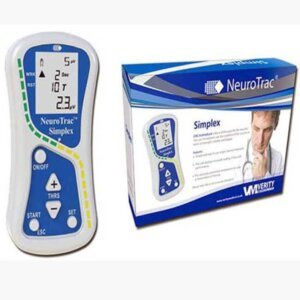
What are the common signs of dyscalculia in a school-aged child?

Signs vary by age. In grade school, a child might:

  • Have extreme difficulty learning and recalling basic math facts (e.g., 2+4=6).
  • Struggle to identify and use math symbols like + and – correctly.
  • Rely on fingers to count long after peers have moved to mental math.
  • Have trouble understanding math-related vocabulary like “greater than” or “less than.”
How can Neurofeedback help treat dyscalculia?

For dyscalculia, Neurofeedback targets brain regions responsible for numerical processing, attention, and memory. Promoting more efficient brain activity can enhance core cognitive skills, such as focus, working memory, and processing speed, which are crucial for effective math performance.

Which areas of the brain are targeted in Neurofeedback for dyscalculia?

Key brain areas include:

  • Parietal Cortex: Crucial for numerical processing and spatial awareness.
  • Frontal Cortex: Manages executive functions like attention, working memory, and planning.
  • Temporo-Parietal Junction: Involved in attentional allocation and numerical processing.
  • Central Cortex: Associated with sensorimotor processing relevant to numerical manipulation.
What are the specific Neurofeedback protocols used for dyscalculia?

While protocols are often personalized, common approaches include:

  • Beta/SMR Training: Enhances focused attention and cognitive control (often on frontal sites).
  • Alpha/Theta Training: Promotes relaxed alertness and reduces anxiety, which can be a significant barrier.
  • Enhancing the Beta/Theta Ratio: This protocol has shown some of the best results for improving mathematical performance directly.

References:

Antonia Plerou, Panagiotis Vlamos. 2016, Neurofeedback Training Effect in Cognition and Mathematical Perception: IORE Journal of Bioinformatics & Computational Biology IJBCB Vol1.1 (2016), DOI: 10.21770/0907-3004.004

Peyman Hashemian, Pezhman Hashemian. Effectiveness of Neuro-feedback on Mathematics Disorder; Hashemian and Hashemian, J Psychiatry 2015, 18:2

Marie Arsalidouab, Matthew Pawliw-Levaca, Mahsa Sadeghia, Juan Pascual-Leonea. 2018. Brain areas associated with numbers and calculations in children: Meta-analyses of fMRI studies. Developmental Cognitive Neuroscience, Volume 30, April 2018, Pages 239-250, https://doi.org/10.1016/j.dcn.2017.08.002